

Italy serves up more than just ancient ruins and world-class pasta. Its coastline stretches for thousands of miles, wrapping around a peninsula that juts boldly into the Mediterranean like a boot ready to kick something.
And tucked into every curve and cove, you’ll find beaches that make the crowds at the Colosseum suddenly seem less appealing. Some hide behind dramatic cliffs, others spread out like golden ribbons between medieval towns, and a few exist in colors that seem too vivid to be real.
The Italian approach to beaches mirrors their approach to everything else: why settle for ordinary when extraordinary is right there waiting?
Cinque Terre

The five villages of Cinque Terre cling to cliffs like stubborn barnacles, and their beaches reward the effort it takes to reach them. Monterosso al Mare has the largest stretch of sand, where you can actually spread out a towel without apologizing to three different families.
The other villages offer smaller pebble beaches tucked between the rocks.
Getting down to these beaches often involves navigating paths that seem designed by mountain goats. But that’s exactly why they work.
The effort keeps away anyone who isn’t genuinely committed to the experience.
Spiaggia dei Conigli, Lampedusa

Consider the logistics of this place: Lampedusa sits closer to Tunisia than to Sicily, which puts it closer to Africa than to most of Italy, and yet here lies what many consider the most beautiful beach in the entire Mediterranean. The water around Rabbit Beach (as it translates) shifts between shades of turquoise and sapphire that photographers spend entire careers trying to capture accurately, though the camera invariably falls short—the way it does when you’re trying to photograph lightning or the moment a child realizes they can ride a bike without training wheels.
The beach itself curves like a crescent moon made of powdered ivory, and during certain times of year, loggerhead sea turtles choose this very spot to nest (which is perhaps the highest endorsement any beach could receive, given that sea turtles have been around long enough to know what they’re talking about). And the island’s remoteness means you can’t just stumble onto this beach by accident.
You have to mean it.
Scala dei Turchi, Sicily

Picture chalk cliffs sculpted by wind into something resembling frozen ocean waves, then imagine them gleaming white against water so blue it looks artificial. Scala dei Turchi earned its name from Turkish pirates who supposedly used these natural steps as landing points centuries ago.
The limestone formations create natural bleachers overlooking the sea. People climb the smooth white rock like they’re ascending to some ancient amphitheater.
Which, in a way, they are.
Spiaggia di Tropea, Calabria

Tropea proves that southern Italy keeps its best secrets for those willing to venture past the obvious destinations (and who can navigate the somewhat stubborn train system that connects this part of Calabria to the rest of the world). The town itself perches on sandstone cliffs about 200 feet above the Tyrrhenian Sea, creating the kind of dramatic backdrop that makes every photograph look like a postcard someone might have embellished for effect—except this is simply what the place looks like on an ordinary Tuesday afternoon.
Below the medieval streets and the church that seems to hover impossibly close to the cliff’s edge, the beach spreads out in a wide arc of golden sand that meets water so clear you can spot schools of fish from the clifftop restaurants. The contrast between the ancient town above and the pristine beach below creates a kind of visual conversation between centuries.
So you’re always aware that this beauty isn’t accidental—it’s the result of time and geography collaborating on something neither could have achieved alone.
Cala Rossa, Favignana

The Egadi Islands don’t appear on most tourist itineraries, which explains why Cala Rossa feels like stumbling into someone else’s private paradise. The cove cuts deep into volcanic rock, creating natural pools where the water stays impossibly warm even when the rest of the Mediterranean turns chilly.
Red rocks give this beach its name and create a color palette that shouldn’t work but absolutely does. Rust-colored stone, white limestone, turquoise water.
It reads like a design experiment that succeeded against all odds.
Positano Beach

Positano has mastered the art of being simultaneously iconic and intimate—no small feat for a destination that appears on roughly half the travel posters promoting the Italian coast. The beach sits at the bottom of a town that cascades down the mountainside like a waterfall of pastel-colored houses, each one seemingly painted by someone who understood that subtlety and drama aren’t mutually exclusive.
The beach itself is mostly pebbles, which might sound less appealing than sand until you realize that pebbles mean the water stays clearer, and clear water in Positano reveals depths that shift from pale green near shore to deep sapphire further out. And the pebbles make a particular sound when waves retreat—a gentle rattling that becomes the soundtrack to every afternoon spent here.
The town’s restaurants spill practically onto the beach, so you can eat fresh seafood with your toes still sandy and the Amalfi Coast rising dramatically on either side like nature’s own cathedral walls.
Spiaggia Rosa, Budelli
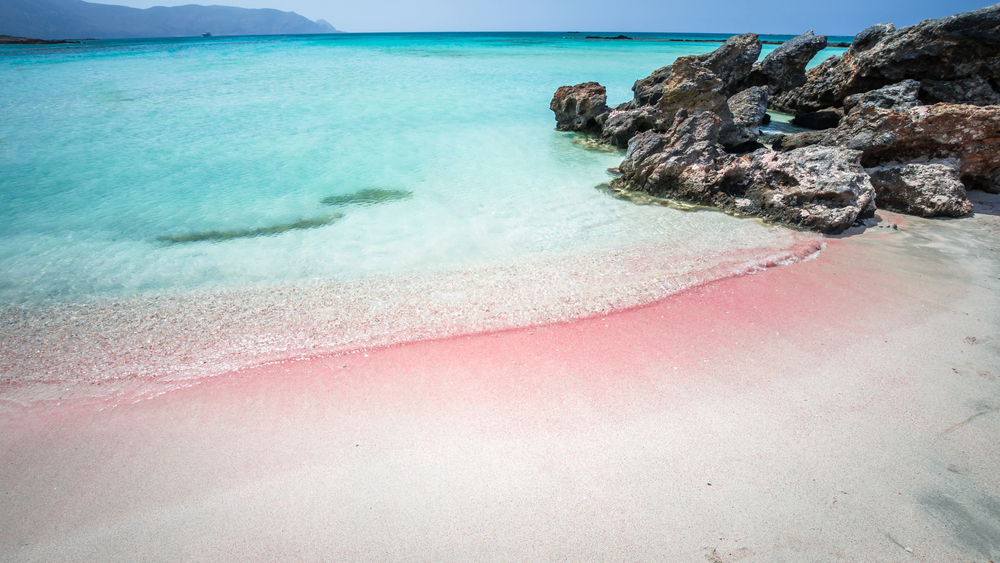
Pink sand beaches exist in maybe a dozen places on earth. Budelli has one of them.
The pink comes from crushed coral and microscopic shell fragments that have been ground down by centuries of waves into something that looks like it belongs in a fairy tale.
The beach sits within a national park, which means access is strictly controlled. No swimming, no taking sand samples, no camping overnight.
Just looking. Sometimes the most beautiful things demand that kind of restraint.
Capo Vaticano, Calabria

The southern tip of Calabria juts into the sea like Italy’s final statement before the water takes over completely, and Capo Vaticano serves as the dramatic punctuation mark—a series of beaches separated by granite cliffs that have been carved by wind and salt spray into sculptures no artist could have imagined (though many have certainly tried to replicate what they’ve seen here). The water around these beaches achieves that particular shade of blue-green that exists nowhere else in nature, the color of sea glass held up to sunlight, and it’s clear enough that you can watch fish swimming twenty feet below the surface as if you’re peering into an enormous aquarium.
Each beach along this stretch has its own personality: some are wide and sandy, others are intimate coves accessible only by scrambling over rocks, and a few can only be reached by boat, which means they remain empty even during peak season. But what they all share is that sense of being at the edge of something vast and ancient.
Standing here, you’re acutely aware that this same view has been stopping people in their tracks for thousands of years.
Marina di Pescoluse, Puglia

Puglia’s heel gets overlooked while everyone else crowds into Tuscany and the Amalfi Coast. Marina di Pescoluse benefits from this oversight.
Seven kilometers of white sand beach stretch along the Ionian Sea, earning it the nickname “Maldives of Salento.”
The comparison isn’t entirely accurate, but it’s not entirely wrong either. The water here achieves a clarity and color that rivals any tropical destination, without requiring a twenty-hour flight to reach.
Isola Bella beach, Sicily

Sicily’s eastern coast hides this small pebble beach behind Isola Bella, a nature reserve connected to the mainland by a narrow strip of sand that disappears at high tide (which creates the peculiar and delightful experience of watching an island become a peninsula and then transform back into an island again, depending on when you happen to be paying attention). The beach sits in a protected cove where the water stays calm even when the rest of the Mediterranean grows restless, and the clarity here is so remarkable that snorkeling feels almost redundant—you can see everything from the surface.
The surrounding cliffs are covered in Mediterranean vegetation that releases the scent of wild herbs into the air, creating an olfactory backdrop that somehow makes the visual beauty even more intense. And because access requires a short hike through the nature reserve, the beach never feels crowded, even during peak season.
The effort required to get here ensures that everyone who arrives genuinely wants to be there.
Cala Goloritzé, Sardinia

Sardinia saves its most dramatic scenery for those willing to earn it. Cala Goloritzé requires either a boat trip or a hiking trail that descends through limestone cliffs for about an hour.
The beach sits at the bottom of a natural amphitheater of white rock.
A 470-foot limestone spire rises directly from the beach like an exclamation point. The water here is so clear it’s almost absurd—you can spot sea urchins on the bottom in twenty feet of water.
Sometimes nature just shows off.
San Vito Lo Capo, Sicily

Northwestern Sicily’s answer to Caribbean beaches delivers three kilometers of white sand that feels imported from somewhere much more tropical (though the medieval watchtower at one end and the dramatic mountain backdrop quickly remind you that this is distinctly Mediterranean). The beach curves in a perfect arc between two rocky headlands, creating a natural harbor where the water stays calm and assumes that particular shade of turquoise that makes photographers slightly obsessive about capturing the exact color.
The town behind the beach maintains the relaxed pace of a place that knows it doesn’t need to try too hard—the setting does most of the work. And the local specialty is couscous, a reminder of Sicily’s complex history and its proximity to North Africa.
So you can spend the morning swimming in water that rivals any tropical paradise, then spend the evening eating North African-influenced cuisine while watching the sun set behind mountains that belong distinctly to the Mediterranean.
Spiaggia del Principe, Sardinia

The Costa Smeralda was designed for people with serious money, but Spiaggia del Principe remains democratic in the way that truly beautiful places often are. The beach sits between granite boulders that have been sculpted by wind into smooth, organic shapes.
Pink granite meets white sand meets emerald water.
The name comes from Prince Karim Aga Khan IV, who supposedly declared this his favorite beach on the entire Costa Smeralda. When someone who can afford to beach-hop anywhere in the world picks a favorite, that recommendation carries weight.
Spiaggia delle Due Sorelle, Marche

The Adriatic coast doesn’t get the attention that Italy’s western shores command, but the Two Sisters beach proves that oversight is everyone else’s loss (and your gain, assuming you’re willing to venture beyond the well-worn path of tourist hotspots). The beach takes its name from two towering sea stacks that rise from the water like ancient sentinels, creating a natural gateway between the open sea and this hidden cove of white pebbles and impossibly clear water.
Access requires a boat ride from Sirolo or a challenging hike along coastal paths that demand both decent physical condition and a genuine commitment to reaching something special. But the effort pays dividends in the form of a beach that feels virtually untouched, where the water is so transparent you can count pebbles on the bottom fifteen feet down, and where the dramatic limestone cliffs create a sense of complete seclusion.
The Adriatic here achieves colors that rival its more famous Mediterranean cousins, but with a pristine quality that comes from being just difficult enough to reach that it never gets overwhelmed.
Cala Brandinchi, Sardinia

Northeastern Sardinia delivers this stretch of fine white sand that locals call “Little Tahiti.” The nickname captures something essential about the water color here—a blue so vivid it seems enhanced.
Behind the beach, a pine forest provides natural shade and the scent of Mediterranean vegetation.
The sand stays cool even in peak summer heat, and the water remains shallow for quite a distance offshore. Sometimes the most beautiful places are also the most comfortable ones.
Where beauty meets the sea
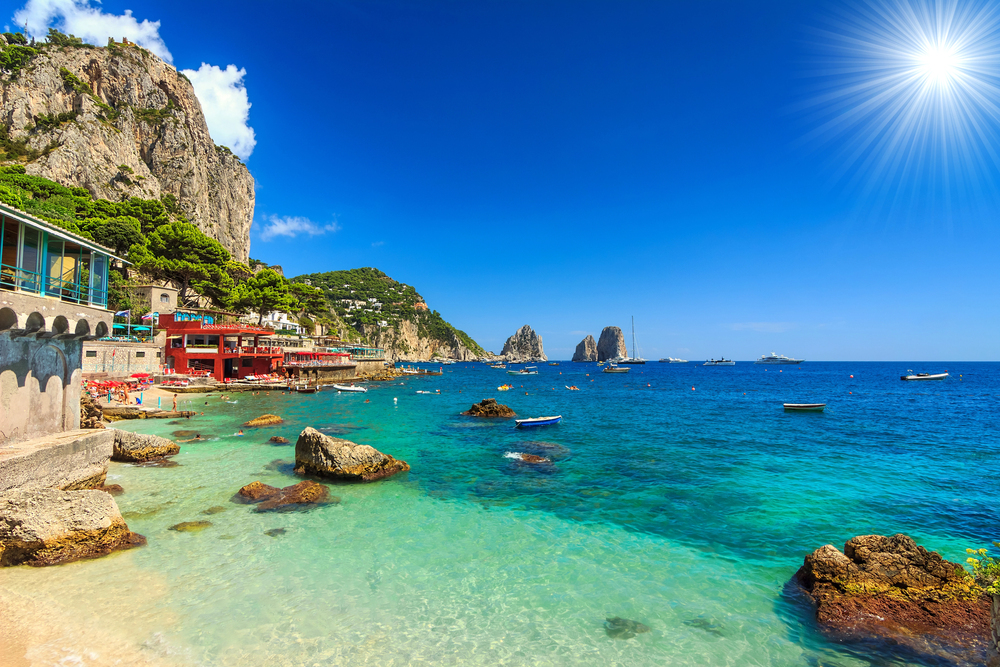
These beaches represent something more valuable than just scenic coastline. They’re proof that Italy’s genius extends beyond art galleries and ancient monuments into the realm of pure natural beauty.
Each one offers a different conversation between land and sea, between human history and geological time. And the best part might be that discovering them requires exactly the kind of wandering and willingness to venture off the obvious path that makes any trip to Italy memorable in the first place.
So pack accordingly—and remember that the most stunning places often reward those who arrive with patience, comfortable shoes, and the understanding that some destinations are worth whatever effort they demand.
More from Travel Pug

- Underrated Italian Towns That Beat the Tourist Crowds
- Las Vegas Tourist Traps to Skip
- Prettiest Towns in Every US State
- 18 passport-free countries for Americans
- Signs Your Cruise Is Not Worth The Cost
Like Travel Pug’s content? Follow us on MSN.