

There’s a predictable economic logic to bad food near famous places. The landmark brings the foot traffic, the foot traffic brings the hunger, and the hunger — arriving right there, in that location, after a long morning of walking — makes the calculation easy: charge twice what the food is worth, because where else are they going to go? The remarkable part isn’t that this happens. It’s how consistently it happens, and how reliably travelers walk into these restaurants despite every warning sign being clearly visible from the door.
What follows is a tour through some of the most reliably disappointing restaurant experiences attached to the world’s most famous attractions — along with a general theory of why the same forces produce the same results across continents, decades, and cuisines.
Fisherman’s Wharf, San Francisco

Fisherman’s Wharf holds the distinction of being the world’s most reviewed tourist trap, with more TripAdvisor mentions of the phrase “tourist trap” than any other attraction globally — over a thousand documented uses in reviews.
The restaurant strip along the waterfront charges premium San Francisco prices for seafood that local food critics and residents universally avoid, served in dining rooms oriented entirely around tables of out-of-towners who came for the sea lions and stayed for the $28 clam chowder in a sourdough round.
The views of the bay are real. Everything else about the dining experience is calibrated to extract money from people who have already committed to being in the most tourist-dense neighborhood in California.
Times Square, New York City

Times Square generates enormous foot traffic and enormous restaurant revenue, almost none of which is associated with good food. The Bubba Gump Shrimp Company operates here as a flagship example: themed, aggressively branded, staffed by servers in costume, and charging Manhattan prices for seafood that tastes like it arrived frozen from a distribution center before the theming was applied.
The entire Times Square dining zone functions as an elevated food court where location is the product and the actual food is largely beside the point. New Yorkers do not eat in Times Square if they can avoid it.
Near the Colosseum, Rome

The streets immediately surrounding the Colosseum are well-documented among frequent Rome visitors as some of the worst-value dining in Italy. One spot near the Castel Sant’Angelo gained international attention for presenting tourists with inflated bills and opaque service charges that added amounts not clearly disclosed at ordering.
The pattern repeats along Via Sacra and in the lanes between the Forum and the Palatine Hill: restaurants with aggressive greeters at the door, laminated multi-language menus featuring photographs of the dishes, and pasta at prices that would be difficult to justify even in more expensive parts of the city.
Near the Eiffel Tower, Paris
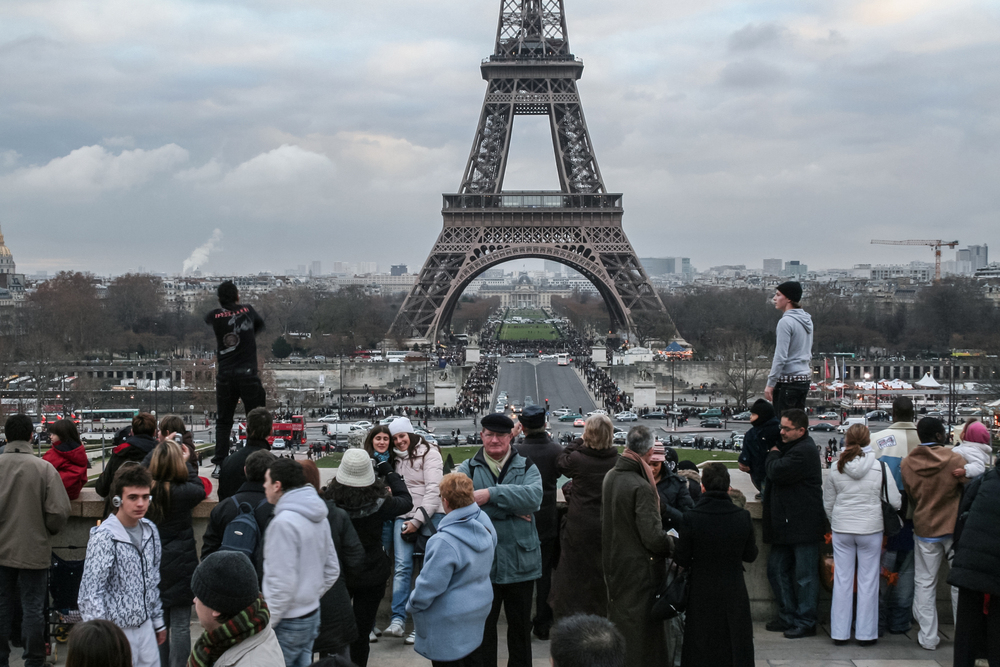
Paris is one of the world’s great food cities, and the restaurants within visual range of the Eiffel Tower are an argument for that claim’s limits. The Champ de Mars area and the Trocadéro plaza generate enough tourist traffic that the surrounding establishments have learned they don’t need to serve good food — they need only to serve food to people who are hungry after climbing to the tower’s second floor or waiting in the security line.
Croque monsieurs that would embarrass a French school cafeteria appear on menus at Rive Gauche bistro prices, and the word “authentic” appears prominently in the window of establishments whose menus have never been near authentic in any technical sense.
Covent Garden, London

Covent Garden is one of London’s most visited entertainment districts, and the restaurants packed into its piazza and surrounding streets represent the capital’s densest concentration of mediocrity per square meter.
The piazza itself commands premium rents that restaurants pass directly to customers in the form of prices that exceed quality by a factor that locals find embarrassing. Most London residents direct visitors firmly elsewhere — Soho, Clerkenwell, Borough Market — and treat Covent Garden dining as a last resort scenario reserved for travelers who arrived without a plan.
Temple Bar, Dublin

Temple Bar markets itself as Dublin’s cultural quarter and delivers something closer to a themed drinking district where food is an afterthought. Reviews regularly describe it as “the tourist trap to end all tourist traps,” and the Guinness poured in most Temple Bar establishments is consistently criticized as inferior to what’s available in any neighborhood pub five minutes’ walk away.
The district’s landlord model — extremely high rents for heritage buildings — guarantees that any establishment operating there must charge tourist-zone prices to survive, regardless of what’s actually on the menu.
The Champs-Élysées, Paris

The most famous avenue in France is lined with global luxury boutiques at the high end and overpriced café-restaurants at every other address. The establishments along the Champs-Élysées have long operated on the logic that the address justifies the premium, which it does for some things — the Apple Store, the Louis Vuitton flagship — and most definitively does not for sandwiches and café au lait at roughly three times the price available two blocks away on a side street.
Parisian residents use the Champs-Élysées for shopping and essentially never for eating.
Pier 39 Area, San Francisco

Pier 39 operates as a shopping and entertainment pier attached to the Fisherman’s Wharf tourist zone, and the restaurants along its boardwalk are the logical extension of the Wharf’s approach: spectacular views of the bay and Alcatraz, prices calibrated for visitors who won’t return, and menus designed around what tourists expect San Francisco food to look like rather than what San Francisco food actually is.
The California Dungeness crab — a genuinely excellent ingredient when prepared simply and fresh — tends to arrive here in preparations that manage to make it taste like it came from a national chain.
Near Prague’s Old Town Square

Prague’s Royal Route — the tourist corridor from the castle through the Old Town Square to the Charles Bridge — is lined with restaurants that employ outdoor staff to intercept passing visitors and extend laminated menus with photographs of goulash and svíčková. Every major travel forum covering Central Europe includes warnings about this area, where the food is described as overpriced relative to what’s available in Prague’s residential neighborhoods at a fraction of the cost. Czech cuisine done well is genuinely good.
The version served along the Royal Route is rarely the real thing.
Hofbräuhaus, Munich

The Hofbräuhaus is among Germany’s most visited restaurants and one of its most reliably criticized for what it delivers versus what it charges. The beer hall experience — long communal tables, liter steins, oompah band — is real enough as an atmosphere, but the food draws consistent complaints about long waits, indifferent service, and prices that exceed what comparable Bavarian cooking costs in the neighborhoods around the Viktualienmarkt or anywhere outside the tourist center.
One TripAdvisor reviewer’s assessment — summarized as expensive food combined with a long wait — repeats across hundreds of similar assessments.
Near the Sagrada Família, Barcelona

The Gaudí landmarks in Barcelona command enough tourist density that the surrounding streets have developed their own ecosystem of tourist-facing restaurants.
Near the Sagrada Família, a neighborhood that was historically working-class Eixample has seen its immediate surroundings colonized by establishments that charge old-city-center prices for food of significantly lower quality, relying on the assumption that visitors arriving from the Gaudí sites are hungry, tired, and unlikely to walk 15 minutes to find better options.
Stroget Restaurants, Copenhagen

Copenhagen’s Strøget pedestrian shopping street is the busiest shopping district in Scandinavia and home to a dining scene that leverages Scandinavian prices while delivering distinctly average results.
Copenhagen is, by most measures, the most expensive restaurant city in Northern Europe, and the establishments on and around Strøget add a location premium on top of those already high baseline prices for food that bears no relationship to the genuinely innovative Nordic cooking for which the city has earned a serious international reputation.
Niagara Falls Clifton Hill, Ontario

The tourist strip running back from the falls in Niagara Falls, Ontario — centered on Clifton Hill — offers one of the most extraordinary concentrations of themed restaurant mediocrity in North America. Every franchise concept designed for maximum family throughput appears within two blocks, charging prices inflated by the proximity to one of the continent’s most visited natural wonders.
The falls themselves are genuinely spectacular; the dining infrastructure surrounding them appears to have been designed by someone who saw Atlantic City once and thought the only thing missing was more neon.
Near the Trevi Fountain, Rome
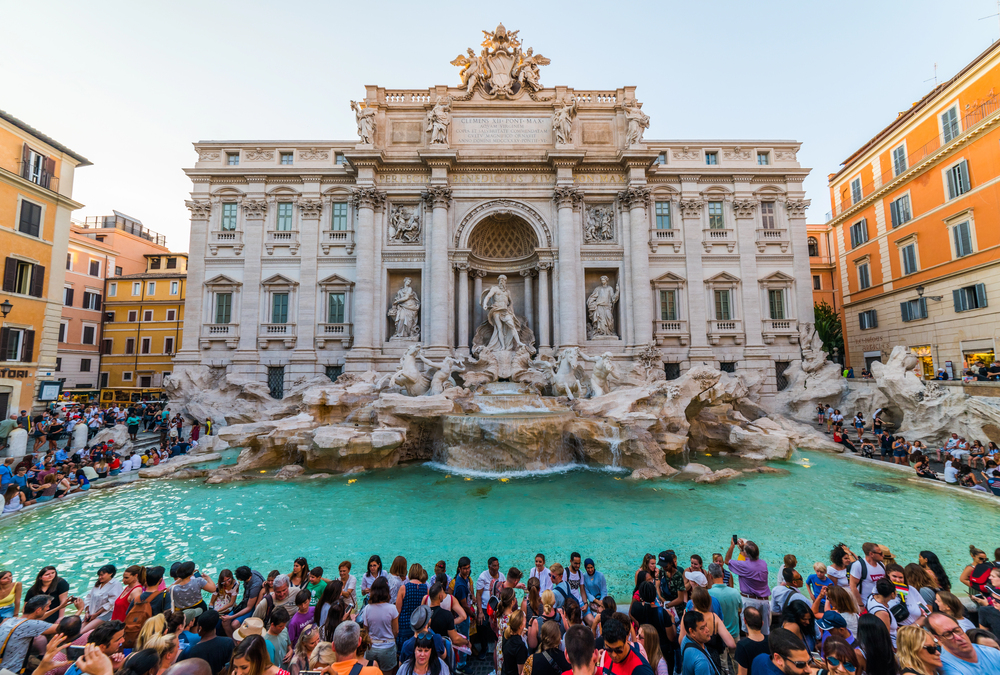
The Trevi Fountain is one of the most visited single spots in Rome, and the restaurants within a two-minute walk charge accordingly. Gelato in the immediate Trevi zone costs consistently more than gelato one or two streets removed, and the restaurants along the lanes approaching the fountain operate with full knowledge that most of their customers are experiencing peak tourist-moment exhaustion and will order without reading the fine print on the pricing.
This is the area of Rome where the “coperto” — a per-head cover charge — tends to appear most aggressively on the final bill.
Universal CityWalk, Los Angeles

CityWalk, the entertainment mall connecting the Universal Studios Hollywood parking structure to the theme park entrance, houses a range of restaurants that operate on theme park logic: a captive audience with elevated price expectations who have already demonstrated willingness to spend on entertainment.
The food quality across CityWalk’s restaurant lineup runs from chain standard to slightly below, and the prices run from slightly above chain standard to considerably above. The reasoning — that you’re paying for the experience of eating in a movie-set streetscape — is internally coherent and externally unconvincing once the food arrives.
Near Westminster Bridge, London

The south end of Westminster Bridge and the Borough South Bank, particularly in the blocks immediately adjacent to the London Eye, host some of the river’s most photogenic and least satisfying restaurant options.
The London Eye itself has an associated dining pod experience that charges considerably for the privilege of eating a set menu while rotating over the Thames, but the café-restaurants at ground level near the attraction trade in food that suggests the landmark proximity has been calculated to neutralize any pressure on quality.
Near Sacré-Cœur, Paris

Montmartre is one of the most atmospheric neighborhoods in Paris, and the square at the foot of the Sacré-Cœur basilica manages to extract the atmosphere while leaving the quality behind.
The restaurants ringing Place du Tertre — where portrait artists work and tourists cluster — charge prices calibrated for a world-famous Parisian landmark while serving fixed-price menus that would not survive one block farther into the residential village streets behind the hill, where actual Montmartrois go to eat.
Near the Spanish Steps, Rome

The area around the Spanish Steps in Rome runs on reputation. The addresses at the top of Rome’s most fashionable shopping district command rents that only tourist-facing businesses can afford to pay, and the bars and restaurants that survive there do so by charging accordingly for coffee that costs a third of the price six streets away.
A caffè consumed standing at the bar is a Roman tradition; the same drink ordered while seated in view of the Steps triggers table service pricing that can be five times higher, with the charge sometimes listed in print too small to read without requesting a second pair of glasses.
Near the Parthenon, Athens

The Acropolis draws millions of visitors annually, and the Monastiraki and Plaka neighborhoods immediately below it have developed tourist dining infrastructure that operates on the certainty of a captive hungry audience.
The moussaka served at restaurants with Acropolis view terraces is among the most expensive and least authentic in Athens. The actual neighborhood where Athenians eat — slightly farther from the tourist core, in Pangrati, Kypseli, or Exarcheia — charges a fraction of the price for food made with more care, but requires a willingness to walk more than five minutes from the main landmark.
Covent Garden Piazza Restaurants, London

The Covent Garden piazza warrants its own separate mention from the broader neighborhood because the restaurants inside the covered market structure itself operate at the highest price-to-quality ratio in the area. The visual spectacle — Punch and Judy puppets, street entertainers, Victorian iron architecture — is real and enjoyable.
The food served in the restaurants beneath it trades on the same spectacle, charging for the experience of the place rather than the quality of what’s on the plate.
Near Checkpoint Charlie, Berlin

Checkpoint Charlie, the former Cold War crossing point between East and West Berlin, has been commercialized into a tourist experience that includes actors in period uniforms for photographs and a ring of restaurants offering American-style burgers, schnitzel, and currywurst at prices considerably higher than the same food costs anywhere else in central Berlin. Kreuzberg, a fifteen-minute walk away, offers significantly better examples of Berlin’s actual food culture at a fraction of the cost — but requires willingness to leave the former border crossing behind.
The Venetian Restaurant Strip Near St. Mark’s Square

Venice overall operates on tourist pricing across most of its restaurant inventory, but the establishments within direct sight of St. Mark’s Square represents the apex of the city’s price-to-quality inversion.
A café in the piazza itself charges what is likely the highest price for a single espresso in Western Europe, and the seafood risotto available in the surrounding streets costs two to three times what a comparable dish costs in the Cannaregio or Castello neighborhoods on the other side of the city, which most visitors never reach because the area around the square and Rialto market absorbs their full available time.
Universal Orlando CityWalk

The Florida counterpart to Los Angeles’ CityWalk operates on identical logic: a retail and restaurant strip connecting the resort parking structures to the theme park entrance, calibrated for guests who have already cleared the financial threshold of theme park admission and are operating under the assumption that elevated spending is the appropriate mode for the day.
The restaurant lineup rotates but maintains consistent characteristics: chain concepts, elevated-for-the-location pricing, and food quality that compares unfavorably with equivalent chains in any nearby shopping mall.
Near the Louvre, Paris

The immediate vicinity of the Louvre is dominated by cafés and brasseries that charge full arrondissement-premium prices for food aimed at museum visitors arriving hungry after queuing, which can take one to two hours in peak season. The Café Marly, inside the Louvre’s Richelieu wing, offers genuinely atmospheric seating in the museum’s courtyard arcades and charges accordingly — the experience of drinking coffee in a Pei pavilion is coherently priced.
The restaurants outside the Louvre’s main entrance on the Rue de Rivoli have the atmosphere without the coherence.
The Geography of Hungry Travelers

The pattern across every entry on this list is the same, and it makes the economics obvious once you see it clearly. Tourists arrive at a famous landmark, spend time there, generate an appetite, and then look around for somewhere to eat.
The places closest to the landmark have guaranteed foot traffic and low customer-return probability — visitors rarely stay in one city long enough to come back to a bad experience and avoid it next time. That combination — guaranteed demand, minimal repeat customer pressure — produces the only economic outcome it can: high prices and declining quality, maintained for as long as the landmark keeps sending people through the door.
The solution is almost always a ten-minute walk. No famous landmark in the world is so isolated that ten minutes in any direction away from it doesn’t reveal a neighborhood where people actually live and eat. That’s where the food is better, the prices are lower, and nobody is standing outside with a laminated menu photograph waving you in.
More from Travel Pug

- Underrated Italian Towns That Beat the Tourist Crowds
- Las Vegas Tourist Traps to Skip
- Prettiest Towns in Every US State
- 18 passport-free countries for Americans
- Signs Your Cruise Is Not Worth The Cost
Like Travel Pug’s content? Follow us on MSN.