

Hamburg’s culinary landscape tells the story of centuries-old maritime trade routes, where Hanseatic merchants brought exotic spices home to mingle with North Sea catches. This port city’s food scene stretches far beyond the hamburger’s contested origins, weaving together sailor’s sustenance, merchant wealth, and Nordic traditions into something distinctly its own.
Here are 16 essential foods that capture Hamburg’s authentic flavors, from dockside fish sandwiches to elegant lobster bisques that have graced patrician tables for generations.
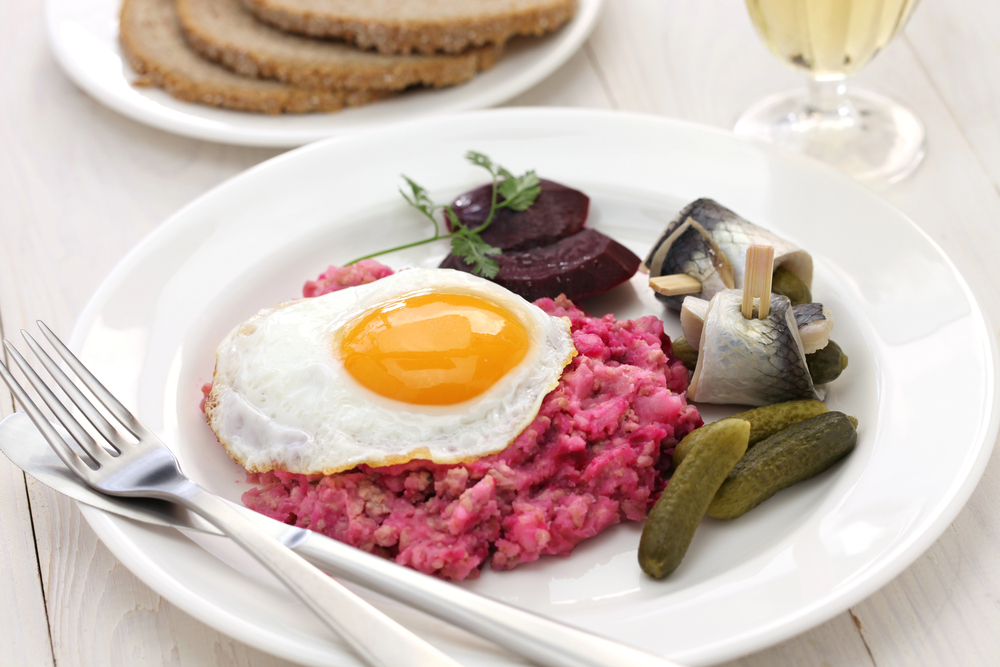
Labskaus
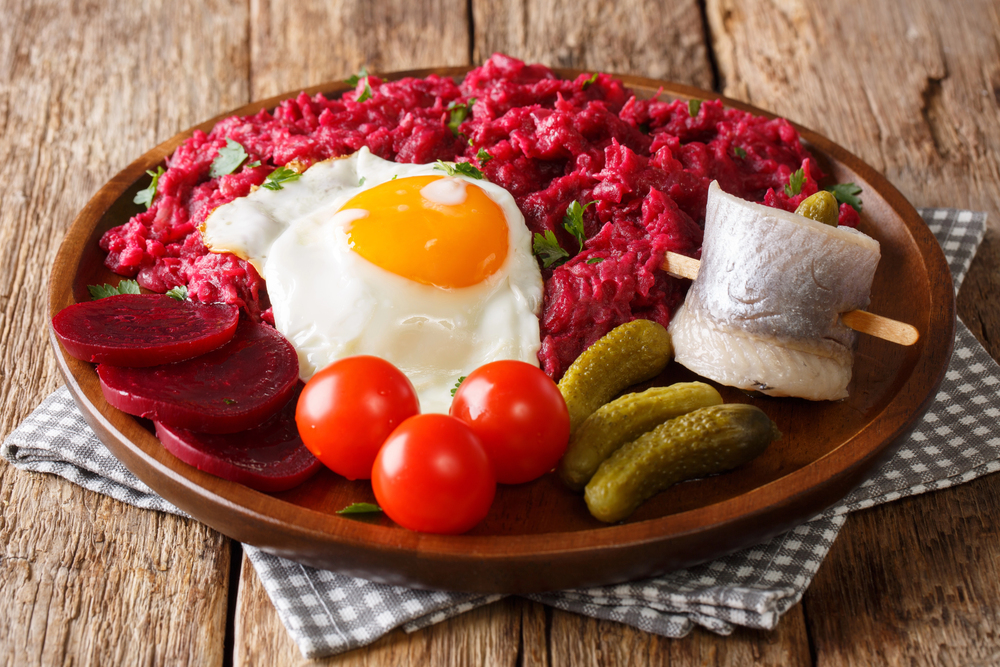
This traditional sailor dish comprises corned beef, mashed potatoes and onions, with pickled beetroot, pickled gherkin, herring and fried egg commonly served as sides. The bright pink color comes from the blending seeping into everything else.
Originally designed to sustain seafarers during long voyages, labskaus has evolved into Hamburg’s most recognizable comfort food. The Old Commercial Room claims to be a “Labskaus ambassador” and serves generous portions that could feed a crew.
Fischbrötchen
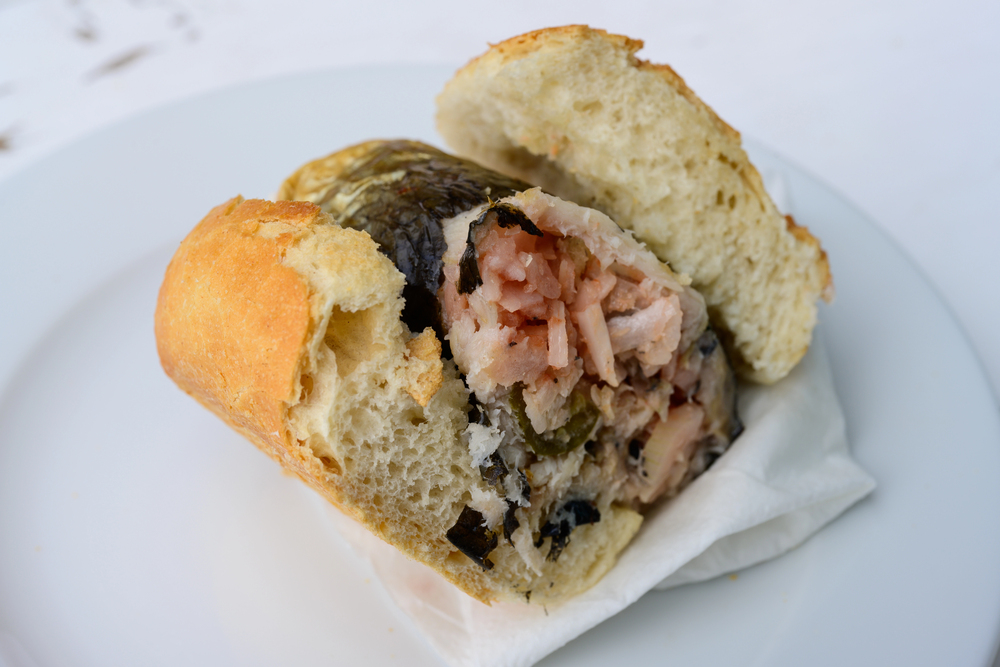
The omnipresent Fischbrötchen is a roll with raw or fried fish inside that is sold as street food. Usually featuring herring, these sandwiches appear at every corner near the harbor.
Simple. Direct. Perfect after a morning at the fish market when your stomach demands something substantial, but your schedule doesn’t allow for sitting down.
Finkenwerder scholle
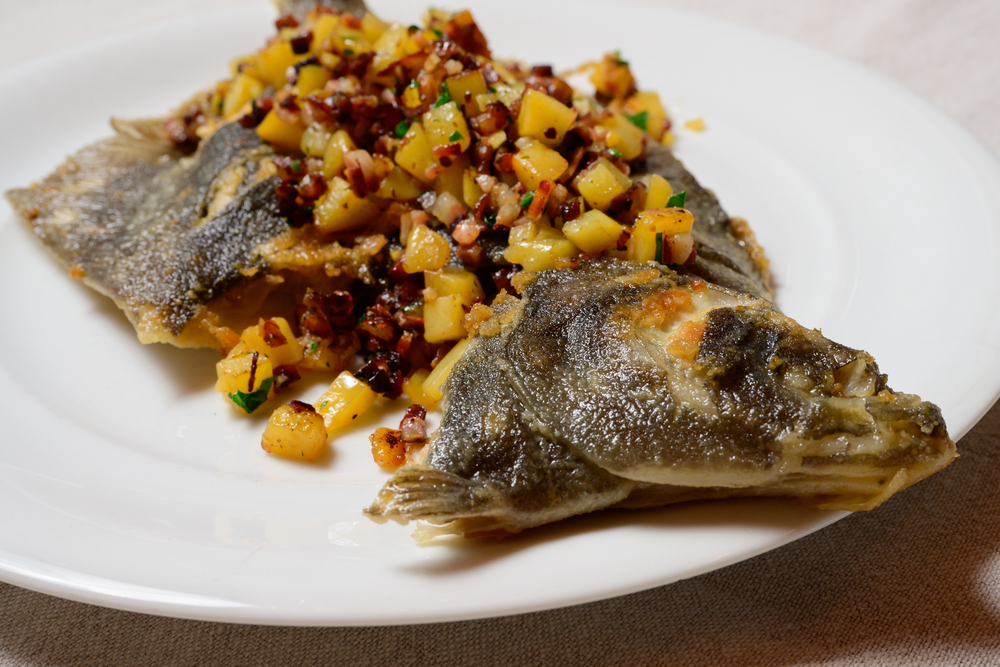
This traditional fish dish is named after a district of Hamburg that was once a fishing village. Plaice (scholle) is baked or pan-fried with bacon, onions and shrimp from the North Sea. The plaice is dredged in flour, fried and topped with diced bacon. It is served with fried potatoes.
The dish carries the name of Finkenwerder, where fishing boats once crowded the docks. Today, you’ll find restaurants throughout the district still preparing this specialty with the care it deserves.
Franzbrötchen
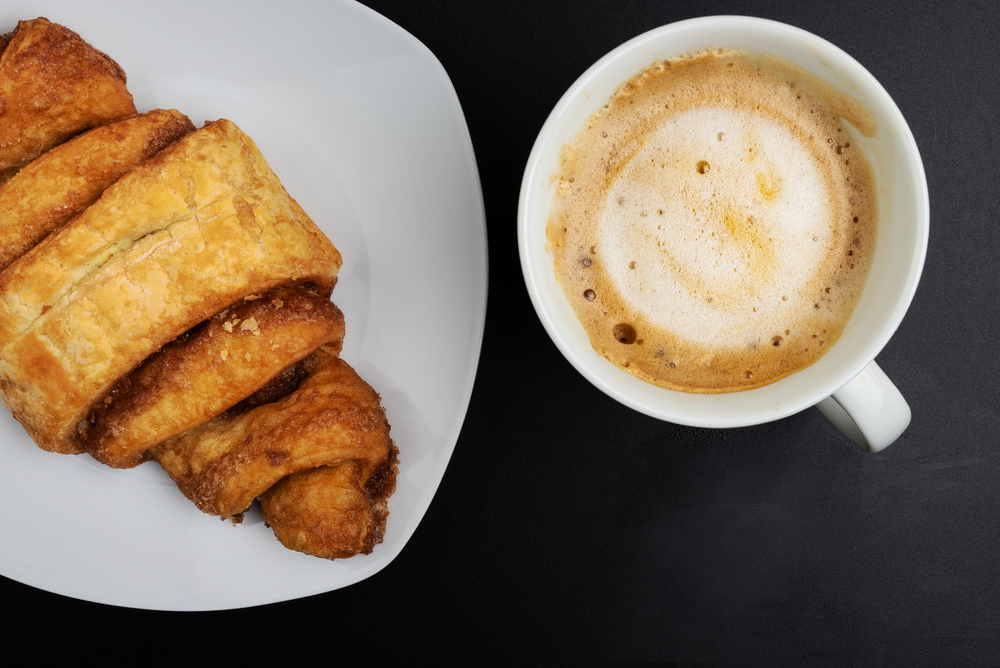
Franzbrötchen are also very popular: Despite the name containing the word Brötchen, it is not a roll but a kind of flaky pastry typical only for Hamburg and baked with much butter and cinnamon. The size often surprises first-timers.
As the story goes, their creation was inspired by the French croissant introduced in Hamburg during the occupation of Napoleon’s troops in the 19th century. Most bakeries now offer variations with chocolate, marzipan, or pumpkin seeds. The smell of butter and cinnamon wafting from bakery windows is enough to stop traffic.
Pannfisch
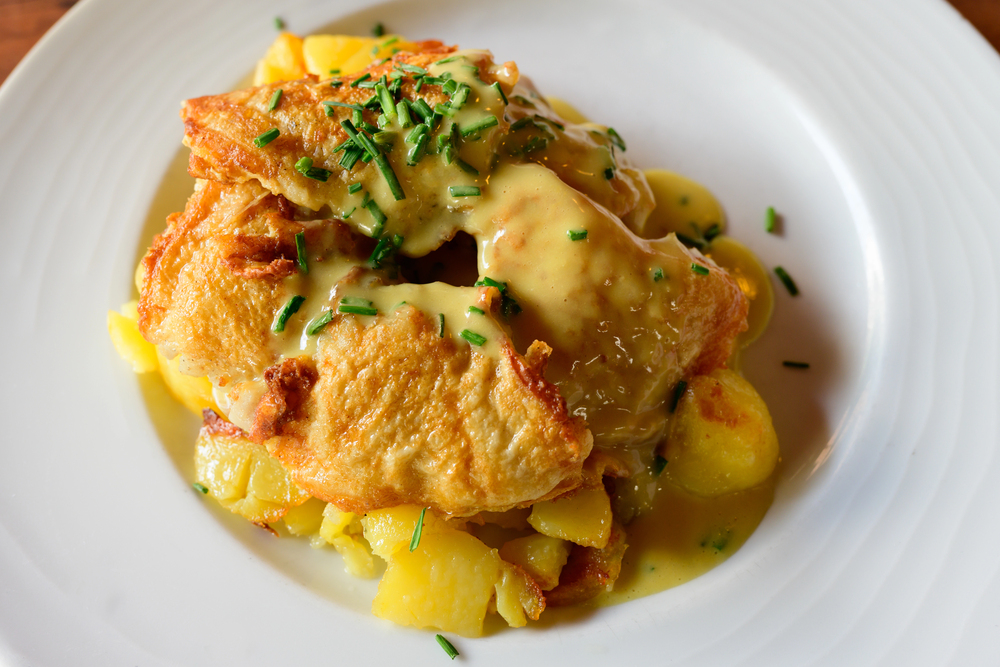
Pannfisch with baked potatoes, a dish that features fish leftovers in a mustard sauce, represents Hamburg’s practical approach to cuisine. What started as a way to use leftover fish has become a beloved specialty.
The fried or cooked fish pieces swim in that distinctive mustard sauce, served alongside crispy potatoes. Nothing fancy, but it hits differently when you’re sitting by the Elbe watching container ships navigate the harbor.
Hamburger aalsuppe
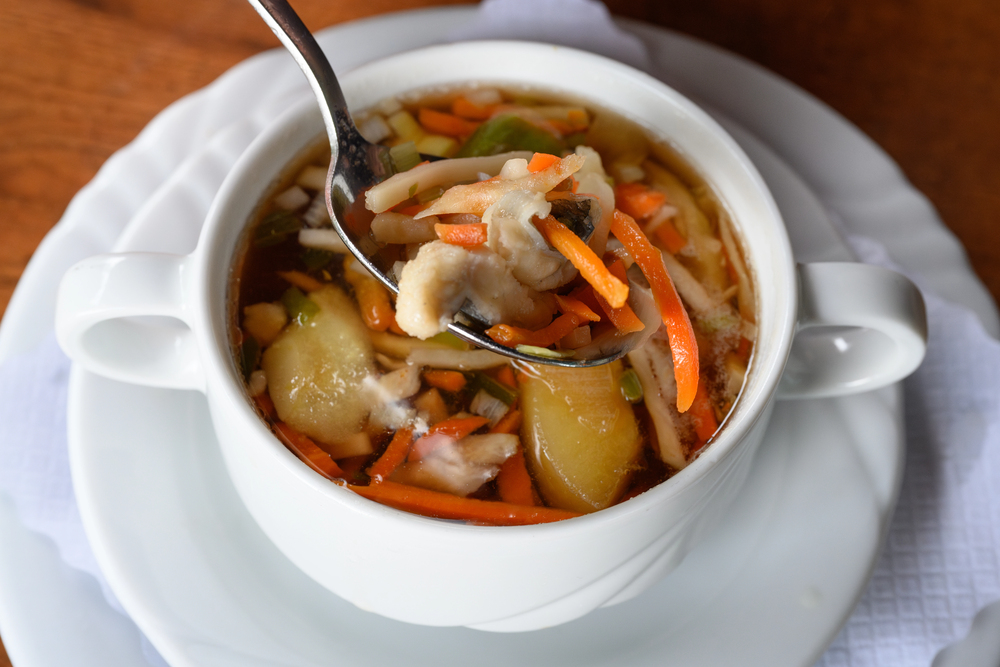
Don’t let the name fool you. Hamburger aalsuppe is a traditional soup that originally did not contain eel, but was instead made with leftover vegetables and a ham bone (what you would call zero-waste cooking). However, the dish has an unusual history, because, due to the similarity of the sound of ‘aol’ and ‘aal’ (eel), many people would ask where the eel was because they could not see it in their soup… So, in the late 18th century, some clever cooks decided to add it in and double the price of this humble soup.
The broth contains ham, vinegar, and sugar, various vegetables and fruits (carrots, leeks, apples, pears), meatballs, and aromatic herbs (thyme, coriander, marjoram, and sage). Sweet and sour flavors dance together in ways that shouldn’t work but absolutely do.
Hamburger hummersuppe
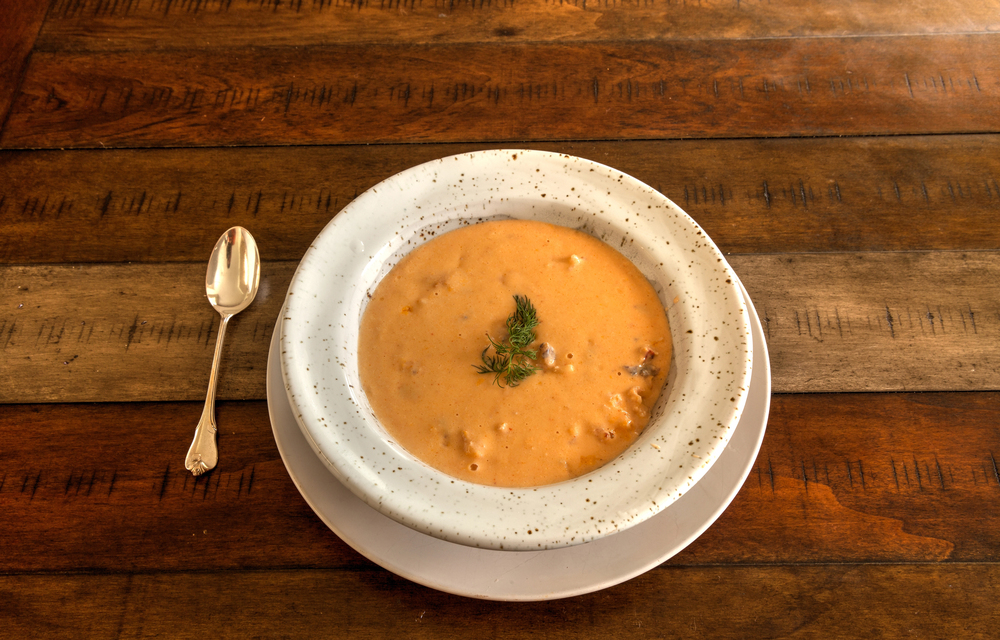
One of the most popular soups in Hamburg is the creamy lobster soup called Hamburger Hummersuppe, which is served with a small amount of whipped cream and garnished with dill. This represents Hamburg’s finer dining traditions.
Sometimes with a dash of cognac for good measure. The Atlantic Restaurant at Hotel Atlantic Kempinski has kept this bisque on its menu for over a century, serving it with spectacular views of Aussenalster Lake.
Currywurst
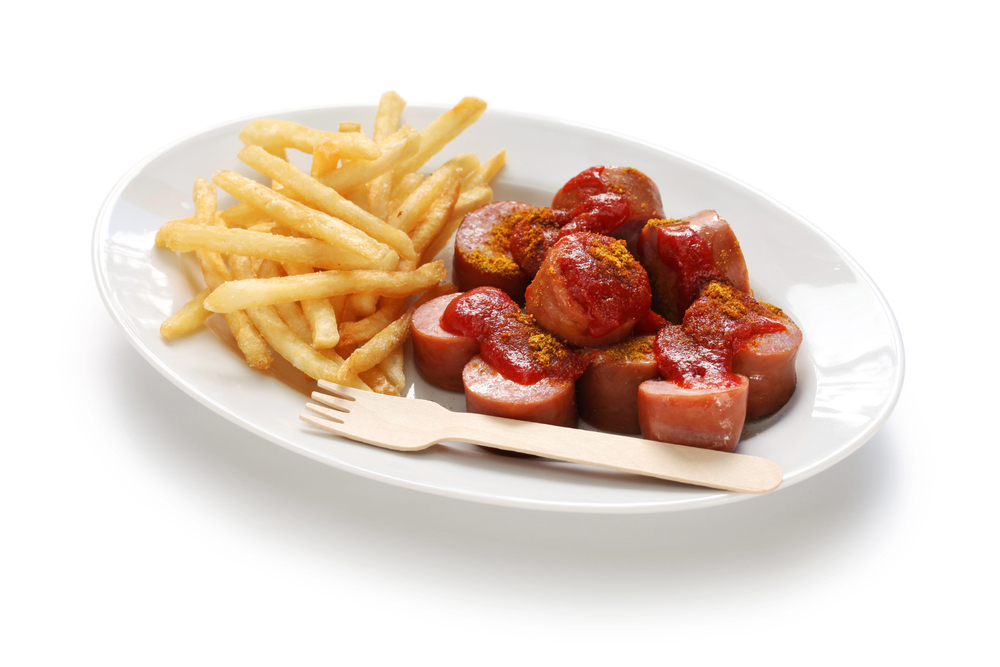
Currywurst, a beloved German street food, holds a special place in Hamburg’s vibrant culinary landscape. The combination of sliced bratwurst doused in curry-spiced ketchup might seem simple, but locals take their versions seriously.
Street vendors compete over sauce recipes and sausage quality. Imbiss bei Schorsch has been perfecting theirs for 50 years, serving it with potato salad that regulars swear by.
Rote grütze
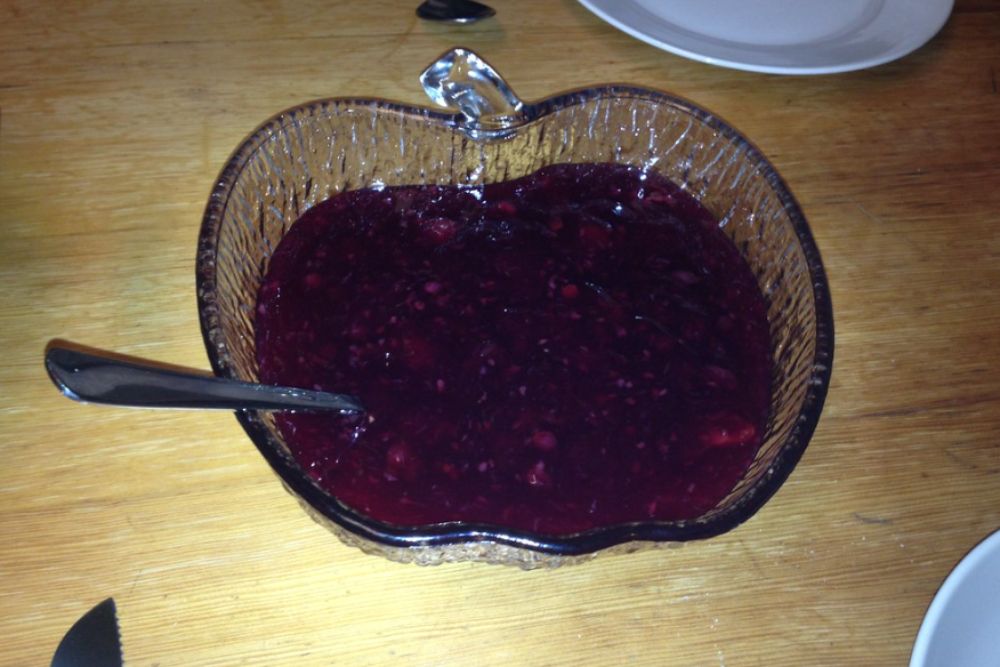
This mouth-watering rote grütze is cooked from red summer berries and served with milk, vanilla sauce, or ice cream. This dish was brought to the region by the Danes, but has become a staple of the North German cuisine.
The vibrant red pudding captures summer in a bowl:
- Cherries, raspberries, strawberries, blackcurrants
- Thickened to perfect consistency
- Served cold with cream cascading over the top
Perfect after dinner or even for breakfast, if you’re feeling rebellious.
Schwarzsauer
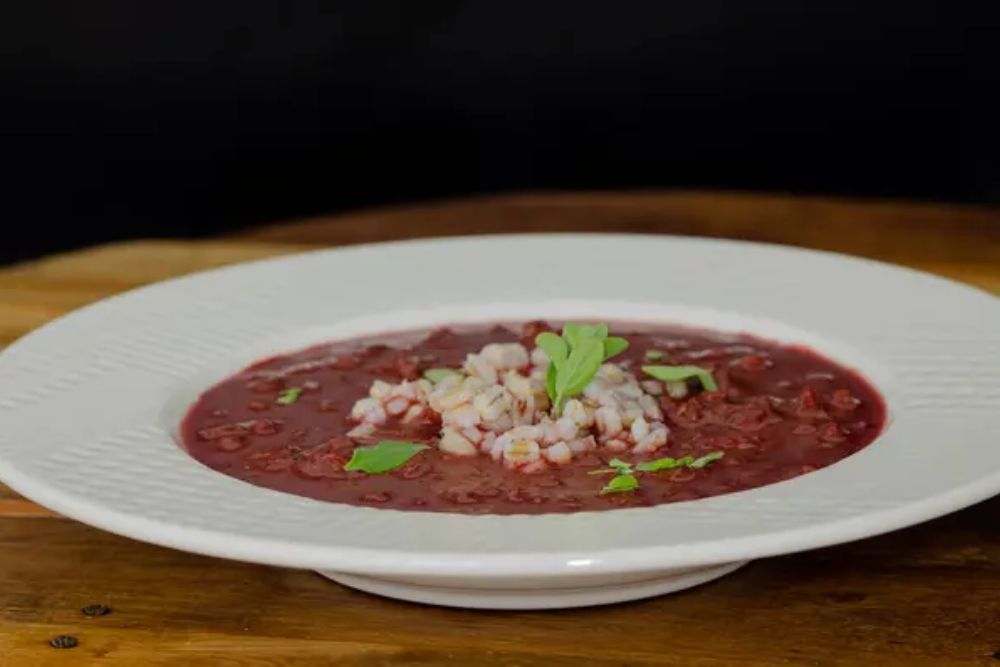
Schwarzsauer (a sour kind of blood soup) represents Hamburg’s more traditional side. This traditional German blood soup has its origins in the northern parts of the country and is typically associated with the Schleswig-Holstein region. It was mainly prepared during pig slaughter, when fresh blood was collected and cooked with pork, vinegar, onions, and spices such as bay leaves, peppercorns, and cloves.
Not for everyone, but those who appreciate it understand the deep connection to Hamburg’s agricultural past. Schwarzsauer is served with steamed potatoes.
Grünkohl
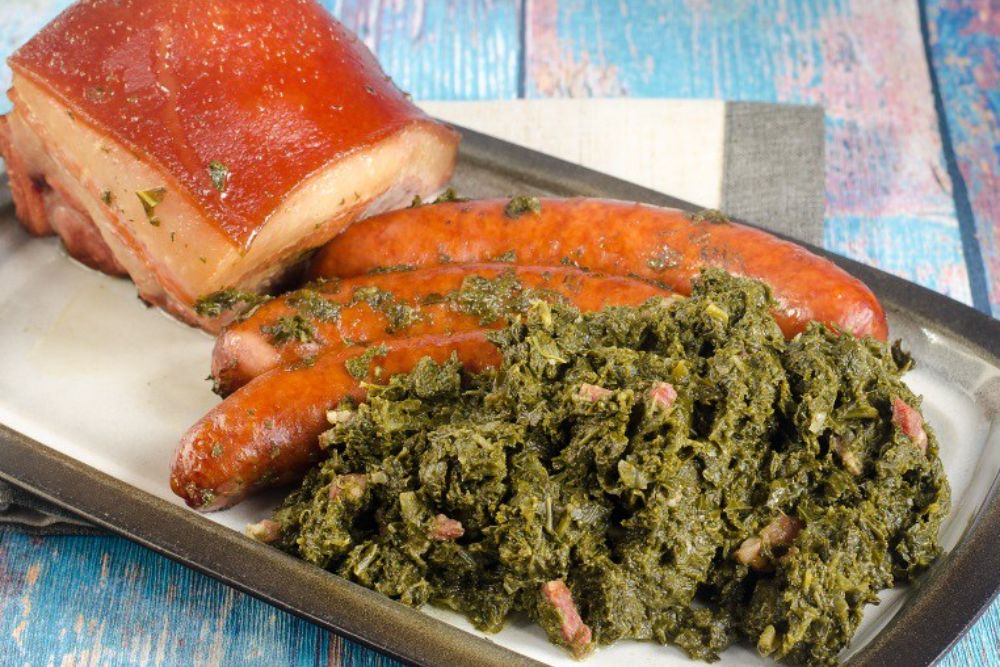
Grünkohl (kale) has become a trendy health food throughout Europe, but here in North Germany, it is prized as a winter delicacy. In Hamburg, kale is traditionally stewed for several hours and served with smoked pork, sausages, and potatoes.
But fear not; in true German fashion, this common health superfood is served in a manner that would make health gurus turn over. Here, the kale is stewed for hours before it is served with the smoky sides of pork, heaps of boiled or fried potatoes, and up to two types of sausage! Widely celebrated among locals, there are entire tours (kohlfahrt) dedicated to honoring the dish.
Brathering
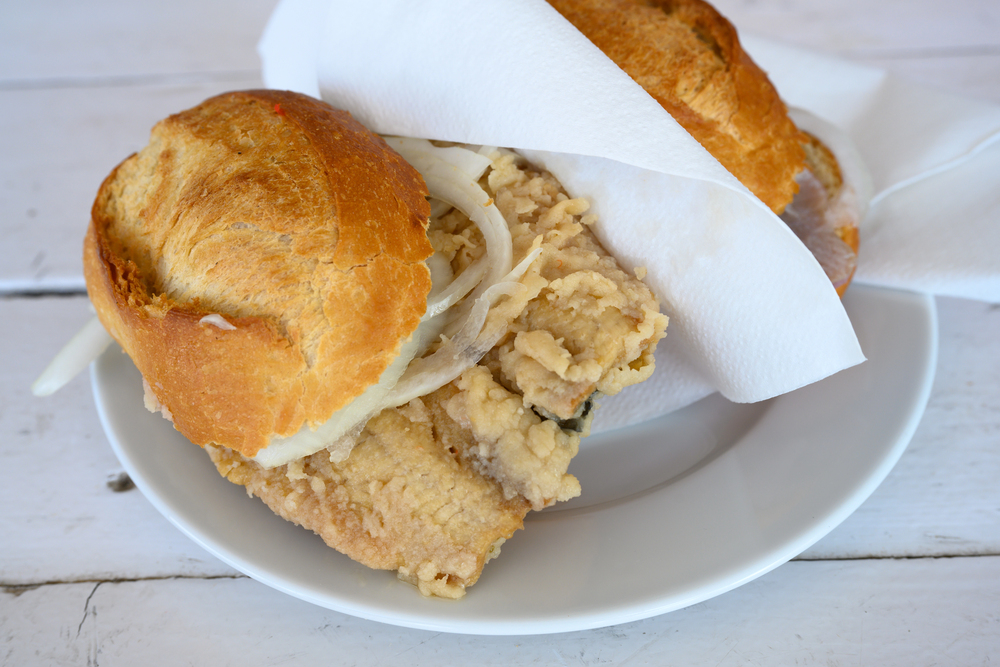
Brathering (fried herring) has been a staple of North German cuisine for centuries. The herring is either breaded or battered, fried, cooled, and served in a marinade that combines vinegar, onion, salt, spices, bay leaves, mustard seeds, and sugar.
Don’t worry about any bones: the marinade will dissolve them quickly. This makes it perfect harbor food, eaten standing up while watching the maritime bustle around you.
Traditional Hamburg apple pie
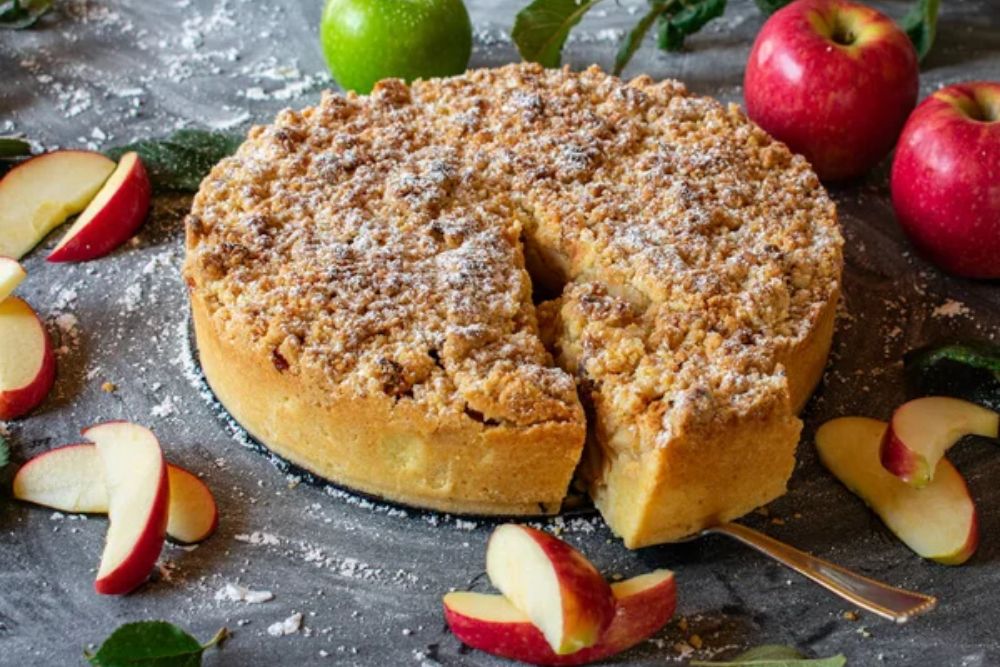
Another famous baked good for ‘coffee and cake’ is the traditional apple pie of Hamburg, which is prepared by pan-frying the apples and deglazing them with white wine before baking the actual cake. This technique creates layers of flavor that set it apart from standard apple desserts.
The white wine adds subtle complexity that pairs beautifully with afternoon coffee. Local pastry shops guard their exact methods jealously.
Braune kuchen
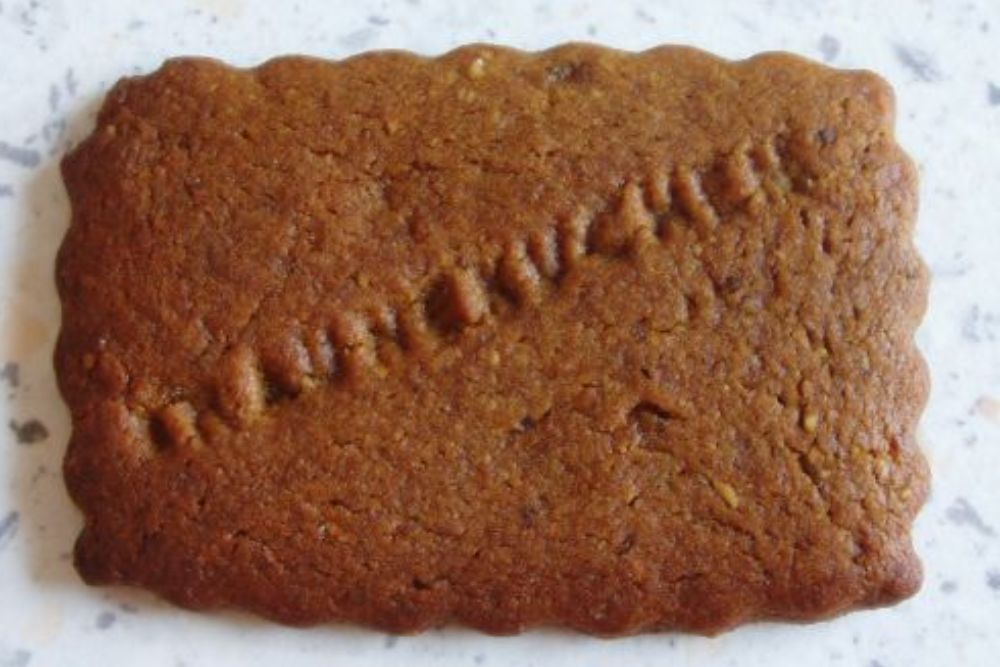
‘Braune Kuchen’ (lit.: brown cakes) are crisp rectangular biscuits baked with molasses and gingerbread spice that are based on a recipe developed back in 1782 from the Konditorei Kemm.
Still made to the original 18th-century recipe, these dark, spiced cookies carry centuries of Hamburg baking tradition. The molasses gives them a distinctive, deep flavor that coffee can’t improve upon but somehow makes better anyway.
Birnen, Bohnen und Speck
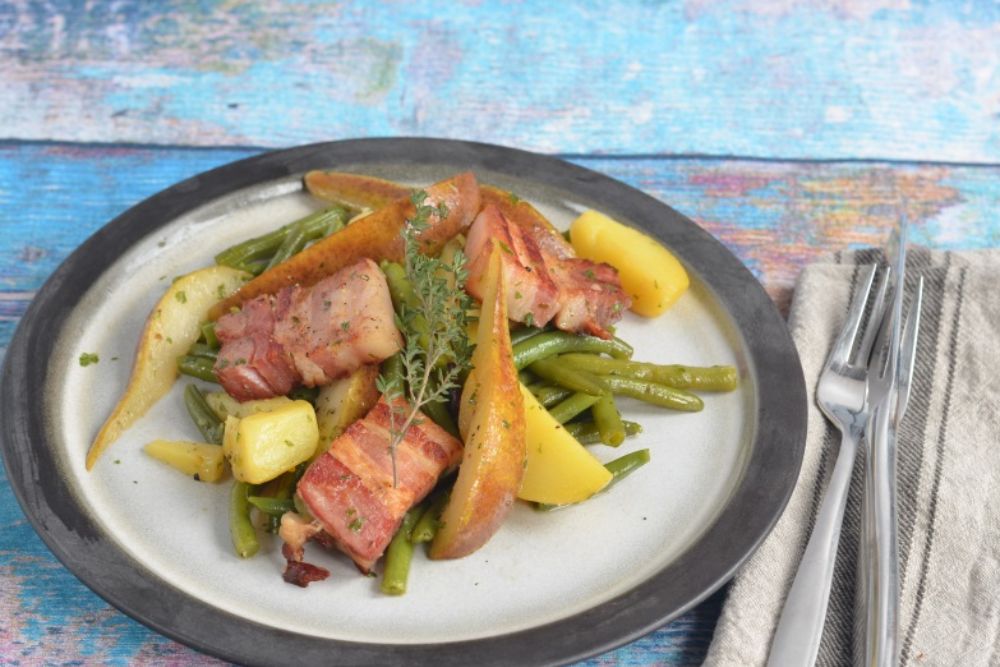
Birnen, Bohnen und Speck translates simply as pears, beans, and bacon, but the combination creates something greater than its parts. This autumn comfort food represents Hamburg’s practical approach to seasonal ingredients.
The sweet pears balance the salty bacon while green beans provide texture and color. Served hot, it warms you through the damp Hamburg winters.
Hamburger krabbensuppe
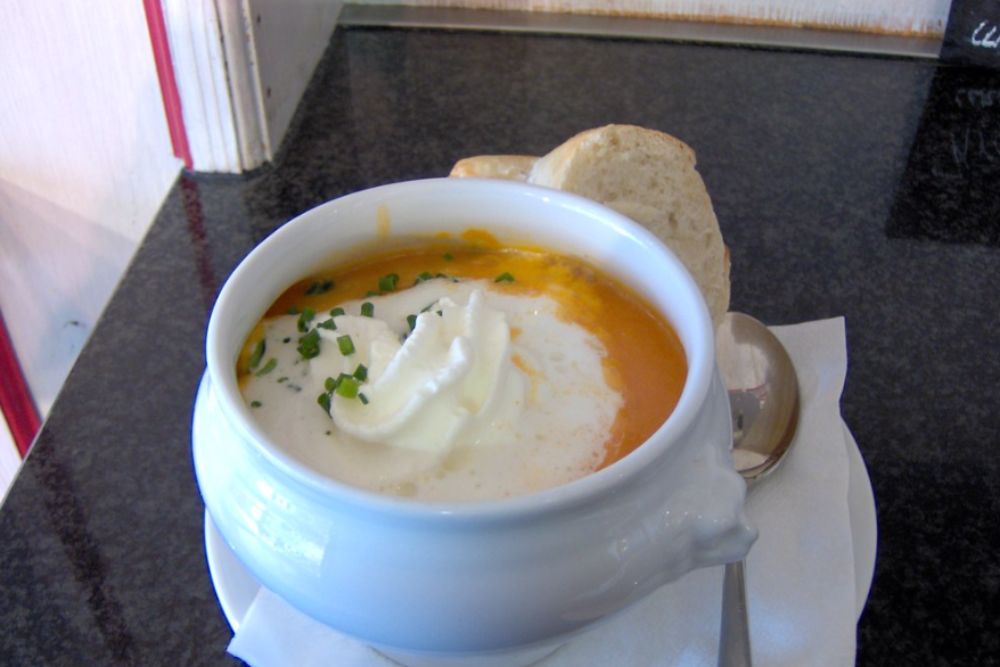
A variation of this soup is the small shrimp soup Hamburg style, called Hamburger Krabbensuppe. Adding a dash of Cognac to both variations is optional but very common. These tiny North Sea shrimp pack intense flavor into every spoonful.
Krabbentoast is popular either for breakfast or as a snack at lunchtime. But the soup version, rich with cream and dill, elevates these humble crustaceans to luxury status.
Harbor flavors await
Hamburg’s food scene continues evolving while honoring traditions that stretch back centuries. These 16 specialties offer entry points into a culture where maritime heritage meets modern innovation, where simple ingredients transform into memorable experiences through time-tested techniques and unwavering local pride.
More from Travel Pug

- Underrated Italian Towns That Beat the Tourist Crowds
- Las Vegas Tourist Traps to Skip
- Prettiest Towns in Every US State
- 18 passport-free countries for Americans
- Signs Your Cruise Is Not Worth The Cost
Like Travel Pug’s content? Follow us on MSN.