

America’s national parks get all the glory, and for good reason.
They’re spectacular, iconic, and frankly deserve every bit of praise thrown their way.
But here’s the thing: tucked away across the country are state parks so stunning, so vast, and so packed with natural wonders that they could easily hold their own against any federal heavyweight.
Some are bigger than multiple national parks combined.
Others boast features that make you wonder why they haven’t been elevated to national status already.
The difference often comes down to crowds and logistics.
While Yosemite and Yellowstone buckle under the weight of millions of visitors each summer, these state parks offer similar jaw-dropping scenery with a fraction of the hassle.
Here’s a closer look at the state parks that prove you don’t need a national designation to deliver an unforgettable outdoor experience.
Adirondack Park
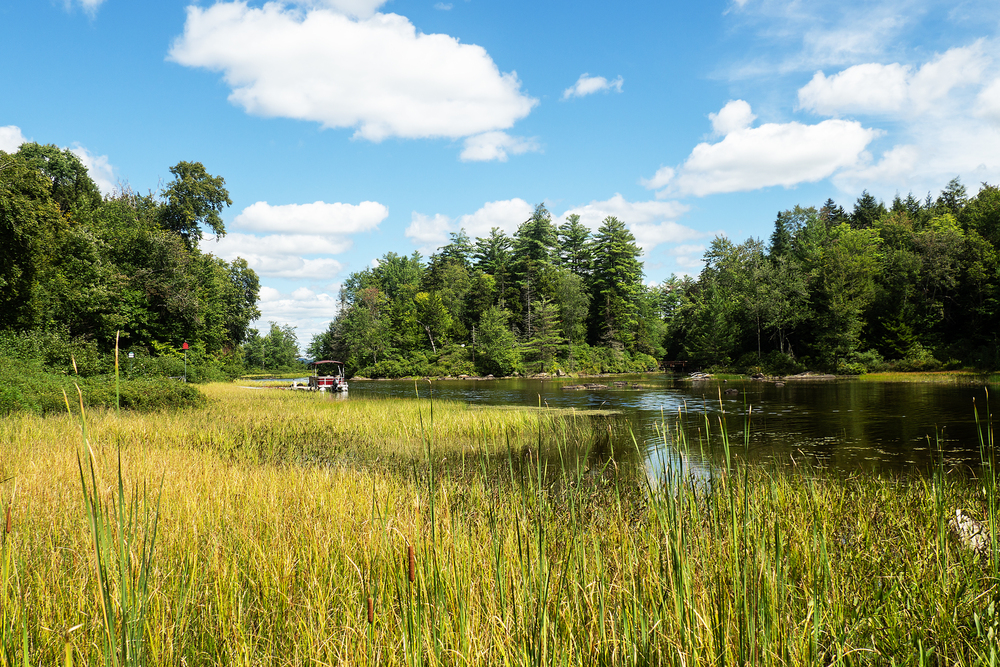
Let’s start with the heavyweight champion of state parks.
At six million acres, Adirondack Park in upstate New York isn’t just big—it’s incomprehensibly massive.
To put that in perspective, it’s larger than Yellowstone, Everglades, Glacier, and Grand Canyon national parks combined.
It spans roughly one-fifth of New York State and is about the same size as neighboring Vermont.
The park contains over 3,000 lakes, 30,000 miles of rivers and streams, and 46 peaks that soar above 4,000 feet.
Unlike traditional national parks, there’s no entrance gate, no admission fee, and it never closes.
About 130,000 people actually live within its boundaries in small towns scattered throughout.
What makes Adirondack Park particularly fascinating is its unique blend of public and private land.
Roughly half belongs to New York State and is constitutionally protected as ‘forever wild’ since 1894, while the rest remains privately owned.
This creates an unusual patchwork where conservation meets civilization.
Visitors can summit a High Peak in the morning and grab dinner in a cozy mountain town by evening.
The hiking alone rivals anything out West, with the 46 High Peaks drawing ambitious climbers, while more than 2,000 miles of trails accommodate every skill level.
In winter, the park transforms into a snowy playground with world-class skiing, snowmobiling, and ice climbing opportunities.
Custer State Park
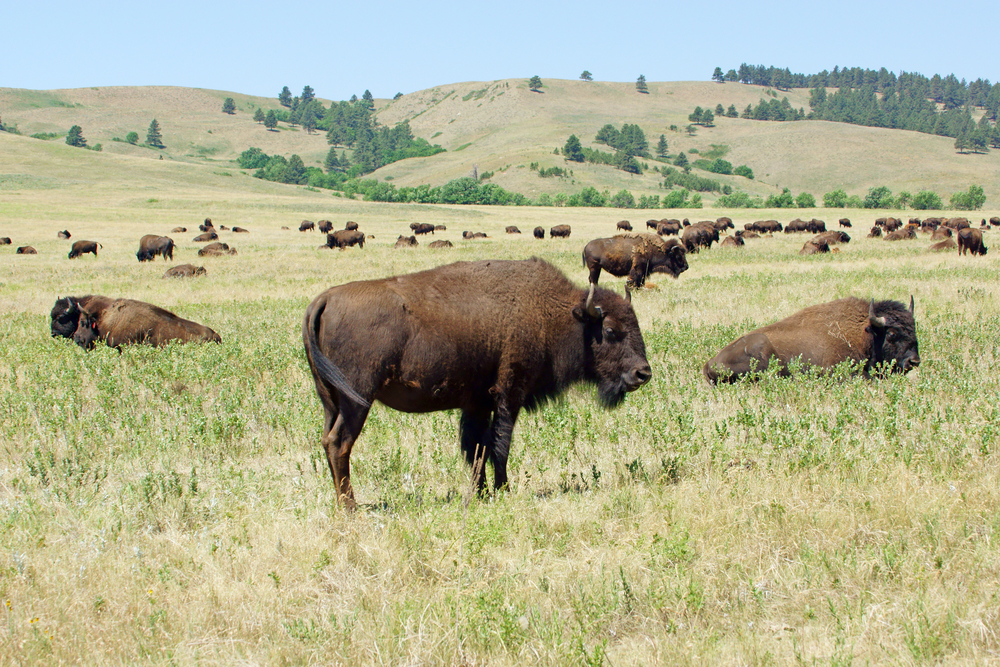
South Dakota’s Custer State Park doesn’t mess around when it comes to wildlife.
More than 1,300 bison roam freely across 71,000 acres of rolling prairie, pine forests, and granite peaks in the Black Hills.
That’s the kind of scene people travel to Yellowstone to witness, except here you’re far less likely to sit in bumper-to-bumper traffic while a bison takes its sweet time crossing the road.
The Wildlife Loop Road delivers exactly what it promises—close encounters with bison herds, along with elk, pronghorn deer, bighorn sheep, coyotes, and even wild burros descended from gold rush-era pack animals.
The park also serves up serious geological eye candy.
The Needles Highway winds through impossibly narrow granite spires and tunnels carved directly into rock formations, while the Cathedral Spires jut dramatically from the landscape like natural skyscrapers.
Sylvan Lake, a pristine alpine gem surrounded by giant boulders, has been a favorite swimming and picnicking spot for generations.
For overnight stays, Custer offers everything from rustic campgrounds to four historic lodges, including the State Game Lodge that President Calvin Coolidge used as his ‘Summer White House’ in 1927.
Every November, the park holds a massive bison roundup and auction that draws spectators from across the country—a living reminder that this place maintains its Old West character.
Letchworth State Park
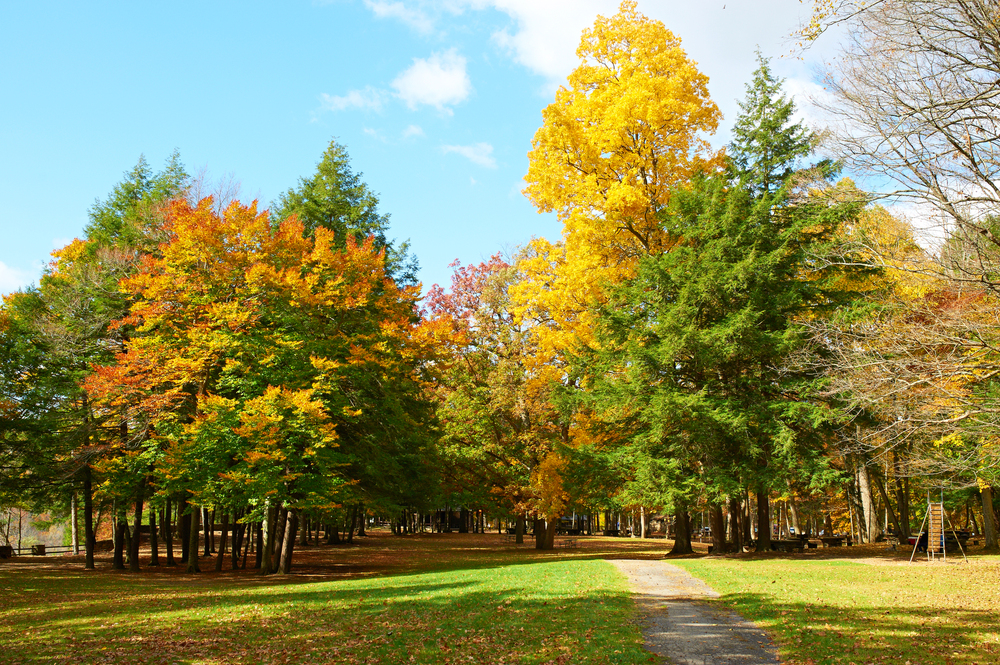
New York strikes again with Letchworth State Park, often called the ‘Grand Canyon of the East.’
That’s not tourism board hyperbole.
The Genesee River has carved a gorge through 14,000 acres of forest, with cliff walls towering up to 600 feet high in places.
Three major waterfalls—Upper, Middle, and Lower Falls—thunder over rock ledges, with Middle Falls plunging 107 feet in a spectacular curtain of white water.
The Seneca people, who originally inhabited this land, believed Middle Falls was so wondrous it made the sun stop at midday.
Beyond the famous trio, the park hides dozens of smaller cascades, including Inspiration Falls, which at 350 feet becomes New York’s tallest waterfall during periods of heavy rain.
Sixty-six miles of hiking trails snake through the gorge and surrounding forests, offering everything from easy riverside strolls to challenging climbs with panoramic overlooks.
In 2015 and again in 2020, readers voted Letchworth the best state park in the entire United States, beating out thousands of competitors.
The park also features hot air balloon rides that float over the canyon at sunrise, the historic Glen Iris Inn for overnight stays, and whitewater rafting through the gorge.
Even the fall foliage season here rivals New England’s famous displays.
Porcupine Mountains Wilderness State Park
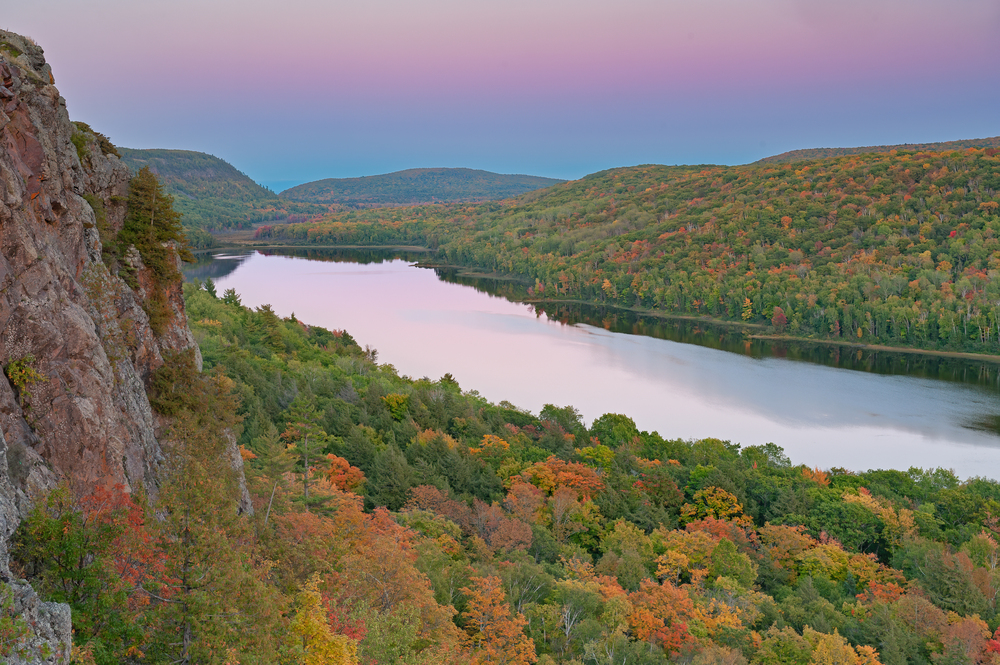
Michigan’s Upper Peninsula harbors one of the most pristine wilderness areas in the Midwest.
The Porcupine Mountains—affectionately called ‘the Porkies’—span 60,000 acres of old-growth forest, Lake Superior shoreline, and rugged ridges.
The centerpiece is Lake of the Clouds, a stunning mountain lake cradled between two forested ridges.
The overlook here ranks among the most photographed spots in the Upper Peninsula, and one glimpse explains why.
The valley below transforms with the seasons: emerald green in summer, a blazing palette of oranges and reds in fall, and stark white in winter.
What sets the Porkies apart is the sheer amount of virgin forest.
The park contains approximately 35,000 acres of old-growth northern hardwoods—considered the largest and best tract of its kind in North America west of the Adirondacks.
Ancient hemlocks tower overhead on trails that wind past waterfalls, including the dramatic cascades along the Presque Isle River corridor.
Summit Peak, at 1,958 feet, offers observation tower views across the forest canopy and, on clear days, all the way to Isle Royale National Park sitting in Lake Superior.
The federal government recognized the area’s significance in 1984 by designating it a National Natural Landmark.
Valley of Fire State Park
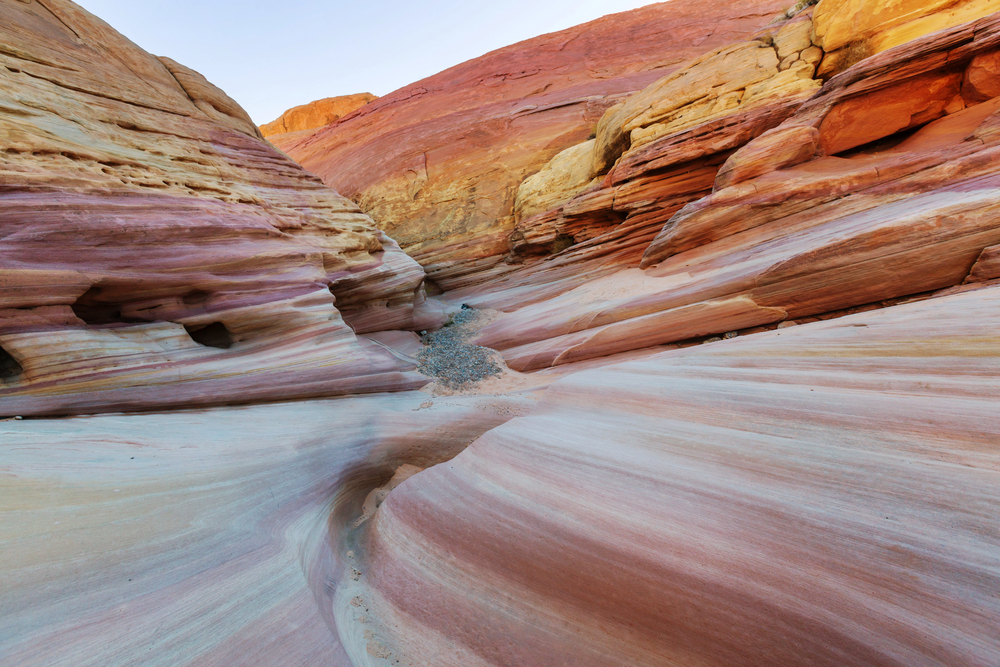
Nevada’s oldest and largest state park sits less than an hour northeast of Las Vegas, yet it feels like another planet entirely.
Valley of Fire earned its name honestly—the red Aztec sandstone formations seem to ignite under the desert sun, creating an almost surreal landscape of crimson and orange.
These rocks date back to the age of dinosaurs, roughly 150 million years old, and erosion has sculpted them into spectacular arches, domes, and balanced rocks.
Ancient petroglyphs carved by the Ancestral Puebloans cover rock faces throughout the park, some dating back 4,000 years.
The hiking here takes you through slot canyons and past formations with names like Elephant Rock, Beehives, and Piano Rock.
Mouse’s Tank Trail leads to a natural basin where rainwater collects and petroglyphs cluster on the canyon walls.
Because the park sits at a higher elevation than nearby Zion National Park and catches more breeze, temperatures typically run 10 to 15 degrees cooler—a welcome relief in summer.
The night sky here is phenomenal, with minimal light pollution revealing the Milky Way in sharp detail.
Campgrounds rarely fill to capacity, meaning photographers can capture sunrise and sunset over the fiery landscape without jockeying for position.
Dead Horse Point State Park
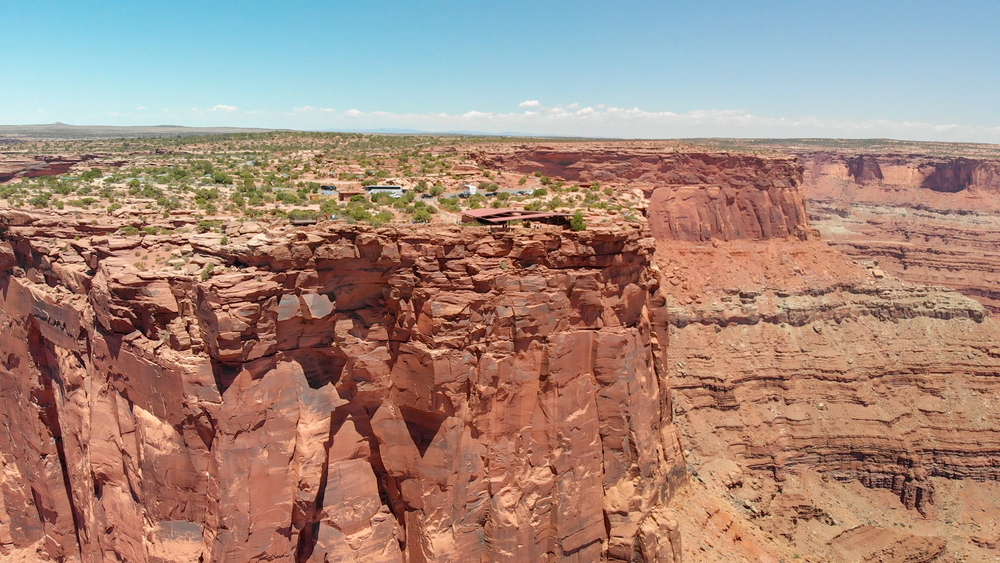
Perched 2,000 feet above the Colorado River in southeastern Utah, Dead Horse Point delivers one of the American Southwest’s most jaw-dropping overlooks.
The name comes from a grim Old West tale: cowboys once corralled wild mustangs on this narrow mesa, and according to legend, some horses were accidentally left behind and perished.
Today, the overlook draws visitors who come to witness the Colorado River snaking through deep canyons far below, with the La Sal Mountains rising in the distance.
It’s the kind of vista that makes you understand why Hollywood keeps filming here—’Thelma & Louise’ shot its famous final scene at this exact spot.
Located just outside Moab, Dead Horse Point serves as a quieter alternative to nearby Arches and Canyonlands national parks.
The East Rim Trail offers moderate hiking with views that just keep getting better, while the West Rim Trail provides a more relaxed option.
Mountain bikers flock to the trails, and the park has also earned International Dark Sky Park certification, meaning stargazing conditions rival anywhere in the country.
The visitor center perched on the rim provides context about the geology and human history of the region without requiring you to elbow through crowds.
Anza-Borrego Desert State Park
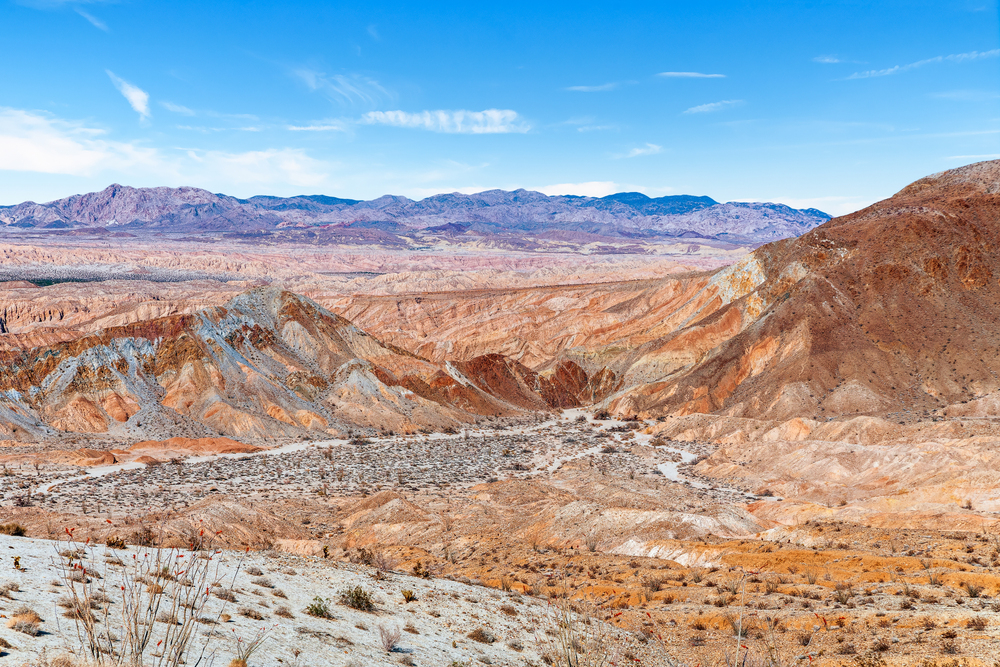
California’s largest state park sprawls across more than 600,000 acres of desert wilderness east of San Diego.
That’s roughly the size of Rhode Island, giving Joshua Tree National Park a run for its money.
Anza-Borrego contains everything from sweeping badlands and slot canyons to hidden palm oases and boulder-strewn mountains.
The landscape looks harsh and barren until you pay closer attention—then the diversity becomes apparent.
The park harbors multiple ecosystems and more than 60 mammal species, 200 bird species, and countless reptiles adapted to desert life.
The real magic happens in spring after a wet winter, when the desert erupts in a wildflower super bloom.
Millions of flowers carpet the valleys in waves of purple, yellow, and orange, drawing visitors from around the world.
The park also functions as a paleontology hotspot, with numerous sites containing fossilized bones and teeth from ancient creatures that roamed these lands millions of years ago.
Borrego Palm Canyon Trail leads to a lush oasis fed by a year-round creek, where California fan palms cluster in a scene that seems impossible in this arid environment.
Because much of the park sits on BLM land with few restrictions, you can camp almost anywhere, making it a favorite among off-grid adventurers.
Calaveras Big Trees State Park
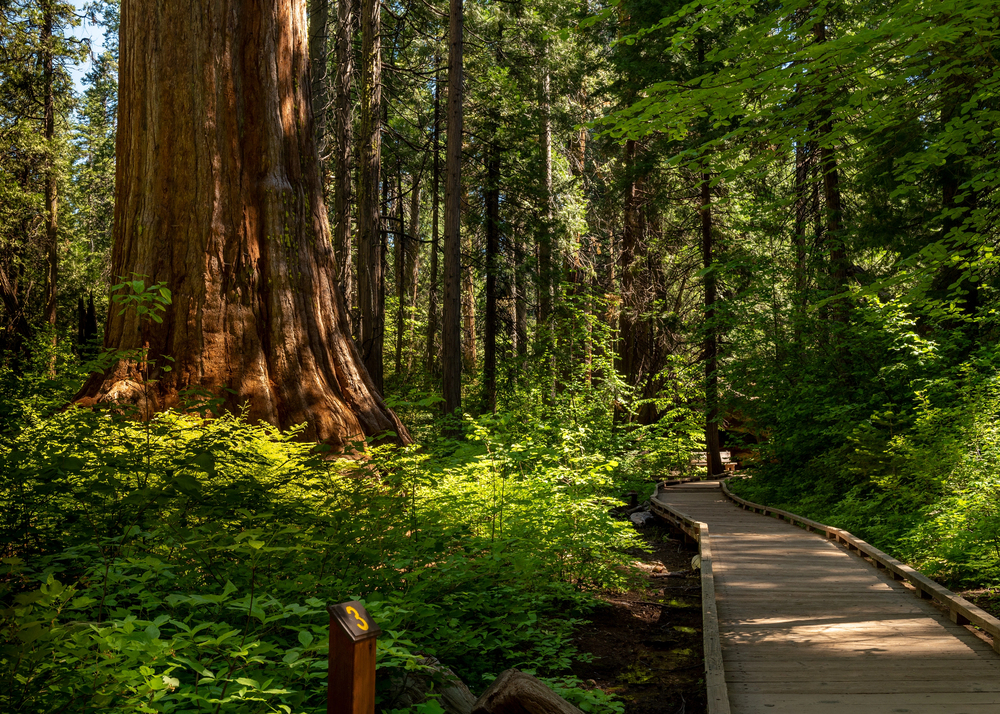
Standing among giant sequoias creates a sense of scale that photographs can’t capture.
Calaveras Big Trees, located about two hours north of Yosemite, opened to the public in 1852—almost 40 years before Yosemite became a national park.
The North Grove offers an easy stroll among massive trees that can reach 279 feet tall and live for thousands of years.
The South Grove requires a bit more effort, with a moderate 1.5-mile climb followed by a three-mile loop, but the reward is tranquility.
Far fewer visitors make the trek, so you can experience these ancient giants without competing for photos.
The Palace Hotel Tree in the South Grove survived a fire and now has a scar large enough to walk into like a cave.
While no tree here quite matches the General Sherman Tree in Sequoia National Park (the world’s largest living tree by volume), several specimens come impressively close.
The park’s location in the Sierra Nevada foothills means it’s more accessible in winter than higher-elevation sequoia groves, and the surrounding forest provides habitat for black bears, mountain lions, and a variety of smaller wildlife.
The quiet competition

These state parks don’t exist in opposition to national parks—they complement them.
National parks serve as crown jewels of American conservation, protecting landscapes deemed so significant they belong to all citizens.
But state parks often fly under the radar precisely because they lack federal recognition, and that anonymity becomes their greatest asset.
You can explore old-growth forests, witness spectacular waterfalls, encounter free-roaming bison, and camp beneath ancient trees without reserving a spot six months in advance or arriving at dawn to find parking.
The infrastructure at state parks tends to be less developed, which some visitors see as a drawback and others view as authenticity.
You won’t find shuttle systems or elaborate visitor centers at most state parks, but you will discover places that feel more wild and less managed.
The admission fees stay lower, the crowds remain thinner, and the experience often feels more personal.
As national parks continue grappling with overcrowding and reservation systems, state parks offer an increasingly appealing alternative for people who just want to get outside without the logistics becoming a second job.
More from Travel Pug

- Underrated Italian Towns That Beat the Tourist Crowds
- Las Vegas Tourist Traps to Skip
- Prettiest Towns in Every US State
- 18 passport-free countries for Americans
- Signs Your Cruise Is Not Worth The Cost
Like Travel Pug’s content? Follow us on MSN.