

Asia has always been a continent of ambitious builders. From ancient dynasties constructing monuments to last millennia to modern nations racing toward the sky, the drive to create something extraordinary seems embedded in the cultural DNA.
Today, that ambition has produced structures that don’t just break records — they redefine what’s possible. These aren’t simply buildings or bridges; they’re statements written in steel, concrete, and glass against the backdrop of a rapidly changing world.
Burj Khalifa
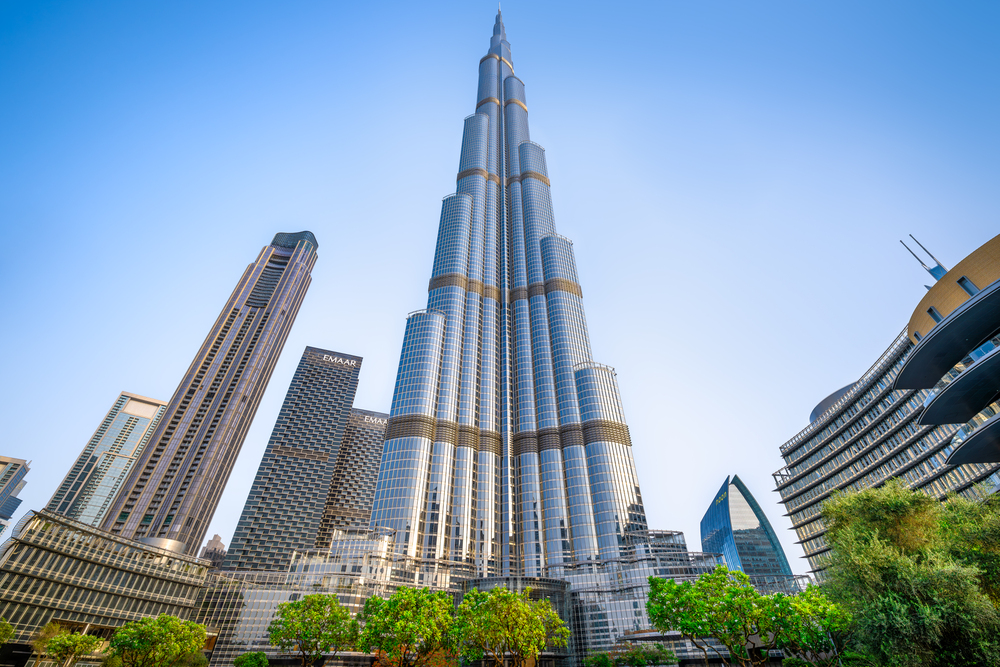
The Burj Khalifa stands 828 meters tall. No other building currently surpasses it.
Dubai built it during the financial crisis when most of the world was pulling back on grand projects.
The elevator ride to the observation deck takes less than a minute. That’s 124 floors covered faster than most people can process vertigo.
Shanghai Tower

Think of the Shanghai Tower as a building that learned to dance with the wind rather than fight it (which is exactly what the twisted design accomplishes, reducing wind loads by 24% compared to a traditional rectangular structure). The 632-meter tower spirals upward through nine distinct zones, each one a vertical city unto itself, complete with sky gardens that bloom impossibly high above the Huangpu River.
And here’s the thing about those sky gardens — they’re not decorative afterthoughts but breathing spaces where office workers can step outside at the 37th floor, or the 52nd, or the 77th, and remember what fresh air feels like. So the tower becomes less a single monolithic statement and more a collection of communities stacked toward the clouds.
The building corrects you if you think skyscrapers have to choose between height and humanity.
Taipei 101
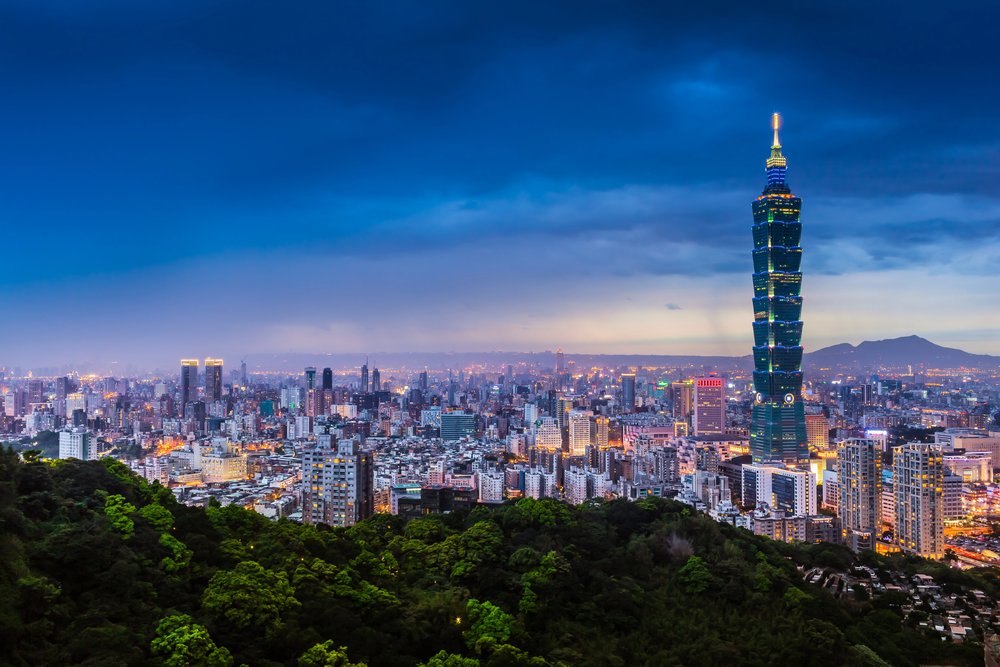
Taipei 101 was the world’s tallest building before Dubai changed the conversation. The design mimics bamboo segments, which makes sense in a place where typhoons test every structure’s resolve.
Inside sits a 660-ton steel ball that keeps the building stable during earthquakes and storms. Engineering disguised as architecture, or maybe the other way around.
Petronas Twin Towers

The Petronas Towers prove that record-breaking doesn’t require reinventing the wheel — just perfecting it with obsessive attention to detail. These 452-meter twins held the title of world’s tallest buildings from 1998 to 2004, but their real achievement was showing how Islamic geometric patterns could be translated into steel and glass without losing their mathematical poetry.
The floor plan follows an eight-pointed star, a traditional Islamic motif, extended into a form that maximizes floor space while maintaining structural integrity. Each tower was built by a different contractor (one Japanese, one South Korean) racing to meet in the middle at the sky bridge on the 41st and 42nd floors.
The precision required was absurd. Miss by even a few centimeters and the bridge connecting them becomes impossible.
Tokyo Skytree

Tokyo already had Tokyo Tower. Building another broadcast tower seemed redundant until you consider that Tokyo Skytree reaches 634 meters — exactly twice the height of its predecessor.
The number wasn’t arbitrary. In Japanese, 6-3-4 can be pronounced “mu-sa-shi,” the old name for the region where Tokyo stands.
Sometimes engineering serves poetry.
Lotte World Tower
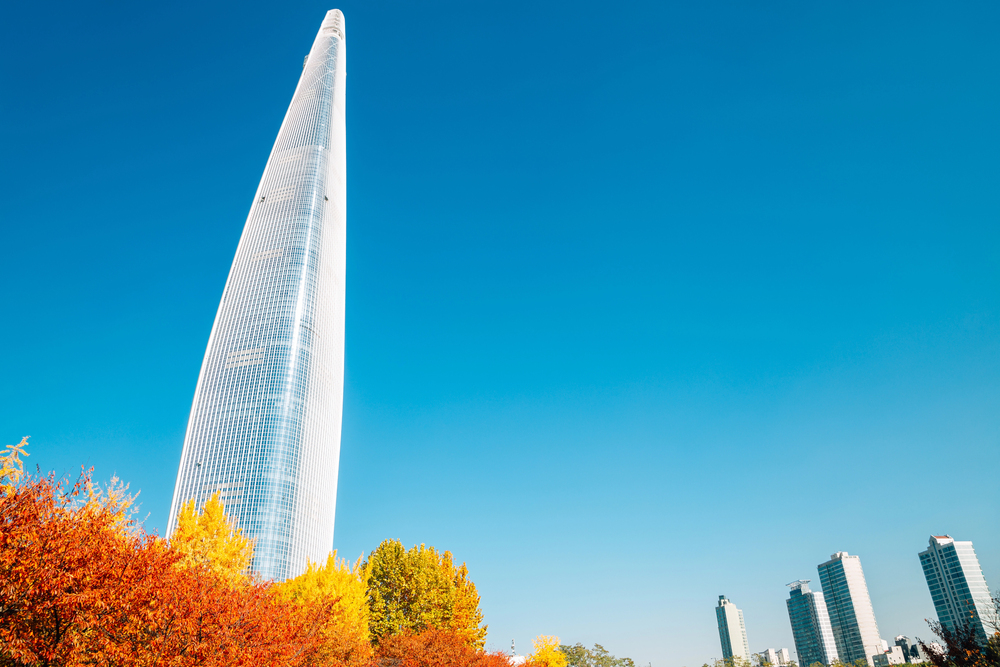
Seoul’s Lotte World Tower stretches 554 meters into the sky, but its real achievement isn’t height — it’s endurance testing in one of the world’s most seismically active regions. The building sits on a foundation that goes 38 meters underground, deeper than most subway tunnels, anchored into bedrock that has weathered centuries of geological shifts.
Inside, the tower houses everything from luxury hotels to observation decks to an aquarium (because apparently fish need views too). What strikes you about Lotte World Tower isn’t just its size but its stubborn insistence on housing normal life — offices, shops, restaurants — at extraordinary heights.
The building becomes a vertical neighborhood where you can live, work, eat, and sleep without ever touching the ground.
Marina Bay Sands

Marina Bay Sands looks impossible because it basically is. Three 55-story towers supporting a 340-meter-long rooftop that houses a swimming pool, gardens, restaurants, and an observation deck.
The infinity pool sits 200 meters above Singapore’s harbor. Swimming laps while staring down at cargo ships requires a particular kind of confidence.
Ping An Finance Centre
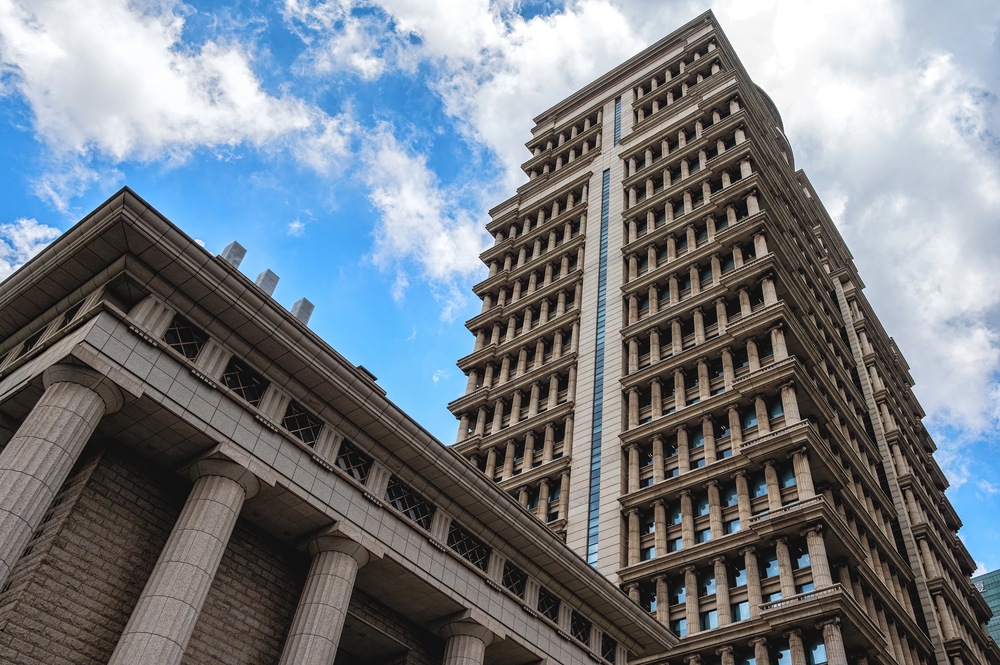
The Ping An Finance Centre in Shenzhen was supposed to be 660 meters tall with a massive spire crowning the top. Aviation authorities had other ideas, so the spire got cut and the building topped out at 599 meters — still the fourth tallest in the world, which is saying something.
The truncated design actually works better than the original plan. Without the spire, the building feels more grounded, less like it’s trying too hard to grab attention.
Sometimes restrictions force better architecture.
Danyang-Kunshan Grand Bridge
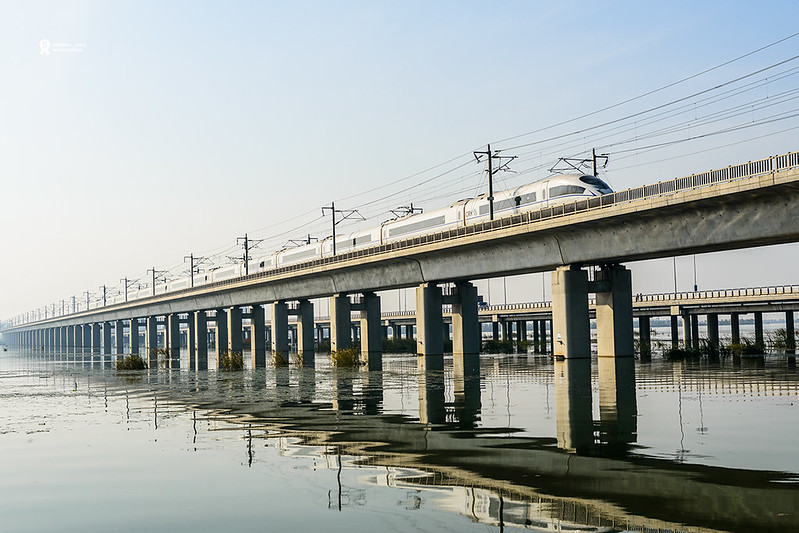
Stretching 164.8 kilometers across eastern China, the Danyang-Kunshan Grand Bridge holds the record as the world’s longest bridge of any kind — a concrete ribbon that connects Shanghai to Nanjing and crosses terrain so varied it seems like the engineers were showing off. The bridge traverses rivers, lakes, canals, and rice paddies, maintaining a perfectly straight line that suggests someone took a ruler to the map and refused to deviate for anything geography threw at them.
Construction required 450,000 tons of steel and 2.5 million cubic meters of concrete, materials enough to build a small city, all deployed in service of letting high-speed trains maintain 350 km/h without slowing for topographical inconveniences. And here’s what makes the bridge genuinely remarkable: it was built in just four years, which means crews were laying down roughly 110 meters of bridge per day, every day, for 1,460 consecutive days.
The bridge doesn’t just cross the landscape — it ignores it completely.
Hong Kong-Zhuhai-Macao Bridge

The Hong Kong-Zhuhai-Macao Bridge spans 55 kilometers across the Pearl River Delta. Most of it runs underwater through tunnels because surface bridges would interfere with shipping traffic.
The artificial islands where the bridge dives underground were built from scratch. Two new pieces of land were created solely to make the engineering work.
Akashi Kaikyō Bridge

The Akashi Kaikyō Bridge in Japan holds the record for the longest suspension bridge span at 1,991 meters between towers — just nine meters short of two full kilometers of unsupported roadway hanging over the Akashi Strait. The bridge connects Honshu and Awaji Island, a crossing that was notorious for ferry accidents before the bridge opened in 1998.
During construction, the Great Hanshin earthquake struck in 1995, actually stretching the bridge by one meter as tectonic plates shifted beneath the partially completed structure. Engineers simply adjusted the design and kept building.
The bridge cables contain 300,000 kilometers of wire — enough to circle the Earth seven and a half times — all tensioned to support a roadway that sways gently in the wind 65 meters above ships passing below.
Bangabandhu Bridge
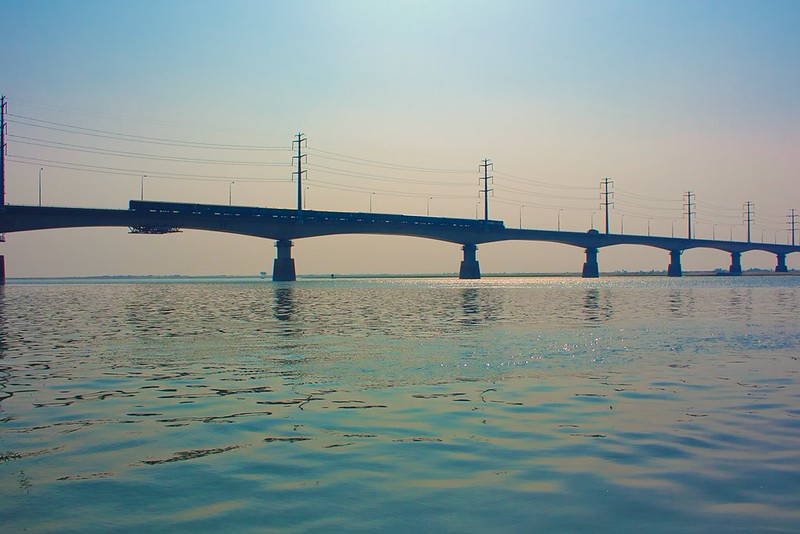
Bangladesh’s Bangabandhu Bridge crosses the Jamuna River with a main span of 150 meters — modest by global standards but revolutionary for a country where rivers routinely wash out transportation infrastructure. The 4.8-kilometer bridge carries both road and rail traffic, connecting the eastern and western halves of Bangladesh for the first time with a permanent link that doesn’t depend on ferry schedules or weather conditions.
What makes the bridge remarkable isn’t its size but its resilience: designed to withstand the annual monsoon floods that turn the Jamuna from a manageable waterway into a raging torrent that can shift its banks by several kilometers in a single season. The bridge foundations go 122 meters into the riverbed — deeper than the river is wide during dry season — anchored into bedrock that predates the delta itself.
Russky Bridge
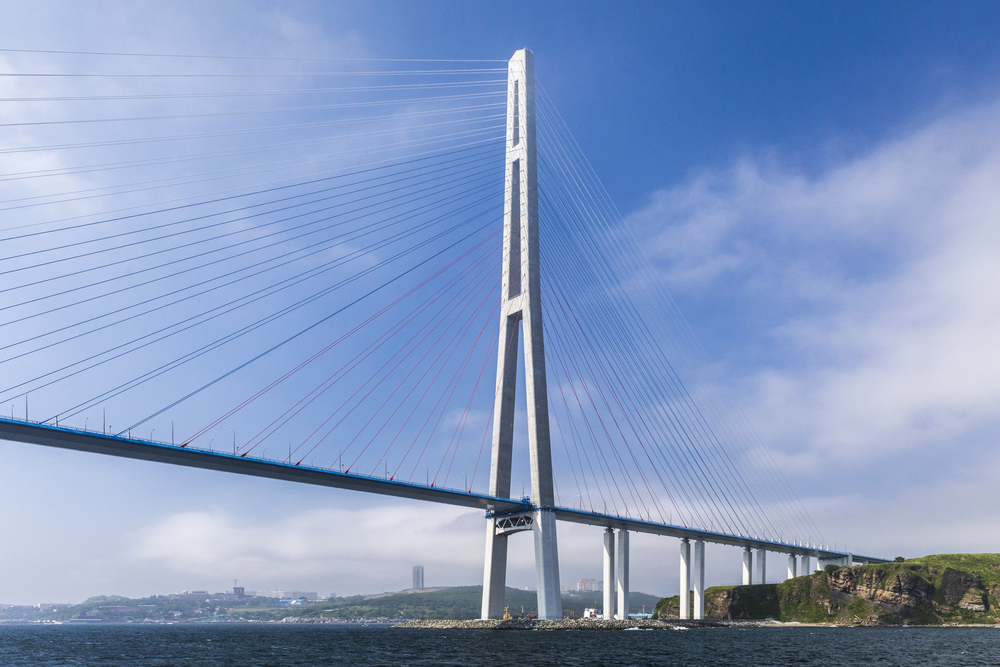
Vladivostok’s Russky Bridge connects the mainland to Russky Island with the longest cable-stayed span in the world at 1,104 meters. The bridge was built for the 2012 APEC summit, giving world leaders a dramatic backdrop and giving Russia a chance to show off its engineering capabilities in the Far East.
The bridge towers rise 324 meters above the Eastern Bosphorus Strait. That’s taller than the Eiffel Tower, in case anyone was keeping track.
Sultan Mizan Zainal Abidin Bridge

Malaysia’s Sultan Mizan Zainal Abidin Bridge spans the Terengganu River with an asymmetrical cable-stayed design that looks like a giant’s harp stretched across the water (the single tower and fan of cables create a profile that’s both minimal and dramatic, proving that bridges can be sculptures when nobody’s looking). The 638-meter bridge connects Kuala Terengganu to the South China Sea coast, but its real purpose seems to be catching light at different times of day — the steel cables slice sunrises and sunsets into geometric patterns that shift as you drive beneath them.
So the bridge becomes less about crossing the river and more about framing the sky above it. The structure teaches you that infrastructure doesn’t have to be invisible to be elegant.
Sutong Bridge
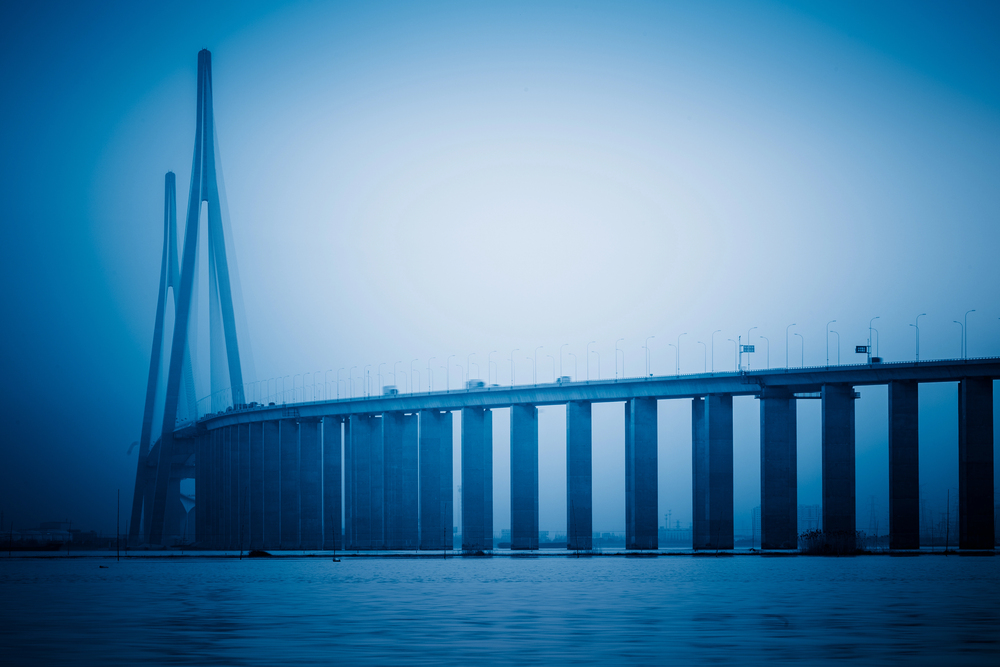
The Sutong Bridge crosses the Yangtze River with towers that reach 306 meters above the water — the tallest cable-stayed bridge towers in the world when it opened in 2008. The main span stretches 1,088 meters, allowing massive cargo ships to pass underneath without slowing river traffic.
Construction took seven years and required building temporary islands in the Yangtze to support the tower foundations. The islands were removed after completion, leaving no trace except the bridge itself.
Looking up from here
These structures represent more than engineering achievements or national pride projects — they’re proof that the impossible has become merely expensive. Asia’s record-breaking buildings and bridges don’t just reach new heights or span greater distances; they’ve fundamentally changed how we think about what’s buildable.
The question isn’t whether the next record will be broken, but how quickly, and by whom. In a region where ambitious construction projects are as much about tomorrow as today, the only safe prediction is that these records won’t stand for long.
More from Travel Pug

- Underrated Italian Towns That Beat the Tourist Crowds
- Las Vegas Tourist Traps to Skip
- Prettiest Towns in Every US State
- 18 passport-free countries for Americans
- Signs Your Cruise Is Not Worth The Cost
Like Travel Pug’s content? Follow us on MSN.