

From the azalea-lined fairways of Augusta to the cliff-top drama of Pebble Beach, America’s golf landscape tells the story of a nation obsessed with chasing that perfect round. These aren’t just places where you play golf—they’re pilgrimage sites where legends were forged and dreams either came true or died spectacular deaths on impossibly fast greens.
Here’s a list of 15 iconic golf destinations that represent the very soul of American golf, each offering its own blend of championship pedigree, architectural brilliance, and the kind of atmosphere that makes golfers weak in the knees.
Augusta National Golf Club

Nothing prepares you for the green. Not the television coverage, not the magazine photos, not even the stories from friends who’ve been lucky enough to walk these hallowed grounds in Georgia.
When Bobby Jones and Alister MacKenzie designed this masterpiece in the early 1930s, they created something that transcends sport. The Masters Tournament has transformed this private club into golf’s most sacred space, where azaleas bloom like pink prayers each April and the roars echo through pines that have witnessed more history than most museums.
Pebble Beach Golf Links

The seventh hole alone justifies the green fee. This tiny par-3 perched on the edge of forever, where the Pacific crashes against the rocks below and seals occasionally pop their heads up to watch your approach shot. Not great when you’re already nervous.
Pebble Beach Golf Links is an iconic course that has consistently ranked as one of the best in the world, and unlike many legendary courses, this one welcomes the public—if you can afford the privilege. The routing takes you on an emotional journey from forest to coastline, culminating in one of golf’s most photographed finishing stretches.
Pine Valley Golf Club

George Crump’s New Jersey creation remains the golf world’s ultimate examination. Pine Valley Golf Club was the dream of a Philadelphian hotelier, George Crump, who sadly died before its completion, but his vision of penal architecture lives on in this sandy wasteland that humbles even the world’s best players.
Every shot demands precision. Every miss gets punished. The course sits in a natural amphitheater of sand and scrub, where wayward shots disappear into areas so punishing they make you question your life choices.
Cypress Point Club

Alister MacKenzie carved this masterpiece from the same dramatic coastline as Pebble Beach, but Cypress Point takes the cliff-top concept to its logical extreme. The 16th hole—a par-3 that plays entirely over churning Pacific waters—represents either golf architecture’s greatest triumph or cruelest joke, depending on where your ball lands.
And those consecutive par-3s on the back nine? Pure genius that tests every club in your bag while your eyes feast on some of the most spectacular scenery in golf.
Shinnecock Hills Golf Club

Not only was Shinnecock Hills Golf Club one of the five founding members of the USGA but also it was where one of the first specifically designed golf clubhouses was built. This Long Island classic embodies everything great about American golf architecture from the game’s early days.
William Flynn’s design philosophy shows in every undulation. The course plays firm and fast across rolling terrain that looks almost Scottish, with fescue grasses dancing in the Atlantic breeze. When the U.S. Open visits, scoring becomes an exercise in survival rather than attack.
Oakmont Country Club

Apart from Augusta National, Oakmont Country Club has hosted more major championships than any other course in the U.S. and it’s considered by many to be the toughest golf course in the world. This Pennsylvania institution built its reputation on lightning-fast greens and diabolical bunkers that number in the hundreds.
The famous “Church Pews” bunkers tell their own story. Each one carved with ridges that can kick your ball in directions that defy physics. Still, there’s something beautiful about a course that makes no apologies for its difficulty.
TPC Sawgrass

The 17th hole became an instant icon the moment it opened. Pete Dye’s island green par-3 has swallowed more golf balls than any single hole in professional golf, creating drama that television loves and players fear in equal measure.
But the Stadium Course offers more than just one famous hole. Dye’s railroad ties and waste bunkers create a visual feast that challenges conventional golf course architecture. The amphitheater setting around multiple holes brings spectators closer to the action than anywhere else in professional golf.
National Golf Links of America

C.B. Macdonald’s 1911 masterpiece reads like a love letter to Scottish golf. National Golf Links of America is a golf course of monumental historical importance.
The Redan, the Alps, the Eden—Macdonald brought the best of the old world to the new, creating America’s first true destination golf course on Long Island’s eastern tip.
Bethpage Black
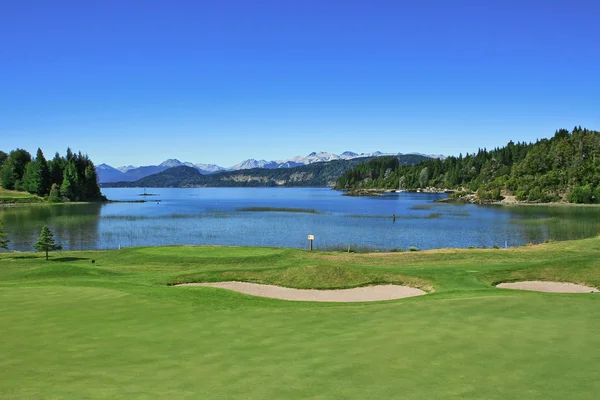
Democracy in action. This New York state park course proves that championship golf doesn’t require country club membership—just thick skin and serious game. The warning sign at the first tee suggests the course is for “highly skilled golfers only.”
A.W. Tillinghast’s routing through Long Island’s rolling terrain created a test that brought the U.S. Open to public golf for the first time in 2002. Tiger Woods was the only player to break par for four rounds, which tells you everything about the Black’s bite.
Whistling Straits

Pete Dye transformed a former airfield along Lake Michigan into something that looks like it was transported wholesale from the Scottish Highlands. Eight holes play directly along the shoreline, where the wind off the lake can turn a routine approach shot into an adventure in applied physics.
The Irish Course provides a slightly gentler companion layout. But the Straits Course—with its massive dunes, fescue grasses, and sheep wandering the grounds—creates an Old World atmosphere that’s pure theater.
Merion Golf Club

Hugh Wilson’s 1912 design packs championship drama into just 6,500 yards. This Pennsylvania classic proves that distance isn’t everything when you have routing genius and strategic bunkering that makes every shot a puzzle.
Merion is also remembered for its wicker basket flagsticks, Bobby Jones completing his Grand Slam here in 1930, Ben Hogan’s legendary 1-iron at the 1950 U.S. Open, and the old stone quarry that influences multiple holes.
Sand Hills Golf Club

Sand Hills Golf Club is a club to respect and those in the know admire their non-commerciality and that is a delightful break from tradition these days. Bill Coore and Ben Crenshaw discovered this natural wonderland in Nebraska’s sandhills and built their course with minimal earth moving, letting the wind-sculpted terrain dictate the routing.
The result feels ancient despite opening in 1995. Golf as it was meant to be played, where the wind determines everything and the vast landscape stretches to horizons that seem borrowed from a western movie.
Bandon Dunes

Mike Keiser’s Oregon coast resort changed American golf when it opened in 1999. Four championship courses perched on bluffs above the Pacific offer pure links golf without the trans-Atlantic flight. You can smell the ocean salt on every tee.
The walking-only policy and caddie culture create an atmosphere that prioritizes the game’s traditions. Each course offers its own personality, from the original Bandon Dunes to Tom Doak’s Pacific Dunes to the cliff-top drama of Bandon Trails.
Pinehurst No. 2

Donald Ross’s North Carolina masterpiece has hosted more major championships than any resort course in America. The crowned greens and strategic bunkering create a thinking player’s course where position trumps power.
And that recent restoration by Bill Coore and Ben Crenshaw? It stripped away decades of rough and cart paths, returning the course to Ross’s original vision of sandy waste areas and natural playing corridors that flow like a river through the pines.
Kiawah Island Ocean Course

Pete Dye’s South Carolina monster plays like a seaside links course designed by someone with a twisted sense of humor. The 1991 Ryder Cup—the “War by the Shore”—showcased everything dramatic about this oceanfront layout where ten holes play directly along the Atlantic.
Wind direction changes everything here. A club selection that works in the morning becomes irrelevant by afternoon when the breeze shifts and those massive waste bunkers start looking even more intimidating.
Where legends live forever

These fifteen destinations represent more than great golf—they’re repositories of the game’s finest moments and biggest heartbreaks. Each fairway holds stories that connect every weekend warrior to the champions who walked there before, proving that in golf, geography really is destiny.
More from Travel Pug

- Underrated Italian Towns That Beat the Tourist Crowds
- Las Vegas Tourist Traps to Skip
- Prettiest Towns in Every US State
- 18 passport-free countries for Americans
- Signs Your Cruise Is Not Worth The Cost
Like Travel Pug’s content? Follow us on MSN.