

Most safari-goers dream of spotting the Big Five, but Africa holds treasures far rarer than lions and elephants. Hidden in remote corners of the continent, extraordinary creatures exist in such small numbers that glimpsing them becomes the wildlife encounter of a lifetime.
These aren’t just animals that happen to be uncommon — they’re species teetering on the edge, each sighting a privilege that few people will ever experience.
The thrill of searching for these elusive animals transforms any safari from a typical game drive into something approaching a quest. Some have survived ice ages only to face modern threats.
Others adapted to such specific environments that they exist nowhere else on Earth. Finding them requires patience, luck, and often a willingness to venture far from the well-traveled safari circuits.
Ethiopian Wolf

The Ethiopian wolf exists in a world that seems too harsh for such a delicate creature. Fewer than 500 individuals survive in the high-altitude grasslands of Ethiopia, making them rarer than giant pandas.
These aren’t actually wolves but the last remaining African members of the dog family’s ancient lineage. Their rust-colored coats catch morning light against the stark Afroalpine landscape.
They hunt giant mole-rats in meadows above 3,000 meters, where the air grows thin and most other predators cannot follow.
Riverine Rabbit

South Africa’s Karoo region hides what might be the continent’s most endangered mammal, though you’d never guess it from looking at one (and the truth is, almost nobody ever does look at one — which is exactly the problem). The riverine rabbit, with its distinctive black stripe running from the corner of each eye to the base of each ear, lives only along seasonal riverbeds in this semi-desert landscape, and with fewer than 250 individuals scattered across an increasingly fragmented habitat, spotting one requires not just luck but the kind of persistence that borders on obsession.
Very few people have seen them. Even fewer have photographed them.
But for those who make the effort to search the dense riverine thickets at dawn and dusk — when these creatures emerge to feed on the karoo bushes that somehow manage to thrive in this unforgiving landscape — the reward is witnessing something genuinely irreplaceable.
The species evolved here over millennia, perfectly adapted to a world of seasonal floods and extended droughts. Climate change and agriculture have squeezed them into an ever-shrinking refuge.
Pangolin

Picture trying to find a living pinecone that walks. Pangolins move through the African night like ancient armor brought to life, their overlapping scales catching moonlight as they lumber between termite mounds.
These creatures embody a kind of prehistoric patience — they’ll spend hours methodically dismantling a single termite colony with claws designed for precisely that purpose. When threatened, they roll into an impenetrable ball, a defense that worked perfectly for millions of years until humans began collecting them by the thousands.
Ground pangolins still roam parts of southern and eastern Africa, though each sighting feels like witnessing a small miracle. Their nocturnal habits and secretive nature mean even experienced guides go years between encounters.
Hirola
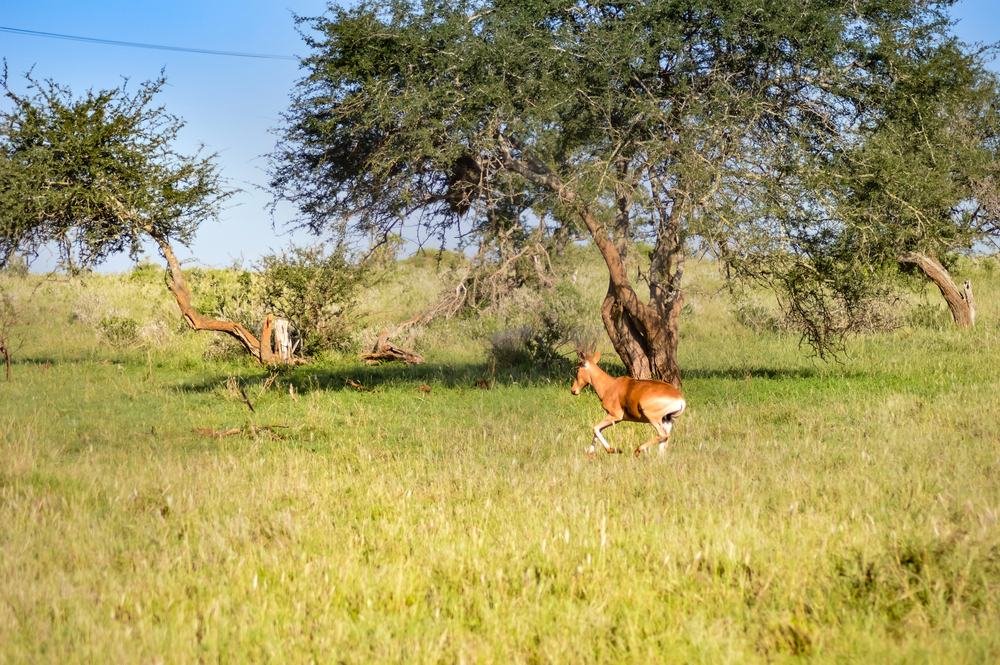
The hirola earned a nickname that tells you everything you need to know about its chances: “four-eyed antelope.” Those aren’t extra eyes, just distinctive white markings above each real eye that make them unmistakable.
Also unmistakable: they’re vanishing faster than almost any large mammal on Earth.
Fewer than 400 survive along the Kenya-Somalia border. Poaching and habitat loss pushed them from thousands to hundreds within a single human generation.
The remaining herds move across a landscape so remote that monitoring them requires satellite collars and dedicated conservation teams.
Finding hirola means traveling to places where roads disappear and safety becomes negotiable. Even then, success isn’t guaranteed.
Black Rhinoceros
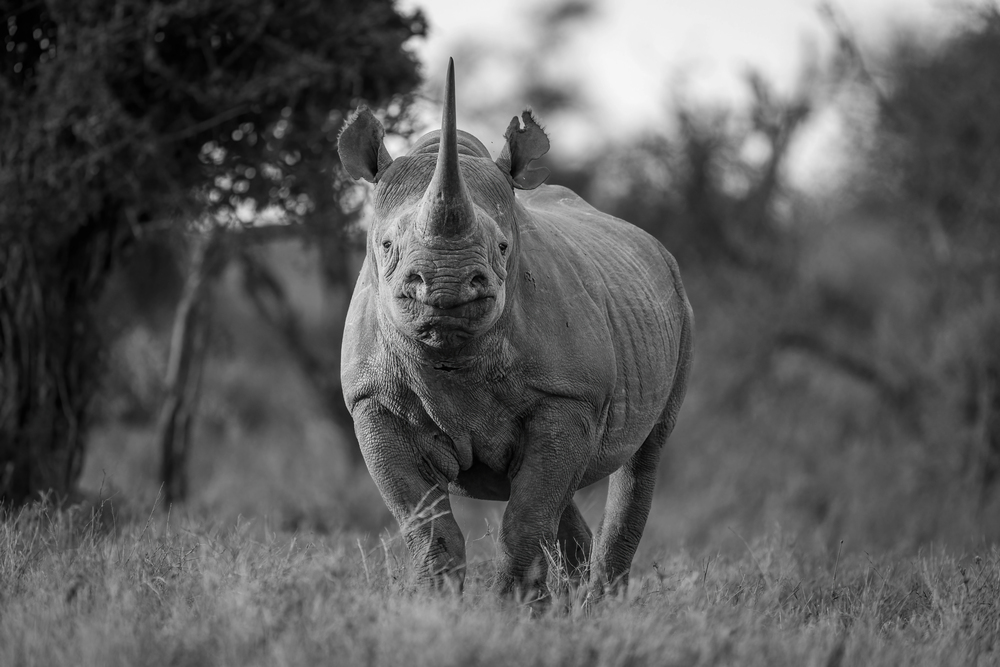
Black rhinos command respect in ways that go beyond their obvious physical presence. These aren’t gentle giants — they’re unpredictable, nearsighted, and equipped with horns that can punch through metal.
Population numbers tell the whole story: from 65,000 in 1960 to fewer than 6,000 today. Most survivors live under armed guard in private conservancies and national parks with military-level security.
Seeing one means entering a world where rangers carry automatic weapons and every rhino has a name.
The few that remain represent one of conservation’s most intensive efforts. Each individual matters enough that their movements are tracked daily.
Some have had their horns removed to reduce poaching pressure — a heartbreaking necessity that probably saved their lives.
Bongo

Deep in central Africa’s remaining forests, bongo antelope move like shadows between the trees — their chestnut coats marked with thin white stripes that break up their outline in dappled light. Finding one requires entering some of the most remote wilderness left on the continent, places where the canopy grows so thick that GPS signals disappear and navigation becomes an art form practiced by local guides who learned these trails from their fathers and grandfathers.
The eastern bongo subspecies faces extinction. Civil war (and the bushmeat trade that inevitably follows) has devastated their numbers across their range.
And yet something about them refuses to give up: they’re browsers perfectly adapted to dense forest, capable of disappearing completely despite weighing 400 pounds.
The few that survive inhabit landscapes so pristine they feel like stepping back in time. Ancient trees.
Elephant paths worn smooth by generations of use. The kind of Africa most people assume disappeared decades ago.
Addax
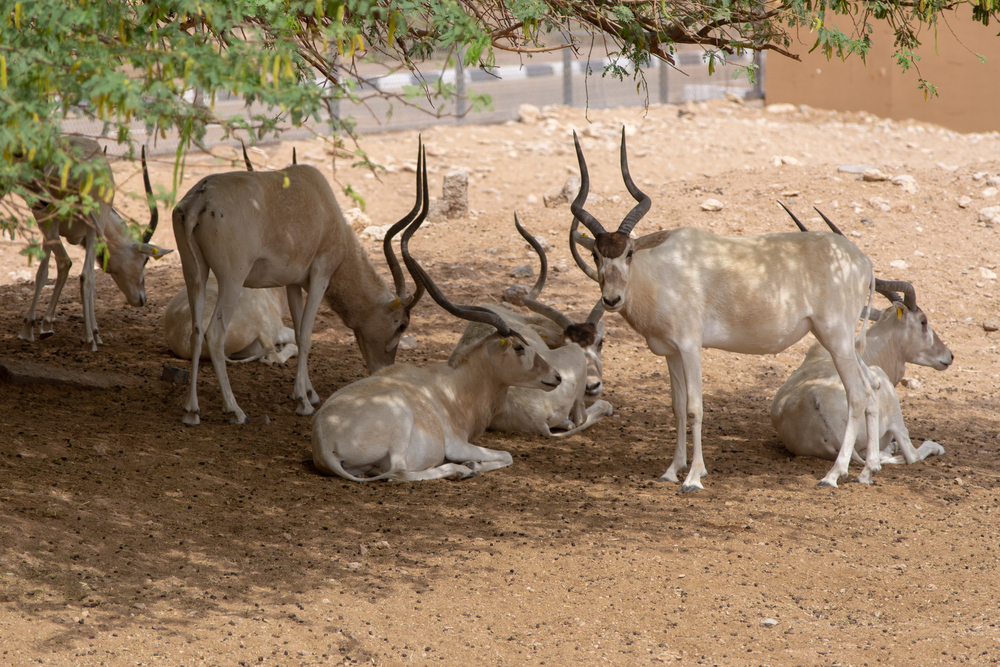
The addax represents stubbornness taken to an evolutionary extreme. These antelopes chose to make their living in the Sahara Desert, where summer temperatures routinely exceed 120°F and rain might not fall for years at a time.
Their pale coats reflect brutal sunlight. Their hooves spread wide to distribute weight across shifting sand.
They can survive indefinitely without drinking water, extracting every drop they need from desert vegetation. Millions of years of adaptation produced an animal perfectly suited to one of Earth’s harshest environments.
Fewer than 100 wild addax remain, scattered across remote corners of Chad, Niger, and Mauritania. Oil exploration and military conflicts have pushed them into refuges so isolated that reaching them requires expedition-level planning.
Grevy’s Zebra
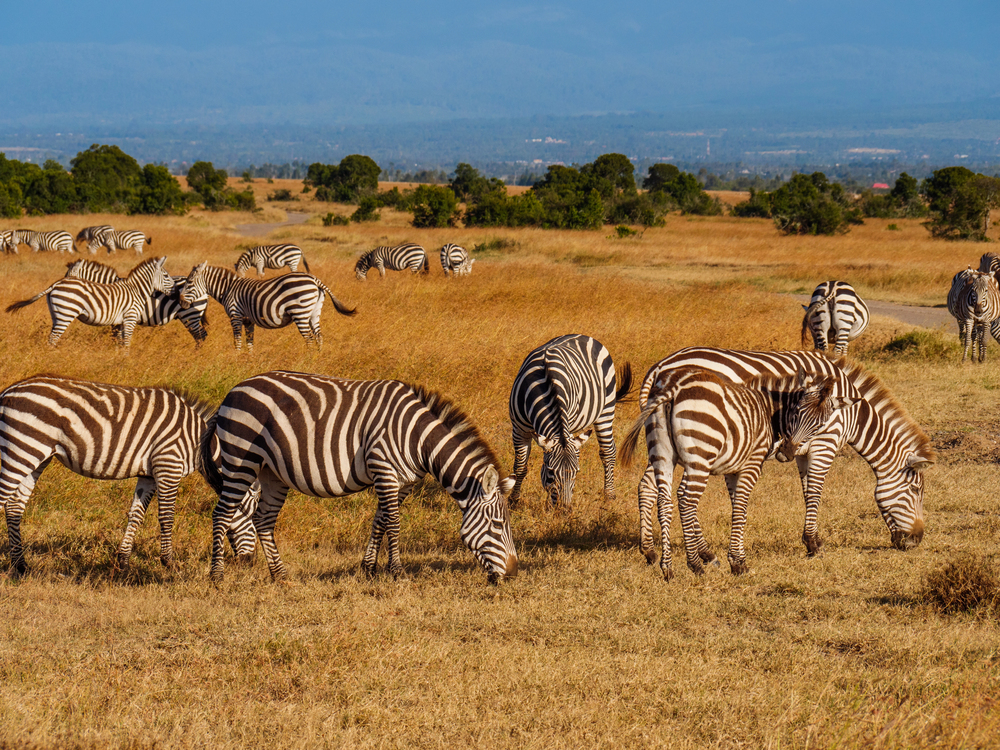
Not all zebras are created equal, though most people wouldn’t know that from a distance (which, frankly, is exactly how Grevy’s zebras prefer it — they’ve spent millennia perfecting the art of blending into landscapes where standing out means becoming dinner). These northern Kenya natives wear their stripes differently than their common cousins: narrower lines that never cross their bellies, leaving a clean white expanse that makes them unmistakable once you learn what to look for.
And while plains zebras gather in the massive herds that dominate most safari photography, Grevy’s zebras maintain a more solitary existence — stallions defending territories along seasonal rivers, mares wandering between water sources with their foals, the whole species operating according to social rules that seem more suited to an earlier, quieter version of Africa.
The numbers tell their own story: fewer than 3,000 survive, down from 15,000 just four decades ago. Drought and habitat fragmentation have compressed their range into ever-smaller pockets of suitable grazing.
Wild Dog

African wild dogs hunt with a precision that makes other predators look amateur. Their success rate approaches 80% — a number that should humble lions and leopards, who consider themselves lucky to make half that many kills.
These aren’t dogs in any domestic sense. They’re highly social carnivores with rounded ears, mottled coats, and pack coordination that borders on telepathic.
Each individual has unique markings, like fingerprints painted in brown, black, and white.
Fewer than 7,000 remain across all of Africa. They need enormous territories to support their ranging lifestyle — requirements that put them in constant conflict with human expansion.
Seeing a pack requires either extraordinary luck or access to the handful of reserves large enough to sustain them.
Aardvark

There’s something deeply satisfying about an animal that commits completely to its chosen profession. Aardvarks eat ants and termites — not occasionally, not as part of a varied diet, but with the single-minded dedication of creatures who discovered their calling millions of years ago and never looked back.
Their elongated snouts end in pig-like nostrils that can close to keep dirt out while digging. Their powerful claws can tear through termite mounds built harder than concrete.
Their sticky tongues extend up to 12 inches to harvest insects from deep tunnels.
Aardvarks emerge only at night, making sightings rare even in areas where they’re relatively common. They spend daylight hours in burrows that can extend 20 feet underground — elaborate tunnel systems with multiple entrances and sleeping chambers.
Bontebok

The bontebok’s story reads like a conservation case study written in reverse — starting with near-extinction and somehow managing to inch back toward stability. By 1930, fewer than 20 individuals survived in a single location in South Africa’s Western Cape, the remainder of a species that once grazed across vast stretches of fynbos grassland.
Their distinctive white facial markings and rich brown coats made them unmistakable, which unfortunately also made them easy targets during the colonial hunting period that nearly wiped them out. But something about their particular adaptation to coastal grasslands proved resilient enough to survive in small, carefully managed populations.
Today, their numbers have grown to about 2,500 — still low enough that every individual matters, but stable enough that dedicated conservation efforts have pulled them back from the brink. Most live in protected reserves where their grazing helps maintain the unique fynbos ecosystem.
Suni
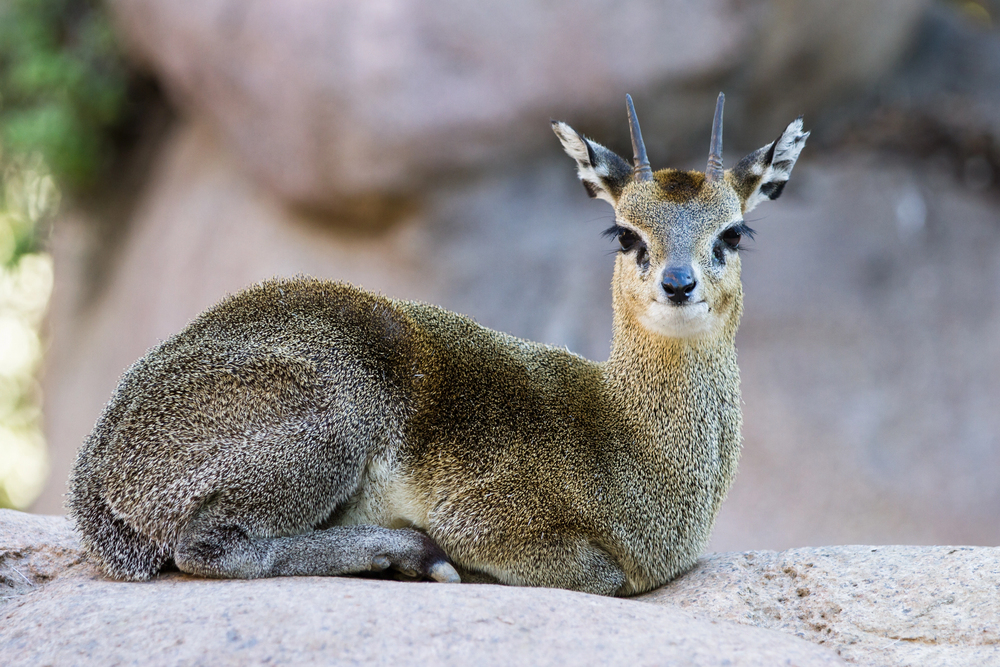
Suni antelopes challenge every assumption about what constitutes impressive wildlife. These tiny creatures — weighing less than 12 pounds fully grown — inhabit dense coastal forests where size becomes an advantage rather than a limitation.
Their diminutive stature allows them to navigate through undergrowth that would stop larger animals completely. They create networks of tunnels through thick vegetation, invisible highways that connect feeding areas to resting spots to escape routes.
Spotting suni requires abandoning the open savanna mindset that dominates most safari experiences. They live in forests where visibility extends only a few yards and every sound matters.
Patient observation near water sources or forest clearings occasionally reveals these secretive animals as they emerge to feed.
Cheetah

Speed defined the cheetah’s existence for millions of years — until humans reshaped the landscape in ways that made pure velocity irrelevant (and the cruel irony is that an animal capable of reaching 70 mph finds itself trapped by something as simple as a fence line or a highway that fragments its hunting grounds into unusable fragments). These cats require vast territories to support their energy-intensive hunting style, chasing down prey across open grasslands in spectacular bursts that burn through calories at an unsustainable rate.
So when habitat shrinks and prey becomes scarce, their magnificent adaptation becomes a liability — they simply cannot slow down enough to survive in a constrained world.
The numbers paint a stark picture: from 100,000 cheetahs in 1900 to fewer than 7,000 today. Most survivors live in southern and eastern Africa, concentrated in a handful of large reserves and private conservancies.
Their spotted coats and distinctive black “tear marks” make them unmistakable when spotted resting in shade during the heat of day. Unlike other large cats, they hunt primarily during daylight hours — a strategy that reduces competition with lions and leopards but increases their vulnerability to human interference.
Serval

Servals look like someone took a house cat and stretched it in all the right directions. Their oversized ears and long legs create proportions that seem almost cartoon-like until you watch them hunt — then every adaptation makes perfect sense.
Those enormous ears can detect rodent movements in grass from 150 feet away. Their extended legs allow them to leap 10 feet horizontally and 4 feet vertically to pounce on prey.
They achieve hunting success rates that rival much larger predators.
Servals prefer wetland habitats where their specialized skills provide maximum advantage. Tall grass conceals their approach while abundant small mammals support their energy needs.
Finding them requires timing visits to coincide with their most active periods around dawn and dusk.
Caracal

The caracal earned its reputation as Africa’s most successful small predator through a combination of power, agility, and absolute fearlessness that borders on recklessness. These compact cats will attack prey twice their size and defend territory against much larger competitors.
Their distinctive black ear tufts serve as communication devices — position and movement convey information to other caracals across considerable distances. Their powerful hind legs generate enough force to leap six feet straight up, allowing them to snatch birds directly from flight.
Caracals adapt to diverse habitats from semi-desert to mountain forests. This flexibility helped them survive human encroachment better than more specialized species, though they remain secretive enough that most people never see them even in areas where they’re common.
Honey Badger

Honey badgers approach life with a philosophy that can only be described as aggressive optimism. They’ll fight anything — lions, leopards, venomous snakes, entire bee colonies — with the unshakeable conviction that retreat is always optional.
Their loose skin allows them to twist around and attack even when grabbed by larger predators. Their powerful claws can dig through concrete.
Their thick hide resists snake bites and bee stings that would incapacitate other animals.
Despite their fearsome reputation, honey badgers remain elusive. They’re primarily nocturnal and cover enormous territories in search of food.
Sightings usually happen by accident — brief encounters when they emerge from underground burrows or cross roads during night drives.
The real Africa reveals itself in whispers
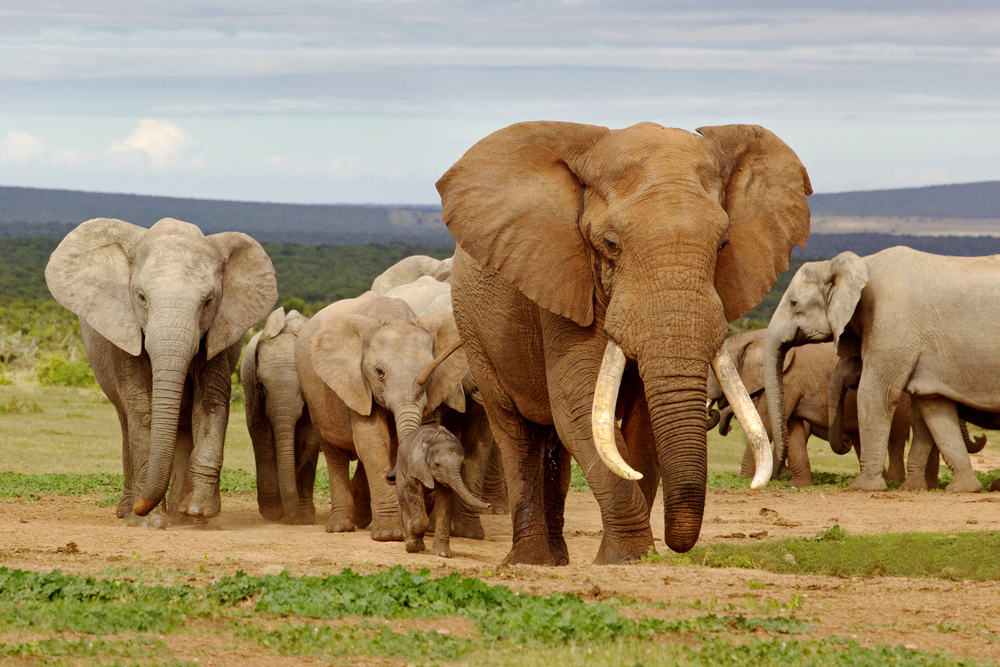
Finding Africa’s rarest wildlife changes how you understand the continent itself. These aren’t animals that announce themselves with roars or dramatic migrations.
They slip through forests at dawn, emerge from burrows after midnight, or graze in grasslands so remote that reaching them requires days of travel. Each sighting feels less like wildlife viewing and more like being admitted to a secret that most of the world will never know exists.
The privilege isn’t just witnessing something rare — it’s glimpsing the Africa that endures quietly, stubbornly, in spaces between the roads and the crowds and the noise of a modern world that has little room left for creatures that refuse to compromise.
More from Travel Pug

- Underrated Italian Towns That Beat the Tourist Crowds
- Las Vegas Tourist Traps to Skip
- Prettiest Towns in Every US State
- 18 passport-free countries for Americans
- Signs Your Cruise Is Not Worth The Cost
Like Travel Pug’s content? Follow us on MSN.