

There’s something almost sacred about a local’s blank stare when tourists ask about the city’s most famous attraction. That polite smile, the gentle redirect toward “where the real locals go” — it’s a kindness, really.
Because chances are, that marquee destination has been scrubbed clean of whatever made it special in the first place, packaged into something that looks like authenticity but tastes like cardboard.
These tourist magnets exist in every corner of America, drawing millions of visitors who dutifully snap photos and check boxes on their travel lists. Meanwhile, the people who actually live there drive past without a second glance, or worse, take deliberate detours to avoid the crowds.
The gap between what visitors expect to find and what locals know to be true creates some of the most expensive disappointments in American travel.
Times Square

Times Square stopped being New York the moment it became a pedestrian mall filled with chain restaurants and costumed cartoon characters. New Yorkers treat it like a necessary evil — something to endure when catching a Broadway show, then escape as quickly as possible.
The neon signs flash bright enough to be seen from space, advertising companies that could afford the rent, which tells you everything about what happened to the neighborhood’s soul. Street performers work the same tired routines while tourists pay twenty-five dollars for mediocre pasta at restaurants that exist nowhere else because no local would tolerate them twice.
Fisherman’s Wharf

San Francisco’s waterfront tourist zone feels like a theme park version of what a fishing village might look like if it were designed by a committee that had never seen fish (or, for that matter, a village that wasn’t specifically built to separate visitors from their money). The sea lions lounging on Pier 39 are genuine enough, though they’re probably the only authentic thing left in the entire area.
And yet, people line up for clam chowder served in bread bowls that cost more than most locals spend on lunch for a week. Meanwhile, the actual fishing boats that still operate out of San Francisco dock elsewhere, away from the crowds and the gift shops selling “I Left My Heart in San Francisco” t-shirts made in factories that have never seen the Golden Gate Bridge.
Hollywood Walk of Fame

Walking down Hollywood Boulevard looking for your favorite celebrity’s star is like searching through a graveyard where half the names have been forgotten and the other half wish they could be. The sidewalk stretches for blocks, lined with costume shops, souvenir stands, and the kind of restaurants that survive purely on foot traffic from people who don’t know any better.
The stars themselves are set into concrete that’s cracked and stained, surrounded by the smell of desperation and knockoff perfume. Los Angeles locals know that the real entertainment industry happens in office buildings in Century City and sound stages in Burbank — places where the actual work gets done, far from the tourists taking selfies with Spiderman impersonators who smell like they’ve been wearing the same costume for weeks.
Wall Street

The Financial District empties out after market hours, leaving tourists wandering through narrow streets that feel more like a movie set than a living neighborhood. The famous bronze bull statue draws crowds who pose for photos while the people who actually work in finance grab coffee from food trucks and try to navigate around the selfie sticks.
Wall Street itself is surprisingly short and unremarkable — just another narrow canyon between tall buildings where the most exciting thing happening is usually a delivery truck blocking traffic. So the tourists snap their photos and buy their commemorative coins from street vendors while the locals who work there spend their lunch breaks in small parks blocks away, trying to find a quiet spot that hasn’t been discovered yet.
Bourbon Street

New Orleans is a city that knows how to celebrate, but Bourbon Street represents everything locals wish visitors wouldn’t think the city was about. The street reeks of spilled beer and industrial-strength cleaning solution (applied every morning to wash away what happened the night before), while some musicians perform primarily for tourist crowds that think this is what authentic New Orleans music sounds like.
The bars serve overpriced drinks that taste like they were mixed by someone who learned bartending from a manual, not from the kind of neighborhood joints where locals actually go to hear music that matters. Meanwhile, the real culture of the city — the food, the music, the traditions that make New Orleans unlike anywhere else in America — happens in places that don’t have neon signs advertising their authenticity.
Navy Pier

Chicago built Navy Pier as a municipal wharf in 1916, and it shows. The lake views are genuine enough, but everything between the parking lot and the water feels like a shopping mall that happens to have a Ferris wheel attached to it.
The restaurants serve deep-dish pizza to tourists who think that’s what Chicagoans eat regularly (locals prefer thin crust and know which neighborhoods have the places worth visiting). The pier stretches into Lake Michigan like a finger pointing away from the city, which is appropriate because most of the good stuff about Chicago happens inland, in neighborhoods where the rent hasn’t been inflated by proximity to attractions that exist mainly for people who don’t live here.
Space Needle

Seattle’s most recognizable landmark offers views of a city that looks much more interesting from 605 feet up than the experience of actually getting there suggests. The observation deck provides the kind of panoramic perspective that makes everything below look like a postcard — which is exactly the problem.
The elevator ride costs more than most locals spend on dinner, and the revolving restaurant serves food that tastes like it was designed to be photographed rather than eaten. Meanwhile, the neighborhoods that make Seattle worth living in — the coffee roasters, the music venues, the bookstores that have survived Amazon — exist at ground level, in buildings that look unremarkable from Space Needle height but contain the actual culture of the city.
South Beach

Miami Beach’s Art Deco district photographs beautifully, which explains why it’s become a backdrop for people whose primary relationship with the beach involves being seen at the beach rather than actually enjoying it. The sand is real enough, but the scene that plays out on it feels as artificial as the neon lighting that illuminates the hotel facades after dark.
The restaurants charge New York prices for food that would be embarrassing in any neighborhood where the customers actually lived there and might come back if the experience was disappointing. And yet, the line of supercars parked along Ocean Drive suggests that plenty of people find this version of Miami Beach worth the expense — people who presumably have other places to go when they want to actually relax, rather than perform relaxation for an audience of strangers with cameras.
Graceland

Elvis Presley’s former home has been preserved exactly as it was when he lived there, which means visiting feels like stepping into a time capsule of 1970s interior design choices that seemed questionable even then. The jungle room, with its green shag carpet extending up the walls and across the ceiling, suggests what happens when unlimited money meets questionable taste and no one willing to say no.
Memphis locals will direct you to the music venues where blues and soul actually get played for people who come to listen rather than check items off tourist lists. The city’s musical heritage runs deep enough that it doesn’t need to be packaged into tours that end at gift shops selling scarves and keychains.
But Graceland remains frozen in amber — a monument to fame that became something different after the person who created it was no longer around to change it.
Mount Rushmore
Four presidents’ faces carved into a granite cliff in South Dakota remain the subject of ongoing debate regarding engineering achievement, history, and Indigenous cultural significance against a sacred mountain, depending on who you ask and how much you know about the history involved. The monument sits in the Black Hills, which were taken from the Lakota people who considered the mountain sacred — a detail that doesn’t appear prominently on the postcards.
The viewing area provides exactly one perspective on the carved faces, which means every photo looks essentially the same. Locals in the area know that the Black Hills contain caves and hiking trails and natural beauty that existed long before anyone decided to blast presidential portraits into the rock face, but those attractions require more effort to reach than the parking lot and gift shop at Mount Rushmore National Memorial.
Lombard Street

San Francisco’s “most crooked street in the world” draws lines of cars driven by tourists who want to experience driving down eight sharp hairpin turns in one city block. The residents who actually live on Lombard Street have been trying for years to limit tourist traffic, which should tell you something about how much fun the experience actually is for anyone involved.
The street’s brick-paved switchbacks were designed to make a steep hill navigable for cars, not to create a thrill ride for visitors. Locals know that San Francisco has plenty of steep streets that are more interesting to drive and don’t require waiting in line behind rental cars driven by people taking photos instead of paying attention to where they’re going.
But Lombard Street appears in guidebooks, so tourists keep coming, while residents consider moving somewhere that hasn’t been turned into an attraction.
Faneuil Hall

Boston’s “Cradle of Liberty” has been restored and polished until it gleams like a museum exhibit rather than a place where actual history happened. The building itself is genuine enough — Samuel Adams really did give speeches here before the American Revolution — but the surrounding marketplace feels like a food court that happens to be housed in historically significant buildings.
The cobblestone streets are real, but they’re surrounded by chain restaurants and souvenir shops that sell “Boston” t-shirts made in factories that have never seen the Charles River. Locals grab coffee and keep walking, heading to neighborhoods where the buildings are just as old but haven’t been converted into attractions designed to look like what tourists expect colonial America to have looked like.
Beale Street

Memphis music history deserves better than what Beale Street has become — a three-block stretch of bars that serve overpriced drinks while cover bands play blues songs for tourists who think this is where the music actually came from. The street was indeed central to the development of blues music, but that was when it was a neighborhood where people lived and worked, not a theme park version of musical authenticity.
The real blues clubs in Memphis are scattered throughout the city in places that don’t advertise their historical significance because they’re too busy being actual music venues rather than attractions that happen to have music playing in the background. But Beale Street appears in guidebooks and documentaries, so visitors keep coming to hear watered-down versions of songs that were written in circumstances very different from these air-conditioned bars with gift shops attached.
Key West Sunset Celebration

Every evening at Mallory Square, street performers and vendors set up for a daily festival celebrating something that happens naturally every day all over the world: the sun goes down. The sunset itself is often spectacular — Key West’s location at the southern tip of Florida provides unobstructed views of the horizon over the Gulf of Mexico — but the celebration surrounding it feels as manufactured as anything happening indoors.
Locals who want to watch the sunset without paying for parking and navigating crowds of tourists taking identical photos know plenty of other spots around the island where the sun disappears just as dramatically without the accompaniment of juggling acts and t-shirt vendors. But Mallory Square has been marketed as “the” place to watch sunset in Key West, so people line up dutifully every evening to experience something they could see better from dozens of other vantage points around the island.
Las Vegas Strip

Las Vegas exists to separate visitors from their money as efficiently and entertainingly as possible, which makes it honest in a way that many tourist attractions are not. The city doesn’t pretend to be anything other than what it is — a place designed to create experiences that cost money and leave people wanting to come back for more.
But locals live in Las Vegas year-round, which means they know where to get good food that doesn’t cost resort prices and where to find entertainment that doesn’t involve slot machines or shows designed for audiences that won’t be back next week. The Strip serves a purpose, but that purpose has very little to do with the daily life of people who call Nevada home.
It’s a place for visiting, not for living, which becomes obvious the moment you venture beyond the neon lights into the neighborhoods where people actually grocery shop and go to work.
Niagara Falls
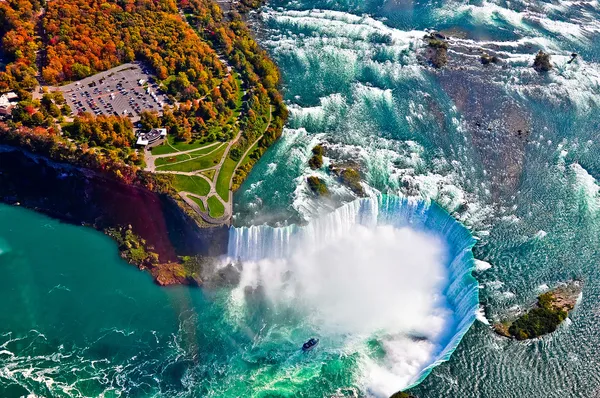
Water falls over a cliff. People pay to get closer to it than they could for free.
The falls themselves are genuinely impressive — millions of gallons per minute creating mist that can be felt from impressive distances — but the experience of visiting them involves navigating crowds and attractions that seem designed to prove that humans can find ways to monetize anything, even natural wonders that were spectacular long before anyone thought to charge admission to see them.
The boat tours that take visitors close to the base of the falls provide perspectives that justify the ticket price, but the surrounding area feels like a carnival that happens to be adjacent to one of nature’s more impressive displays of power. Locals on both sides of the border know spots where the falls can be viewed without the accompanying gift shops and overpriced restaurants, but those locations require knowing where to look rather than following signs that lead to parking lots.
Willis Tower Skydeck

Chicago’s tallest building offers views of a flat city stretching toward horizons that disappear into Lake Michigan and prairie farmland. The glass ledges that extend from the 103rd floor provide the sensation of standing in midair above the city, which creates dramatic photo opportunities and mild terror in equal measure.
But locals rarely visit unless they’re entertaining guests from out of town, partly because of the cost and partly because the view, while impressive, doesn’t reveal anything about Chicago that makes the city worth living in. The neighborhoods that give Chicago its character — the restaurants, the music venues, the corner bars where people actually gather — are invisible from 103 floors up.
The skydeck provides perspective, but not the kind that helps explain why people choose to live in a city where winter lasts six months and the wind off the lake can knock you sideways.
Liberty Bell

Philadelphia’s most famous artifact sits in a climate-controlled building designed specifically to house a bronze bell that cracked the first time it was rung and never worked properly afterward. The bell itself is genuine enough — it really was commissioned for the Pennsylvania State House in 1753 — but the experience of seeing it involves waiting in line to view an object that symbolizes American independence while learning that it spent most of its existence not working.
The Liberty Bell Center provides historical context and multimedia presentations that explain the bell’s significance, but locals know that Philadelphia’s role in American independence can be experienced more meaningfully by walking through Independence Hall or exploring the neighborhood where the constitutional convention actually met. The bell draws crowds because it appears in textbooks and tourist guides, not because viewing it provides insights into history that can’t be found in less crowded locations throughout the city.
Golden Gate Bridge

San Francisco’s most photographed landmark spans the Golden Gate strait with an elegance that justifies its reputation as one of the world’s most beautiful bridges. The International Orange paint color was chosen partly for visibility in San Francisco’s frequent fog, which means the bridge often disappears into clouds that make it look even more dramatic than usual.
But locals drive across it regularly for work or errands, which means they experience it as transportation infrastructure rather than as a tourist attraction. The bridge serves a purpose beyond looking beautiful in photographs — it connects San Francisco to Marin County and points north — and people who use it regularly know that the views are spectacular but the traffic can be miserable, especially when tourists stop in driving lanes to take photos.
National Mall

Washington D.C.’s two-mile stretch of museums and monuments contains enough American history and culture to justify weeks of exploration, but most tourists try to see it all in a day or two, which guarantees superficial experiences with institutions that deserve more attention than drive-by visits provide.
The Smithsonian museums house collections that scholars spend careers studying, but visitors often rush through them checking off famous exhibits rather than spending time with items that might actually teach them something new. Locals who work in D.C. know that the museums are less crowded on weekday mornings and that the monuments are more impressive at dawn or dusk when they’re not surrounded by tour groups and school buses.
The National Mall serves its purpose as a showcase of American culture and history, but it works better when experienced slowly rather than as a checklist to be completed.
Pike Place Market

Seattle’s waterfront market retains enough of its original function as a place where local vendors sell fresh fish and produce to feel authentic, but the experience of visiting involves navigating crowds of tourists who come to watch fishmongers throw salmon and take photos of flower stalls rather than actually shopping for groceries.
The market opens early for people who want to buy ingredients for dinner, not souvenirs to prove they visited Seattle. Locals know which vendors sell the best coffee and where to find fresh seafood that hasn’t been marked up for tourists, but they also know to arrive before the crowds or to shop at neighborhood markets that serve the same function without the performances designed for visitors with cameras.
French Quarter

New Orleans’ oldest neighborhood contains architecture and history that justify its designation as a National Historic Landmark, but the tourist experience of visiting focuses on bars and restaurants that serve expensive approximations of local cuisine rather than the actual culture that makes the city unique.
The balconies and courtyards that give the French Quarter its distinctive character house residents who live there year-round, which means the neighborhood functions as both a tourist destination and a place where people grocery shop and walk their dogs. But visitors rarely see the residential aspects because the guided tours focus on locations that serve alcohol or sell souvenirs rather than the architecture and history that make the neighborhood architecturally significant.
Statue of Liberty

New York Harbor’s most famous resident requires a ferry ride and advance planning to visit, which means seeing it involves more effort than many tourist attractions demand. The statue itself represents ideals about freedom and opportunity that continue to resonate, but the experience of climbing to the crown involves navigating security checkpoints and crowds that can make the visit feel more like an obligation than an inspiration.
The view from Liberty Island provides perspectives on Manhattan that justify the ferry ride, but locals know that the statue can be seen clearly from several free locations around New York Harbor, including the Staten Island Ferry, which runs regularly and doesn’t require advance reservations. The statue serves as a symbol that means different things to different people, but seeing it up close doesn’t necessarily enhance its symbolic power.
Plymouth Rock

The actual historical significance of this particular boulder is disputed, and historians debate whether the Pilgrims ever stepped on it at all. Visitors often arrive expecting a monumental landmark and instead find a relatively modest rock sitting beneath a protective canopy beside the waterfront.
Locals understand that Plymouth’s real value lies in its broader colonial history, museums, and waterfront district rather than a single stone. The rock serves as a symbol, but it’s a symbol that often leaves first-time visitors wondering if they missed something larger nearby.
Where the Locals Actually Go

The funny thing about tourist traps is that many of them aren’t completely bad. Times Square really is bright.
Niagara Falls really is powerful. The Golden Gate Bridge really is beautiful.
The problem isn’t that these places fail to deliver anything worthwhile — it’s that they’re often presented as the entire story when they’re really just the most marketable chapter.
Locals skip these attractions because they’ve already seen them, but also because they know what exists beyond them. Every city has neighborhood restaurants that never appear in guidebooks, parks without souvenir stands, and cultural landmarks that don’t need gift shops to justify their existence.
The most memorable trips usually happen when travelers spend a little less time chasing famous photo opportunities and a little more time exploring the places residents actually return to. That’s where cities stop performing for visitors and start revealing who they really are.
More from Travel Pug

- Underrated Italian Towns That Beat the Tourist Crowds
- Las Vegas Tourist Traps to Skip
- Prettiest Towns in Every US State
- 18 passport-free countries for Americans
- Signs Your Cruise Is Not Worth The Cost
Like Travel Pug’s content? Follow us on MSN.