

Travel broadens perspectives and creates memorable experiences, but it also puts people in situations where they’re culturally clueless and making mistakes they don’t even recognize.
Most travelers mean well.
They just don’t know what they don’t know, and nobody tells them until after they’ve already offended someone or created an awkward situation.
The worst part is that many of these mistakes are completely avoidable with minimal research or observation.
Some customs seem obvious once explained, but are somehow invisible to people experiencing them for the first time.
Others are counterintuitive enough that travelers do the opposite of what’s expected while thinking they’re being polite.
The result is a constant stream of cultural fumbles that locals have learned to expect from tourists, even though they’re collectively exhausted by them.
Let’s talk about what travelers consistently get wrong, why it happens, and what the actual custom is.
Shoes indoors

This trips up Americans constantly because the U.S. is inconsistent about shoes indoors — some households care, others don’t.
But in large parts of Asia, Scandinavia, and various other regions, removing shoes when entering a home is non-negotiable.
Not a preference, not a request — it’s what you do, as automatic as closing the door behind you.
Tourists either don’t know this or forget in the moment, walking into someone’s home with their street shoes on and tracking in whatever they’ve been stepping in all day.
The reasoning makes perfect sense once you think about it. Floors are living space.
People sit on them, kids play on them, sometimes people eat or sleep on them.
Wearing shoes indoors is like putting your feet on someone’s dining table.
It’s not just rude, it’s kind of gross.
But travelers from cultures where this isn’t standard often don’t even think about it until someone has to awkwardly point out the pile of shoes by the door.
What makes this worse is when tourists notice the shoes by the door, acknowledge the custom, then ask, “Oh, should I take off my shoes?” while still standing there in them.
Just take them off. Don’t make the host explicitly instruct you.
If you see shoes by the entrance, that’s your signal.
Even if you don’t see a pile, watch what your host does and follow their lead.
Greetings and physical contact

The number of cheek kisses varies by country, sometimes by region within a country.
Is it one kiss? Two? Three? Do you actually make contact or just do the air-kiss thing?
Which side do you start on? Tourists panic, locals laugh at them, and everyone feels awkward.
Then there are the cultures where kissing strangers is bizarre and you should be shaking hands, or bowing, or doing the slight head nod thing.
Americans, particularly men, are notorious for the aggressive handshake — firm grip, lots of eye contact, maybe even the two-handed clasp for extra sincerity.
This reads as normal in the U.S. but overly intense or even aggressive in places where handshakes are lighter and briefer.
Meanwhile, tourists from more reserved cultures often give these limp handshakes in places where a firm grip is expected, and locals interpret that as weakness or disinterest.
The solution isn’t memorizing every regional greeting variation.
It’s paying attention to what locals do and mirroring that. If everyone’s doing two cheek kisses, do two cheek kisses.
If everyone’s bowing, bow back.
If someone extends their hand, shake it with the same energy they’re offering.
This isn’t complicated, but it requires actually noticing what’s happening instead of defaulting to whatever you do at home.
Dining pace and meal structure

Americans eat faster compared to most of Europe.
The idea of a leisurely three-hour dinner feels indulgent or even wasteful to travelers who are used to eating and leaving within 45 minutes.
So they sit down at a restaurant in Spain or France or Italy, inhale their food, then wonder why the waiter isn’t bringing the check. Meanwhile, the server is wondering why these people are in such a desperate hurry.
In many countries, meals are social events, not just fuel stops.
The expectation is that you’ll sit, eat slowly, have drinks, talk, maybe have coffee or dessert, and occupy that table for a significant chunk of time.
Rushing through this process signals either rudeness or that something’s wrong.
Asking for the check the moment you finish eating suggests you’re unhappy and want to leave, not that you’re efficiently managing your evening.
The reverse happens too.
Tourists from cultures with slower dining paces go to places where meals are meant to be quick, then get frustrated that they’re being “rushed” when really they’re just misreading the local custom.
The key is watching what locals do. Are people lingering? Linger.
Are people eating and leaving? Eat and leave. Match the local rhythm instead of imposing yours.
Gift-giving expectations

In some cultures, bringing a small gift when invited to someone’s home is polite.
In others, it’s expected to the point where showing up empty-handed is offensive.
In still others, gifts need to be refused once or twice before being accepted, and accepting immediately is rude.
Tourists often either bring nothing when they should or bring something inappropriate, or accept a gift wrong, or create awkwardness by insisting someone accept something when they’re supposed to decline.
The specifics vary wildly.
In some places, you bring wine or flowers.
In others, bringing flowers is fine, but certain types or colors have negative meanings.
In some cultures, you bring fancy wrapped gifts.
In others, expensive gifts create obligation and discomfort.
In some places, you open gifts immediately in front of the giver.
In others, that’s incredibly rude and you’re supposed to wait until later.
This is one area where a quick search really helps.
“Gift etiquette in [country]” will get you solid guidelines.
The general rule is when in doubt, bring something small and consumable — good chocolate, nice tea, local specialties from your home country.
These are safe in most contexts.
And pay attention to how the host handles it.
If they set it aside without opening it, don’t insist they open it right away.
Gestures that don’t translate

The thumbs-up gesture is positive in the U.S. and offensive in some Middle Eastern countries.
The “OK” sign made with thumb and forefinger is fine in the U.S. but vulgar in Brazil and Turkey.
Beckoning someone with your finger pointing up is normal in some places, offensive in others where you’re supposed to beckon with your palm down.
Pointing with your index finger is standard some places, rude in others where you should point with your whole hand or chin.
Tourists use gestures constantly without thinking about it, especially when language barriers make verbal communication hard.
Then they inadvertently insult someone or create confusion because that gesture means something completely different in the local context.
The problem is these gestures are so automatic that people don’t even realize they’re doing them.
The universally safest approach is just using fewer gestures overall when you’re unsure of local meaning. If you need to point, use your whole hand.
If you need to get someone’s attention, use words or eye contact.
If you want to indicate yes or no, say it rather than nodding or shaking your head, since even those aren’t universal.
This feels unnatural at first, but it beats accidentally telling someone to f-off when you thought you were saying “good job.”
Escalator and sidewalk sides

Standing on the right, walking on the left.
Or is it standing on the left, walking on the right?
Depends on where you are. In most of the U.S. and Europe, stand right, walk left.
In Japan and Australia, it’s reversed. This seems trivial until you’re the person creating a human traffic jam because you’re standing on the wrong side, while locals behind you are radiating irritation.
The sidewalk version of this is even more inconsistent.
In some places, everyone walks on the right. Some places, left.
Some places, there’s no clear system and it’s just chaos.
Tourists often walk wherever feels natural based on their home country, creating these awkward sidewalk standoffs where two people are trying to pass each other and both keep moving the same direction.
The fix is simple observation.
Look at what everyone else is doing.
If everyone on the escalator is standing on the right, stand on the right.
If people are walking on a particular side of the sidewalk, walk on that side.
If there’s no clear pattern, just stay alert and move with intention rather than drifting randomly and expecting others to navigate around you.
Taxis and ride-shares

In some places, you sit in the front seat of a taxi to be friendly.
In others, that’s weird and you should sit in back.
In some places, you make conversation with the driver.
In others, silence is preferred.
In some places, you round up the fare as a tip.
In others, tipping isn’t done.
In some places, you confirm the price before getting in.
In others, suggesting the driver might cheat you is insulting.
Ride-share apps have created new confusion because the norms are still being established.
Some places treat them like casual carpools where friendliness is expected. Others treat them like professional car services where minimal interaction is fine.
The rating system adds pressure — drivers and passengers both trying to figure out what behavior will get them five stars, often guessing based on their cultural expectations rather than local norms.
This is another area where watching locals helps.
How do they interact with drivers? Are they chatty or quiet? Where are they sitting?
If you’re truly unsure, err on the side of polite but reserved.
You can always warm up if the driver seems open to conversation, but starting overly familiar when that’s not the custom creates discomfort.
Restaurant summoning and payment

In the U.S., servers check in constantly. In France, they don’t, and trying to flag them down like you’re hailing a cab is considered rude.
In some Asian countries, there’s a button on the table specifically for summoning staff.
In some places, you pay at the table.
In others, you pay at a register.
In some places, splitting the bill is normal.
In others, it’s annoying and someone should just pay and settle up later.
American tourists especially struggle with the lack of constant service checking in other countries.
They interpret it as bad service when really it’s just a different model where you’re given space and expected to indicate when you need something.
Then they get increasingly frustrated, eventually flagging down the server in ways that are too aggressive for the local custom, and everyone ends up annoyed.
The payment thing creates similar confusion.
In some places, you never touch the bill — the server processes payment and returns with your card or change.
In others, you’re expected to take the bill to a register.
Trying to pay at the table when there’s a register system, or waiting at the table when you’re supposed to go pay, both create awkward delays.
Look around.
See what other diners are doing.
Copy that.
Bathroom customs
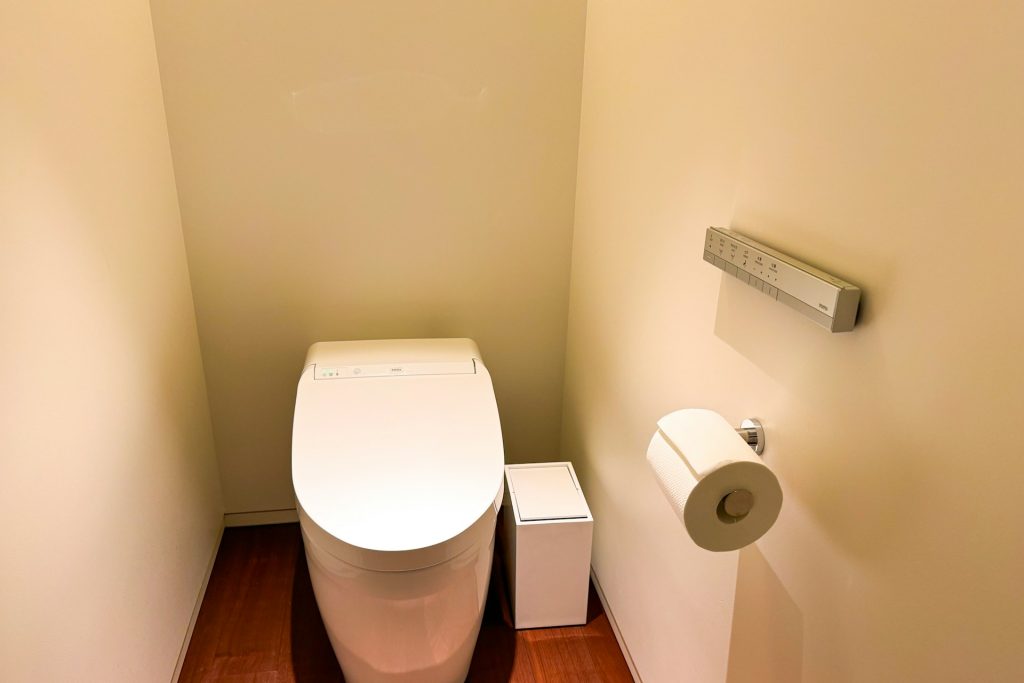
Some countries have squat toilets.
Some have bidets.
Some have elaborate electronic toilet systems with more buttons than a spaceship console.
Some charge for toilet use. Some expect you to tip the attendant. Some have paper, some don’t.
Some want you to throw paper in the toilet, others want it in the bin.
Tourists get all of this wrong constantly, either through confusion or because they refuse to adapt.
The toilet paper thing is especially contentious. Many places have plumbing that can’t handle paper, so there’s a bin beside the toilet for disposal.
Tourists from places where you flush paper often find this gross and flush it anyway, causing plumbing problems.
Or they don’t realize there’s no paper at all and learn this unfortunate fact too late.
Or they’re confused by the bidet situation and either ignore it or use it incorrectly.
This is one area where it’s worth doing the awkward research before you travel.
Look up bathroom customs for your destination.
Carry tissues or toilet paper with you if the place you’re going doesn’t consistently provide it.
If you encounter something unfamiliar, take a second to figure it out rather than just guessing and hoping for the best.
Photography permissions

Not everyone wants to be in your vacation photos.
This should be obvious, but tourists routinely photograph people without asking — street vendors, local workers, kids, people in traditional dress, anyone who looks “authentic” or “exotic.”
In some cultures and situations, this is fine.
In others, it’s invasive and offensive.
Sometimes people expect payment for being photographed.
Sometimes they’ll be insulted if you offer payment.
The worst version of this is tourists photographing people like they’re part of the scenery, especially in developing countries or indigenous communities.
Taking pictures of poverty, of people working, of religious ceremonies, all without asking or considering whether the subjects want to be content for someone’s Instagram.
The power dynamic is gross — tourists with expensive cameras photographing people who have little choice about being documented.
The solution is asking permission, ideally in the local language or at least with gestures that make your intention clear.
If someone says no, accept it without arguing or trying to sneak the photo anyway.
If you’re at a religious ceremony or cultural event, check whether photography is appropriate.
Some things aren’t meant to be captured.
The inability to experience something without documenting it is a personal problem, not everyone else’s responsibility to accommodate.
Public affection boundaries
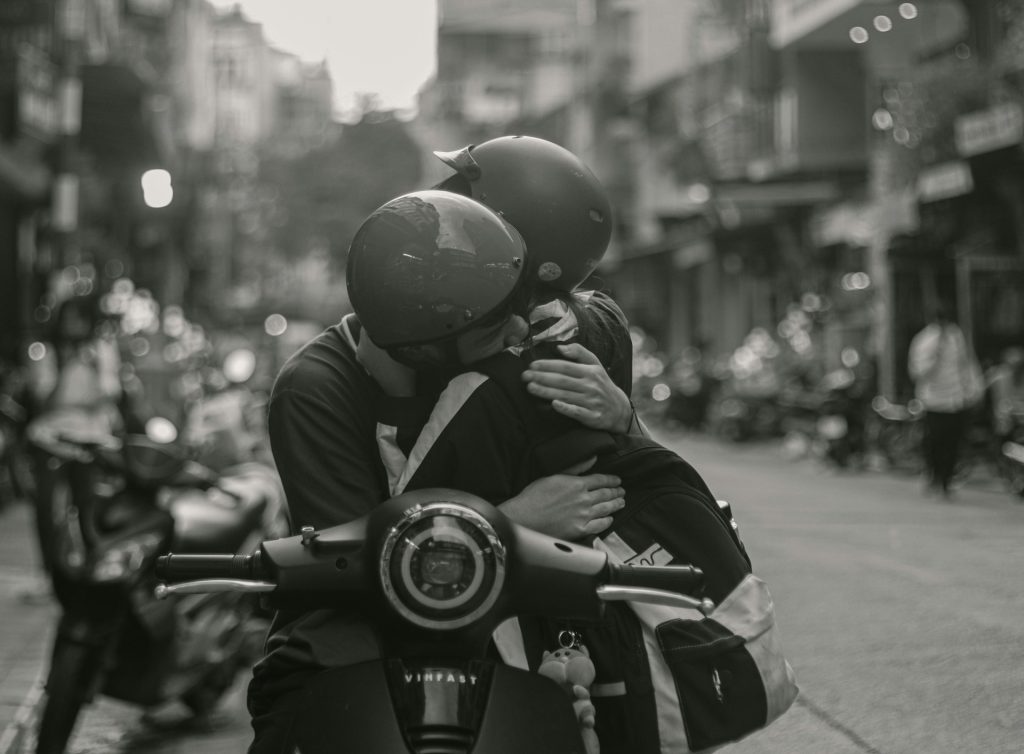
What counts as acceptable public affection varies enormously.
In some places, kissing in public is completely normal.
In others, even holding hands is pushing it.
In some cultures, same-gender friends walk arm-in-arm and it means nothing.
In others, any same-gender physical affection is read as romantic and potentially dangerous.
Tourists often either bring their home culture’s affection norms and offend people, or over-correct and act cold toward their travel companions.
This particularly affects couples from more liberal areas visiting conservative regions.
They’re used to casual affection and don’t think about it, then find themselves getting hostile looks or even confronted by locals or police.
The excuse “but we’re just being ourselves” doesn’t really hold up when you’re a visitor in someone else’s country with different standards.
You don’t have to like the local norms, but you do need to respect them while you’re there.
The reverse happens too — travelers from conservative cultures going to liberal areas and being shocked by the public affection they witness.
They’re not doing anything wrong by being surprised, but they become problematic when they start vocally judging or trying to impose their standards on locals.
You’re visiting their country.
They get to set the norms.
Punctuality standards

In some cultures, showing up exactly on time is expected.
In others, arriving exactly on time is weird and you’re supposed to be fashionably late.
In some places, 15 minutes late is basically on time. In others, being even five minutes late without notice is disrespectful.
Business meetings, social gatherings, and meals all have different timing expectations depending on where you are.
Tourists from punctual cultures visiting places with more flexible time norms often get frustrated waiting for things to start or for people to show up.
They interpret lateness as disrespect when really it’s just a different cultural framework around time.
Meanwhile, tourists from cultures with looser time norms show up late to things in places where punctuality matters, then don’t understand why people are annoyed.
When visiting someone’s home or attending a scheduled event, err on the side of your host’s cultural norms rather than yours.
If you’re unsure, ask what time actually means.
“Dinner at 7” might mean show up at 7, or show up at 7:30, or show up at 7 but don’t expect to eat until 9.
These differences aren’t arbitrary — they reflect different cultural values around time, scheduling, and social flexibility.
The pattern that emerges

Most of these mistakes share a common thread: tourists assuming their cultural norms are universal or at least should be accommodated, rather than recognizing they’re temporary visitors in someone else’s space.
The mistakes themselves are usually forgivable.
What grates on locals is the pattern of visitors who don’t even try to learn local customs, who get defensive when corrected, or who treat cultural differences as inconvenient rather than something to respect.
The irony is that travelers who make an effort to learn and follow local customs have richer experiences.
They get invited into homes, included in activities, given insider recommendations.
Locals respond warmly to visitors who show genuine interest and respect.
The tourists who can’t be bothered get the transactional version of their destination — the surface experience designed for people passing through without meaningful connection.
Both groups think they’re seeing the real place.
Only one actually is.
More from Travel Pug

- Underrated Italian Towns That Beat the Tourist Crowds
- Las Vegas Tourist Traps to Skip
- Prettiest Towns in Every US State
- 18 passport-free countries for Americans
- Signs Your Cruise Is Not Worth The Cost
Like Travel Pug’s content? Follow us on MSN.