

Ayutthaya was once one of the largest cities in the world, serving as the capital of the Siamese Kingdom for over 400 years before the Burmese invasion of 1767 reduced much of it to ruins. Today, this UNESCO World Heritage Site sits about 50 miles north of Bangkok and draws visitors from around the globe who want to wander through the skeletal remains of ancient prangs, crumbling chedis, and headless Buddha statues.
The atmosphere here feels otherworldly, especially when late afternoon light catches the red brick and beige stucco of temples that have weathered centuries of history. Here is a list of 15 historic temples in Ayutthaya that offer a fascinating glimpse into Thailand’s rich past.
Wat Phra Mahathat
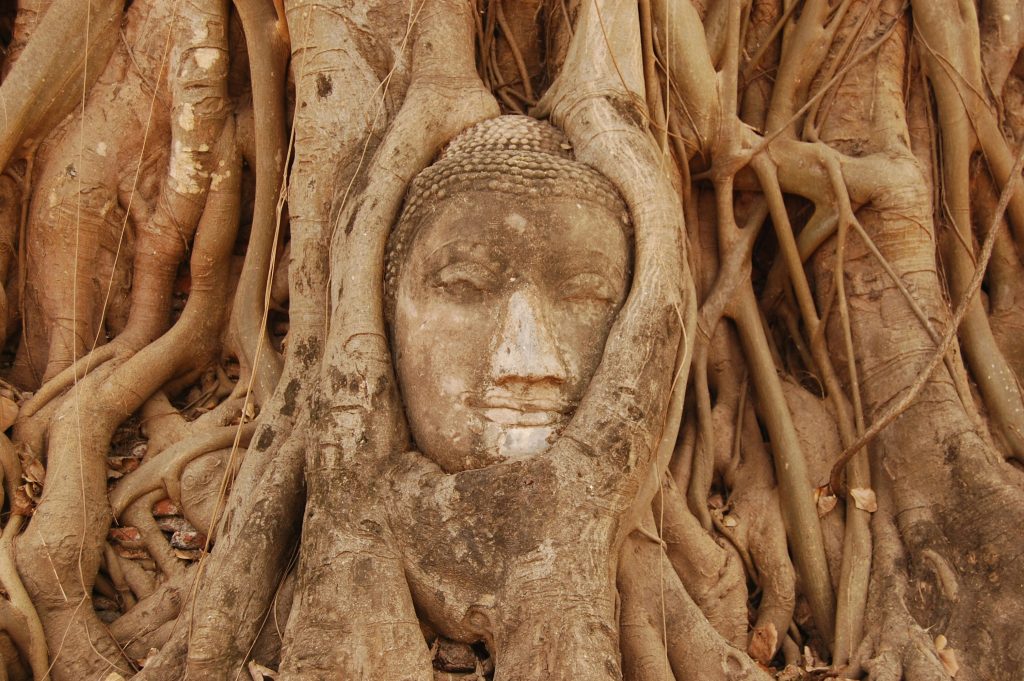
This ancient temple is probably the most photographed site in all of Ayutthaya, thanks to its iconic Buddha head wrapped in the roots of a banyan tree. The image has become something of a symbol for the entire historical park, and you’ll see it on postcards and tourism posters throughout Thailand.
Wat Phra Mahathat once served as the spiritual centre of the early Ayutthaya period and housed sacred Buddha relics in its now-collapsed Khmer-style prang. The temple grounds are sprawling, with dozens of headless Buddha statues lining the walkways, their heads looted or damaged during the Burmese sacking of the city.
Wat Phra Si Sanphet
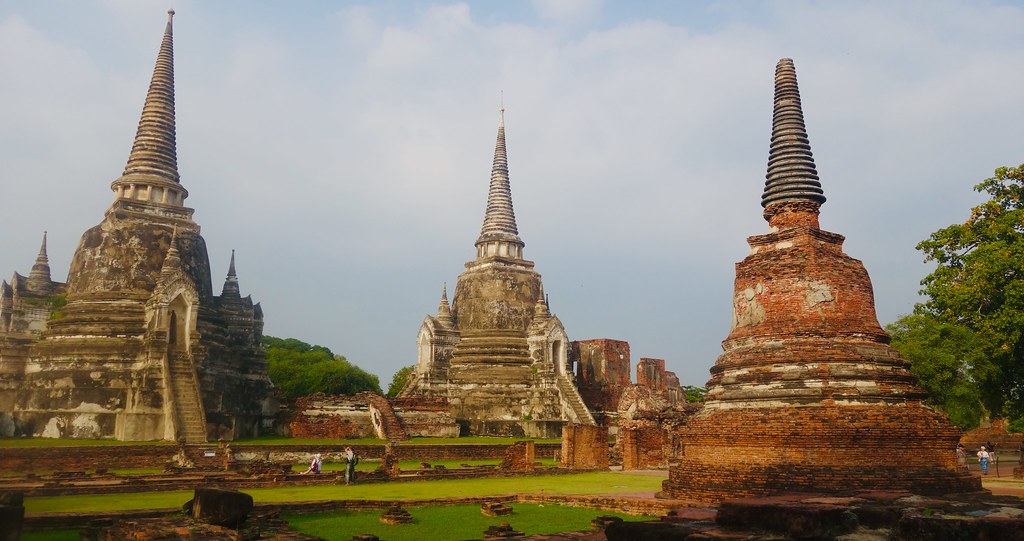
Considered the holiest temple on the grounds of the old Royal Palace, Wat Phra Si Sanphet features three iconic bell-shaped chedis that have become synonymous with Ayutthaya itself. Each chedi contains the ashes of Ayutthaya kings, specifically King Borommatrailokanat, King Borommarachathirat III, and King Ramathibodi II.
The temple was never home to monks because it functioned exclusively as a royal chapel where the king performed religious ceremonies. Walking through the expansive ruins today, you’ll pass crumbling walls, smaller chedis, and the remains of what was once the most important temple in the kingdom.
Wat Ratchaburana
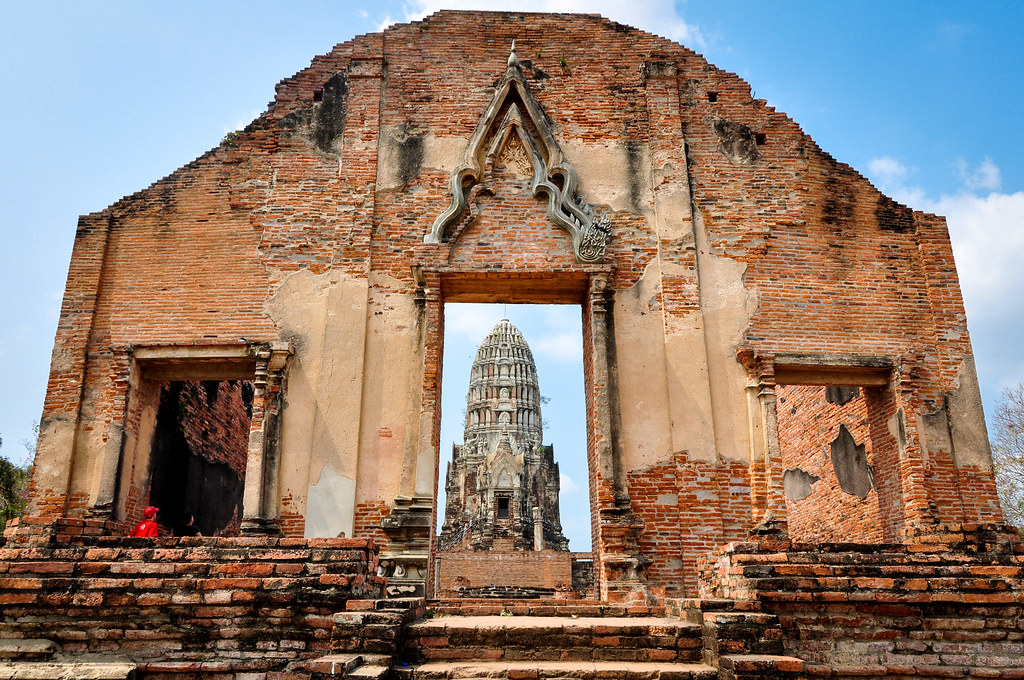
Built in 1424 by King Chaiyasittha after a tragic succession dispute between his two brothers who killed each other in a duel, Wat Ratchaburana stands as both a memorial and a treasure trove. The main prang here is impressive, and visitors can actually descend into chambers beneath it where archaeologists discovered gold artifacts, Buddha images, and elaborately painted murals that remain partially visible today.
The descent is steep and tight, so it’s not for everyone, but those who make it down get a rare glimpse at 15th-century Ayutthayan art. The temple grounds also feature several ruined prangs and chedis that hint at its former grandeur.
Wat Chaiwatthanaram
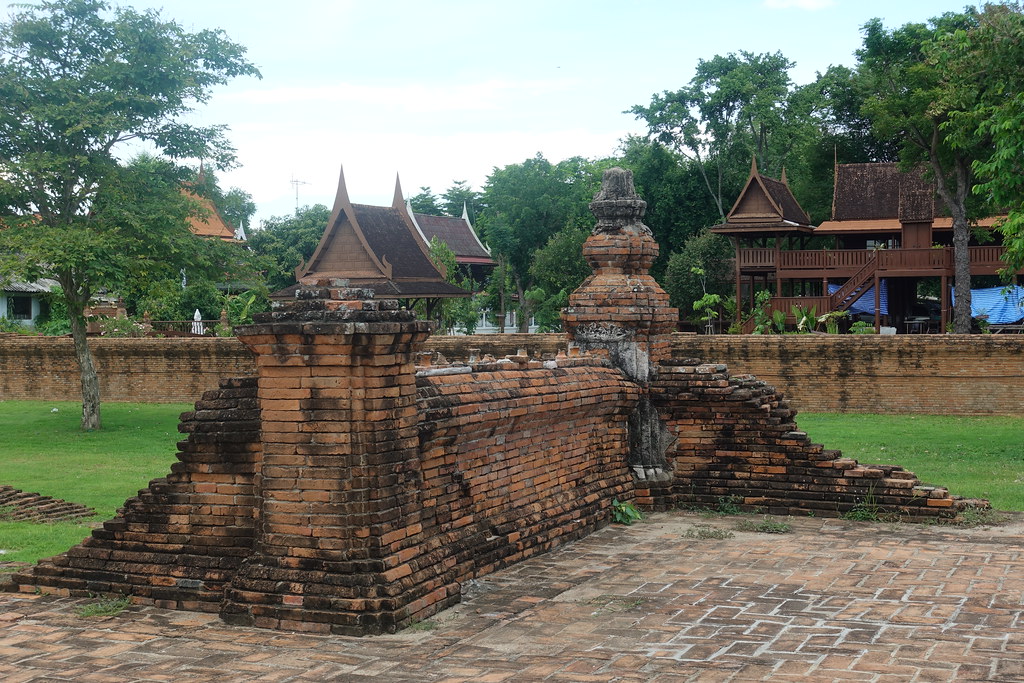
Sitting on the west bank of the Chao Phraya River, Wat Chaiwatthanaram is arguably the most photogenic temple in Ayutthaya, especially at sunset when the warm light turns its towers golden. King Prasat Thong built this temple in 1630 following his return from a successful campaign in Khmer lands, which explains its distinctly Cambodian-influenced architecture.
The central prang rises about 82 feet and symbolises Mount Meru, the centre of the universe in Buddhist cosmology. Around it, 120 seated Buddha images in various states of disrepair line the outer gallery walls, their heads long since removed by looters or time.
Wat Yai Chai Mongkhon
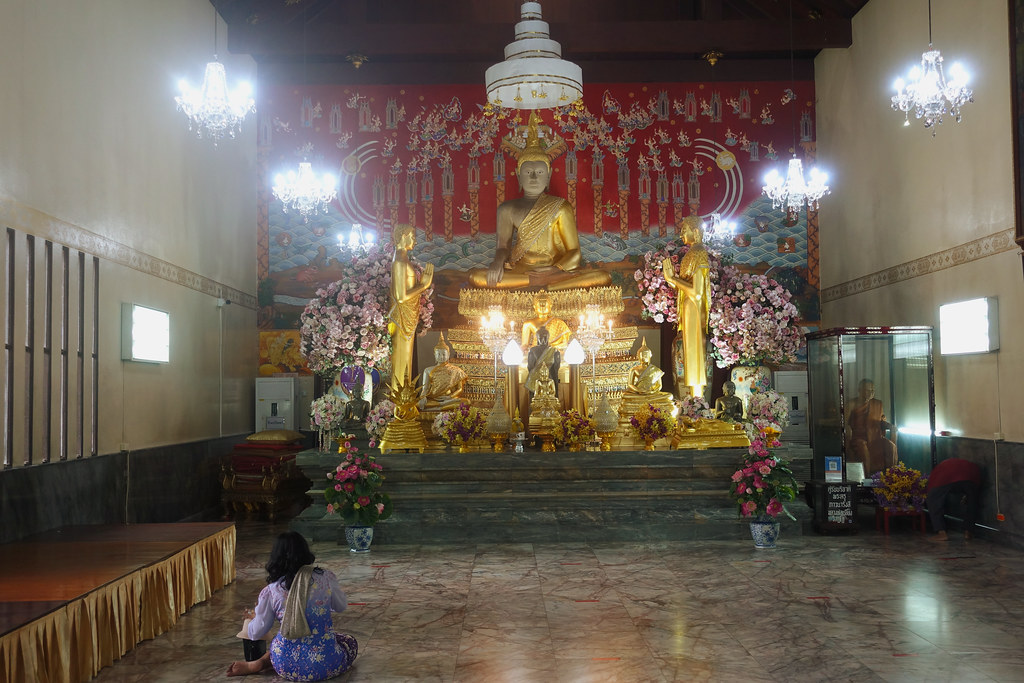
This is one of the best-preserved ancient royal monasteries in Ayutthaya, and it remains an active place of worship today. King U-Thong founded the temple during his reign in the mid-14th century as a forest temple school for monks who had studied in Ceylon.
The massive chedi here dominates the site, and you can actually climb partway up for views over the surrounding grounds where rows of Buddha images draped in saffron cloth create a striking visual. Outside the main temple area lies a large reclining Buddha measuring about 23 feet in length, peacefully stretched out amid the ruins.
Wat Phanan Choeng
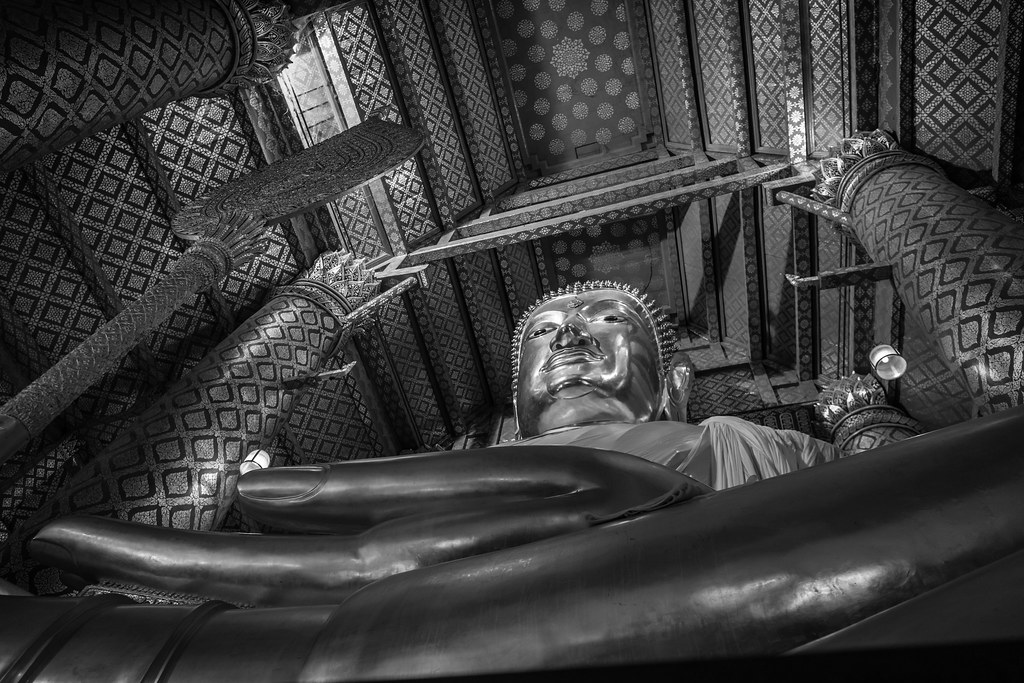
Before Ayutthaya even became the capital, this temple already existed, making it one of the oldest in the area. The star attraction is a 62-foot seated Buddha image called Luang Por To, built in 1325 and considered one of the largest, oldest, and most revered Buddha images in all of Thailand.
The statue sits in the ‘Subduing Mara’ pose and fills nearly the entire hall, creating an almost overwhelming sense of presence. Chinese pilgrims particularly favour this temple, and you’ll often find it bustling with worshippers making offerings and burning incense, which gives it a more lived-in feeling than the ruins elsewhere in the park.
Wat Lokayasutharam
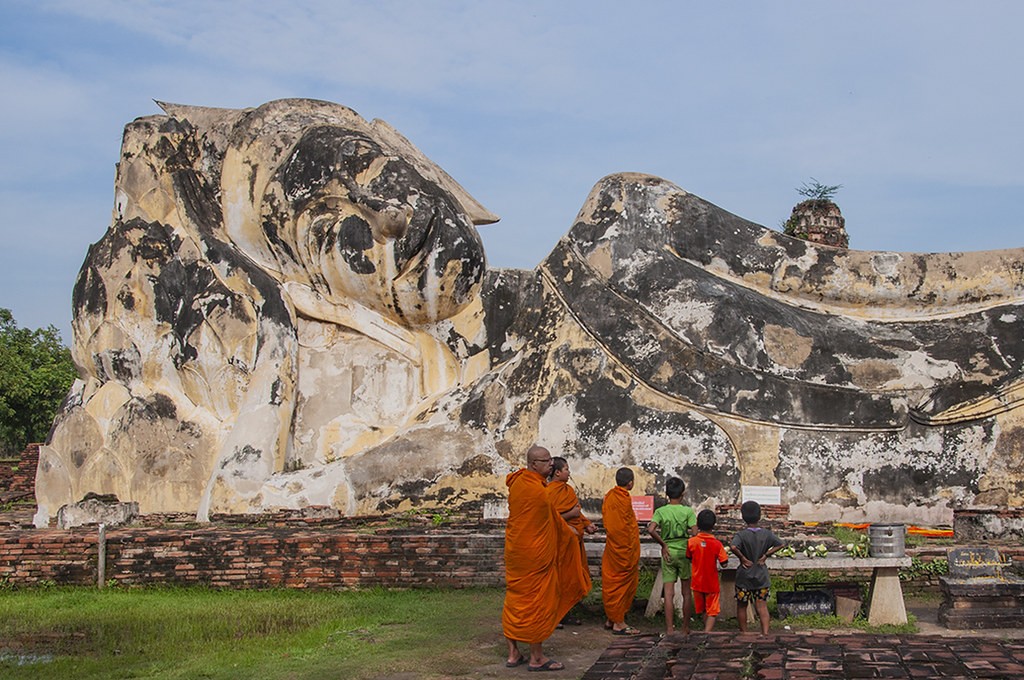
This temple is essentially one giant attraction: a 138-foot reclining Buddha that lies in the open air, its original temple structures having been completely destroyed. Covered in a large saffron-coloured robe and resting its head on a lotus blossom, the statue has a more rugged appearance than its famous counterpart in Bangkok.
The lack of surrounding buildings actually makes this one quite dramatic to approach, as you can see the enormous figure from quite a distance across the flat landscape. Local worshippers often leave offerings at the base, and small vendors nearby sell lotus flowers and incense for visitors who want to pay their respects.
Wat Phu Khao Thong
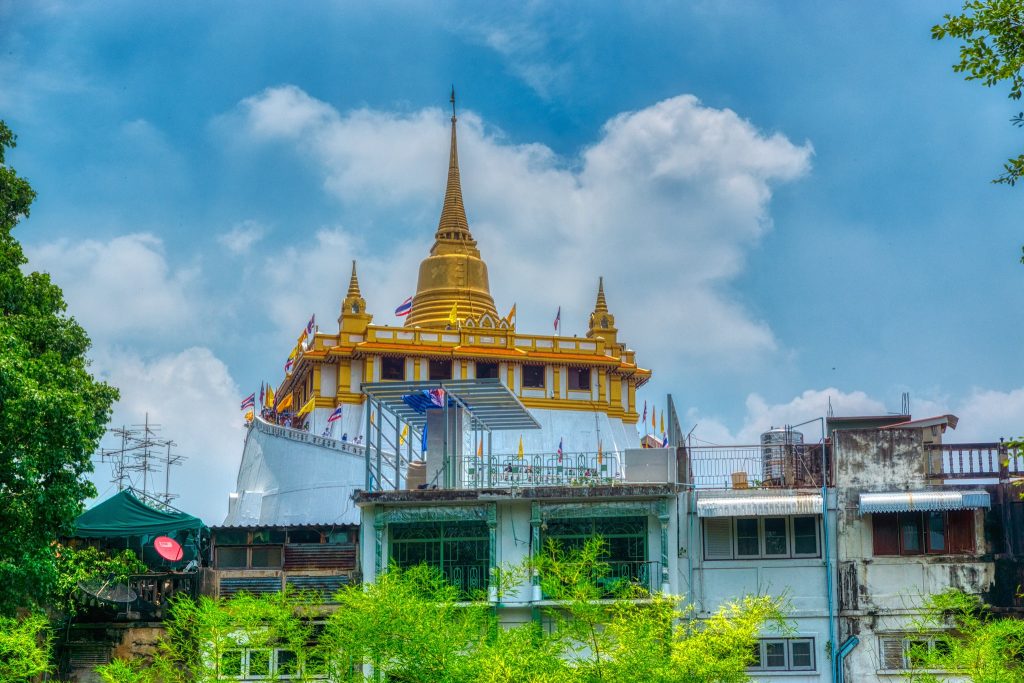
Surrounded by rice paddies and a small lake northwest of the main historical park, Wat Phu Khao Thong offers something the other temples don’t: panoramic views. The 164-foot white chedi dates to 1569 with modifications added over subsequent centuries, and visitors can climb the steep stairs to upper levels that provide impressive vistas across the surrounding countryside.
The name translates to ‘Golden Mount Temple,’ though the structure appears white today. Getting here requires a bit more effort than the centrally located temples, but the peaceful atmosphere and photo opportunities make it worthwhile.
Wat Na Phra Men
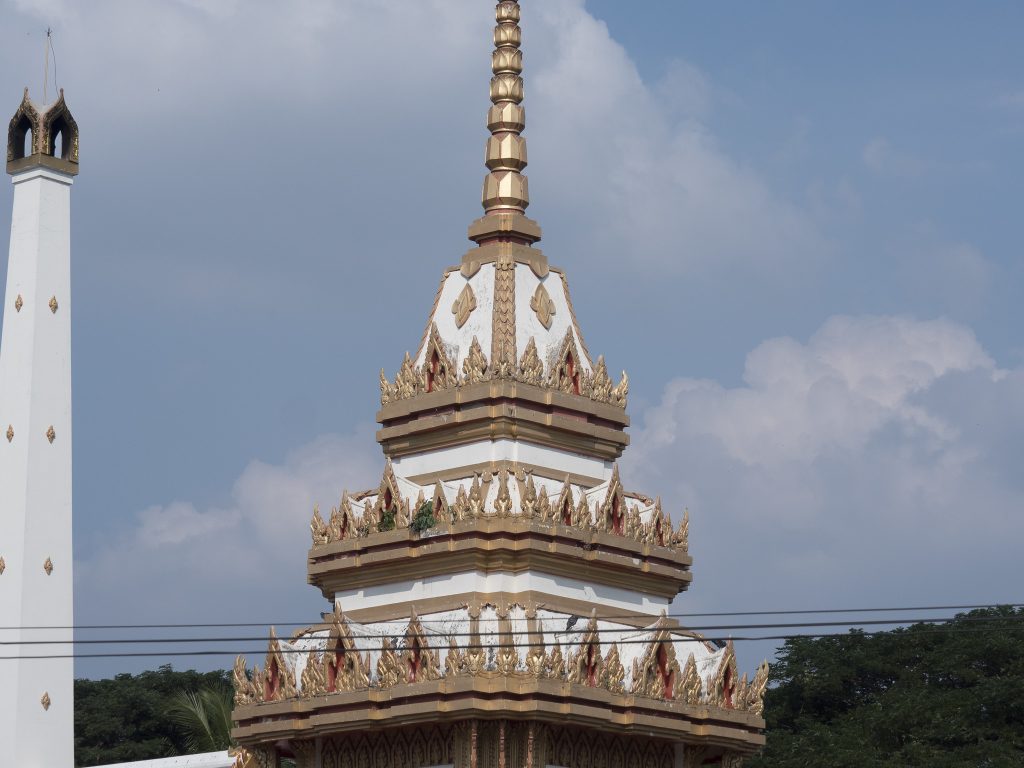
This is the only significant temple in Ayutthaya that escaped destruction during the Burmese invasion, which makes it unique among all the ruins here. The Burmese actually used the temple as a military headquarters during their siege, and legend has it that a Burmese commander died when a cannon misfired on the grounds, lending the site a certain spiritual potency in Thai culture.
Inside the ordination hall, a six-metre bronze Buddha wearing royal regalia and an ornate headdress sits in stunning condition. A smaller building nearby houses an unusual green stone Buddha carved in the Dvaravati style, depicting the figure seated in a chair with both feet on the ground rather than the typical cross-legged position.
Wat Phutthaisawan
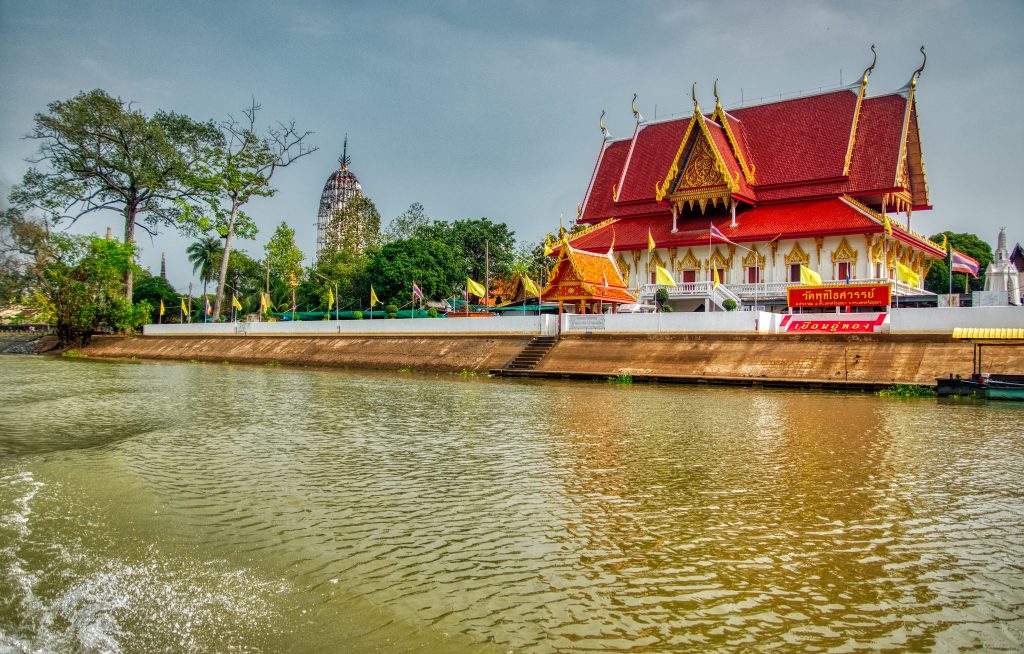
Built in 1353 during the reign of King U-Thong, this temple sits across the river from the main island and features a Khmer-style prang surrounded by a square cloister containing hundreds of Buddha images. The prang represents the cosmic Mount Meru and contains rare murals painted during the late Ayutthaya period that depict religious ties between Ayutthaya and what is now southern Thailand.
Within the ruins of an old chapel, you’ll find a reclining Buddha that’s smaller and arguably prettier than the one at Wat Lokayasutharam. The location along the riverbank makes this temple particularly accessible by boat tours.
Wihan Phra Mongkhon Bophit
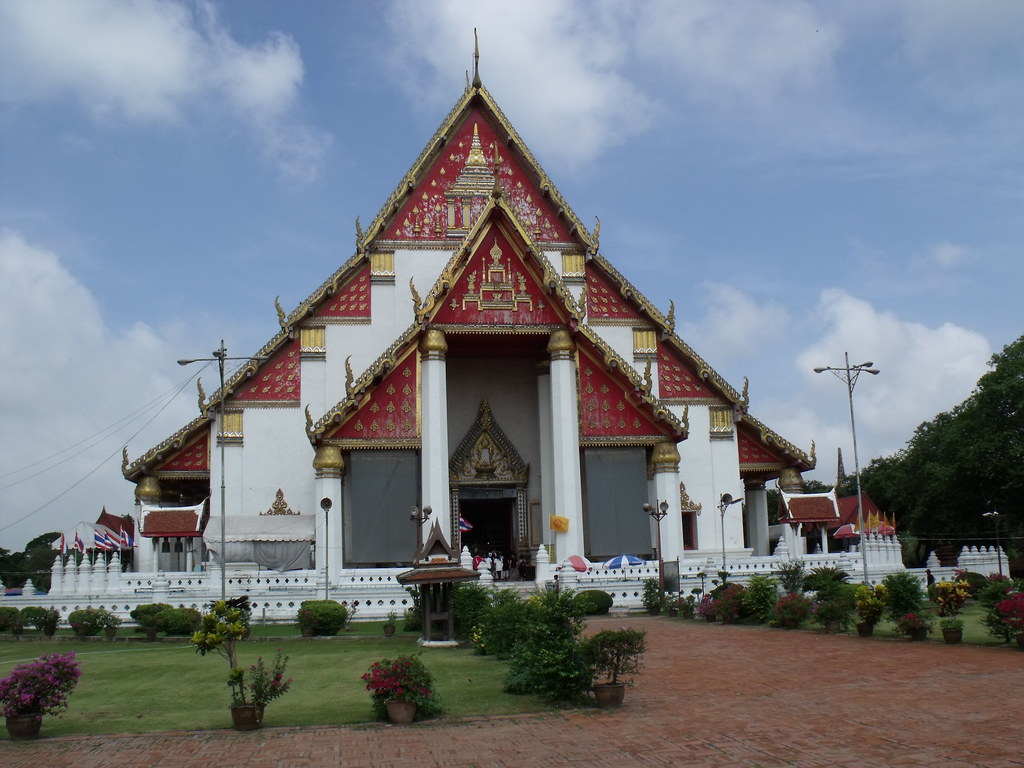
Adjacent to Wat Phra Si Sanphet, this temple houses one of the largest bronze Buddha images in Thailand, a 40-foot statue called Phra Mongkhon Bophit that was originally cast in 1538. The image has survived lightning strikes, fires, and the Burmese sacking, though not without damage.
Its head fell off at one point, and the current building actually dates to the mid-20th century after Queen Sirikit contributed to its reconstruction in 1956. Unlike most of the ruins in Ayutthaya, this is an active place of worship, and you’ll see Thai Buddhists making merit and leaving offerings throughout the day.
Wat Phra Ram
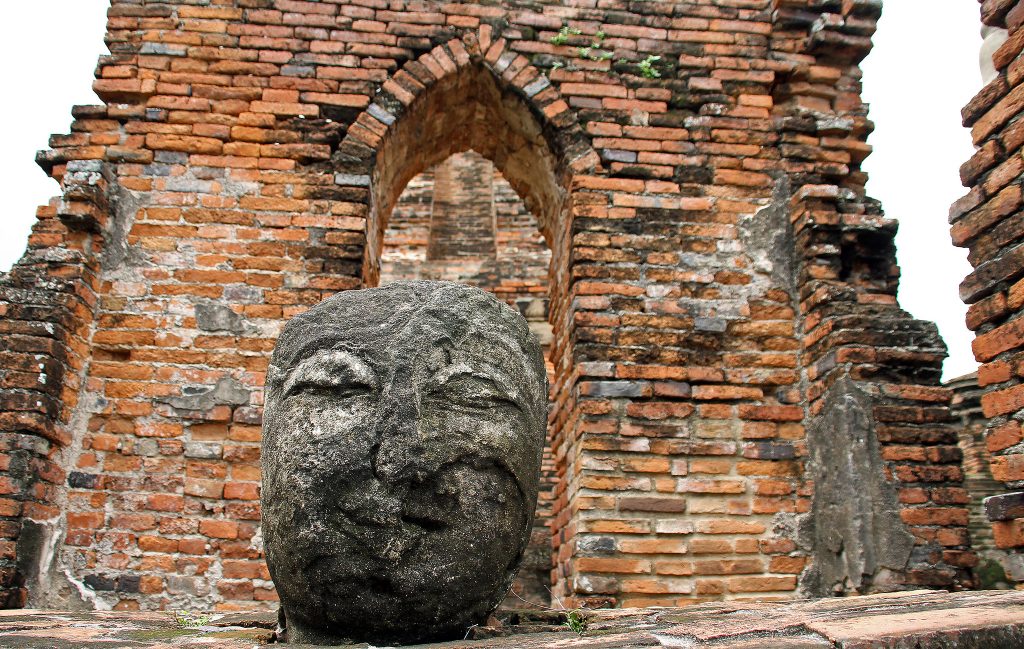
Founded in the late 14th century at the cremation site of King U-Thong, Wat Phra Ram sits in a park-like setting with small lakes surrounding its central Khmer-style prang. The corncob-shaped tower stands on an elevated platform decorated with sculpted Garudas and nagas, mythical creatures that appear throughout Thai religious architecture.
In the 17th century, four smaller prangs were added around the main structure, and the remains of a surrounding gallery still hold several broken Buddha images. The reflections of the prang in the surrounding water make this a particularly scenic spot for photography.
Wat Thammikarat
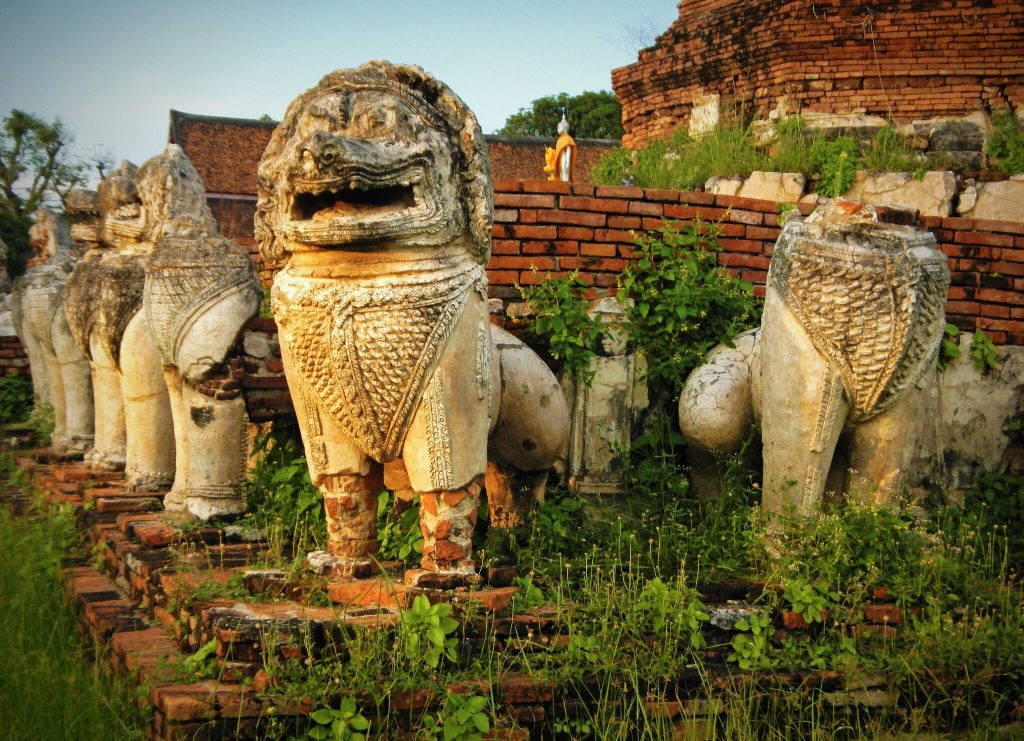
Some historians believe this temple predates Ayutthaya itself, possibly originating in the 12th century when the Khmer ruled this region. The ruins here include the substantial walls and pillars of a large viharn that once housed a bronze Buddha image, though only a replica remains on site now. The original head is displayed at the Chao Sam Phraya National Museum nearby.
What makes this temple distinctive is its association with roosters, and you’ll see statues of them throughout the grounds, left by devotees who believe the temple brings good luck. The atmosphere here feels less polished than the major sites, giving it an authentic sense of discovery.
Wat Maheyong
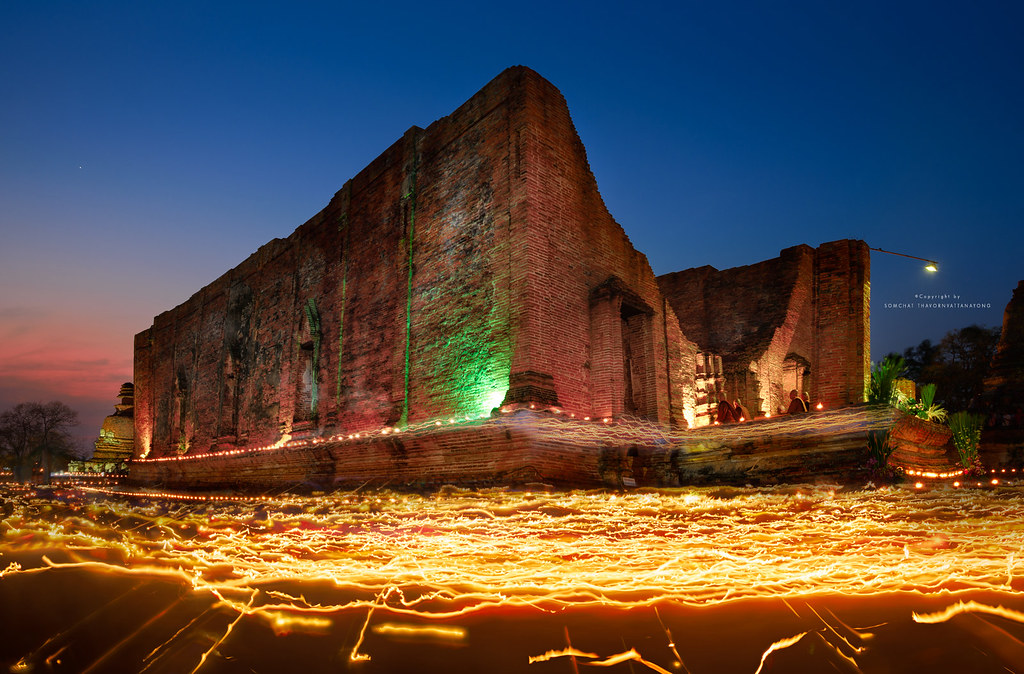
This meditation-focused temple lies on the quiet eastern edge of Ayutthaya and sees far fewer tourists than the central sites. King Borommarachathirat II established it in 1438 as a place for contemplation, and a modern monastery next door continues that tradition today.
Walking through the brick gate and down a long pathway flanked by ancient walls draped in low-hanging trees creates a dramatic entrance. At the rear of the grounds stands a partially intact bell-shaped chedi made of brick and plaster, while the roofless walls of the main hall occasionally host monks for chanting and meditation.
Wat Suwandararam
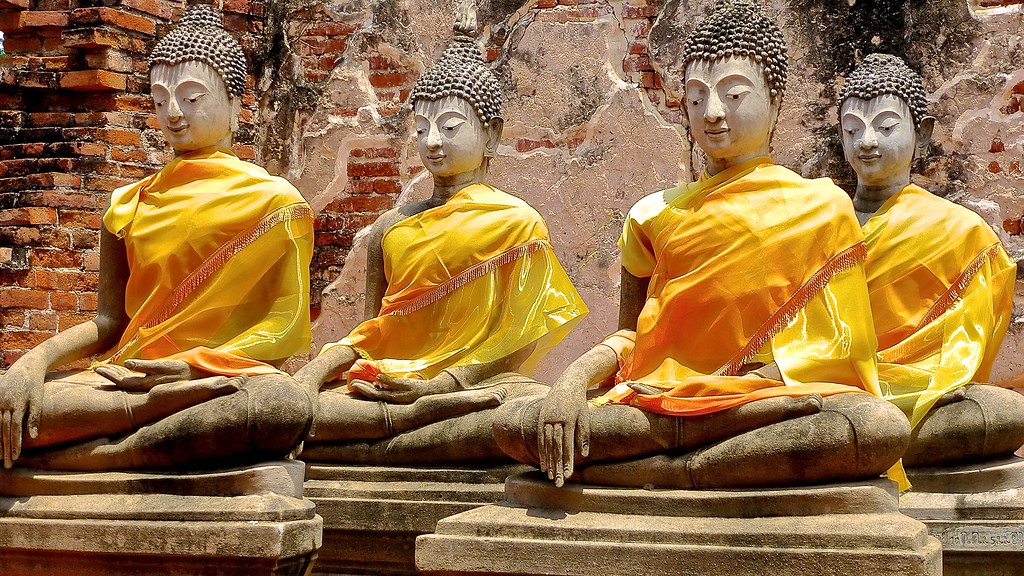
Originally called Wat Thong, meaning ‘Golden Temple,’ this site was built during the late Ayutthaya period by the grandfather of King Rama I. After the fall of Ayutthaya, the temple was abandoned until Rama I restored it and gave it its current name, which combines the names of his parents.
The temple features stunning mural paintings depicting King Naresuan’s military exploits, rendered in an unusual Western artistic style rather than traditional Thai techniques. A white pagoda on the grounds enshrines Buddha relics and was added during the reign of King Rama IV.
This remains an active monastery and one of Ayutthaya’s royal temples, giving visitors a glimpse of living Buddhist practice alongside the historical sites.
Where ancient stones still speak
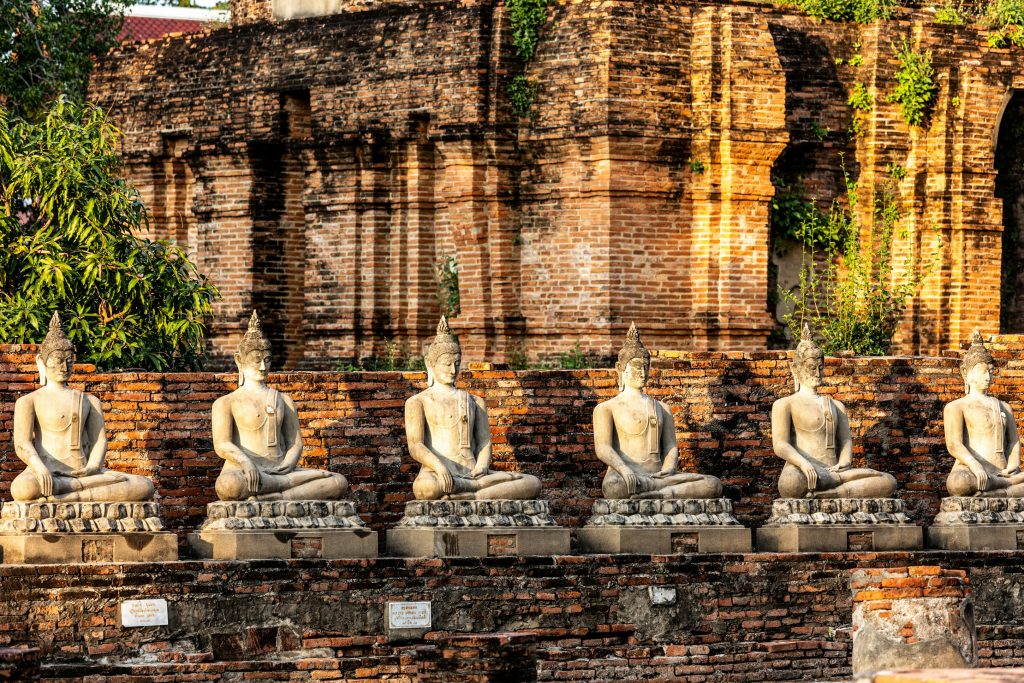
Ayutthaya’s temples represent more than just archaeological curiosities. They’re physical remnants of a kingdom that traded with nations from Japan to Persia and rivalled European capitals in size and sophistication.
Walking through these ruins today, past headless statues and crumbling prangs reclaimed by banyan roots, it’s impossible not to feel the weight of what was lost in 1767. Yet it’s equally impossible not to marvel at what remains and at the Thai people who have worked to preserve, restore, and continue worshipping at these sites for generations.
The stones may be silent, but the stories they hold still echo across the centuries.
More from Travel Pug

- Underrated Italian Towns That Beat the Tourist Crowds
- Las Vegas Tourist Traps to Skip
- Prettiest Towns in Every US State
- 18 passport-free countries for Americans
- Signs Your Cruise Is Not Worth The Cost
Like Travel Pug’s content? Follow us on MSN.