

The Pacific Northwest coastline stretches like a dramatic ribbon of cliffs, forests, and crashing waves—and scattered along this rugged edge are some of the most photogenic lighthouses in America. These aren’t just navigational aids.
They’re historical landmarks wrapped in fog, perched on rocky outcrops, and framed by sunsets that look almost too perfect to be real. Here is a list of 15 lighthouses in the Pacific Northwest that are absolutely perfect for photos.
Heceta Head Lighthouse
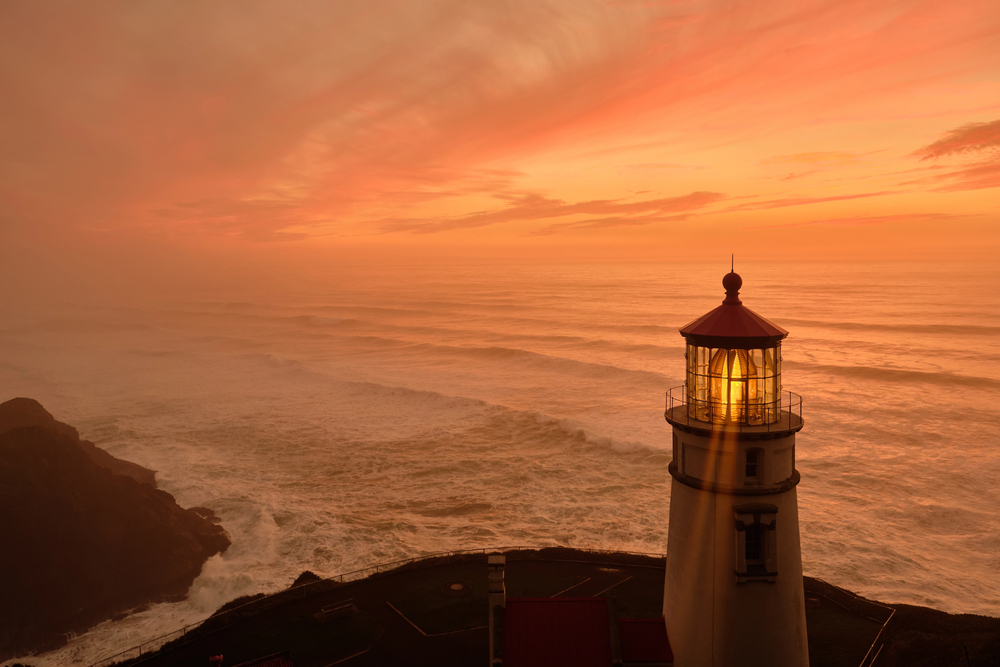
Perched midway along Oregon’s shoreline close to Florence, Heceta Head likely claims the title of most pictured lighthouse in the region. Rising 56 feet atop a promontory already elevated 205 feet above sea level, its pale tower offers sightlines stretching across vast distances.
Connected to the light is a former keeper’s residence—today serving as lodging—which brings visual warmth, particularly amid flowering meadows during spring and early summer months. Access begins with a walk just under a mile round-trip from the nearest lot; though brief, the path leads directly into striking coastal scenery.
Cape Disappointment Lighthouse
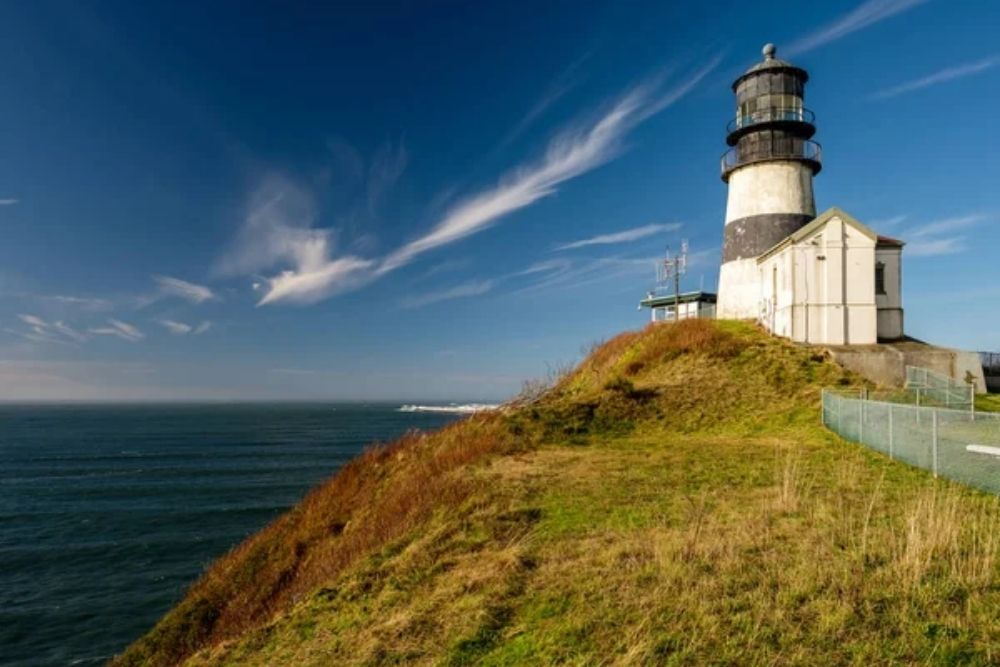
Don’t let the name fool you—there’s nothing disappointing about this Washington lighthouse. Built in 1856 near Ilwaco, it’s the oldest operating lighthouse in the Pacific Northwest and sits at the mouth of the Columbia River where the water churns like a washing machine.
The dramatic setting makes for moody, powerful photos, especially during storms when waves batter the cliffs below. You can hike up to the lighthouse itself, though the tower isn’t open to the public, and the surrounding Cape Disappointment State Park offers multiple vantage points for different angles.
Yaquina Head Lighthouse
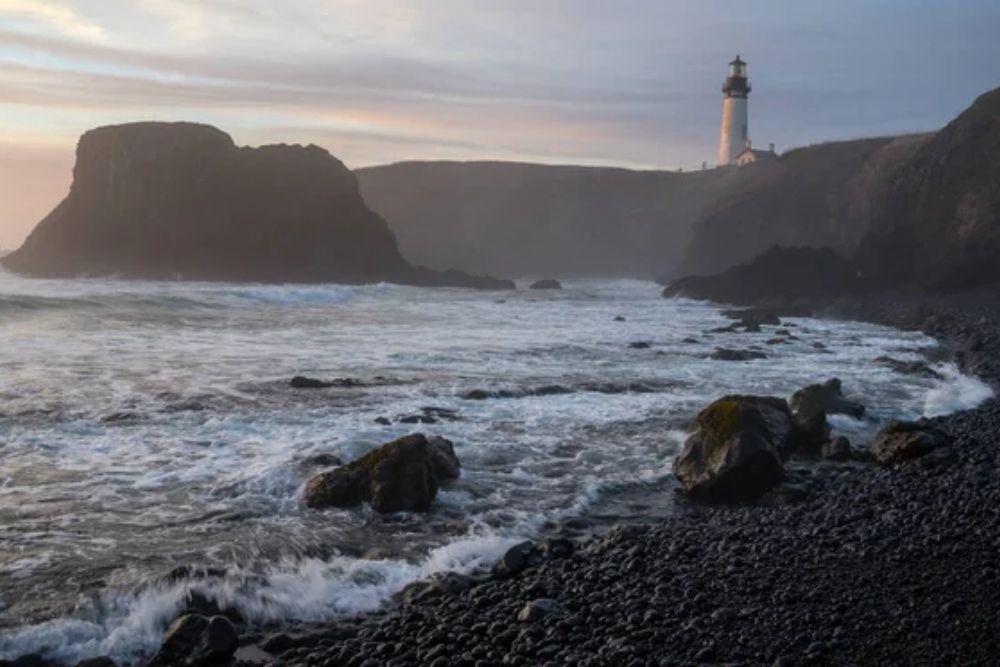
This is Oregon’s tallest lighthouse at 93 feet, standing on a basalt headland just north of Newport like a black-and-white exclamation point against the sky. The tower has been guiding ships since 1873, and it’s one of the few lighthouses where you can actually climb to the top—all 114 steps—for a bird’s-eye perspective of the coastline.
The surrounding area is part of an Outstanding Natural Area managed by the Bureau of Land Management, meaning the tidepools, seabird colonies, and whale-watching opportunities are protected and pristine. Golden hour here is unbeatable, especially when the light catches the white tower against a blue or stormy sky.
Battery Point Lighthouse
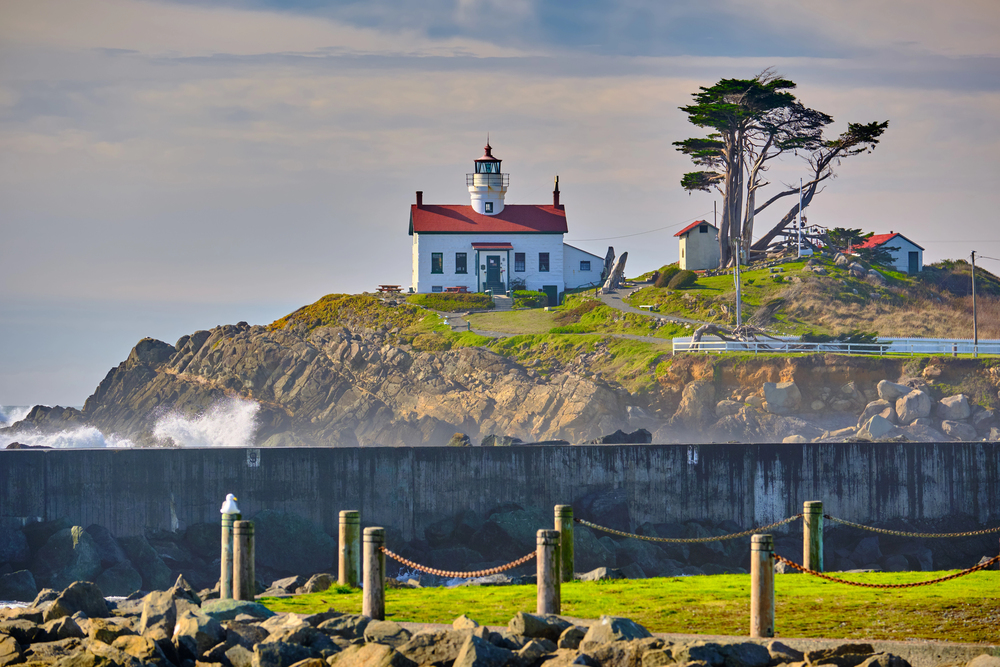
Perched on a tiny island off Crescent City in Northern California, Battery Point becomes accessible only during low tide when you can walk across the rocky causeway. Built in 1856, it’s one of the oldest lighthouses on the West Coast and functions as a museum today, complete with period furnishings and artifacts.
The island setting creates incredible photo opportunities—you can shoot the lighthouse from the mainland with waves crashing in the foreground, or walk out during low tide for closer compositions. Timing is everything here since the tide schedule dictates access, but that limitation actually makes the photos feel more exclusive and adventurous.
North Head Lighthouse
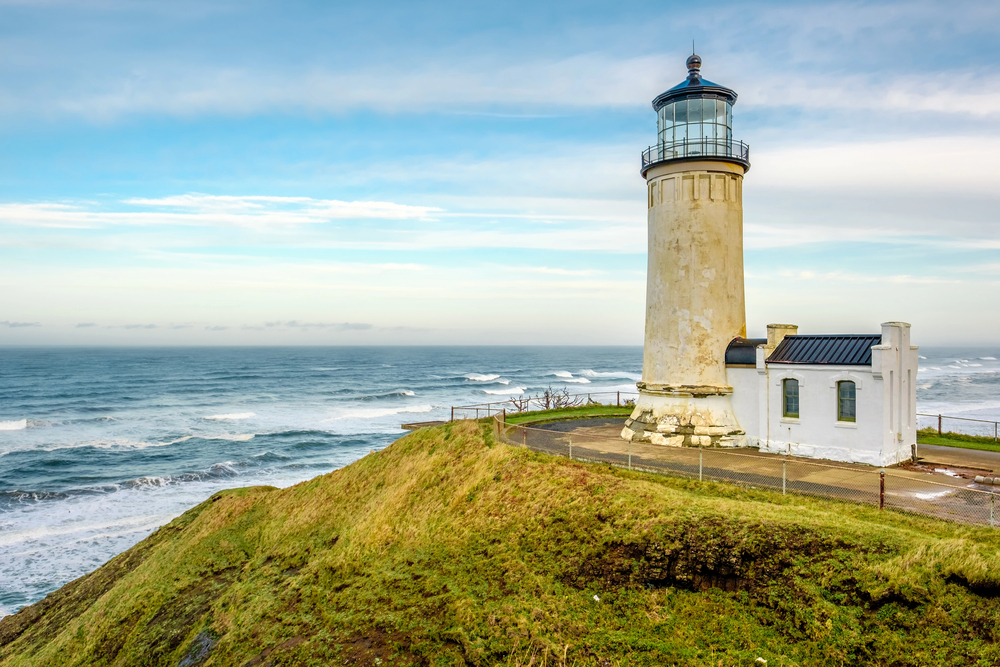
Just a couple of miles from Cape Disappointment, North Head offers a completely different perspective on the Columbia River’s treacherous entrance. This 1898 lighthouse sits 194 feet above the ocean on a windswept bluff that’s often shrouded in fog—which honestly makes for even better photos.
The red-roofed keeper’s quarters contrast beautifully with the white tower, and the surrounding forest of stunted spruce trees bent by constant wind adds an eerie, dramatic quality to your shots. The lighthouse is open for tours during summer months, but the exterior views are accessible year-round.
Cape Meares Lighthouse
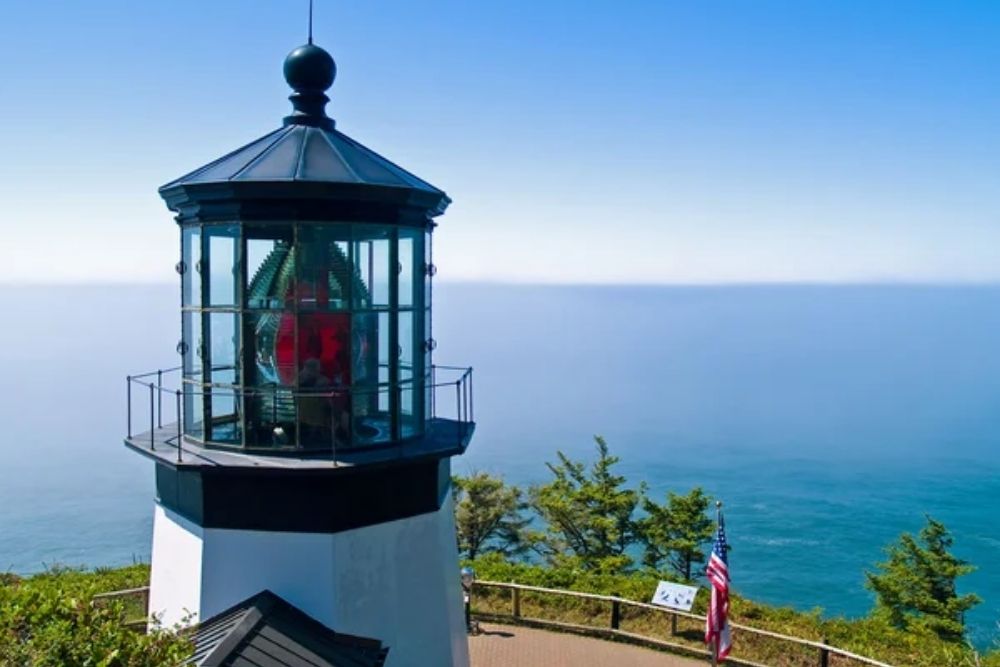
Standing at only 38 feet, Cape Meares holds the title of Oregon’s shortest lighthouse. Despite its modest stature, the structure carries strong presence.
Constructed in 1890 atop a cliff rising 200 feet above the ocean, it rests where land meets endless water. Its compact form appears solid, almost grounded, contrasting sharply with wild coastal views.
Inside, visitors encounter the original Fresnel lens—crafted from brass and glass—which remains one of the most substantial ever produced. This optical piece glimmers quietly under sheltered light.
Nearby grows the well-known Octopus Tree, an ancient Sitka spruce whose limbs twist outward like arms caught mid-motion. Along rocky edges below, tide pools host hidden life while seabirds gather in clusters overhead.
Moments here unfold without hurry, shaped by wind, salt, and time.
Grays Harbor Lighthouse
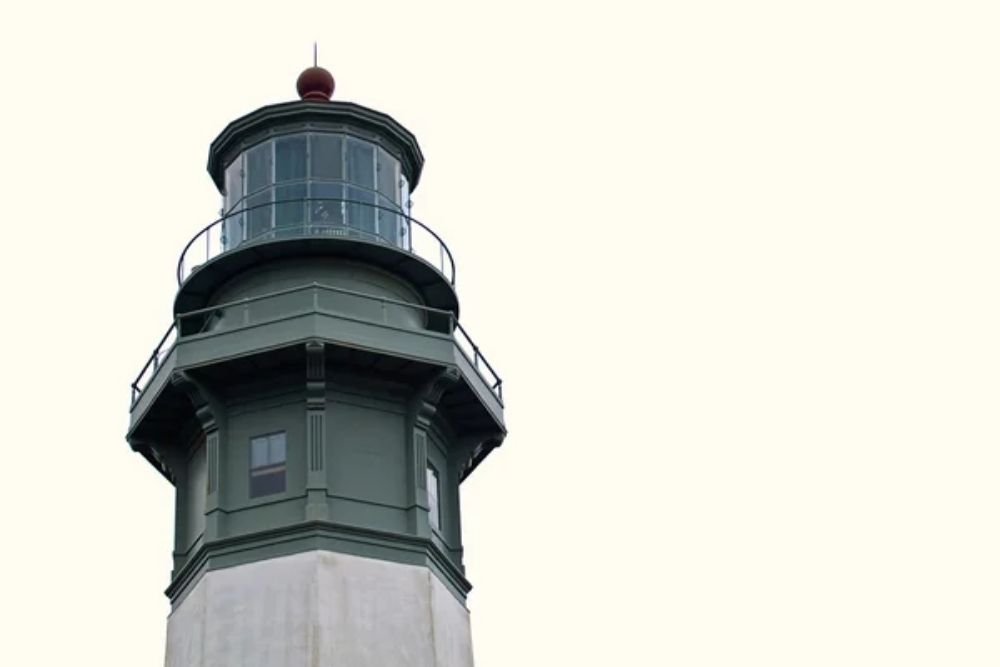
Standing 107 feet tall in Westport, Washington, this is the tallest lighthouse in the state and third tallest on the West Coast. The tower’s distinctive octagonal shape and red lantern room make it instantly recognizable, and the stark white exterior practically glows during the golden hour.
You can climb the 135 steps to the top for panoramic views of Grays Harbor and the Pacific, though the real photographic magic happens from ground level where you can capture the lighthouse’s full height with beachgrass and dunes in the foreground. The surrounding area is fairly flat and open, giving you plenty of room to experiment with different angles and focal lengths.
Coquille River Lighthouse
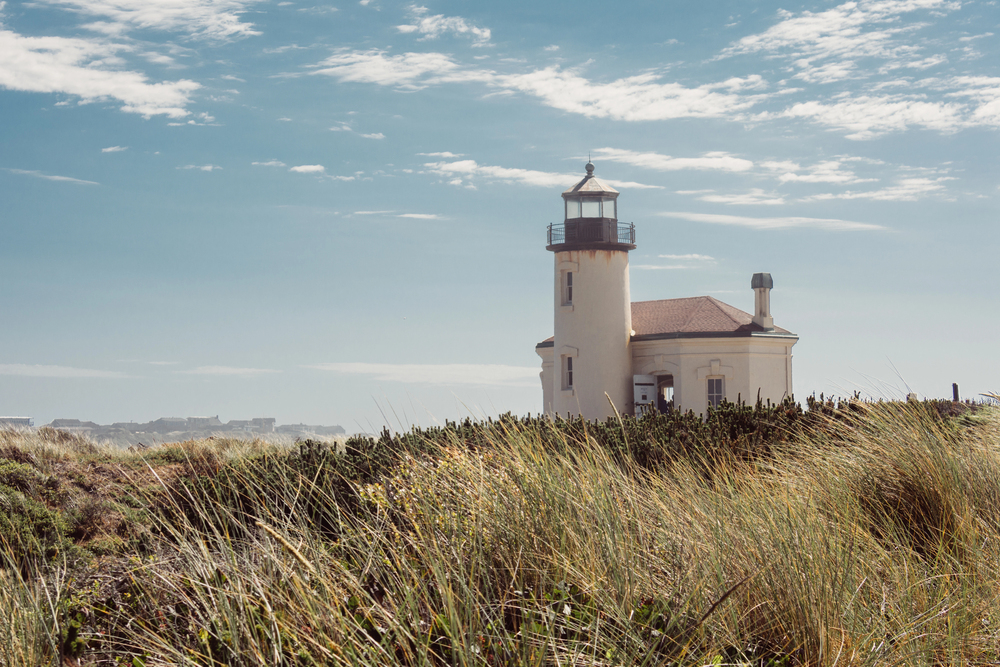
This quirky little lighthouse sits at the mouth of the Coquille River in Bandon, Oregon, and it looks more like a cottage than a traditional tower. Built in 1896, it only served until 1939 before being replaced by automated jetty lights, but it’s been beautifully restored and is now part of Bullards Beach State Park.
The blocky, residential design makes it unique among Pacific Northwest lighthouses, and the setting—surrounded by dunes, driftwood, and the river’s shifting sandbars—offers endless compositional possibilities. Sunset here is particularly stunning when the low light turns the white walls warm and golden.
Mukilteo Lighthouse
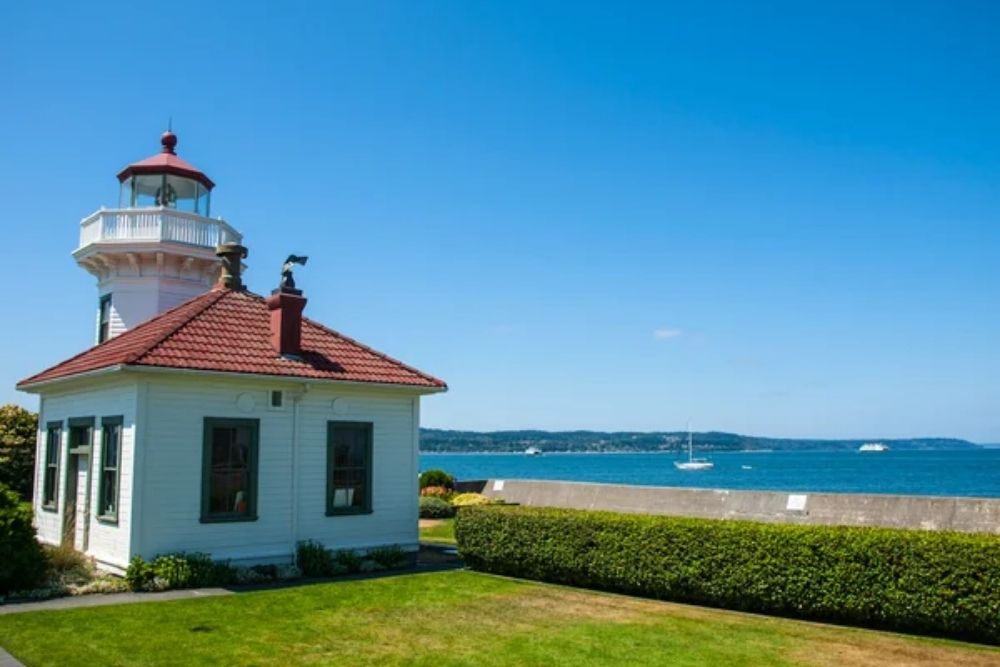
Located on Puget Sound north of Seattle, Mukilteo combines a classic lighthouse with an unexpected Victorian cottage charm. The white tower rises from a red-roofed keeper’s house that looks like it belongs in a fairy tale, and the whole complex sits on a small point with views across the sound to Whidbey Island.
Ferries pass by regularly, adding movement and scale to your photos, and the nearby beach provides foreground interest with driftwood logs and smooth stones. The lighthouse operates as a museum with limited hours, but the grounds are open daily and the compact site makes it easy to photograph from multiple angles.
Point Wilson Lighthouse
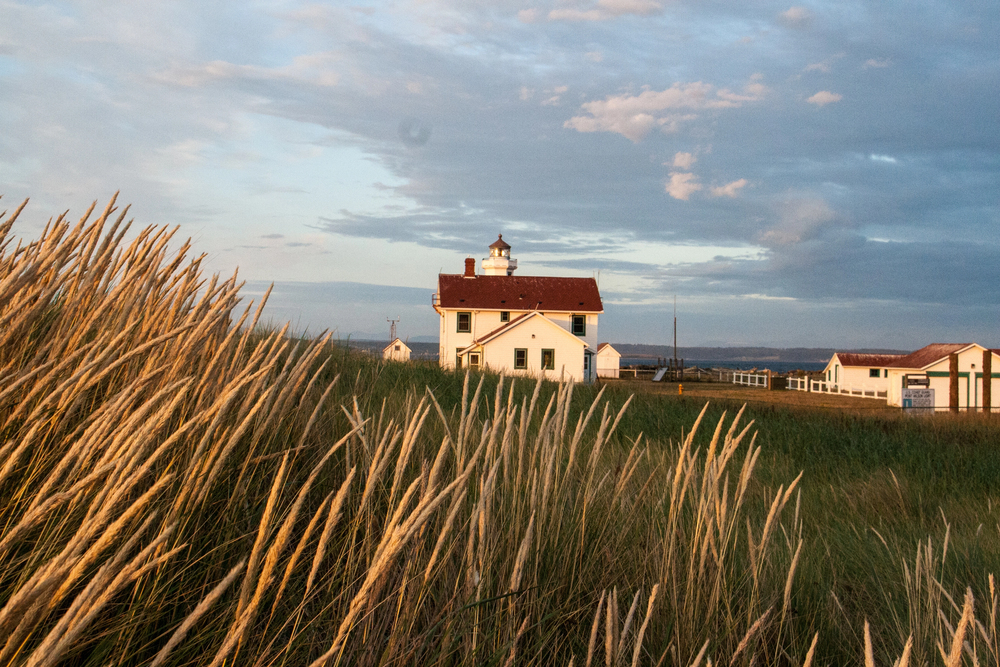
Guarding the entrance to Puget Sound near Port Townsend, Point Wilson has been warning ships away from the rocky point since 1879. The current tower, rebuilt in 1914, features an octagonal design with a distinctive black lantern room that photographs dramatically against cloudy skies.
The lighthouse sits on a sandy spit with Fort Worden State Park stretching behind it, giving you options to shoot from the beach with waves in the foreground or from higher ground for more context. The area is popular with kite surfers and beachcombers, adding human elements to your compositions if you want them.
Cape Blanco Lighthouse
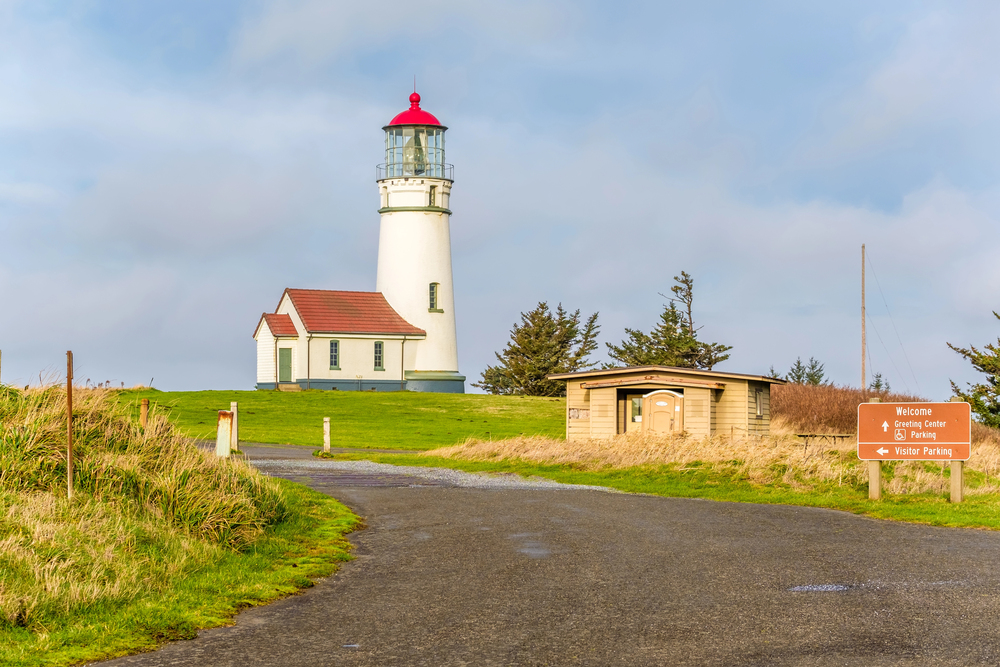
Oregon’s westernmost and oldest continuously operating lighthouse sits 245 feet above the ocean on a windswept headland that feels like the edge of the world. Built in 1870, Cape Blanco’s tower rises 59 feet and still uses its original first-order Fresnel lens—one of only a handful of Pacific Northwest lighthouses that can claim that distinction.
The surrounding landscape is stark and treeless, shaped by relentless wind into rolling grasslands that turn golden in summer and emerald in winter. This exposure creates dramatic, minimalist compositions where the lighthouse stands alone against sky and sea.
Admiralty Head Lighthouse
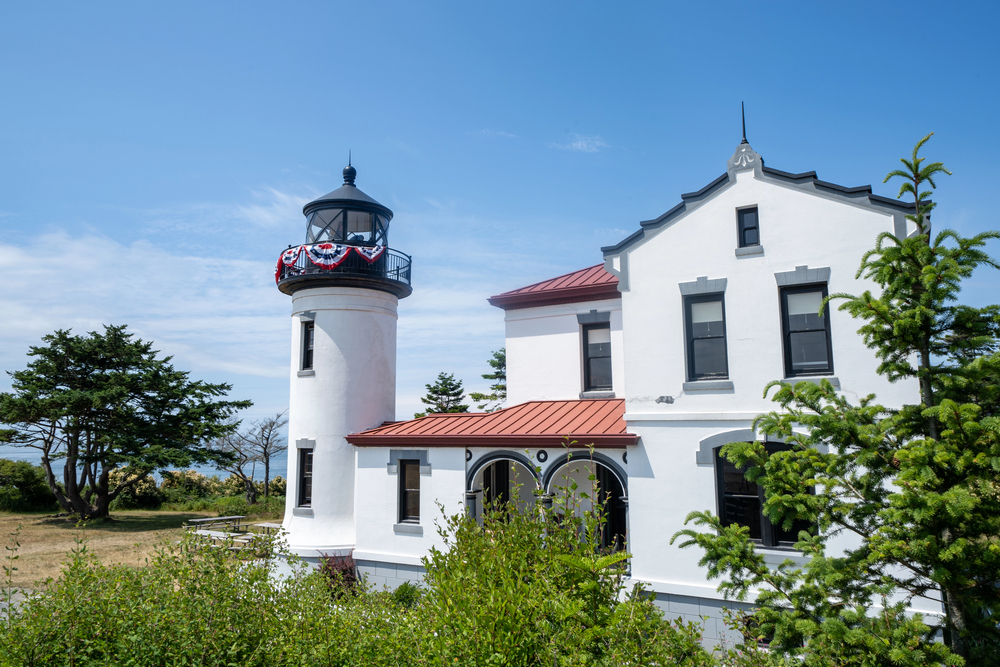
Sitting on a bluff at Fort Casey State Park on Whidbey Island, Admiralty Head is a Spanish Colonial Revival beauty built in 1903. The red tile roof and stucco walls give it a Mediterranean vibe that’s completely unexpected in the Pacific Northwest, making your photos look like they could’ve been taken in California or even Europe.
The lighthouse overlooks Admiralty Inlet with views of the Olympic Mountains when weather cooperates, and the surrounding fort’s historic buildings and gun batteries add interesting historical context to wider shots. The building now houses an interpretive center, but the exterior is what really shines photographically.
Lime Kiln Lighthouse
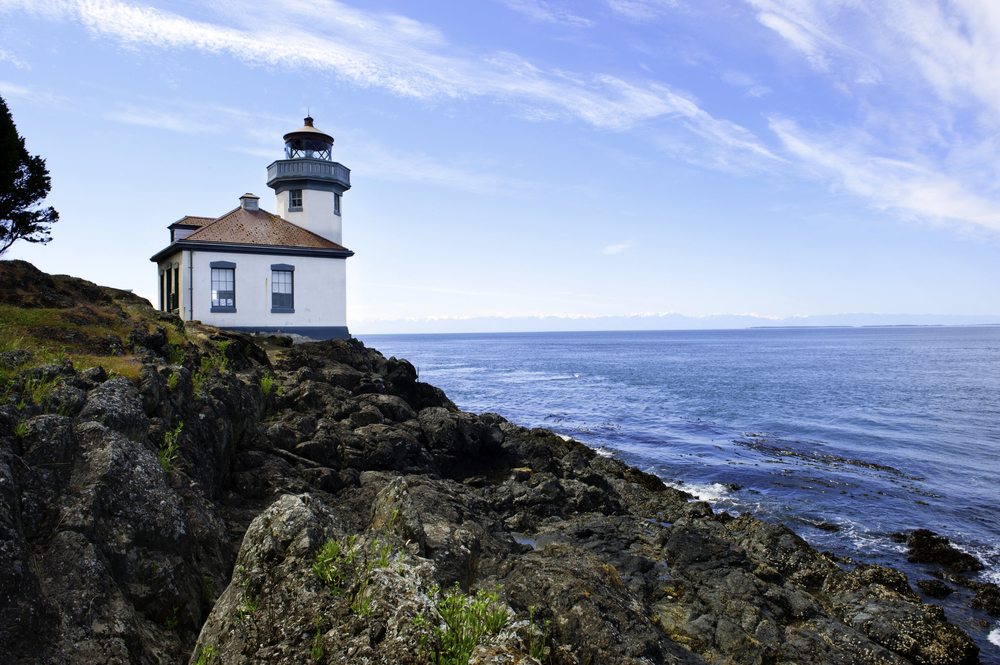
Perched on the rocky west shore of San Juan Island, Lime Kiln is famous as one of the best land-based whale-watching spots in the world. The 1919 lighthouse sits directly on the coastline with no barrier between you and the water, creating intimate, low-angle compositions that feel immediate and powerful.
Orcas frequently pass close to shore here during summer months—imagine capturing a lighthouse with a whale’s dorsal fin cutting through the foreground. Even without marine mammals, the rugged shoreline and Olympic Mountains across Haro Strait provide stunning backdrops in any season.
Umpqua River Lighthouse
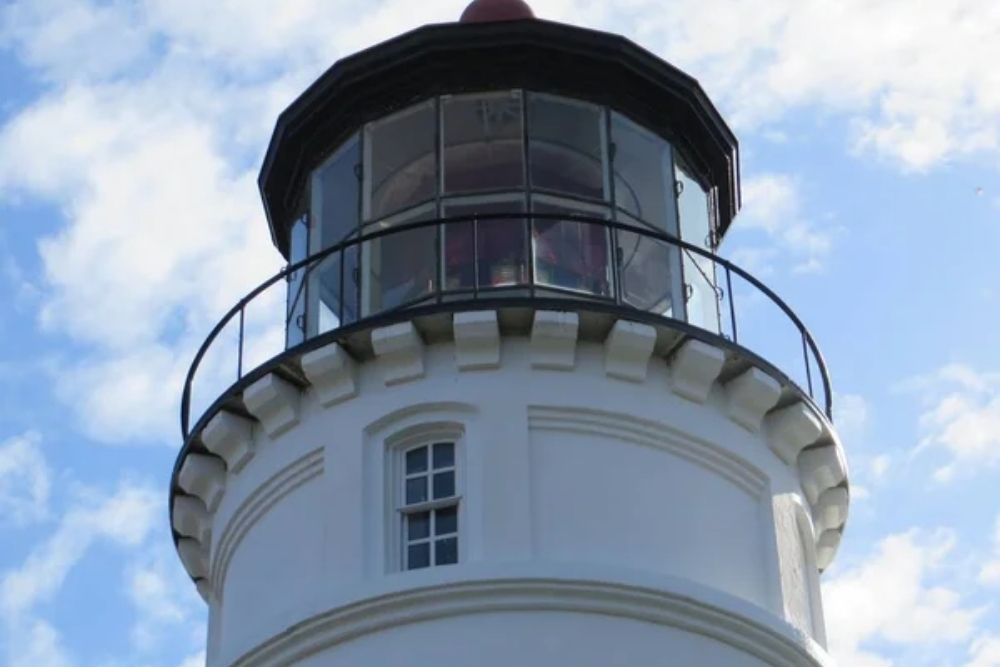
Located near Reedsport in Oregon’s dunes country, Umpqua River stands out with its distinctive red and white bands—the only striped lighthouse in the state. The 65-foot tower has been operating since 1894 after its predecessor was destroyed by river erosion, and it’s now part of a state park with a museum in the former oil house.
The surrounding landscape mixes coastal forest with open dunes, giving you diverse shooting environments within a small area. The nearby lake and dunes create opportunities for reflection shots and environmental portraits that show the lighthouse in its broader context.
Alki Point Lighthouse
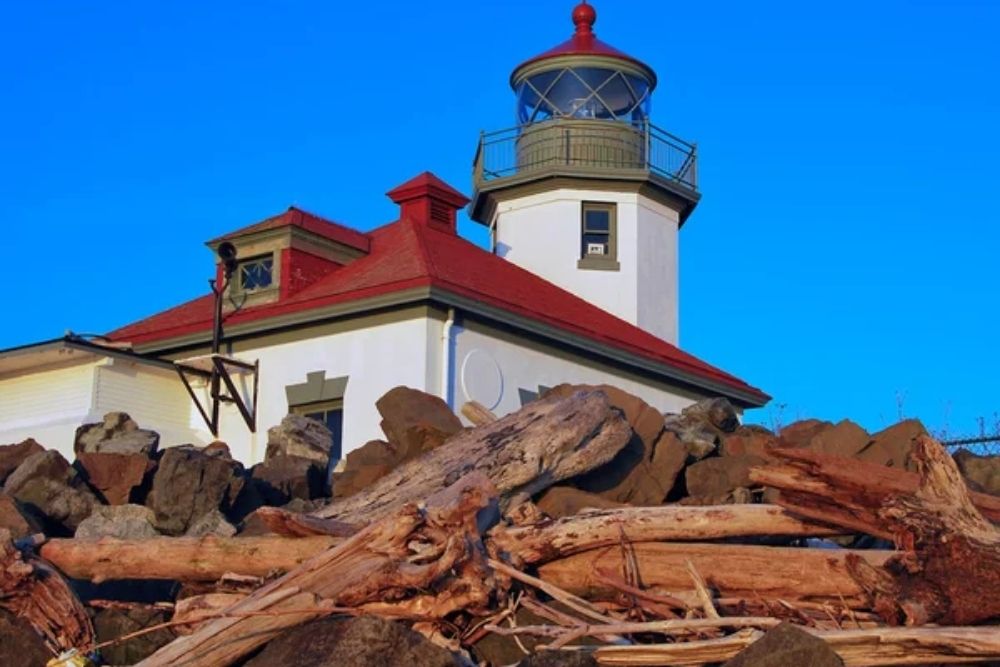
Seattle’s only lighthouse sits on a residential street in West Seattle, making it one of the most accessible spots on this list. Built in 1913, it’s a modest 37-foot octagonal tower attached to a Coast Guard station, but the urban-meets-maritime setting creates unique photographic opportunities.
You can shoot the lighthouse with the Seattle skyline in the background across Elliott Bay, or focus on the intimate details of the tower and surrounding beach. The location gets busy with locals walking dogs and watching ferries, giving your photos a lived-in, community feel that’s different from the isolated drama of most lighthouses.
Keepers of the Coast
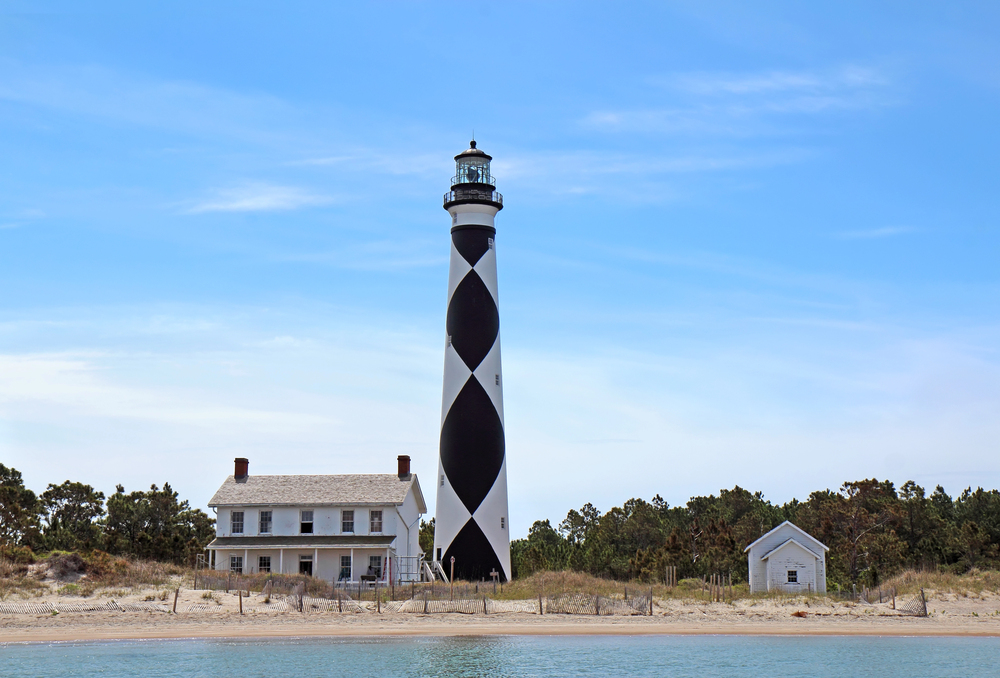
These lighthouses have watched over the Pacific Northwest for more than a century, guiding ships through fog and storm while becoming icons of the coastline themselves. They’ve survived earthquakes, budget cuts, and the march of technology that made most of them obsolete decades ago.
What keeps them standing now isn’t maritime necessity but something harder to quantify—they’re landmarks that anchor our relationship to this wild edge of the continent, reminding us that humans have always needed both warning and welcome when approaching the shore.
More from Travel Pug

- Underrated Italian Towns That Beat the Tourist Crowds
- Las Vegas Tourist Traps to Skip
- Prettiest Towns in Every US State
- 18 Passport-Free Countries for Americans
- Signs Your Cruise Is Not Worth The Cost
Like Travel Pug’s content? Follow us on MSN.