

There’s a particular kind of hunger that only a night market can satisfy — and it has almost nothing to do with food. It’s the pull of a street alive at 10 p.m., smoke rising off a grill, strangers shoulder-to-shoulder over plastic stools, and the strange comfort of being somewhere that clearly doesn’t need you to arrive with a plan.
Asia’s night markets are some of the most densely human places on earth. You don’t visit them so much as get absorbed by them.
Shilin Night Market

Shilin is the one that gets cited in every Taipei travel guide, and turns out, the reputation holds. The underground food hall alone — a labyrinth of stalls selling oyster vermicelli, scallion pancakes, and grilled corn slathered in butter — could occupy an entire evening without anyone feeling shortchanged.
Fried chicken cutlets the size of a human face. That’s the benchmark, and Shilin clears it comfortably.
Jalan Alor
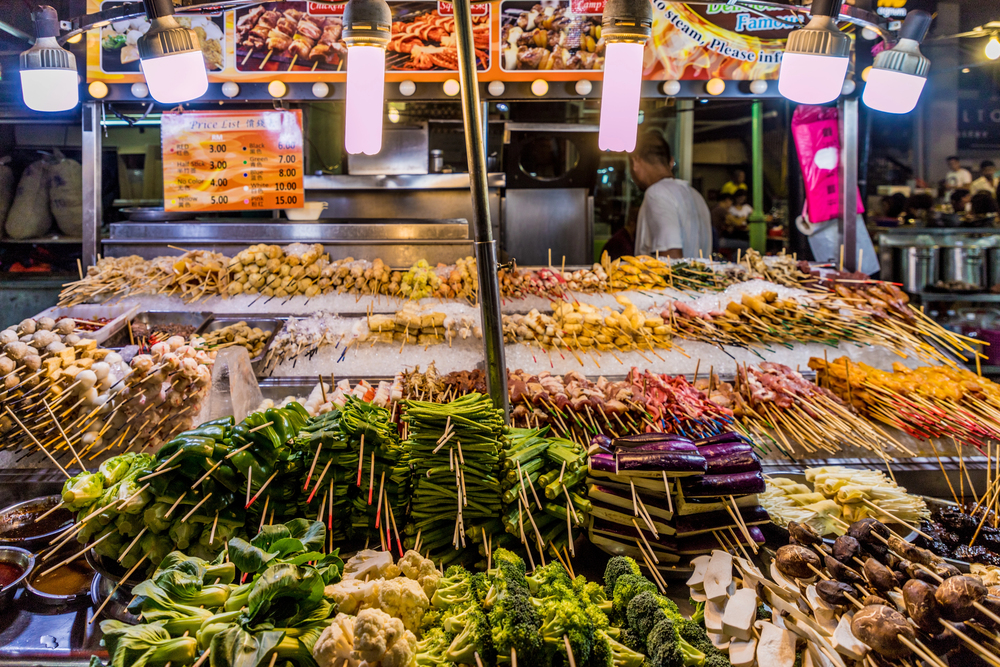
Kuala Lumpur’s Jalan Alor is the kind of street that corrects your assumptions about what a meal needs to be. The whole road — roughly a quarter mile of folding tables, red plastic chairs, and hawker stalls — operates like a single distributed restaurant, indifferent to the idea that dining should involve walls or a menu handed to you by someone in uniform.
Char kway teow hisses in woks over open flame, satay smoke drifts across the lane, and the whole scene has the stubborn energy of something that has been running this way for decades and has no intention of changing.
Chatuchak Weekend Market
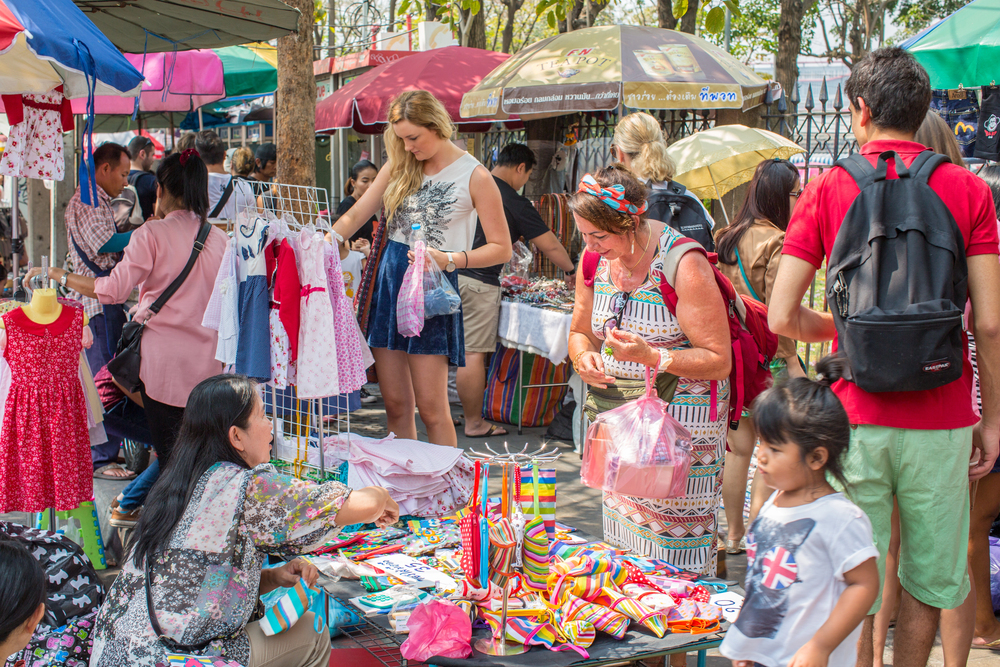
Chatuchak is not just a night market — it bleeds into day, sprawls across 35 acres, and contains somewhere north of 8,000 stalls. But the evening hours are when the atmosphere tips from overwhelming into genuinely electric, the heat easing just enough to make wandering feel like pleasure rather than endurance.
Go figure — one of the world’s largest markets somehow still manages to feel like a neighborhood discovery rather than a tourist operation.
Pak Khlong Talat
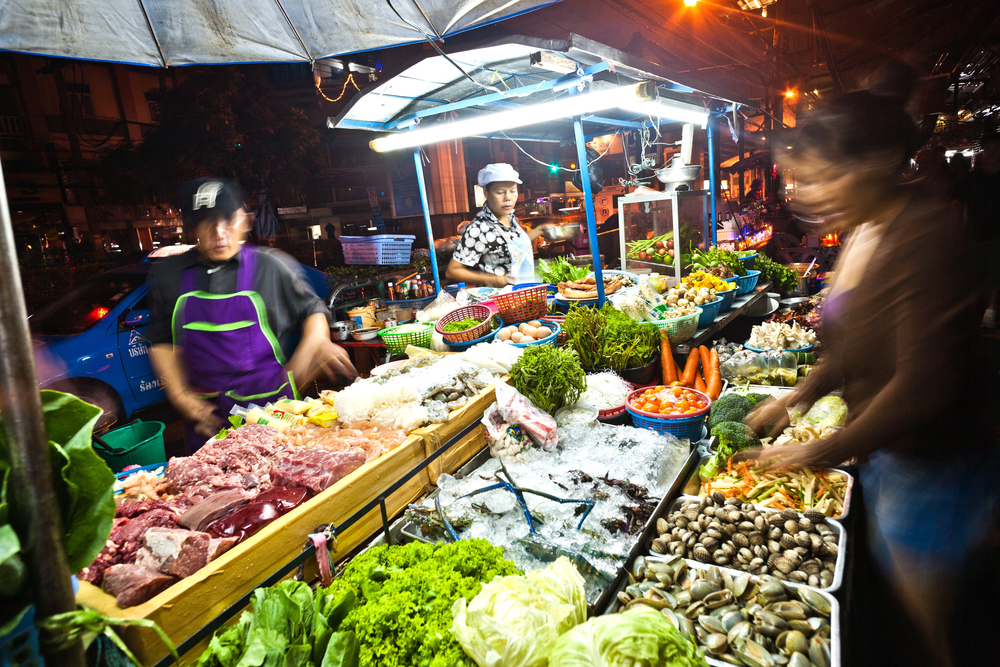
Bangkok’s Pak Khlong Talat is built around flowers, which sounds genteel until you arrive at 2 a.m. and find the whole market operating at full, unreasonable intensity — mountains of marigolds, jasmine garlands, lotus blooms packed into buckets, and wholesale buyers moving through the stalls with the focused urgency of traders on a floor. It isn’t primarily a food market, though food vendors have colonized the edges.
The flowers are the thing: heaped so densely that the whole place carries a sweetness that settles in your clothes long after you’ve left.
Liuhe Tourist Night Market
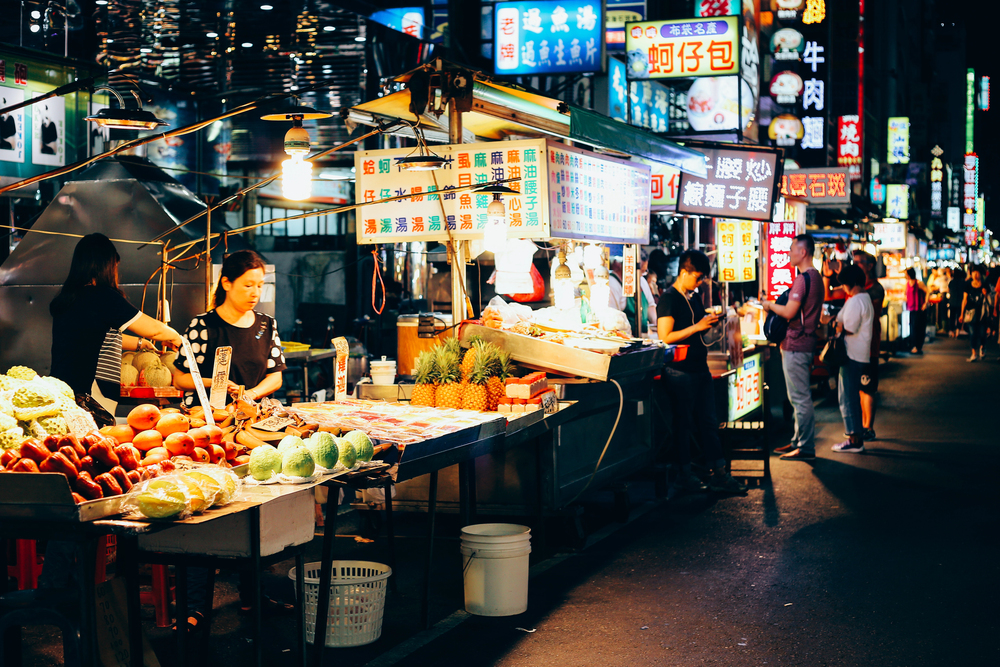
Kaohsiung’s Liuhe market runs down a single long avenue in the heart of the city, and it makes no apologies for being exactly what it looks like. Seafood is the main event here — grilled clams, steamed shrimp, papaya milk stands tucked between fish vendors — and the whole stretch operates with a directness that feels refreshing after markets that have learned to perform for cameras.
You point, they cook, you eat. That’s the agreement.
Pasar Malam
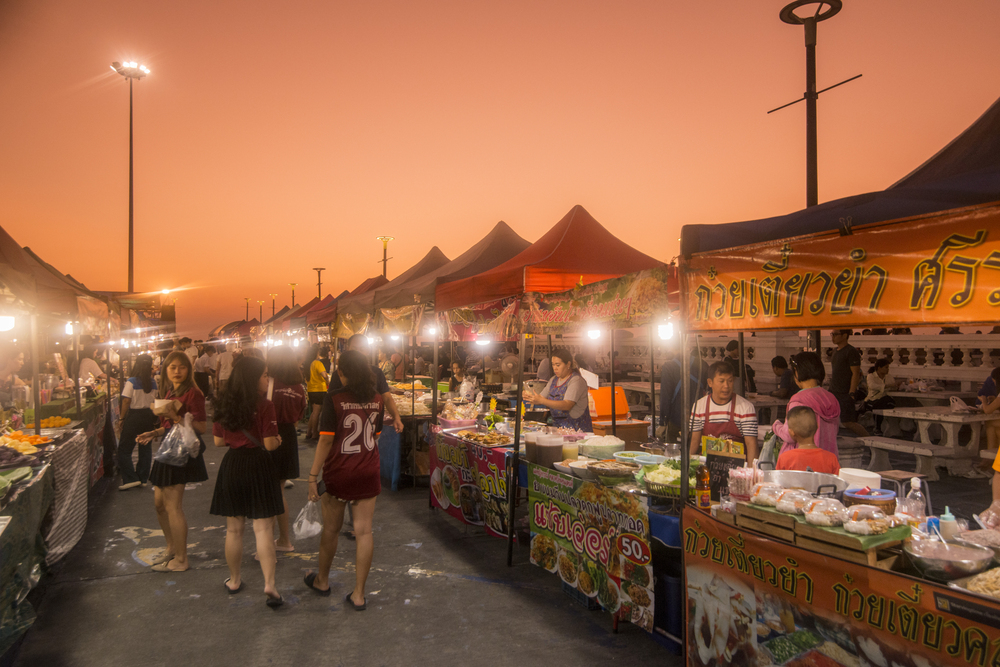
The phrase “pasar malam” simply means night market in Malay, and across Malaysia and Singapore, these pop-up markets appear in neighborhoods on rotating schedules throughout the week. What makes them remarkable isn’t any single location but the consistency — wherever one sets up, it brings the same logic: local vendors, affordable plates, plastic bags of cendol or teh tarik carried home by residents who have been doing this their whole lives.
These aren’t destinations built for outsiders. They just happen to be worth finding.
Raohe Street Night Market
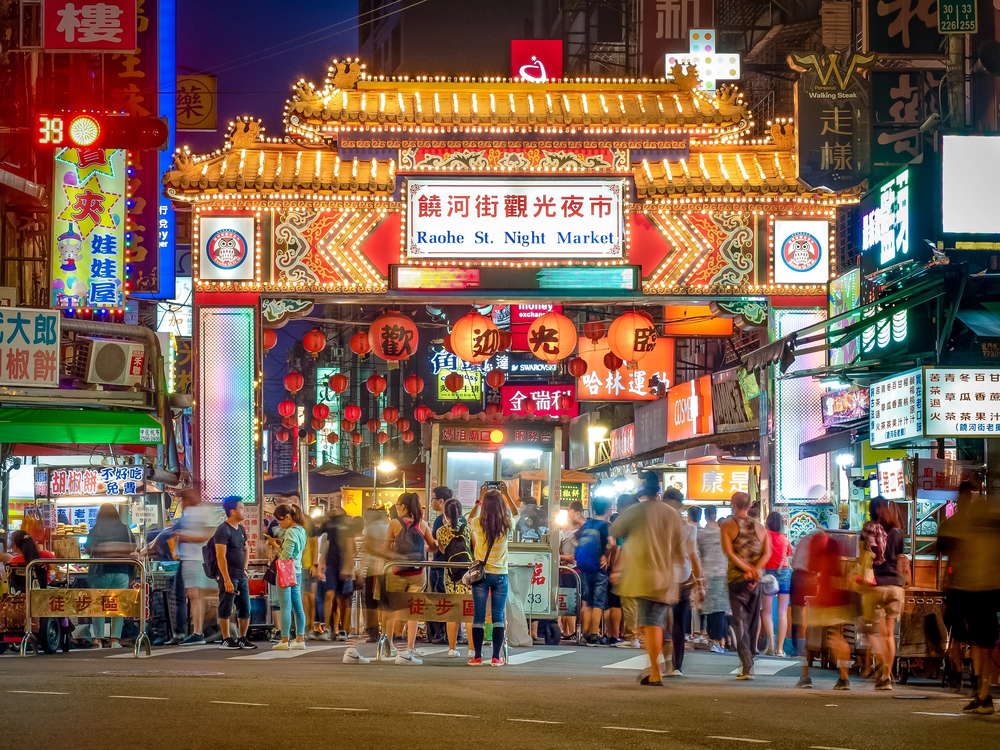
Raohe in Taipei is narrower and more concentrated than Shilin, which makes it feel less like a district and more like a corridor of focused intent. The black pepper bun stall near the temple entrance — run by a family that has been baking the same recipe in a clay oven for years — produces something so specifically good that people queue for twenty minutes without complaint.
And yet the rest of the market is no afterthought: pepper duck, scallion pies, herbal stew that smells like something a grandmother decided should be medicinal and delicious simultaneously.
Ben Thanh Market Night Bazaar
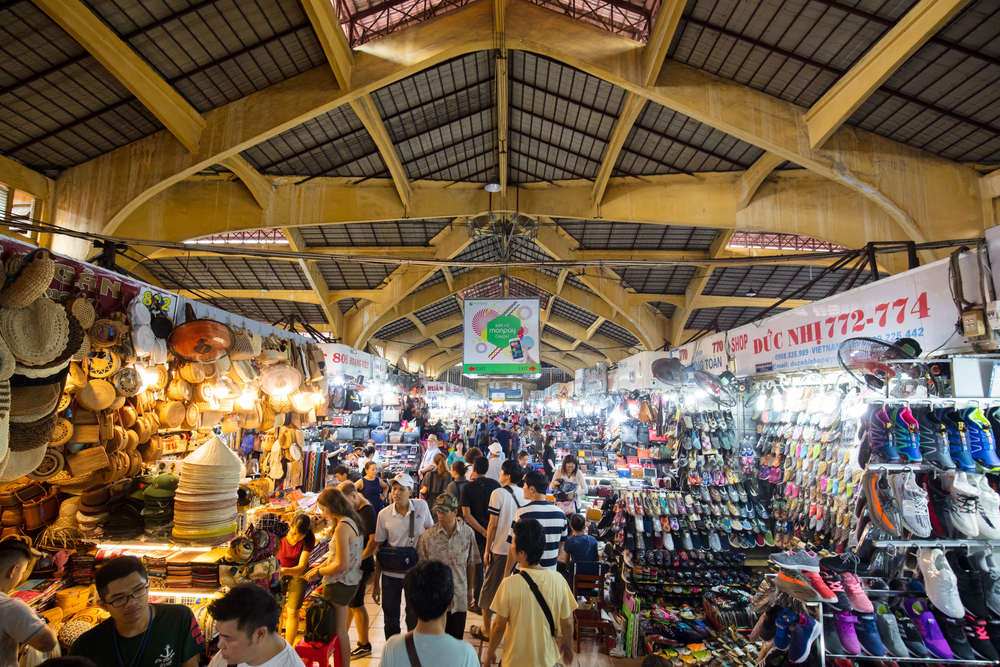
Ho Chi Minh City’s Ben Thanh Market closes its indoor section at sunset and promptly erupts into something livelier on the surrounding streets. The night bazaar that fans out around the building is noisier, looser, and more openly performative than the daytime version — vendors calling out, tables encroaching onto the road, the smell of bun bo Hue and pho mixing with grilled meats in a way that your nose tries to process as a single, complicated thing.
It’s the same location, a completely different market.
Jonker Street Night Market
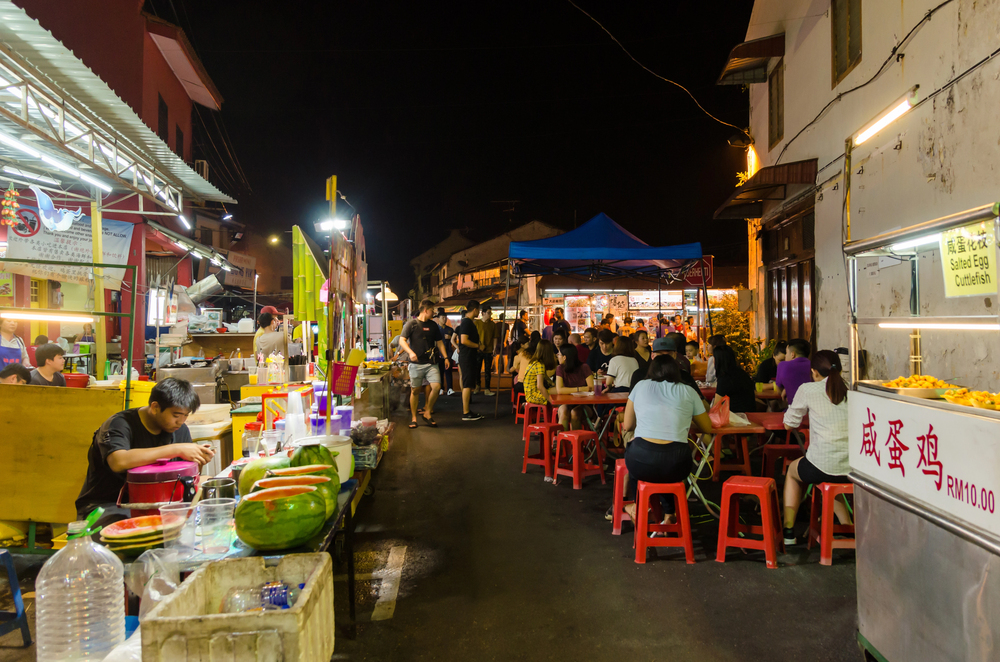
Melaka’s Jonker Street does something unusual: it folds history into the hawker experience without making the history feel like a theme park. The street runs through the Peranakan quarter — a mix of Chinese, Malay, and Dutch colonial architecture — and the weekend night market that sets up along it serves Nyonya food alongside more familiar Malaysian staples, which is worth paying attention to because Nyonya cuisine is among the most underappreciated culinary traditions in Southeast Asia.
Cendol here, served from a cart that has occupied the same corner for years, is the kind of thing that makes you genuinely annoyed you didn’t visit sooner.
Huaxi Street Tourist Night Market

Taipei’s Huaxi Street — sometimes called “Snake Alley” — has a reputation built partly on its history and partly on things that no longer happen with the same frequency they once did. What remains is a dense, slightly eccentric strip of stalls selling turtle jelly, frog meat soup, and traditional medicinal foods that aren’t being marketed to you so much as simply offered.
The market has the atmosphere of something that survived its own notoriety, settling into a quieter, stranger version of itself that rewards curiosity over hesitation.
Phuket Weekend Night Market

The Phuket Weekend Market — known locally as Naka Market — spreads across a large field near the central festival grounds on Friday and Saturday evenings and operates on a scale that surprises first-time visitors expecting something compact. Thousands of stalls cover everything from Thai street food to second-hand clothing, live music stages, and artisan goods, and the food section alone runs long enough that making a second full loop feels justified purely on appetite grounds.
This is a market for locals first; the prices make that immediately clear.
Dongdaemun Night Market
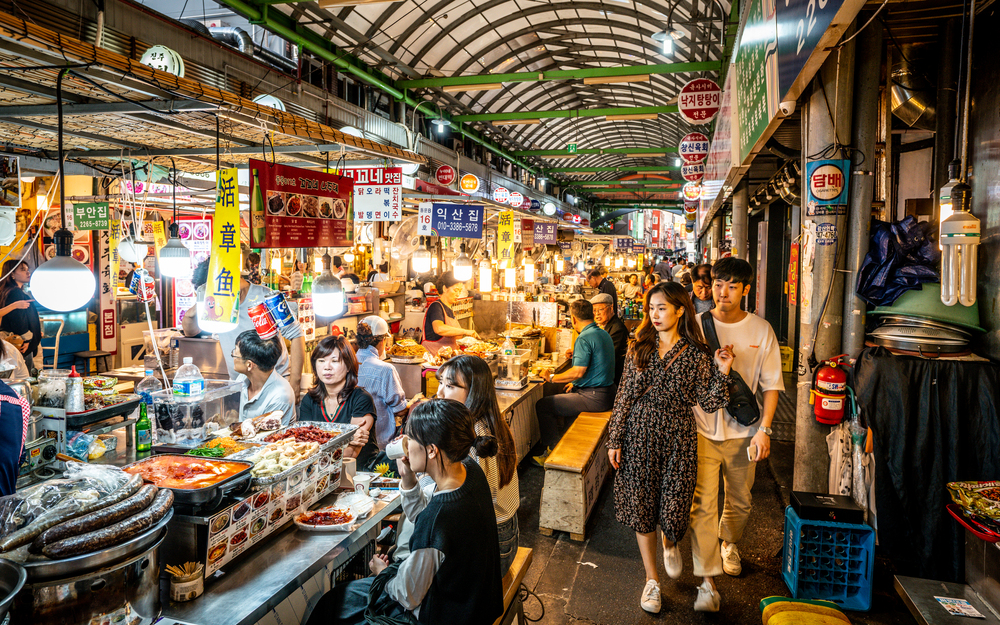
Seoul’s Dongdaemun district is where fashion and food coexist without one acknowledging the other, which somehow works better than it has any right to. The wholesale clothing towers stay open until 5 a.m., and the outdoor pojangmacha tents — the canvas-covered street stalls that have defined late-night Seoul for generations — serve tteokbokki, sundae, and fish cake broth to shoppers, workers, and people who simply didn’t feel like going home yet.
There’s a specific Seoul quality to it: efficient and warm at once, like the city has decided it can be both.
Pasar Senggol
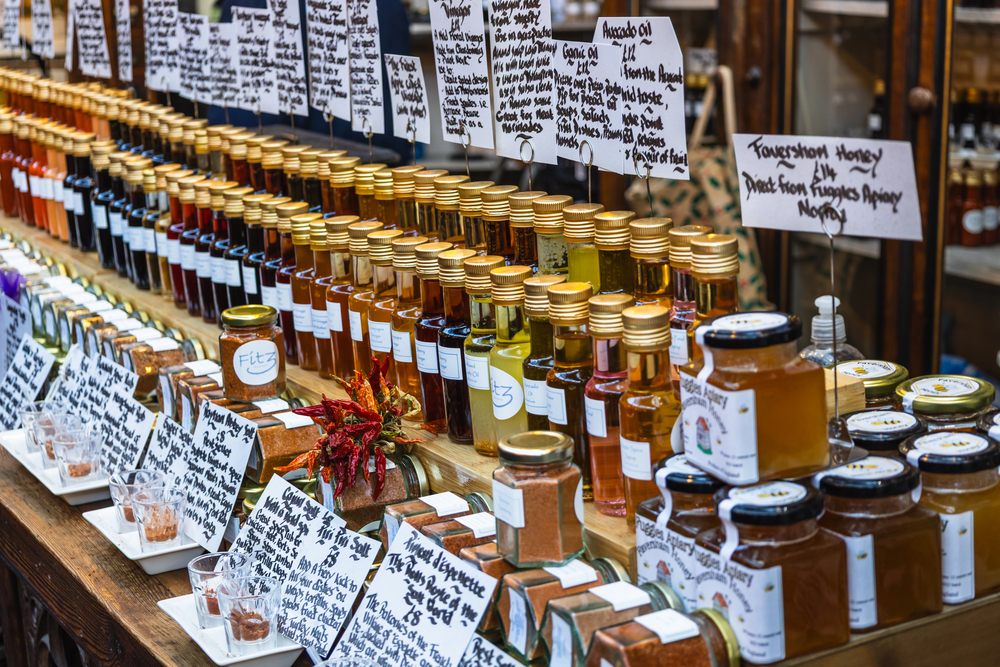
Pasar Senggol night markets appear across Indonesia, and the ones in cities like Surabaya and Makassar have a distinct energy that differs from the more internationally recognized markets of Bali. Grilled corn rubbed with spiced coconut, martabak — both the savory egg-stuffed version and the sweet stuffed pancake — and various regional soto variations give these markets a culinary character that is local to the point of being untranslatable.
To be fair, that specificity is exactly the point.
Khaosan Road Night Market

Khaosan Road in Bangkok has been declared many things by many people, and most of those declarations underestimate what actually happens there after dark. Yes, it draws backpackers and gap-year travelers in quantities that give it a particular demographic character — but the food vendors, the trinket stalls selling amulets alongside pad thai, and the sheer density of competing sound systems create something genuinely alive rather than merely busy.
The market energy here belongs to everyone who shows up, not just the people it’s supposedly designed for.
Jade Market Night Extension

Hong Kong’s Jade Market in Yau Ma Tei runs during the day, but the surrounding streets around Jordan and Temple Street come alive after dark as Temple Street Night Market takes over the neighborhood. Cantonese opera performers occupy the southern end near the temple, fortune tellers set up folding tables under fluorescent lights, and dai pai dong stalls push seafood dishes onto the sidewalk with the kind of cheerful territorial confidence that only works in a city as densely packed as Hong Kong.
It’s chaotic in the way that only places with genuine purpose ever manage to be.
Where the Smoke Rises, Something Is Worth Following

Night markets don’t operate on logic — they operate on accumulated habit, on the fact that someone set up a stall forty years ago and the neighborhood just never stopped coming back. The best ones in Asia share that quality: they weren’t designed for you, weren’t optimized for your convenience, and weren’t built with a visitor experience in mind.
And that’s precisely why they work. You show up, you get in the way a little, you eat something you can’t name and order another one anyway.
No itinerary survives contact with a good night market intact — and honestly, that’s the best possible outcome.
More from Travel Pug

- Underrated Italian Towns That Beat the Tourist Crowds
- Las Vegas Tourist Traps to Skip
- Prettiest Towns in Every US State
- 18 passport-free countries for Americans
- Signs Your Cruise Is Not Worth The Cost
Like Travel Pug’s content? Follow us on MSN.