

No other travel experience compares to the feeling you get when you walk into a magnificent stadium. The site’s historical significance, the buzz of the crowd, and the scent of grass combine to create an overwhelming experience that explains why people travel across continents to spend 90 minutes sitting on a plastic chair.
Every sports fan should put visiting one of these 20 stadiums on their bucket list.
Maracanã, Rio de Janeiro, Brazil
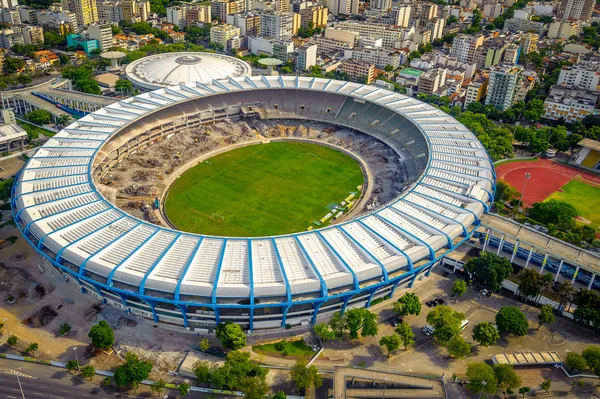
Few stadiums in the world can match the Maracanã’s unique emotional significance. Built to host the 1950 FIFA World Cup, the stadium saw 200,000 spectators for the Brazil vs.
Uruguay championship game, setting an all-time attendance record. The stadium hosted Pelé’s 1000th goal in 1969, the 2014 FIFA World Cup final, and the 2016 Olympic opening ceremony.
Wembley Stadium, London, England

Wembley is as close to a football cathedral as you can get. The old stadium was the site of the 1966 World Cup final, England’s only major international trophy, and the new one, opened in 2007, is easily recognizable from its massive arch that reaches 436 feet into the London sky.
Every FA Cup final, England home match, and big event held at Wembley is as if it’s bearing the weight of a century of football history.
Santiago Bernabéu, Madrid, Spain
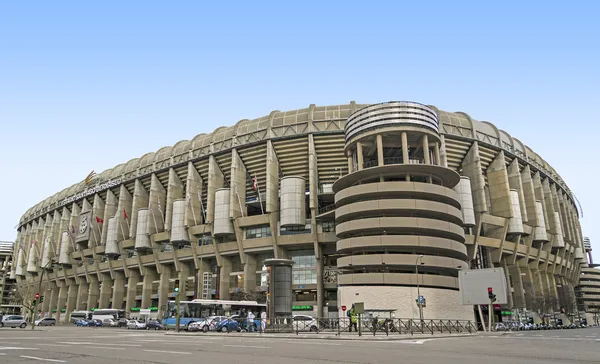
Real Madrid’s home stadium, the Bernabéu Stadium, has seen some of the most dramatic events in football history. Due to a recent renovation, the stadium now has contemporary architectural features like a new retractable roof and an elegant exterior design, increasing its capacity to over 81,000 spectators.
It’s impossible to describe what it’s like to watch a Champions League game at the stadium while the “Hala Madrid” chant reverberates throughout.
Estadio Azteca, Mexico City, Mexico

The Azteca is the only stadium to have hosted two FIFA World Cup finals — in 1970 and 1986. It is also where Diego Maradona scored both the infamous ‘Hand of God’ goal and the breathtaking ‘Goal of the Century’ against England in 1986, making it one of the most storied patches of turf in world sport.
With a capacity of over 87,000, the atmosphere on a big match day is overwhelming in the best possible way.
Old Trafford, Manchester, England

Old Trafford has been known as the ‘Theatre of Dreams’ since 1910, when it became the home of Manchester United. The stadium has been renovated, bombed during World War II, and expanded several times, and each renovation is like a new chapter in the club’s story.
Taking the tour of the stadium, passing through the players’ tunnel and out onto the pitch, is to realize just how many legends have stood on that very spot.
Camp Nou, Barcelona, Spain
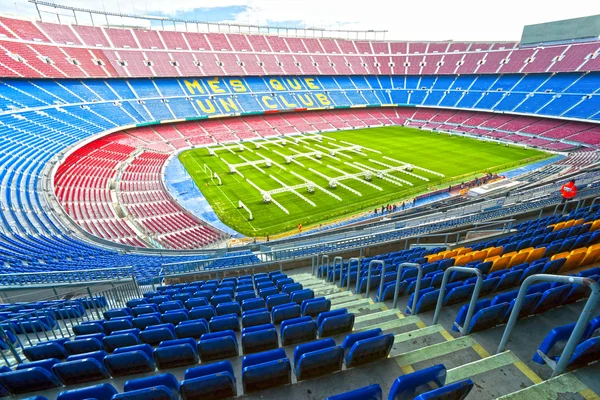
Camp Nou is the largest football stadium in Europe, with a capacity of nearly 100,000. It has been home to some of the most gifted footballers the world has ever seen, from Johan Cruyff in the 1970s to Lionel Messi’s two-decade residency.
The stadium is currently undergoing a major renovation as part of the ‘Espai Barça’ project, so visiting once it reopens in full will be worth planning around.
San Siro, Milan, Italy

San Siro — officially named Stadio Giuseppe Meazza — is shared by Inter Milan and AC Milan, which makes it one of the few stadiums where two of the world’s biggest clubs call the same place home. The Derby della Madonnina, the crosstown clash between the two sides, turns the place into something resembling a thunderstorm with seats.
Built in 1926 and expanded multiple times since, it has a raw, old-school character that modern arenas rarely replicate.
Signal Iduna Park, Dortmund, Germany
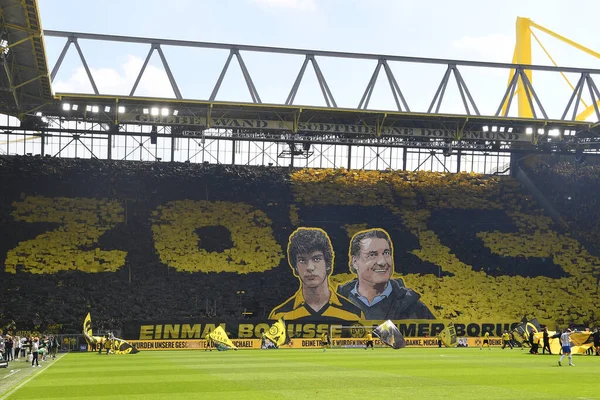
Signal Iduna Park is home to Borussia Dortmund and the famous ‘Yellow Wall’ — a standing terrace on one end that holds 24,000 fans and is widely regarded as the greatest supporter section in world football. On matchday, the sound and visual spectacle of that wall in full voice is the kind of thing that makes even neutral observers understand why people dedicate their lives to following a football club.
Melbourne Cricket Ground, Melbourne, Australia

The MCG — as Australians call it — is one of the oldest and largest stadiums in the world, with a capacity of around 100,000. It hosted the 1956 Summer Olympics and has been the home of Australian cricket since the first-ever Test match between Australia and England was played here in 1877.
The annual Boxing Day Test is a national institution, drawing crowds that turn the MCG into an enormous outdoor living room for the whole country.
Lambeau Field, Green Bay, Wisconsin, USA
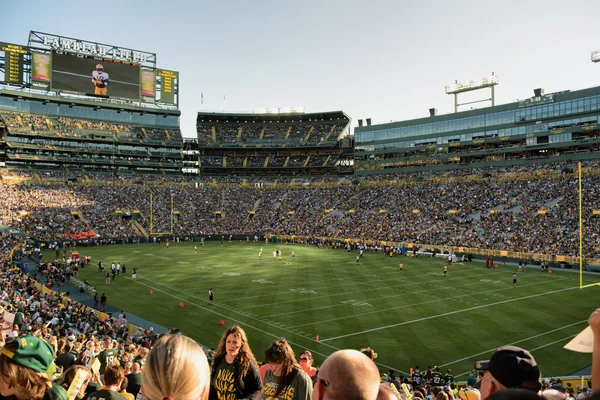
Lambeau Field opened in 1957 and has been home to the Green Bay Packers ever since — a team uniquely owned by the community rather than a private individual or corporation. The ‘Frozen Tundra’ nickname is well earned; late-season games here are played in conditions that would send most people straight to the couch.
The stadium sits at the heart of a small Wisconsin city of about 107,000 people, which makes the fact that it holds 81,000 fans all the more extraordinary.
Fenway Park, Boston, Massachusetts, USA

Fenway Park opened in 1912, making it the oldest active Major League Baseball stadium in the country. The iconic ‘Green Monster’ — a 37-foot wall in left field — was built partly because the park sits on a cramped city block and there was simply nowhere else for the boundary to go.
Fenway has a lived-in, slightly cramped charm that newer, shinier ballparks can rarely match, and the atmosphere during a Red Sox playoff game is as intense as baseball gets.
Wrigley Field, Chicago, Illinois, USA

Wrigley Field opened in 1914 and is the second-oldest active ballpark in Major League Baseball. The ivy-covered outfield walls are one of the most recognized visuals in American sport, and the rooftop bleachers on surrounding buildings are a uniquely Chicago experience that you will not find anywhere else.
The Cubs went 108 years without a World Series title before finally winning in 2016, which means visiting Wrigley now feels like standing in the middle of a story with a long-awaited happy ending.
Yankee Stadium, New York City, USA

The current Yankee Stadium opened in 2009, built directly across the street from the original, which itself was known as ‘The House That Ruth Built.’ The New York Yankees have won 27 World Series championships, more than any other franchise in baseball, and the stadium houses a museum dedicated to that history.
Watching a game here on a warm summer night, with the Manhattan skyline visible beyond the outfield, is about as quintessentially American as a sports experience gets.
Madison Square Garden, New York City, USA

Madison Square Garden is the most famous indoor arena in the world. Home to the New York Knicks and the New York Rangers, ‘The Garden’ sits above Penn Station in the heart of Midtown Manhattan and has hosted everything from championship boxing to political conventions and some of the greatest concerts in music history.
There is a reason it is called the world’s most famous arena — it has simply seen more iconic moments per square foot than almost any other venue on earth.
Narendra Modi Stadium, Ahmedabad, India
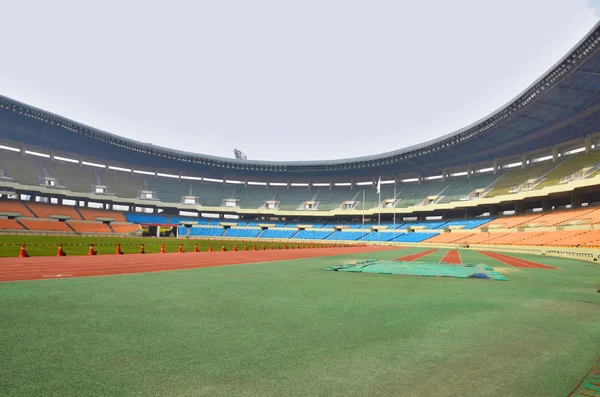
With a capacity of 132,000, the Narendra Modi Stadium is the largest cricket stadium in the world — by a significant margin. The Sardar Patel Stadium, as it was previously known, was completely rebuilt and reopened in 2020.
It hosted key matches during the 2023 Cricket World Cup and has become a symbol of cricket’s enormous cultural footprint in India, where the sport is less a pastime and more a religion with very enthusiastic congregations.
Stade de France, Saint-Denis, France

Built for the 1998 FIFA World Cup, the Stade de France hosted the final in which France claimed their first-ever World Cup title in front of a home crowd. The stadium holds 80,000 spectators and serves as France’s national stadium for both football and rugby.
It also hosted the 2007 Rugby World Cup and the 2022 UEFA Champions League final, cementing its status as one of Europe’s most important multi-sport venues.
Tokyo Olympic Stadium, Tokyo, Japan

The Japan National Stadium was rebuilt and reopened in 2019 to host the 2020 Tokyo Olympics (held in 2021 due to the pandemic). Designed by architect Kengo Kuma, the structure incorporates wood and greenery throughout its design, giving it a warmth and elegance that makes it stand apart from most large-scale Olympic venues.
The stadium holds 68,000 spectators and continues to host major athletic and football events in one of the world’s great cities.
Colosseum, Rome, Italy

The Colosseum is the oldest sports venue on this list by roughly 2,000 years, and that alone earns it a spot. Built between 70 and 80 AD, it once hosted gladiatorial contests and public spectacles in front of crowds of up to 80,000, numbers that rival modern stadiums.
Walking through the arched corridors and out into the arena floor, it is not difficult to imagine why the Romans understood, perhaps better than anyone, that sports and spectacle are inseparable.
Bird’s Nest, Beijing, China

The Beijing National Stadium — universally known as the ‘Bird’s Nest’ — was built for the 2008 Olympic Games and immediately became one of the most recognizable buildings on the planet. Its interlocking steel lattice structure, designed by architects Herzog & de Meuron, can hold over 80,000 spectators.
China used the stadium again for the 2022 Winter Olympics opening and closing ceremonies, making it the first venue in history to host both Summer and Winter Olympic Games.
Arrowhead Stadium, Kansas City, Missouri, USA
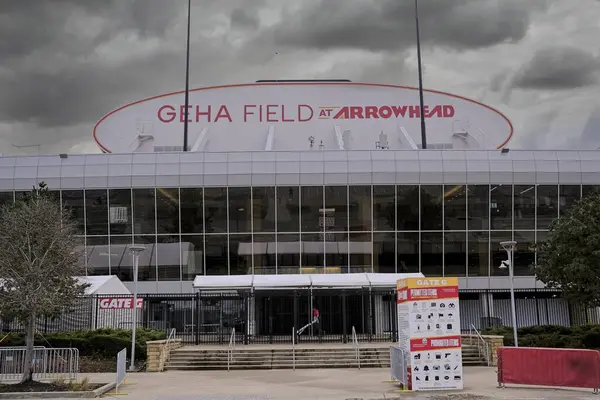
Arrowhead Stadium, which opened in 1972, is one of the world’s most acoustically intense stadiums. It established the Guinness World Record when its audience reached 142.2 decibels of sound in 2014.
The stadium serves as the home ground for the Kansas City Chiefs, who have increased their visibility through their Super Bowl victories. The combination of a fiercely loyal fanbase, a winning team, and a stadium specifically designed to trap and amplify noise makes gameday at Arrowhead an experience that stays with you long after the final whistle.
Where history and sport meet

These 20 stadiums serve as more than venues for athletic competitions because they demonstrate how sports transformed into one of the most significant elements in human cultural history. Some buildings date back to ancient times, while others display modern architectural design, and others showcase their historic charm through authentic wear that comes from decades of dedicated use.
Visiting even one of them reminds you that sport, at its best, is not really about scores or trophies — it is about the collective feeling of being somewhere that matters, surrounded by people who feel the same way.
More from Travel Pug

- Underrated Italian Towns That Beat the Tourist Crowds
- Las Vegas Tourist Traps to Skip
- Prettiest Towns in Every US State
- 18 passport-free countries for Americans
- Signs Your Cruise Is Not Worth The Cost
Like Travel Pug’s content? Follow us on MSN.