

Few trips pack as much variety into one Iberian swing as a Madrid-Lisbon-Barcelona combination. You get two countries, three distinct city personalities, world-class food, and enough art and history to fill several passports.
The only real challenge is sequencing it so you spend your time actually enjoying places rather than backtracking across the peninsula.
Here are 16 ways to combine Madrid, Lisbon, and Barcelona efficiently, whether you have a week or a full two weeks to play with.
Start in Barcelona, end in Lisbon
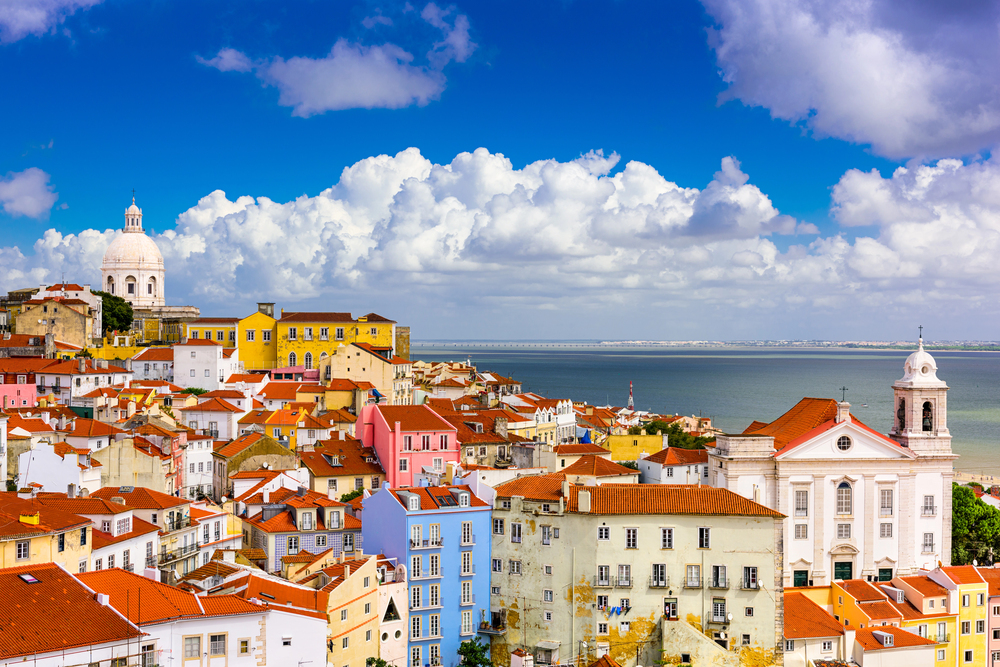
Flying into Barcelona and out of Lisbon — or the reverse — is one of the cleanest ways to structure this trip. You avoid paying for a round-trip ticket into the same city and naturally move from east to west across the Iberian Peninsula without doubling back.
Budget airlines like Vueling frequently offer competitive one-way fares on both ends, so an open-jaw itinerary often costs less than people expect.
Use Madrid as your midpoint

Madrid sits almost exactly in the geographic center of Spain, which makes it the natural hinge between Barcelona and Lisbon. Arriving from Barcelona by train and then heading to Lisbon by bus or flight keeps your routing logical and avoids any zig-zagging.
Spending two to three nights in Madrid as the midpoint also lets the trip breathe instead of rushing straight through.
Take the AVE between Barcelona and Madrid

The high-speed AVE train between Barcelona Sants and Madrid Atocha covers roughly 314 miles in about 2.5 to 3 hours, making it one of the fastest point-to-point connections in Europe. The route has been served by high-speed trains since 2008, and three operators — Renfe’s AVE, Iryo, and budget option Ouigo — now compete on the line.
Booking early almost always gets you the best price, and the train drops you right in the city center on both ends, which no airport can match.
Fly between Madrid and Lisbon

The flight between Madrid and Lisbon takes about 1 hour and 20 minutes, and multiple airlines including TAP Portugal, Iberia, Air Europa, and EasyJet operate the route daily. It is the fastest way to cross the border, and when you factor in the fact that both airports are close to their respective city centers, the total door-to-door time stays reasonable.
For travelers on a tighter schedule, this leg is worth the extra cost over the bus.
Take the overnight bus between Madrid and Lisbon for budget travel

If your main goal is to save money and you have the time, the bus between Madrid and Lisbon is a genuinely solid option. FlixBus and other operators run direct services, with the journey taking around 7 hours and ticket prices sometimes starting as low as $6.
Leaving on an overnight service means you wake up in Lisbon having saved a hotel night, which makes the long ride feel a lot more palatable.
Book open-jaw flights to save money

Rather than flying into and out of the same city, look for flights that land in one city and depart from another. Flying into Barcelona from the U.S. and home from Lisbon — or vice versa — is often comparable in price to a standard round trip and eliminates backtracking entirely.
It also gives the trip a cleaner narrative arc: you arrive in one great city, move through the peninsula, and leave from another.
Go Barcelona–Madrid–Lisbon in that order

This east-to-west sequence is widely considered the most logical routing. Madrid is in the middle of the country between the other two cities, so it makes the most sense to put Barcelona at one end and move across to Lisbon at the other.
The AVE handles the Barcelona-to-Madrid leg quickly, and then a flight or bus takes care of the Madrid-to-Lisbon crossing. No backtracking, no wasted travel days.
Travel during spring or fall for fewer crowds

The best time for a multi-city trip across Lisbon, Madrid, and Barcelona is during the shoulder seasons of spring (April through May) and fall (September through October), which offer warm and dry weather ideal for sightseeing while avoiding the intense heat and crowds of summer. Prices for accommodation and flights also tend to drop noticeably outside of July and August, so your money simply goes further.
The cities are still fully alive in shoulder season — arguably more so, with locals actually out and about rather than hiding from 100-degree heat.
Add a day trip to Sintra from Lisbon

Once you’re in Lisbon, the historic town of Sintra is less than an hour away by train and is well worth a half-day. In Belém, maritime landmarks like the Belém Tower evoke Portugal’s seafaring legacy from the 15th and 16th centuries, and the pastel de nata at Pastéis de Belém is essentially a required stop.
Structuring your Lisbon days so that one of them extends outward — whether to Sintra, Cascais, or Belém — makes the city portion feel much richer without adding extra hotel nights.
Add a day trip to Toledo or Segovia from Madrid

Madrid is one of the best-positioned cities in Europe for day trips, and Toledo and Segovia both sit within easy striking distance. Toledo, a UNESCO World Heritage Site, is about 30 minutes from Madrid by high-speed train, while Segovia — famous for its remarkably preserved Roman aqueduct — takes about 30 minutes by bus or train.
Spending one of your Madrid days outside the city is a smart way to add depth without extending the overall trip.
Prioritize Barcelona’s advance bookings

Barcelona’s biggest attractions require advance planning in a way that Madrid and Lisbon largely do not. Among the most iconic landmarks are the masterpieces of Antoni Gaudí, including the Sagrada Família and Park Güell, both recognized as UNESCO World Heritage Sites.
Tickets for the Sagrada Família in particular sell out weeks ahead during peak periods, so booking before you even leave home is standard practice rather than optional.
Skip renting a car in the cities

A rental car is largely unnecessary for a Madrid-Lisbon-Barcelona trip and can add friction you don’t need. Both Spain and Portugal have robust train networks, and that’s the most efficient way to connect the cities — the car tends to be more of a hindrance than a help in urban areas.
Public transit within each city is excellent, and the money saved on rentals, parking, and gas goes much further toward a nice dinner or a nicer hotel.
Use Lisbon as your first stop if flying from the U.S. East Coast

Several U.S. East Coast airports — including JFK and Boston Logan — offer direct flights to Lisbon, making it a natural entry point for American travelers.
Starting in Lisbon, moving east to Madrid, and finishing in Barcelona means you land after the longest flight in the freshest city on your itinerary rather than arriving exhausted into Barcelona on a connection. TAP Portugal in particular frequently offers competitive transatlantic fares into Lisbon.
Build in at least three nights per city

Two nights in any of these cities feels rushed, especially if one of those days involves a day trip or travel. Three nights gives you one day to settle in, one full day to hit the main sights, and one day to explore neighborhoods, markets, or museum favorites at a slower pace.
For a 10- to 12-night trip covering all three cities, three nights each leaves you a buffer night to use wherever the trip feels like it needs more time.
Use the Eurail pass if visiting multiple countries

If you’re planning to combine this three-city trip with stops elsewhere in Europe, a multi-country Eurail pass can make the rail legs significantly cheaper. The pass works across both Spain and Portugal, covering the AVE between Barcelona and Madrid as well as the train connections toward Lisbon.
It requires a reservation fee on top of the pass for high-speed services, but the per-journey cost drops considerably compared to buying individual tickets close to departure.
Consider splitting time between Barcelona’s neighborhoods

Barcelona is large enough that where you base yourself shapes the entire experience. Staying in the Eixample puts you close to Gaudí’s major works and the city’s best restaurants, while the Gothic Quarter (Barri Gòtic) is better for history walkers and people who want to feel the medieval city underfoot.
Barcelona is celebrated for its cosmopolitan ambiance, artistic flair, and rich history, with diverse cultures evident in its neighborhoods, culinary offerings, and lively festivals. Choosing your neighborhood before booking accommodation makes the day-to-day logistics noticeably smoother.
What the Iberian Peninsula rewards

The Madrid-Lisbon-Barcelona combination works so well because the three cities genuinely complement each other rather than repeat themselves. Madrid gives you grand boulevards, world-class museums like the Prado, and some of the best late-night food culture in Europe.
Lisbon adds a quieter, more poetic atmosphere with its tram-threaded hills and Atlantic light. Barcelona layers modernist architecture and a Mediterranean beach onto a city that already has more than enough to justify the airfare on its own.
Plan the logistics carefully, and you get not just three great cities, but a genuinely coherent journey across two of Europe’s most compelling countries.
More from Travel Pug

- Underrated Italian Towns That Beat the Tourist Crowds
- Las Vegas Tourist Traps to Skip
- Prettiest Towns in Every US State
- 18 passport-free countries for Americans
- Signs Your Cruise Is Not Worth The Cost
Like Travel Pug’s content? Follow us on MSN.