

When most people think about quality healthcare, their minds drift to major metropolitan areas—Boston’s medical district, the Mayo Clinic in Rochester, or the sprawling hospital systems of Los Angeles. There’s a certain logic to this assumption: big cities have more resources, more specialists, and more cutting-edge technology.
But this thinking misses something important happening across America’s smaller communities.
Scattered throughout the country, towns with populations under 50,000 are quietly delivering healthcare that rivals—and sometimes surpasses—what you’ll find in major cities. These aren’t accidents or flukes.
They’re the result of strategic investments, innovative approaches to rural medicine, and communities that refuse to accept that good healthcare is a luxury reserved for urban dwellers.
Burlington, Vermont

The University of Vermont Medical Center doesn’t mess around. Small city, serious medicine.
The University of Vermont Medical Center anchors a healthcare system that serves the entire region without the bureaucratic maze you’d expect from a larger institution.
Bozeman, Montana

Bozeman Health has figured out something that eludes many larger systems: how to combine advanced medical technology with the kind of personal attention that makes patients feel like human beings rather than case numbers. The town’s proximity to Yellowstone means the emergency department sees everything from heart attacks to bear encounters, and they handle both with equal competence.
And here’s the thing about Montana healthcare that surprises people—when your nearest specialist might be 200 miles away, the local doctors become remarkably good generalists who can handle conditions that would get immediately referred out in urban settings.
So the radiologist who reads your MRI might also be the one who performs your joint injection, and the internist managing your diabetes has probably delivered babies and set broken bones. Which means you’re not bouncing between six different specialists who’ve never talked to each other—something that passes for coordinated care in too many big-city hospitals.
Bend, Oregon

Picture healthcare as a well-tended garden rather than a factory assembly line, and you’ll start to understand what St. Charles Health System has cultivated in Bend.
The approach here grows from an understanding that healing happens in relationship—between patient and provider, between the medical team and the broader community, between the immediate treatment and the long-term wellbeing of people who will likely encounter each other at the grocery store next week.
There’s something about knowing your cardiologist’s kids play soccer with your neighbor’s kids that changes the entire dynamic. The medicine doesn’t become less rigorous, but it becomes more human.
Care plans get tailored not just to clinical protocols but to the actual rhythms of patients’ lives.
Hanover, New Hampshire

Dartmouth Health owns the healthcare conversation in the Upper Valley, and for good reason. This is academic medicine done right—rigorous research informing excellent patient care without the ivory tower detachment that can plague university hospitals.
The cancer center draws patients from across New England, which tells you something about the level of expertise concentrated in this town of 11,000 people.
The emergency medicine residency here is notoriously competitive, and residents stick around after graduation more often than not. Fair enough—once you’ve practiced medicine in a place where clinical excellence meets small-town sensibility, everything else feels like a compromise.
Traverse City, Michigan

Munson Healthcare turned what could have been a seasonal tourist town’s medical afterthought into a regional powerhouse. The system serves a sprawling geography across northern Michigan, but the flagship hospital in Traverse City feels intimate rather than institutional.
Emergency response times that would make urban systems jealous, specialists who actually return phone calls, and a cardiac program that has people driving past Detroit hospitals to get here.
Ithaca, New York
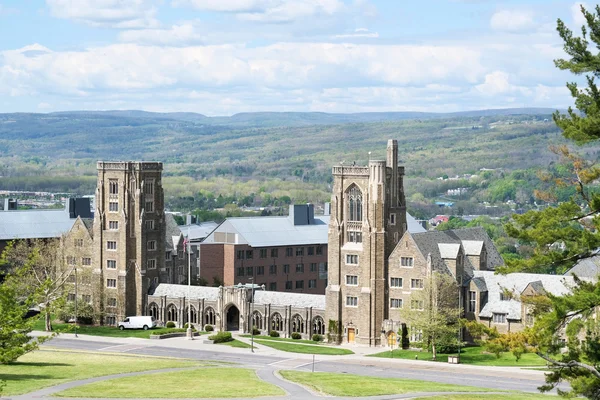
Cayuga Health System operates with the kind of efficiency that comes from serving a community where everyone knows what everyone else does for a living. The collaboration between Cornell’s veterinary program and the local hospital has produced some unexpectedly innovative approaches to infection control and surgical techniques.
University towns often struggle with the tension between academic medicine and community care, but Ithaca has found a rhythm that serves both research and residents without favoring either.
Billings, Montana

Billings Clinic has spent decades building something remarkable: a healthcare system that feels both comprehensive and personal, even as it serves a region roughly the size of Pennsylvania. The reach extends into Wyoming and the Dakotas, but the approach remains fundamentally human-scale (you’re likely to see the same faces across multiple visits, which creates a continuity that gets lost in larger systems where staff turnover resembles a revolving door).
So when the orthopedist who repaired your knee three years ago remembers not just your surgical history but asks about your daughter’s college plans, that’s not accidental—it’s the natural result of a place small enough for relationships to matter. And yet the medical capabilities here include Level II trauma care, comprehensive cancer treatment, and subspecialties that draw patients from across the northern Rockies.
Durango, Colorado

Mercy Regional Medical Center sits in the kind of landscape that makes you wonder why anyone chooses to live anywhere else, but the scenery isn’t what draws patients from across the Four Corners region. The hospital has built a reputation for handling the kind of complex cases that smaller facilities typically transfer out, while maintaining the accessibility and personal attention that big-city systems promise but rarely deliver.
The emergency department sees everything from high-altitude pulmonary edema to industrial accidents from the energy sector, creating a depth of experience that translates into confidence when your own emergency arises.
Burlington, Iowa

Great River Health System proves that excellent healthcare doesn’t require mountain views or university partnerships—just a commitment to doing things right. The system serves both Iowa and Illinois communities along the Mississippi, with a focus on preventive care that has measurably improved health outcomes across the region.
Stroke response times consistently beat national averages, and the diabetes management program has become a model for other rural systems.
Missoula, Montana

Community Medical Center operates with an efficiency that urban hospitals spend millions trying to achieve through consultants and workflow optimization. Here, it happens naturally (the orthopedic surgeon knows which physical therapists get the best results, the cardiologist and the endocrinologist actually coordinate care plans, and the pharmacy staff remembers which patients have trouble with child-resistant caps).
The university connection brings research opportunities and visiting specialists, but the day-to-day experience remains refreshingly straightforward. When you need to see a doctor, you see a doctor—not a series of intermediaries who schedule you for an appointment to discuss scheduling an appointment.
And the emergency department maintains the kind of response times that would be impressive anywhere, but feel almost miraculous if you’re accustomed to urban emergency room waits.
Kalispell, Montana

Logan Health anchors healthcare for the Flathead Valley with the kind of comprehensive services you’d expect to find only in much larger markets. The combination of year-round residents and seasonal influx from Glacier National Park has created a medical system that can scale up for summer trauma volume while maintaining personalized care during quieter months.
Cardiac surgery, advanced cancer care, and a birth center that has families driving from across northwestern Montana—all delivered with the efficiency that comes from teams who work together long enough to anticipate each other’s moves.
Cedar City, Utah

Intermountain Cedar City Hospital campus demonstrates what happens when a larger health system invests seriously in its smaller-market facilities rather than treating them as afterthoughts. The facility punches well above its weight in terms of services offered, from comprehensive cancer care to advanced cardiac procedures.
Emergency response coordination with the local university and nearby national parks has created protocols that handle everything from routine medical emergencies to mass casualty incidents.
Grand Junction, Colorado

Community Hospital serves Colorado’s Western Slope with a combination of advanced medical technology and the kind of patient-centered care that feels increasingly rare in healthcare. The oncology program draws patients from across the region, while the cardiac services have people choosing to stay local rather than traveling to Denver for procedures.
Response times for emergency care consistently outperform state averages, and patient satisfaction scores remain stubbornly high despite the kind of growth pressures that typically erode service quality.
But here’s what really sets the place apart: the integration between different service lines actually works, so your recovery from cardiac surgery includes coordinated nutrition counseling, physical therapy, and medication management without the usual gaps and duplicated efforts that plague larger systems.
Coeur d’Alene, Idaho

Kootenai Health has built something that larger hospital systems study and try to replicate: seamless integration between emergency services, specialty care, and community health programs that actually improves outcomes rather than just coordinating billing. The trauma center serves a region that includes parts of Washington and Montana, but maintains the responsiveness and personal attention that gets lost in urban medical centers (the neurosurgeon who handles your emergency surgery will likely follow your case personally rather than handing you off to a rotation of residents and fellows, which means someone who knows your specific situation is making decisions about your care).
The system has invested heavily in technology that supports rather than complicates patient care—electronic health records that actually help doctors spend more time with patients instead of less, telemedicine capabilities that bring specialist consultations to patients rather than requiring long-distance travel, and emergency response coordination that gets critical patients to the right level of care faster than most urban systems manage.
Flagstaff, Arizona

Northern Arizona Healthcare operates Flagstaff Medical Center with the kind of clinical sophistication that draws patients from across the Colorado Plateau, while maintaining the accessibility and personal attention that makes healthcare feel human rather than transactional. The Level I trauma center serves a geography that includes some of the most remote areas in the continental United States, creating a depth of emergency medicine experience that translates into confidence when any medical crisis arises.
The combination of year-round residents, university students, and visitors to the Grand Canyon has shaped a medical system that can handle volume surges while maintaining quality care.
Steamboat Springs, Colorado

UCHealth Yampa Valley Medical Center serves Routt County with a level of medical sophistication that seems improbable for a town of 13,000 people, but makes perfect sense when you consider the community’s refusal to accept that quality healthcare requires driving to Denver. The orthopedic and sports medicine programs are exactly what you’d expect in a place where recreational athletes push their limits year-round, but the broader medical services—from cardiac care to cancer treatment—maintain the same high standards.
Emergency response coordination across the county’s challenging geography has produced protocols and response times that urban systems struggle to match.
Jackson, Wyoming

St. John’s Health has figured out how to deliver urban-level medical sophistication in a mountain town setting, serving both locals and the steady stream of visitors who discover that altitude and adventure sports can create medical needs that require more than basic urgent care.
The emergency department handles everything from routine injuries to complex trauma cases, while the specialty services include orthopedics, cardiology, and women’s health programs that draw patients from across the region.
The helicopter transport program coordinates seamlessly with larger trauma centers when needed, but handles most cases locally with outcomes that match or exceed regional averages.
Barre, Vermont

Central Vermont Medical Center anchors healthcare for a region that includes some of Vermont’s most rural communities, but maintains service levels and response times that urban systems would envy. The collaboration with Dartmouth-Hitchcock brings specialist expertise to central Vermont without requiring patients to travel for routine consultations, while the emergency services coordinate across challenging geography with efficiency that reflects years of experience handling everything from farm accidents to cardiac emergencies.
The birth center and women’s health services have become regional destinations, drawing families who appreciate the combination of advanced medical care and personalized attention.
Gunnison, Colorado

Gunnison Valley Health operates with the kind of efficiency and personal attention that comes from serving a community where healthcare providers and patients know each other beyond the clinical setting. The hospital handles a surprising range of services for a town of 6,000 people, from emergency care that coordinates seamlessly with flight services for complex cases to routine medical services that keep residents from needing to drive over mountain passes for basic healthcare.
The collaboration with Rocky Mountain Regional VA Medical Center has brought additional expertise and resources to the valley.
Helena, Montana

St. Peter’s Health serves Montana’s capital city and surrounding region with a comprehensive range of services that includes everything from advanced cardiac care to a Level III trauma center.
The system has invested in technology and training that allows local handling of cases that smaller hospitals typically transfer out, while maintaining the personal attention and efficiency that defines quality healthcare in smaller communities.
Emergency response times consistently beat state averages, and the cardiac and cancer programs draw patients from across central Montana.
Pocatello, Idaho

Portneuf Medical Center demonstrates what happens when a community commits to maintaining high-quality local healthcare rather than accepting the gradual erosion of services that affects many small cities. The trauma center serves southeastern Idaho and parts of Utah and Wyoming, while the specialty services include orthopedics, cardiology, and cancer care that keeps patients close to home for treatment.
The emergency department maintains response times and outcomes that would be impressive in any setting, while the integration with Idaho State University brings additional resources and training opportunities.
Gillette, Wyoming

Campbell County Health operates in the heart of Wyoming’s energy sector with medical services that reflect both the industrial hazards and the community prosperity that characterizes the region. The Level III trauma center handles everything from routine emergencies to complex industrial accidents, while the specialty services include orthopedics, cardiology, and women’s health programs that serve a multi-county region.
The emergency response coordination with industrial sites has produced protocols that other energy-sector communities study and adopt.
Rapid City, South Dakota

Monument Health anchors healthcare for the Black Hills region with a combination of advanced medical technology and the kind of patient-centered care that feels increasingly rare in larger systems. The trauma center serves western South Dakota, northeastern Wyoming, and southeastern Montana, while the specialty services include comprehensive cancer care, advanced cardiac procedures, and orthopedic programs that draw patients from across the northern Great Plains.
But what really distinguishes the system is the integration between different service lines—your cardiac surgery includes coordinated follow-up care that actually follows through, rather than the fragmented approach that characterizes too many healthcare systems.
Sheridan, Wyoming

Sheridan Memorial Hospital serves north-central Wyoming and southern Montana with medical services that combine small-town accessibility with sophisticated clinical capabilities. The Level IV trauma center coordinates seamlessly with higher-level facilities when needed, but handles most cases locally with outcomes that consistently exceed regional averages.
The collaboration with the VA has brought additional expertise and resources to the region, while the specialty services include orthopedics and cardiology programs that keep patients close to home for treatment.
Laramie, Wyoming

Ivinson Memorial Hospital operates in Wyoming’s university town with services that serve both the academic community and the broader region of southeastern Wyoming and northern Colorado. The emergency department maintains impressive response times despite covering a vast geographic area, while the specialty services include women’s health, orthopedics, and internal medicine programs that draw patients from across the region.
The collaboration with the University of Wyoming has brought research opportunities and additional medical expertise to the area.
Rock Springs, Wyoming

Memorial Hospital of Sweetwater County serves one of Wyoming’s most challenging geographic regions with medical services that reflect both the industrial economy and the harsh environmental conditions that characterize southwestern Wyoming. The Level IV trauma center handles everything from routine emergencies to complex industrial accidents, while maintaining response times that urban systems struggle to match.
The emergency response coordination across the county’s vast distances has produced protocols that other rural systems study and adopt.
Casper, Wyoming

Banner Wyoming Medical Center serves central Wyoming with comprehensive medical services that include everything from advanced cardiac care to a Level II trauma center. The system draws patients from across the state for specialty services that might otherwise require travel to Denver or Salt Lake City, while maintaining the accessibility and personal attention that defines quality healthcare in smaller communities.
The cardiac surgery program and comprehensive cancer services have become regional destinations, while the emergency department consistently maintains response times that exceed state averages.
Cheyenne, Wyoming

Cheyenne Regional Medical Center operates as Wyoming’s largest medical facility while maintaining the efficiency and personal attention that characterizes healthcare in smaller communities. The Level II trauma center serves southeastern Wyoming, western Nebraska, and northern Colorado, while the specialty services include comprehensive cancer care, advanced cardiac procedures, and women’s health programs that draw patients from across the region.
The emergency response coordination across the tri-state area has produced some of the most efficient protocols in the mountain west.
Riverton, Wyoming

SageWest Health Care serves the Wind River region with medical services that reflect both the rural geography and the diverse community needs of central Wyoming. The Level IV trauma center maintains impressive response times across challenging distances, while the specialty services include orthopedics, women’s health, and internal medicine programs that keep patients close to home for treatment.
The collaboration with the Indian Health Service has brought additional resources and cultural competency to healthcare delivery in the region.
Finding Care Where You Least Expect It
The lesson from these communities isn’t that small-town healthcare is universally excellent—it isn’t. But these places prove that the assumption linking population size to medical quality misses something important about how good healthcare actually works.
When providers know their patients as neighbors, when systems can’t hide inefficiencies behind bureaucratic complexity, and when communities decide that quality healthcare isn’t optional, remarkable things become possible.
These towns didn’t stumble into great healthcare. They built it, defended it, and continue to invest in it because they understand that medical care isn’t just another service—it’s the foundation that makes everything else possible.
More from Travel Pug

- Underrated Italian Towns That Beat the Tourist Crowds
- Las Vegas Tourist Traps to Skip
- Prettiest Towns in Every US State
- 18 passport-free countries for Americans
- Signs Your Cruise Is Not Worth The Cost
Like Travel Pug’s content? Follow us on MSN.