

International travel is a big deal for most people.
They picture a bunch of paperwork, trips to the embassies, and a long wait for the approval of their visas for anything outside of Western Europe.
However, the situation is not so bad at all.
There are many countries that, even though they seem to be complicated or far away, the only thing you need is a valid passport to enter.
Some of them don’t even charge travelers for that.
Others give visas on arrival or issue e-visas so quickly that you almost have no time to drink your coffee before the approval comes.
The distance between the public perception and the actual situation is the biggest for the places that are not popular on Instagram and do not get featured in travel content.
Countries in the Balkans, the Caucasus, parts of Southeast Asia, and even certain areas of Africa have made it really simple for tourists to come in because they want to make money from tourism, and they do not care about the bureaucratic barriers.
Still, travelers keep thinking that these places require the same hassle as getting into a genuinely restrictive country.
This post introduces some countries where the entry process is actually easier than their reputation would suggest.
Albania lets Americans stay for a year
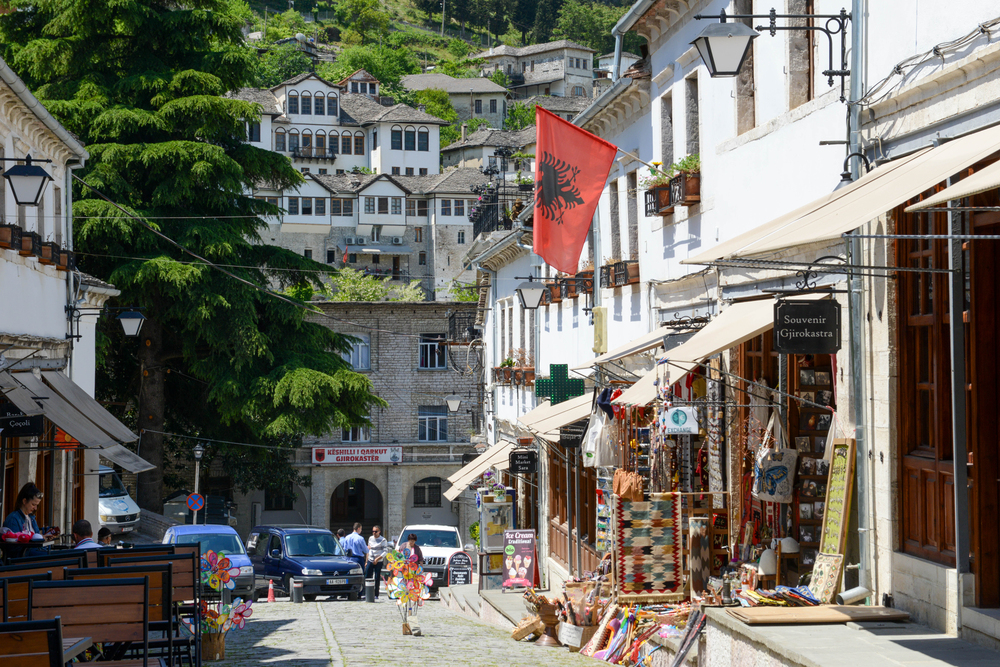
Albania doesn’t just offer visa-free entry for Americans — it offers a full year of it.
Not 90 days like most of Europe.
Not six months.
A full 365 days without needing any paperwork beyond a passport valid for at least three months beyond your planned stay.
That’s more generous than almost anywhere else on the planet, and most people have no idea.
The country itself has been flying under the radar for years, despite having a stunning Adriatic coastline, mountain ranges that rival the Alps, and a capital city in Tirana that’s equal parts quirky and vibrant.
The beaches along the Albanian Riviera look Mediterranean without the Mediterranean prices.
Towns like Berat and Gjirokastër are UNESCO World Heritage Sites filled with Ottoman-era architecture.
The food leans heavily on fresh seafood, grilled meat, and vegetables that actually taste like something.
Getting there is straightforward.
Flights connect through major European hubs, and once you land, the border process is faster than clearing customs in Miami.
No visa application, no fees, no forms to fill out in triplicate.
You walk through, get your passport stamped, and you’re in.
For Americans specifically, Albania has positioned itself as one of the easiest countries in Europe to visit long-term, and yet it rarely makes anyone’s shortlist.
Georgia matches Albania’s generosity
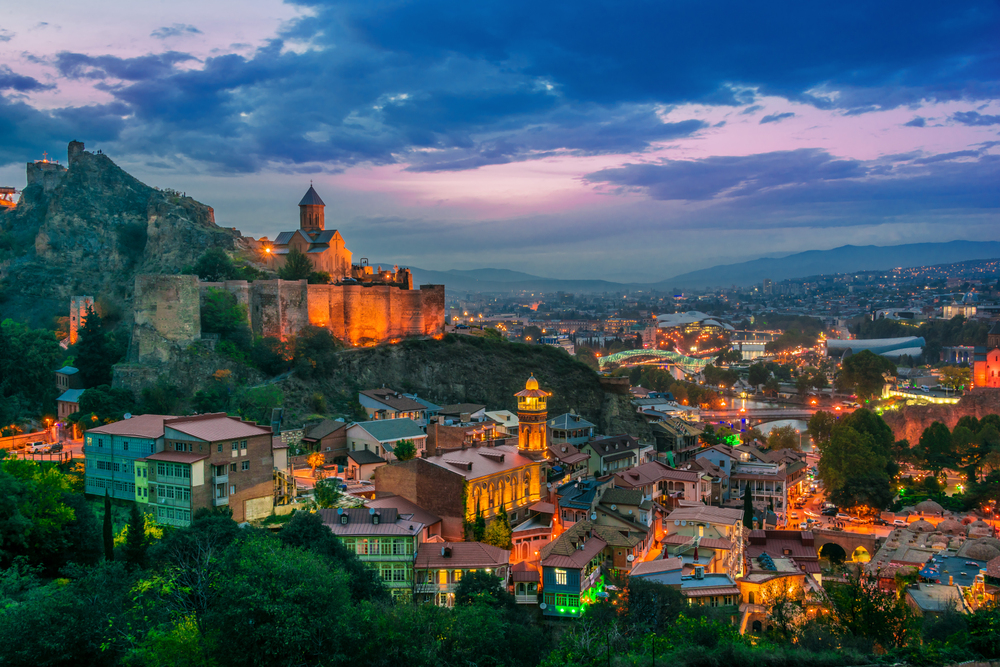
Georgia — the country in the Caucasus, not the state — also grants Americans a full year of visa-free access.
Same deal as Albania: show up with a passport, get stamped in, stay for 12 months if you feel like it.
The country has been aggressively courting tourists and digital nomads for years, and the visa policy reflects that openness.
Tbilisi, the capital, has turned into a hub for remote workers who discovered they could live well on a modest budget while exploring a city that blends Soviet-era architecture with modern wine bars and a food scene that deserves more attention.
Georgian cuisine is its own thing entirely.
Khachapuri — a cheese-filled bread — is practically a national symbol, and khinkali, oversized dumplings that require a specific eating technique.
The wine culture runs deep here, with a tradition that dates back thousands of years and involves fermenting grapes in clay vessels buried underground.
Beyond the capital, the country offers mountain landscapes in the Caucasus that attract hikers and skiers, Black Sea beaches near Batumi, and ancient cave cities carved into cliffsides.
The infrastructure is decent, English is increasingly common in tourist areas, and the cost of living stays low enough that your money stretches further than it would almost anywhere in Western Europe.
Entry requirements couldn’t be simpler, and yet Georgia still reads as exotic or complicated to people who haven’t looked into it.
Serbia skips the Schengen rules

Serbia sits in the middle of the Balkans, surrounded by countries that are either in the European Union or angling to join, but Serbia itself isn’t part of the Schengen Area.
That turns out to be an advantage.
Americans get 90 days visa-free in Serbia, and those 90 days don’t count against your Schengen limit.
You could spend three months in Serbia, hop over to the Schengen zone for another 90 days, and you’ve stretched a European trip to six months without dealing with visa extensions.
Belgrade, the capital, has become a surprising favorite among travelers who stumble into it without high expectations and end up staying longer than planned.
The nightlife is genuinely excellent, the riverside setting makes summer evenings feel special, and the mix of Austro-Hungarian architecture and communist-era buildings gives the city a distinct look.
Novi Sad, a smaller city to the north, hosts one of Europe’s largest music festivals every summer and has a more laid-back vibe than the capital.
The countryside offers monasteries tucked into hillsides, national parks with hiking trails, and small towns where tourism hasn’t fully arrived yet.
Food is hearty and meat-heavy, prices are reasonable, and English is common enough that getting around doesn’t require fluency in Serbian.
The entry process is painless — passport control takes minutes, and there’s no visa fee or advance paperwork.
Serbia makes it easy, and travelers who take advantage of that often wish they’d discovered it sooner.
Montenegro packs a lot into a small package

Montenegro is tiny — one of Europe’s smallest countries — but it compensates with variety.
Adriatic coastline with medieval towns like Kotor, mountain ranges perfect for hiking, and a network of trails and rivers for outdoor types.
Americans get 90 days visa-free, and the entry process is as simple as it gets.
Fly into Podgorica or Tivat, clear passport control in minutes, and you’re done.
Kotor gets most of the attention, and for good reason.
The old town sits at the end of a dramatic bay surrounded by mountains, with Venetian architecture and narrow cobblestone streets that feel straight out of a different century.
It’s gotten more crowded as cruise ships discovered it, but visit in the shoulder season and it’s still manageable.
Budva offers beaches and a party scene, while the interior mountains around Durmitor National Park provide serious hiking and some of the best scenery in the Balkans.
The country is small enough that you can see a lot of it in a week or two, but it’s easy to extend your stay if you’re not in a rush.
Costs are lower than neighboring Croatia, which has become pricier as tourism ramped up.
Montenegro still feels like a deal, and the lack of visa complications makes it an easy add-on to any Balkan itinerary.
Vietnam simplified the e-visa process
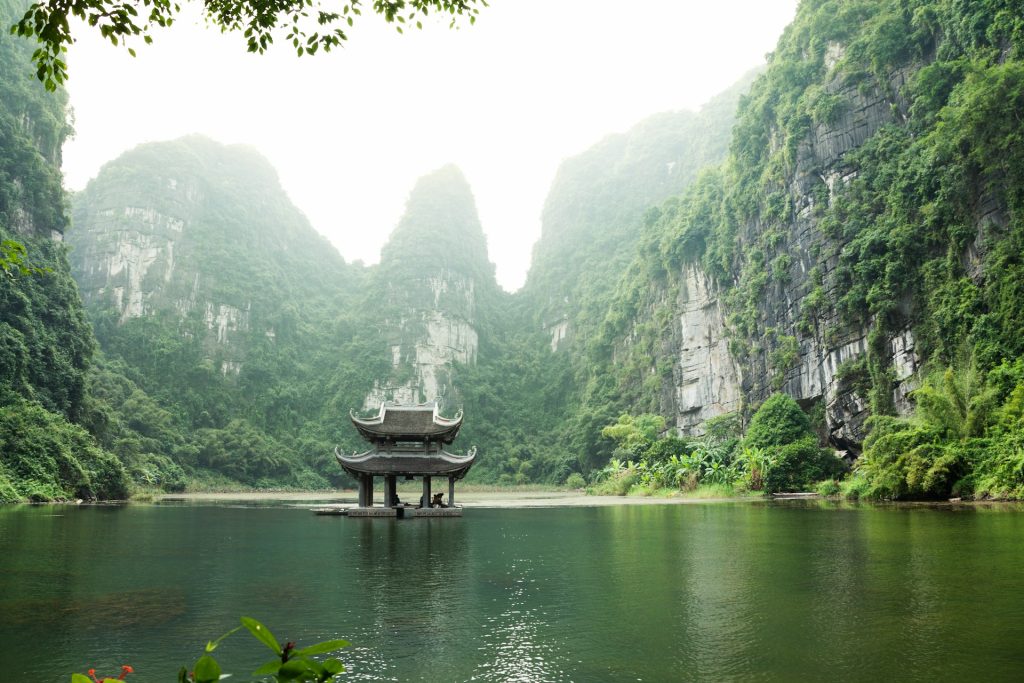
Vietnam used to require planning ahead — visa on arrival or pre-arranged approval letters that felt more complicated than they needed to be.
That changed.
The country now offers a straightforward e-visa that Americans can apply for online, usually receiving approval within three business days.
The visa is good for 90 days with multiple entries, and the whole process costs around 25 bucks.
You fill out a form, upload a passport photo, pay the fee, and wait for the email confirmation.
No embassy visits, no mailing your passport anywhere.
The country itself rewards the minimal effort required to get in.
Hanoi and Ho Chi Minh City offer urban energy, street food that’s become internationally famous, and a pace of life that takes some adjusting to but grows on you.
Ha Long Bay delivers the dramatic limestone karsts that show up in every Vietnam highlight reel.
Hoi An, a coastal town that lights up with lanterns at night, manages to be charming without feeling overly manufactured for tourists.
Central Vietnam has beaches that stay quiet outside peak season, and the northern mountains near Sapa offer terraced rice fields and hill tribe villages worth the trek.
Getting around is easy — buses, trains, and cheap flights connect major cities, and English is common in tourist areas.
The e-visa process removed the last real barrier to entry, and Vietnam has seen tourist numbers climb as a result.
Kenya grants e-visas fast

Kenya has leaned into the e-visa system hard, processing applications quickly and making the whole thing feel less bureaucratic than you’d expect.
Americans apply online, pay around 50 dollars, and typically get approval within a few days.
The visa is good for 90 days, and the process doesn’t involve anything more complicated than filling out a form and uploading documents.
Safari tourism drives a lot of Kenya’s appeal, and rightly so.
The Maasai Mara offers wildlife viewing that lives up to the hype, especially during the annual wildebeest migration.
Amboseli National Park provides views of Kilimanjaro across the border in Tanzania, and the elephants there are worth the trip alone.
Nairobi works as a base for organizing safaris, though the city itself has more going on than people give it credit for — good restaurants, a growing arts scene, and neighborhoods like Karen that feel surprisingly green and spacious.
The coast around Mombasa and Diani Beach offers a completely different experience: Indian Ocean waters, coral reefs for snorkeling, and a slower pace that contrasts sharply with the safari circuit.
The e-visa system makes Kenya accessible without the hassle that used to come with African travel logistics, and the country has invested in infrastructure that makes getting around easier than it was a decade ago.
India streamlined entry for most travelers

India used to mean visa applications that felt like filing taxes.
Now, the e-visa system handles most tourist entries with surprising efficiency.
Americans apply online, pay around 80 dollars depending on visa duration, and usually receive approval within a few days.
The visa comes in different flavors — 30 days, one year, or five years with multiple entries — and the application process, while still detailed, is manageable without needing a lawyer or a fixer.
The country rewards persistence.
Cities like Delhi, Mumbai, and Jaipur offer sensory overload in the best and most challenging ways.
The food scene alone justifies the trip, from street vendors serving chaat and dosas to high-end restaurants reinterpreting regional cuisines.
Historical sites like the Taj Mahal, Jaipur’s palaces, and the temples of Varanasi deliver exactly what you’d hope for, even if the crowds and chaos take some getting used to.
Kerala in the south offers backwaters, beaches, and a more relaxed pace.
Rajasthan provides desert landscapes and fort cities that feel like film sets.
The Himalayas in the north attract trekkers and anyone looking to escape the heat.
India is a lot, and the e-visa system at least removes one layer of complication from the experience.
Why the misconceptions stick

Because perception hasn’t kept pace with reality, countries like these remain off the radar of most tourists.
Before you look at the actual entrance requirements, Albania and Georgia seem far away or challenging, but you’ll find that they’re actually easier to visit than France.
Years ago, Vietnam and Kenya streamlined their immigration procedures, but people continue to use out-of-date information.
Serbia and Montenegro profit from their geographic location, yet they are ill-defined notions of ‘Eastern Europe’ that fail to capture their true accessibility.
It’s not helped by the travel business.
The same few destinations are frequently featured in the content, which recycles itineraries and reinforces the notion that traveling outside the typical circuit necessitates more work.
Meanwhile, because they aren’t already well-known, nations that actively work to draw tourists by making admission simple are ignored.
Travelers who are willing to do little research profit from the disconnect because they find themselves in locations that are still uncrowded, reasonably priced, and genuinely thrilled to see you.
More from Travel Pug

- Underrated Italian Towns That Beat the Tourist Crowds
- Las Vegas Tourist Traps to Skip
- Prettiest Towns in Every US State
- 18 passport-free countries for Americans
- Signs Your Cruise Is Not Worth The Cost
Like Travel Pug’s content? Follow us on MSN.