

Beijing stands as one of the world’s most historically rich cities, with over 3,000 years of documented history and centuries as China’s imperial capital. The city’s carefully preserved landmarks offer glimpses into dynasties long past, from grand palace complexes to humble neighborhood alleyways that once echoed with the footsteps of emperors and commoners alike.
Here is a list of 15 historic sites in Beijing that showcase the city’s extraordinary cultural heritage.
The Forbidden City
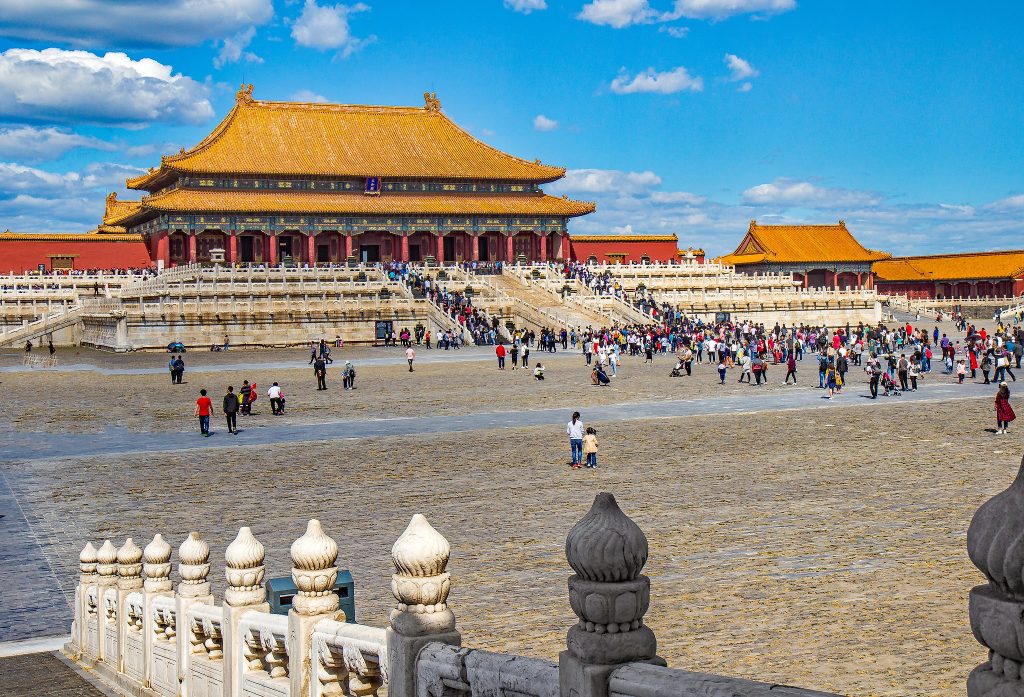
The Forbidden City served as the imperial palace for 24 emperors across nearly 500 years of Ming and Qing dynasty rule. Construction began in 1406 under Emperor Yongle and required over a million workers and 15 years to complete.
This massive complex spans 180 acres and contains 980 buildings, making it the largest ancient palatial structure in the world. The intricate architecture features traditional Chinese design with yellow glazed roof tiles reserved exclusively for imperial use, and the entire complex follows strict feng shui principles along Beijing’s central axis.
UNESCO inscribed it as a World Heritage Site in 1987, recognizing its influence on East Asian architecture and its unparalleled collection of Ming and Qing dynasty artifacts housed in the Palace Museum today.
The Great Wall at Badaling
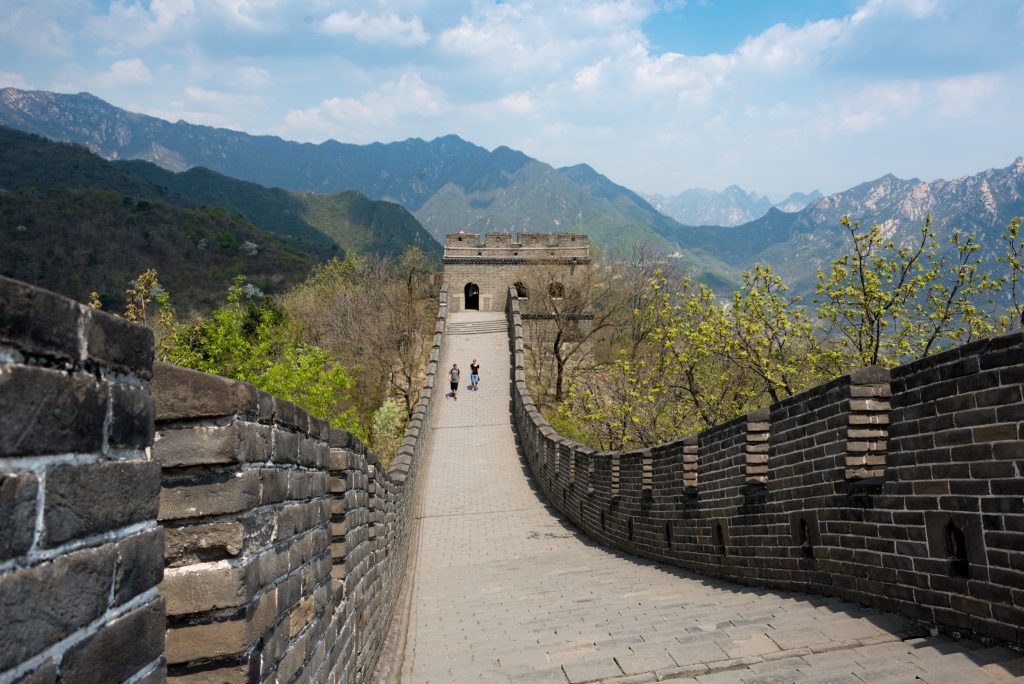
The Great Wall stretches over 13,000 miles across northern China, with the Badaling section representing one of the best-preserved and most accessible portions near Beijing. Built continuously from the 3rd century BC through the 17th century AD, this massive defensive fortification was constructed by successive Chinese dynasties to protect against northern invasions.
The wall winds dramatically across mountain ridges, creating one of humanity’s most recognizable architectural achievements. Standing atop the ramparts, you can see watchtowers dotting the landscape at regular intervals, originally used for signaling and troop movement.
The Badaling section was restored in the 1950s and receives millions of visitors annually, though early morning visits offer a more peaceful experience of this ancient wonder.
Temple of Heaven
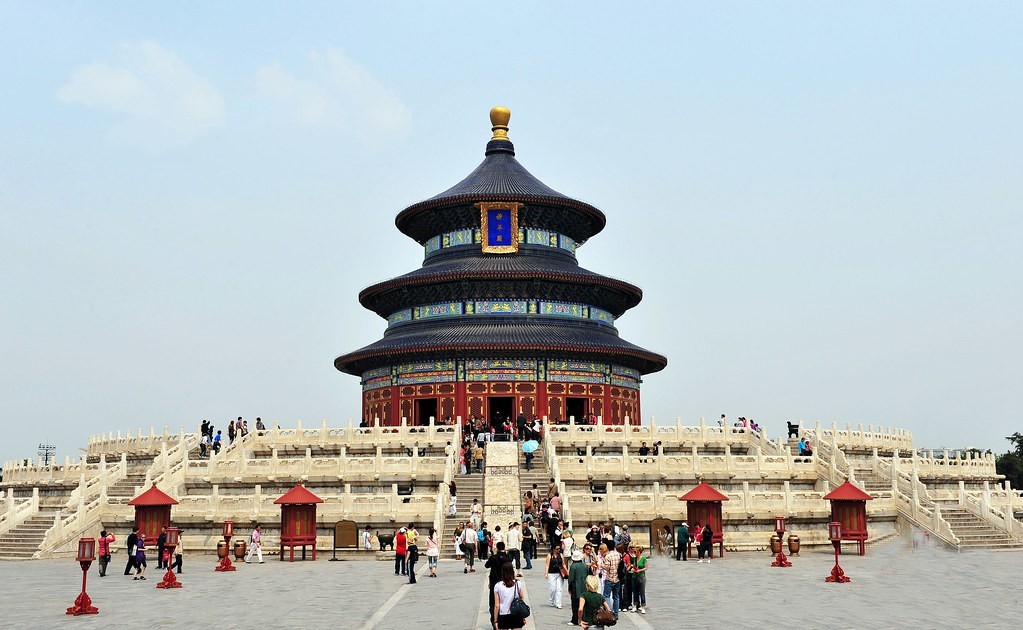
Emperor Yongle commissioned the Temple of Heaven in 1420 as a sacred space where emperors would perform elaborate annual ceremonies to pray for good harvests. The complex covers 273 hectares in southern Beijing, with the iconic Hall of Prayer for Good Harvests standing as its centerpiece—a stunning three-tiered circular structure topped with brilliant blue roof tiles that contrast beautifully against the sky.
The entire complex was designed around symbolic cosmology, with circular buildings representing heaven and square courtyards representing earth. Every detail held meaning, from the number of steps to the colors used in construction.
UNESCO recognized it as a World Heritage Site in 1998, and today the surrounding park has become a gathering place for locals practicing tai chi, playing traditional instruments, and enjoying the ancient pine trees and cypress groves.
Summer Palace
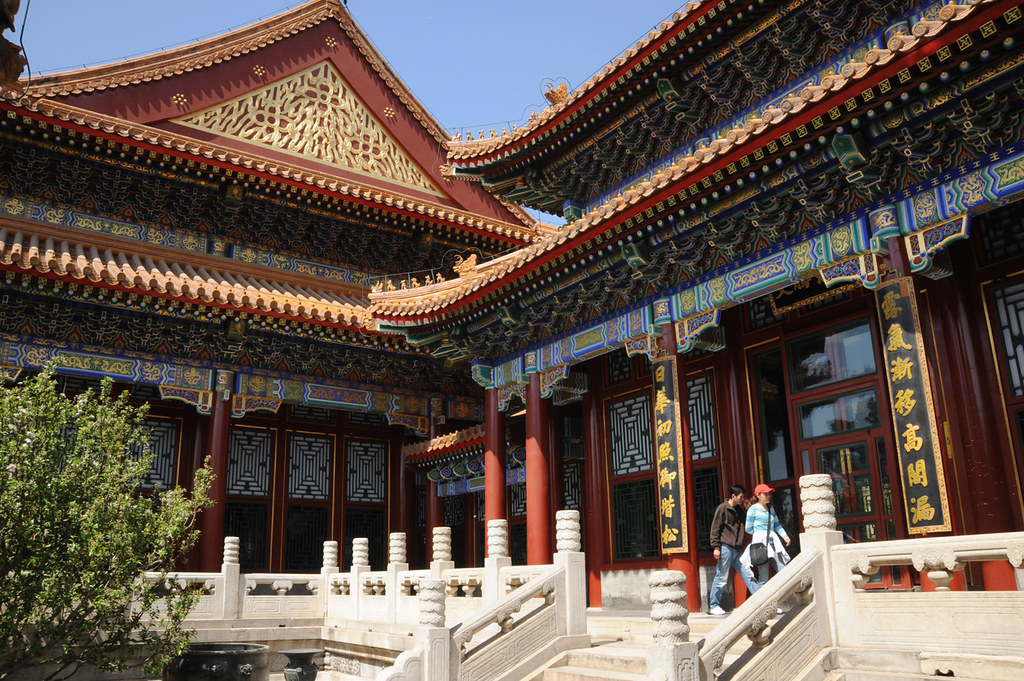
The Summer Palace began as the Gardens of Clear Ripples in 1750 under Emperor Qianlong, drawing inspiration from the scenic beauty of West Lake in southern China. This vast complex covers nearly 700 acres, with three-quarters of it consisting of Kunming Lake and its surrounding waterways.
After the original structures were destroyed in 1860 during the Second Opium War, Empress Dowager Cixi oversaw a controversial reconstruction in 1886, reportedly using funds intended for the Chinese navy. The result is a masterpiece of Chinese landscape garden design, featuring over 3,000 structures including pavilions, bridges, corridors, and halls that blend seamlessly with the natural scenery.
The famous Long Corridor stretches for half a mile along the lake shore, its beams decorated with over 14,000 paintings depicting Chinese landscapes, flowers, and legends.
Ming Tombs
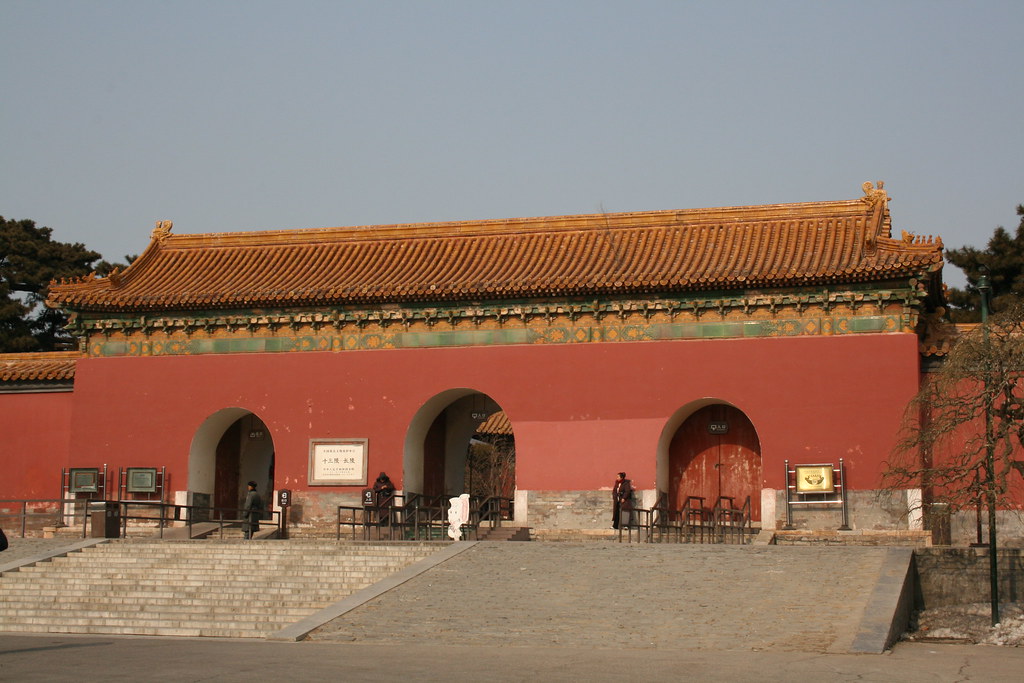
The Ming Tombs complex houses the burial sites of 13 of the 16 Ming dynasty emperors, spanning from 1409 to the dynasty’s fall in 1644. Located at the foot of Tianshou Mountain about 30 miles northwest of Beijing, this sacred valley was carefully selected according to feng shui principles to provide spiritual protection for the imperial dead.
The site covers 40 square kilometers and includes elaborate tomb structures, ceremonial gates, and the famous Spirit Way—a road lined with massive stone statues of animals and officials that leads to the tombs. Changling, the tomb of Emperor Yongle, stands as the largest and most impressive, though it has never been excavated.
Only Dingling was opened in the 1950s, revealing underground chambers and treasures, though many artifacts were tragically destroyed during the Cultural Revolution.
Lama Temple
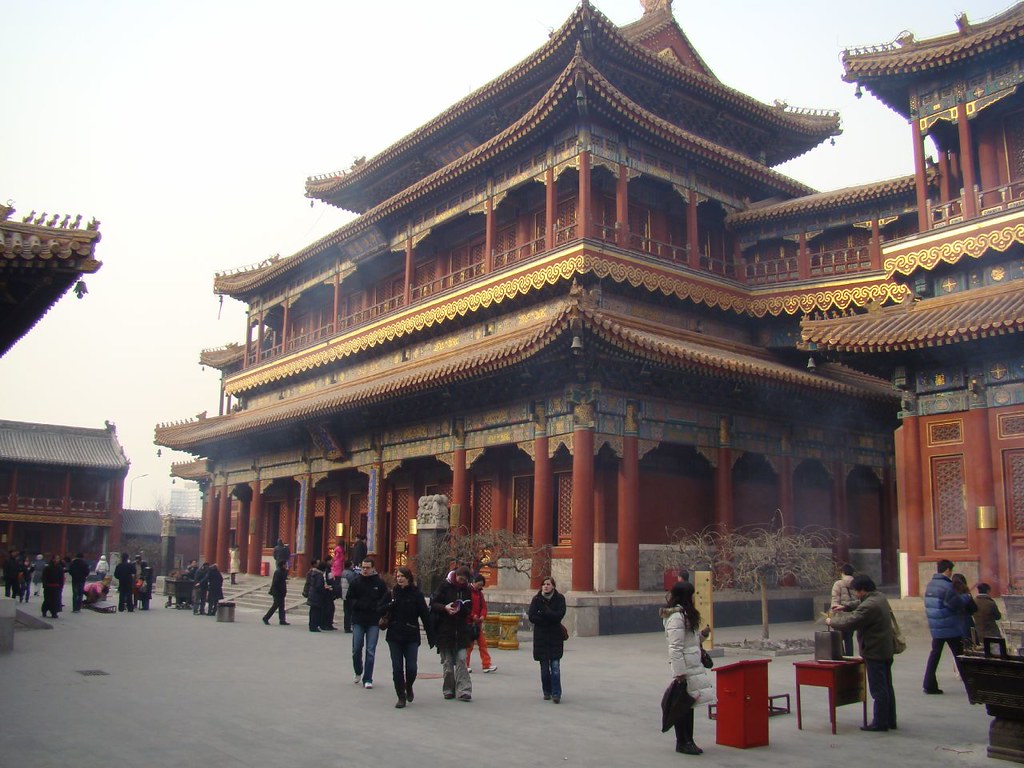
The Lama Temple started life in 1694 as a residence for Prince Yong, who later became Emperor Yongzheng. After ascending the throne in 1722, Yongzheng converted half the complex into a lamasery for Tibetan Buddhist monks, and when he died in 1735, his coffin was placed there temporarily.
His son, Emperor Qianlong, elevated the temple’s status by replacing its green roof tiles with imperial yellow ones and transforming it into the national center for Lama administration. The temple miraculously survived the Cultural Revolution, reportedly due to Premier Zhou Enlai’s personal intervention, and reopened in 1981.
Today it houses an extraordinary 18-meter-tall statue of Maitreya Buddha carved from a single piece of white sandalwood, along with thousands of other Buddhist artifacts in a complex that beautifully blends Han Chinese and Tibetan architectural styles.
Jingshan Park
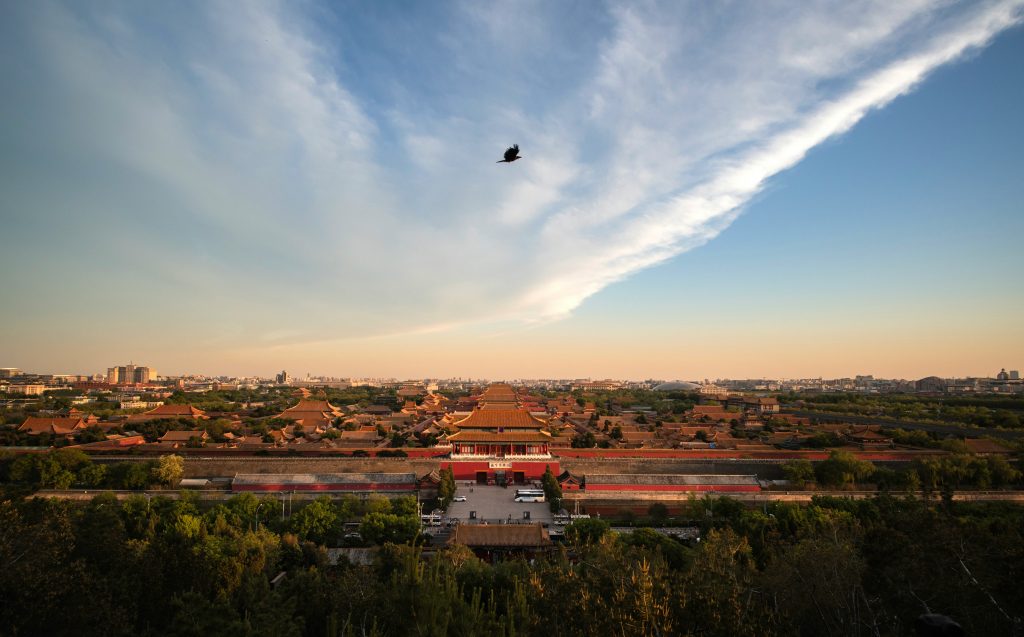
Jingshan Park sits directly north of the Forbidden City on Beijing’s central axis, built on an artificial hill created entirely from soil excavated when digging the palace moats during the Ming dynasty. Rising 150 feet above the surrounding city, this hill served a crucial role in feng shui—protecting the Forbidden City from malevolent northern influences while providing symbolic balance to the imperial capital.
The park gained tragic historical significance in 1644 when the last Ming emperor, Chongzhen, hanged himself from a locust tree here after rebel forces breached Beijing’s walls. Five elaborate pavilions crown the hill’s peaks, with Wanchun Pavilion at the summit offering the single best panoramic view of the Forbidden City’s golden rooftops, along with sight lines to the Bell and Drum Towers and Beihai Park’s white pagoda.
Beihai Park
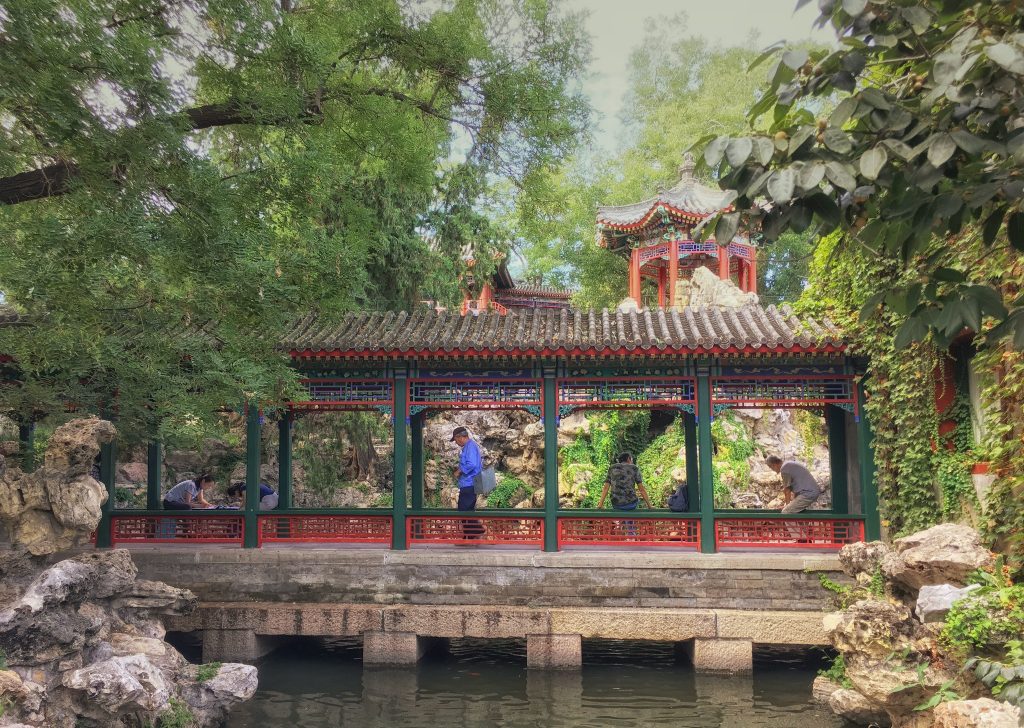
Beihai Park ranks among China’s oldest and best-preserved imperial gardens, with a history stretching back to the 10th century when it served as a pleasure ground for the Liao dynasty. The park centers on a large lake with the iconic White Dagoba rising from Jade Flower Island—a 120-foot-tall Tibetan-style stupa built in 1651 to commemorate a visit by the Dalai Lama.
Covering 170 acres, three-quarters of which is water, the park features traditional pavilions, halls, and gardens arranged around the lake shore. The Nine Dragon Screen, built from colored glazed tiles in 1756, depicts nine dragons playing in the clouds and stands as one of only three such screens remaining in China.
After serving exclusively as an imperial retreat for centuries, the park opened to the public in 1925 and remains a favorite spot for Beijingers practicing calligraphy, flying kites, and taking paddle boats across the tranquil waters.
Prince Gong’s Mansion
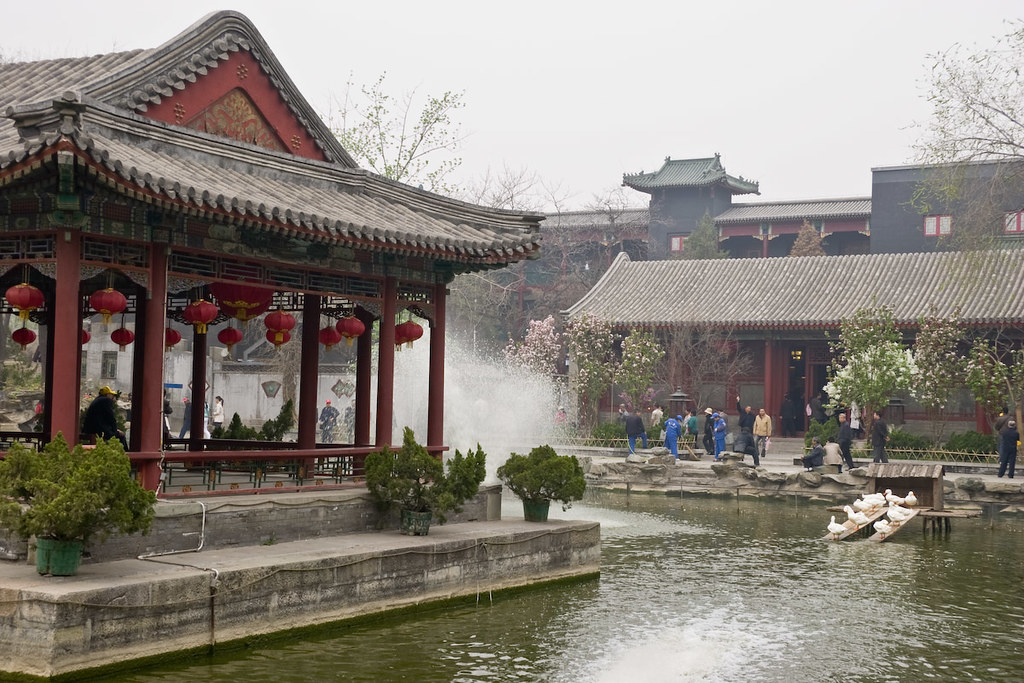
Prince Gong’s Mansion was originally constructed in 1777 for Heshen, a notoriously corrupt official who became one of Emperor Qianlong’s most powerful ministers. After Heshen’s execution and the confiscation of his enormous wealth, the property changed hands several times before Emperor Xianfeng bestowed it upon Prince Gong in 1851.
This sprawling complex covers 60,000 square meters and represents the largest and best-preserved aristocratic residence from the Qing dynasty still standing in Beijing. The mansion features elaborate courtyards, over 40 rooms in the main residential section, and extensive ornamental gardens filled with rockeries, pavilions, and a famous stele carved with the character ‘fu’ (blessing) in Emperor Kangxi’s own handwriting.
The Grand Theater House in the eastern garden still hosts daily performances of Beijing Opera and traditional music in a space that has weathered over a century of northern China’s harsh seasons.
Bell and Drum Towers
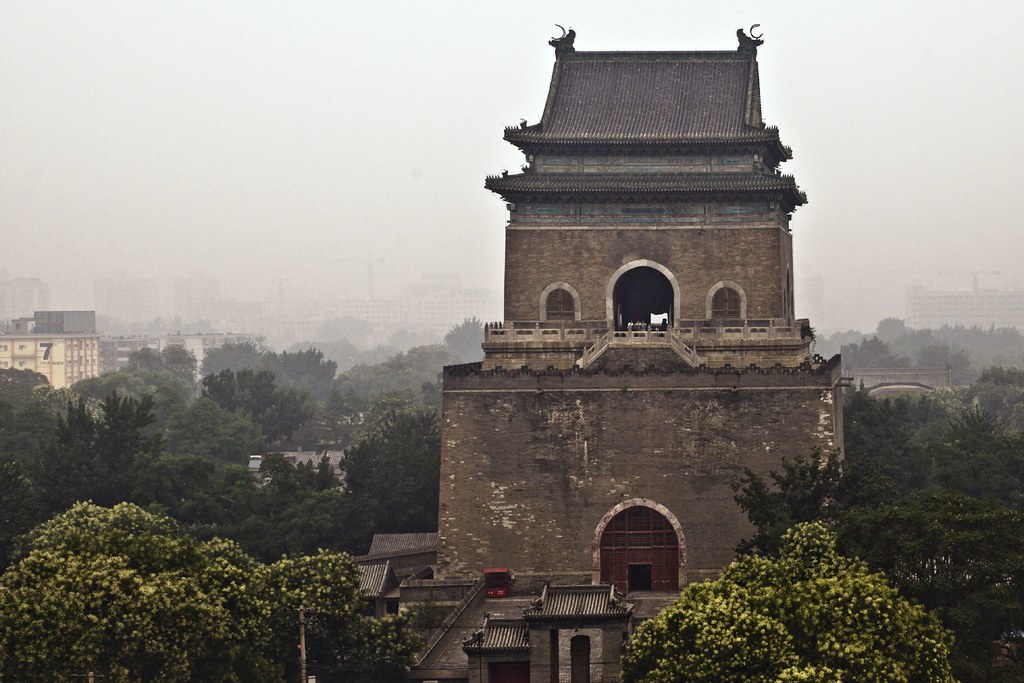
The Bell and Drum Towers stand as sentinels of old Beijing’s timekeeping system, dating back to the Yuan dynasty when they served as the city’s official method of announcing the hours. The Drum Tower, completed in 1272 and standing 150 feet tall, originally housed 24 drums that were beaten to mark sunset and the night watches.
The Bell Tower sits just behind it, built in 1745 to replace an earlier wooden structure destroyed by fire, and contains a massive bronze bell weighing 63 tons. These towers marked the northern terminus of Beijing’s central axis and their sounds once regulated the rhythm of daily life throughout the capital.
From the top of the Drum Tower, you get sweeping views across the surrounding hutong neighborhoods, with their grey-tiled rooftops creating a sea of traditional architecture that contrasts sharply with the modern skyscrapers visible in the distance.
Peking Man Site at Zhoukoudian
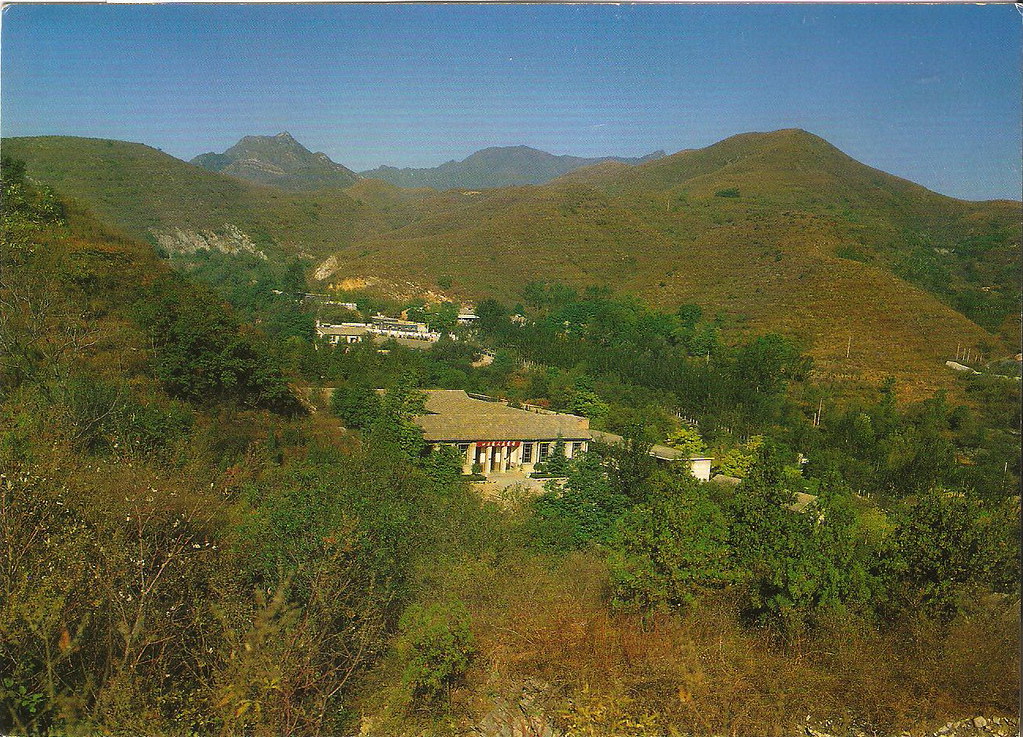
The Peking Man Site at Zhoukoudian, located 30 miles southwest of Beijing, preserves one of the world’s most significant archaeological discoveries from the Paleolithic era. Excavations beginning in the 1920s uncovered fossilized remains of Homo erectus pekinensis who lived here between 770,000 and 230,000 years ago, along with evidence of fire use and primitive stone tools.
The site also yielded remains of Homo sapiens sapiens dating back 18,000 to 11,000 BC, providing an extraordinary record of human evolution and prehistoric life in East Asia. More than 20 fossil localities have been identified across the site, with the original Peking Man cave being the most famous.
UNESCO inscribed it as a World Heritage Site in 1987, and today the site museum displays replicas of the fossils and tools, explaining their significance in understanding human development and early Asian civilization.
Grand Canal
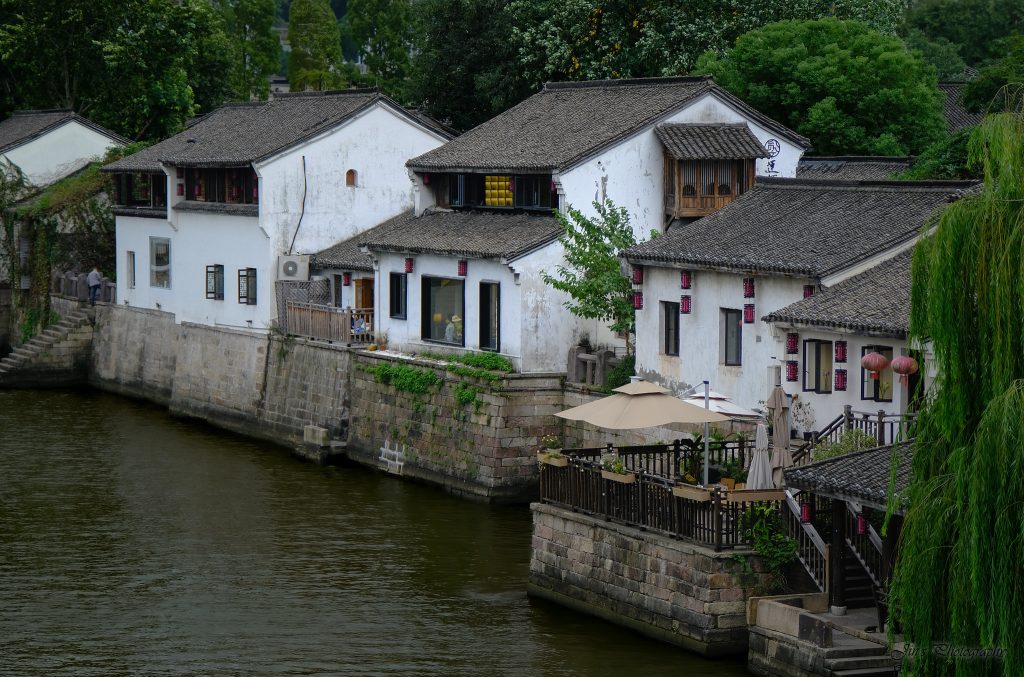
The Grand Canal represents one of history’s most ambitious engineering projects, stretching 1,100 miles from Beijing to Hangzhou and connecting five major river systems. Construction began in 486 BC, with the Beijing sections added during the Yuan dynasty when Kublai Khan made the city his capital and needed reliable grain transportation from the south.
The canal’s Beijing portions include scenic stretches through Shichahai’s interconnected lakes and the Tongzhou section that once bustled with merchant boats carrying tribute rice to the imperial granaries. UNESCO inscribed the canal as a World Heritage Site in 2014, recognizing its role in unifying China economically and culturally across two millennia.
Walking along the canal banks near Shichahai, you can still see traditional courtyard homes, historic bridges, and willow-lined waterways that evoke the canal’s commercial heyday, though today pleasure boats have replaced the merchant vessels.
Beijing’s Historic Hutongs
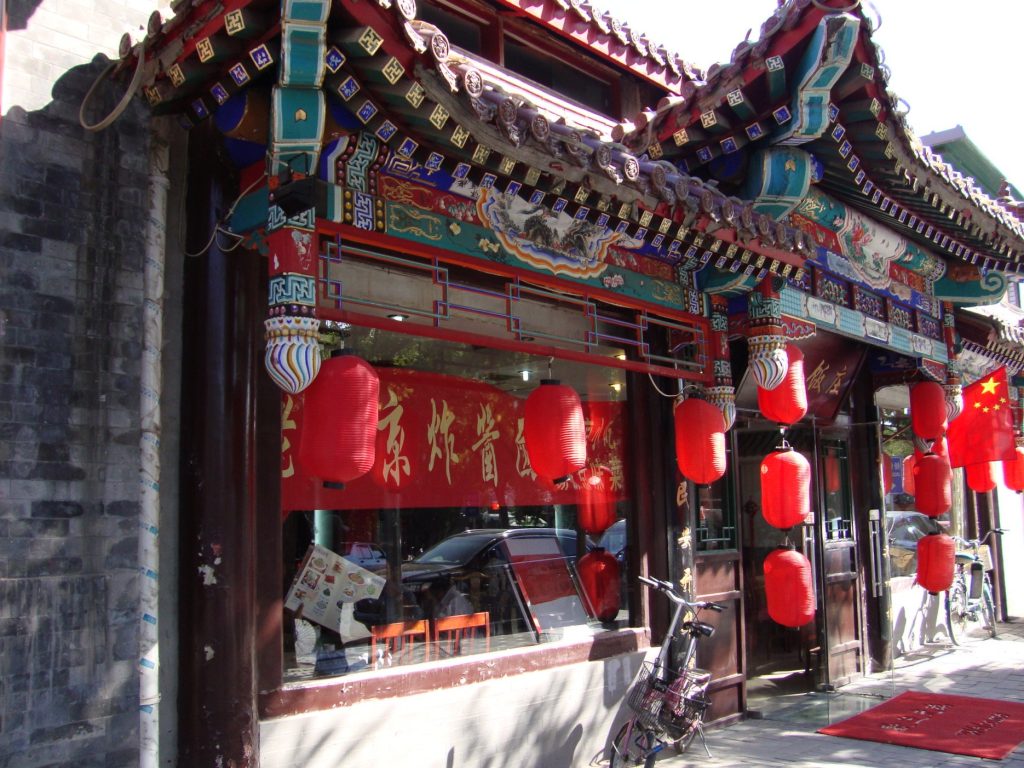
Beijing’s hutongs are narrow alleyways lined with traditional courtyard residences called siheyuan, forming the basic fabric of the old city since the Yuan dynasty in the 13th century. The word ‘hutong’ derives from Mongolian, meaning ‘water well’ or ‘lane,’ and these alleyways created intimate neighborhood communities where generations of Beijingers lived, worked, and socialized.
Nanluoguxiang represents one of the oldest and most well-preserved hutongs, maintaining its 800-year-old layout while now hosting cafes, boutiques, and restaurants. Shichahai and Wudaoying hutongs offer different flavors—the former centered around picturesque lakes with rickshaw tours available, the latter developing an artsy vibe near the Lama Temple.
Many hutongs house historic sites like Prince Gong’s Mansion and various temples, while others simply preserve the rhythms of traditional Beijing life with elderly residents cycling to morning markets and children playing in courtyard doorways.
Confucius Temple and Imperial College
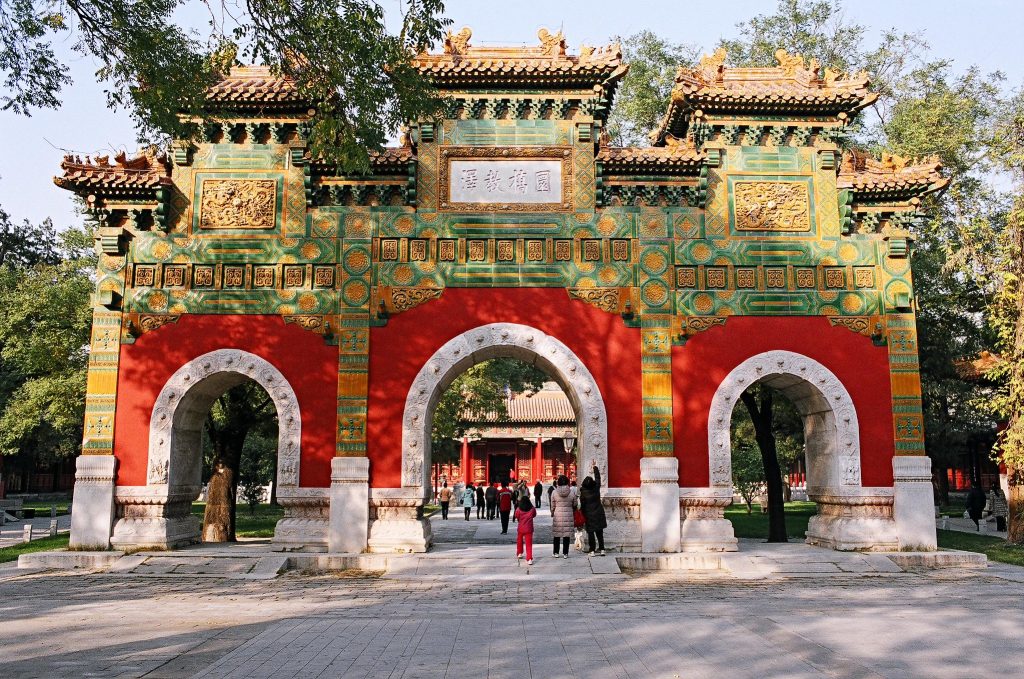
Centered in Beijing, the Confucius Temple stands alongside what was once the nation’s foremost learning site. Construction began in 1302, under the Yuan dynasty, forming a place dedicated to China’s greatest thinker.
Rituals held there stretched through more than seven hundred years. Architectural design follows ancient patterns, using courtyards, halls, and gates shaped by tradition. Stone tablets are carved with ranks of scholars who passed rigorous state exams.
These engravings remain as quiet markers of intellectual dedication long past. Close by rises Guozijian – the name given to the Imperial College. Ruling dynasties from Yuan to Qing used it as the peak of academic training.
Emperors sometimes spoke within its halls while top pupils immersed themselves in philosophical texts. At the heart of a ring-shaped water feature stands Biyong Hall, reached by four separate walkways, forming an arrangement rich in symbolic meaning regarding imperial guidance.
From this setup emerges a view into how learning and Confucian ideals shaped China’s historical approach to rule and societal values.
Beijing Central Axis
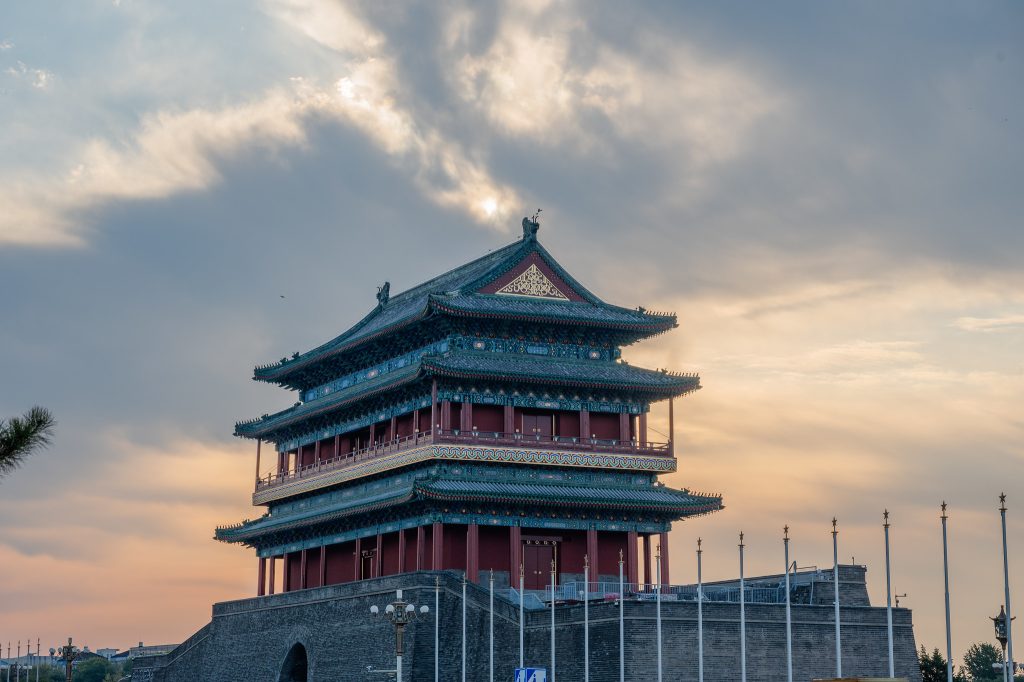
A sequence of landmarks defines a path across central Beijing, measuring roughly eight kilometers from end to end. Beginning near ancient timekeeping towers up north, it moves onward past parkland hills, enclosed courtyards once reserved for royalty, open plazas built more recently, reaching toward a distant southern gateway marked by historic walls.
Alignment follows ideas rooted in balance – earth below, sky above, authority placed precisely between both realms. Positioning was never accidental; each significant building found its place on this singular line based on long-standing beliefs about structure and space.
Seen as fundamental to the city’s original design, it gave shape to neighborhoods, governance centers, spiritual sites alike over centuries without pause. Movement along this route uncovers shifts across dynasties: alley homes carved into older grids appear before grand halls rise into view, followed by vast flat expanses shaped by newer eras.
Recognition came late but certain – global status arrived in 2024, confirming enduring significance embedded within stone, brick, memory.
A living capital
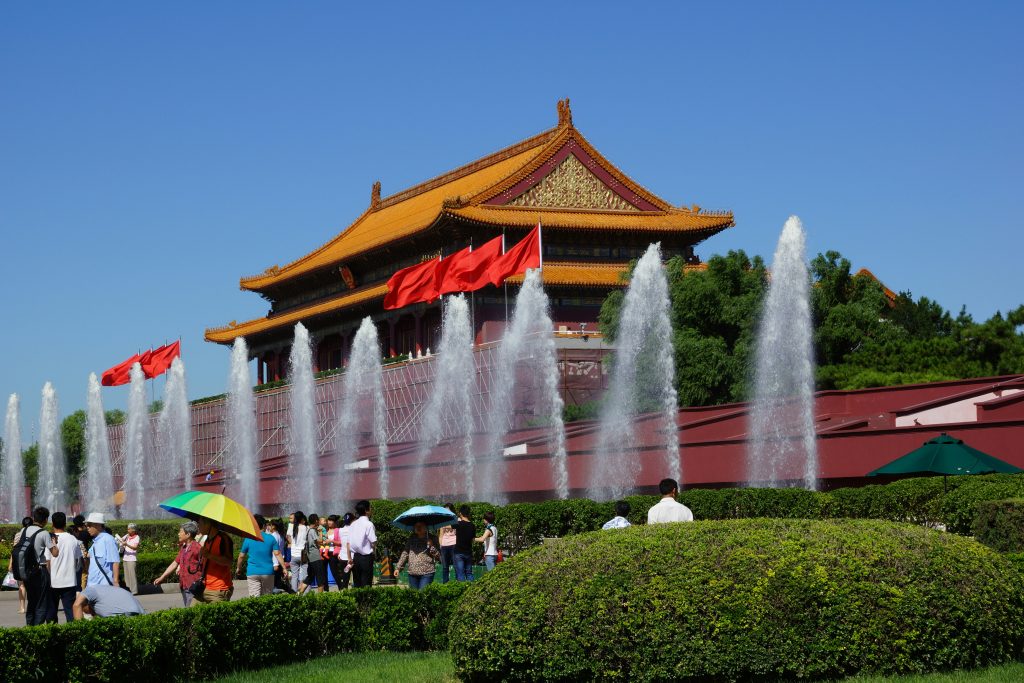
What stands out about Beijing is how its old places stay alive within daily routines. Morning brings people writing characters by hand near water gardens, while narrow lanes hum with voices as night falls.
Prayer smoke rises in temples much like it once did long ago. Time here does not separate what came before from what happens now. Instead, moments across history seem to speak – through alleys, walls, and shared habits that endure.
More from Travel Pug

- Underrated Italian Towns That Beat the Tourist Crowds
- Las Vegas Tourist Traps to Skip
- Prettiest Towns in Every US State
- 18 passport-free countries for Americans
- Signs Your Cruise Is Not Worth The Cost
Like Travel Pug’s content? Follow us on MSN.