

Ancient Mayan cities emerge from jungle shadows like fever dreams made of stone. Their pyramids pierce through centuries of silence, dragging with them stories that blur the line between history and horror.
These ruins don’t just hold artifacts — they carry whispers of curses, human sacrifice, and supernatural guardians that supposedly still patrol crumbling temples under moonlight.
The Maya built more than monuments. They created a mythology so dark and enduring that modern visitors still report unexplained encounters among the ruins.
Local guides share stories their grandfathers told them, stories that make tourists glance nervously over their shoulders as shadows lengthen across ancient plazas.
The blood sacrifice amplification
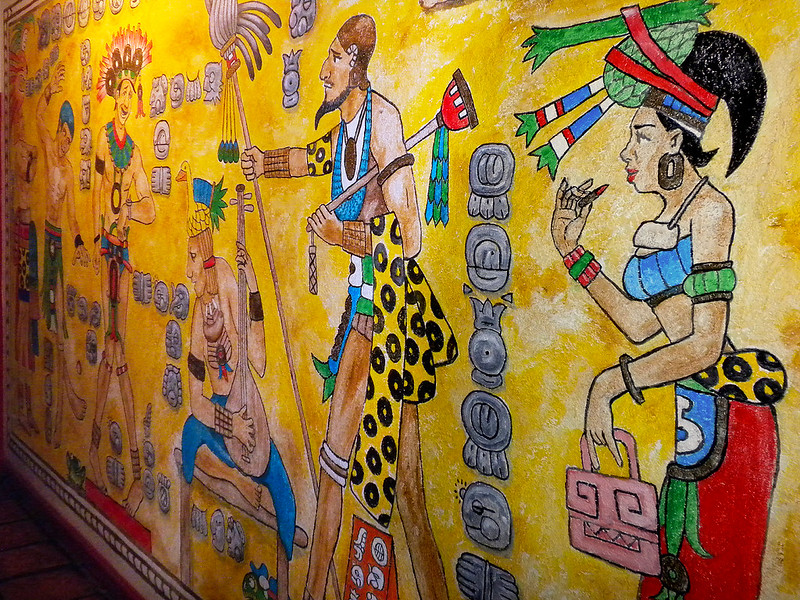
Most people know the Maya practiced human sacrifice. The reality goes deeper than tourist guides admit.
Archaeological evidence suggests ritual killings happened on a scale that would make modern minds reel. Hearts torn from living chests.
Mass drownings in sacred cenotes. Children were buried alive to appease rain gods.
The stones themselves absorbed centuries of blood, and some believe they remember.
Cursed artifacts follow visitors home

Remove a stone from Mayan ruins and misfortune follows you home — or so the legend claims. Tourists who pocket small artifacts (which happens more than park authorities care to admit) report a pattern of escalating bad luck that doesn’t break until the item returns to its origin.
So museums receive packages from panicked visitors who mail back stolen fragments, and park rangers find mysterious offerings left at temple bases: returned pottery shards, jade fragments, obsidian chips — all accompanied by desperate notes begging forgiveness from whatever forces guard these places. And the thing is, these returns happen constantly, which suggests either mass hysteria or something darker at work.
The curse doesn’t discriminate based on the size of the theft, either. A small carved bead carries the same supposed weight as a ceremonial mask.
But here’s what makes it particularly unsettling: the returned items often arrive damaged in ways that don’t match shipping wear — cracked in precise patterns, worn smooth as if aged decades during a few months of absence, bearing scorch marks that no one can explain.
Jaguar spirits patrol ancient temples

The Maya believed jaguars bridged the world of the living and the dead. Their spirits supposedly guard temple entrances even now.
Security cameras at Tikal capture shadowy forms moving through ruins at night. Large, cat-like shapes that disappear when guards investigate.
Local workers refuse night shifts. They know better than to disturb whatever still walks those ancient paths.
Jaguars have declined in many regions, but are not extinct. The shapes keep appearing anyway.
Human sacrifice never really stopped

Here’s an uncomfortable truth about some remote Mayan sites: local indigenous communities never fully abandoned the old rituals; they just adapted them to survive centuries of Christian influence and government oversight. Modern offerings still appear at altar stones — not the dramatic heart-ripping ceremonies that grab headlines, but quieter practices that blur the line between Catholic saints and ancient gods.
Chickens disappear from nearby villages with suspicious regularity, their feathers later found arranged in patterns around cenotes that archaeologists pretend not to notice (because acknowledging ongoing ritual use complicates their research permits and funding). Blood still stains altar stones, though park officials explain it away as mineral deposits or animal markings.
The really unsettling part isn’t that these practices continue — it’s how seamlessly they’ve woven into modern life. A farmer makes an offering before planting.
A mother leaves flowers and food before her child’s surgery. The old gods simply wear new names, and the stones that once hosted grand ceremonies now receive smaller, private devotions that carry the same ancient weight.
Cenotes trap lost souls
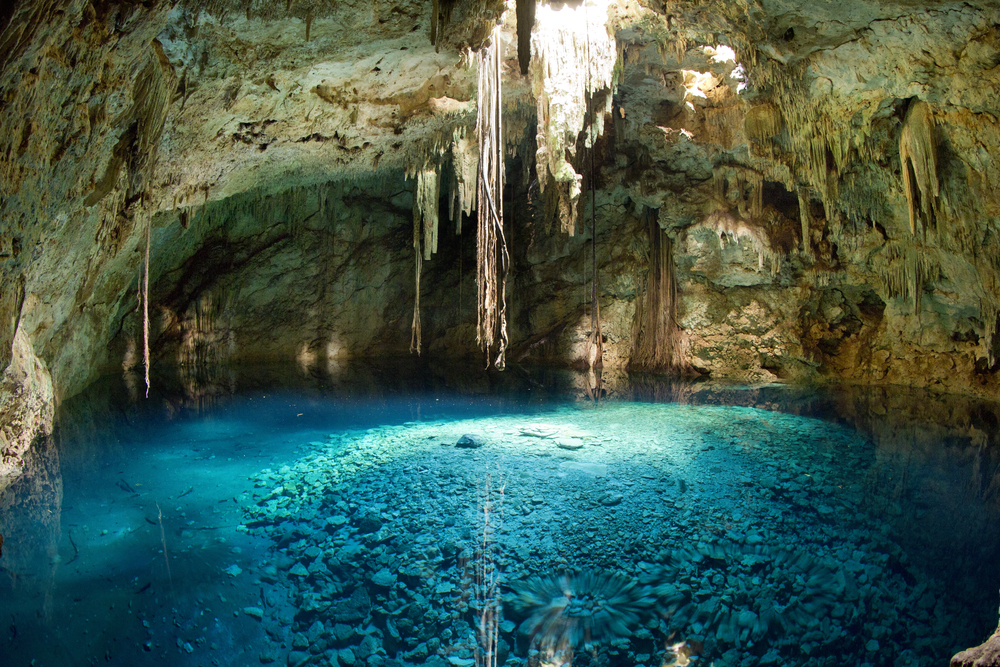
Cenotes are natural sinkholes filled with water, scattered throughout Mayan territory like puncture wounds in the earth. The Maya considered them gateways to the underworld.
Modern divers have reason to believe something down there doesn’t want visitors.
Technical divers report equipment failures in cenotes that work perfectly elsewhere. Compass needles spin wildly.
Dive computers reset themselves. Underwater cameras capture shapes that shouldn’t exist — human forms suspended in water too deep for recreational diving, too still to be alive, too detailed to dismiss as rock formations or debris.
The cenote at Chichen Itza yielded thousands of human remains over decades of excavation. Mostly children.
The water remains extremely deep and only partially explored. Local Maya still avoid swimming in cenotes after dark, claiming the drowned pull living swimmers down to join them in permanent service to the rain god.
Underground tunnel networks hide dark secrets

Beneath every major Mayan site runs a network of tunnels that archaeologists have barely begun to map — and what they’ve found down there suggests the surface temples were just the visible portion of something much larger and more complex. These aren’t simple storage chambers or burial crypts, but elaborate underground cities complete with drainage systems, ventilation shafts, and rooms whose purpose remains completely unknown (though the burn marks on their walls and the channels cut into their floors suggest activities that required containing substantial amounts of liquid).
Recent LiDAR scans reveal tunnel systems extending for miles beneath the jungle, connecting sites that appear separate on the surface.
Exploration teams report consistent problems underground: equipment malfunctions, inexplicable temperature drops, and a persistent feeling of being watched that affects even experienced cavers. But the most disturbing discoveries are the rooms filled with complete human skeletons arranged in seated positions facing blank walls — not burial chambers, but spaces where people apparently died while performing some unknown ritual that required them to remain motionless until death.
Calendar prophecies still unfold

The 2012 apocalypse prediction gave Mayan prophecies a bad reputation. The real calendar system is more subtle and more disturbing.
Mayan priests calculated cycles within cycles, tracking patterns that span centuries. Some of their predictions proved eerily accurate — volcanic eruptions, eclipses, political upheavals timed to match ancient calculations.
Current interpreters of surviving calendar texts point to upcoming dates that mark significant transitions. They’re not predicting world endings.
They’re identifying periods when the barrier between worlds grows thin, when old gods stir, when the dead grow restless.
Temple acoustics induce hallucinations

Mayan architects didn’t just build impressive structures — they engineered spaces that alter human consciousness through sound manipulation. Clap your hands at the base of Kukulkan’s pyramid at Chichen Itza and the echo sounds like a bird call, but that’s just the tourist demonstration.
The real acoustic effects happen inside temple chambers, where specific frequencies resonate at levels that affect brain chemistry and perception.
Researchers studying temple acoustics find that many chambers amplify sounds in the 8-12 Hz range — frequencies known to trigger altered states, visual hallucinations, and feelings of supernatural presence. The Maya understood this.
They designed spaces where priests could literally orchestrate religious experiences through precisely controlled sound environments. Modern visitors who spend time in these chambers report remarkably consistent experiences: sense of floating, visual distortions, feeling of ancient presences, and auditory hallucinations that sound like voices speaking in languages they don’t understand.
The most unsettling part is how specific these experiences are. Different chambers produce different types of hallucinations, as if each space was tuned to evoke particular visions.
Temple priests weren’t just performing rituals — they were running sophisticated psychological operations using architectural technology we’re only beginning to understand.
Bloodline guardians still exist

Modern Maya living near ancient sites aren’t just locals who happen to share ancestry with the builders. Some families maintain unbroken bloodlines stretching back to original priest castes, and they still consider themselves guardians of sacred sites despite centuries of conquest, colonization, and archaeological intrusion.
These hereditary guardians don’t advertise their role or seek recognition from government authorities. They work quietly, maintaining rituals that predate Catholic missions, making decisions about site access that archaeologists never realize are being made.
Certain areas remain mysteriously difficult to excavate — equipment breaks, funding disappears, research permits get tangled in bureaucracy — not through coincidence, but through careful intervention by people who understand how to work within modern systems while protecting ancient obligations.
The guardian families pass down knowledge that academic archaeology hasn’t recovered: locations of sealed chambers, purposes of unexplained structures, meanings of carvings that official translations get wrong. They know which sites are safe for tourism and which should remain undisturbed.
Most importantly, they maintain the protocols that keep certain things contained within the ruins, preventing them from spreading beyond ancient boundaries.
Astronomical alignments still function

Mayan astronomical observations weren’t just impressive for their accuracy — they were designed to track cosmic events that supposedly influence supernatural activity on earth. Temple alignments mark not just solstices and equinoxes, but more obscure celestial phenomena that modern astronomy recognizes but doesn’t consider significant.
When specific star configurations align with temple doorways, locals report increased paranormal activity. Shadow shapes move across temple faces following paths that match ancient procession routes.
Stone faces seem to shift expression as starlight plays across carved features. The buildings were designed as massive astronomical instruments, but their purpose wasn’t just tracking time — they were monitoring cosmic conditions that affect the boundary between dimensions.
Recent studies of Mayan astronomical texts reveal predictions for celestial alignments occurring now, in the 21st century. These aren’t end-times prophecies but operational schedules: dates when specific temples will be “active,” when certain rituals will be most effective, when the dead will be most likely to respond to summoning.
The ancient priests weren’t just studying the stars — they were creating an instruction manual for their descendants.
Hieroglyph curses target archaeologists

Academic translation of Mayan hieroglyphs focuses on historical events, calendar dates, and royal genealogies. The darker texts — protective curses, binding spells, warnings against desecration — get less attention in scholarly papers, partly because they’re harder to translate and partly because acknowledging their existence complicates site management and research funding.
But archaeologists working on deciphering these protective texts report a disturbing pattern of personal misfortune that correlates directly with their translation progress. Career setbacks, family illnesses, financial problems, and professional conflicts seem to intensify for researchers who successfully decode curse inscriptions.
Some switch to different projects. Others abandon Mayan studies entirely.
The curses aren’t subtle threats — they’re detailed instructions for supernatural retribution against anyone who disturbs sacred spaces or reveals protected knowledge. And they appear to work with distressing consistency.
Translation teams develop informal protocols for handling curse texts: limited exposure time, purification rituals borrowed from living Mayan communities, and careful disposal of research materials that prevent curse knowledge from spreading beyond academic circles.
Underground rivers connect to other dimensions

The Yucatan Peninsula sits on a vast network of underground rivers that the Maya considered supernatural highways connecting earth to the underworld. Modern hydrologists mapping these systems discover waterways that don’t follow normal geological patterns — rivers that flow uphill, chambers where water temperature varies dramatically without explanation, and pools that reflect images that don’t match their surroundings.
Cave divers exploring these underground systems report unusual experiences that remain unexplained. Structures that appear artificially constructed but show no tool marks.
Chambers filled with air at depths where air shouldn’t exist. And most disturbing, consistent sightings of human figures swimming in areas too deep and remote for any living person to reach — figures that move with purpose through underwater tunnels, appear immune to pressure and oxygen limitations, and seem to be following routes that connect different cenote systems across vast distances.
The Maya built their cities around cenote openings because they understood these weren’t just water sources — they were access points to a transportation network that operates according to rules different from surface physics.
Mirror portals in polished obsidian
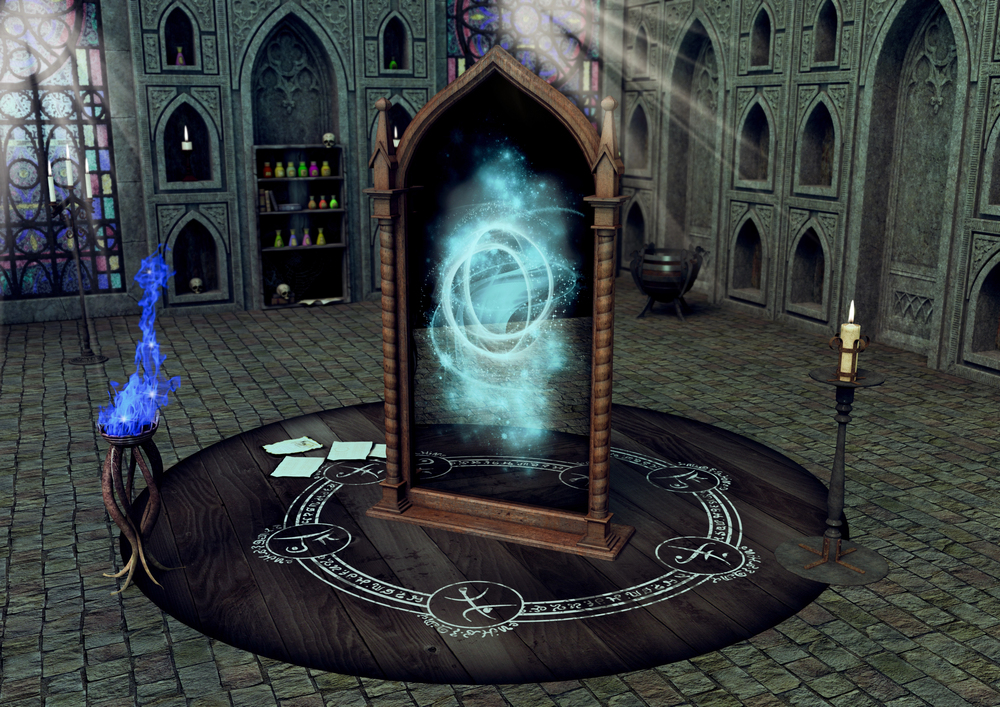
Obsidian was sacred to the Maya, but not just for its practical uses in tools and weapons — polished obsidian surfaces functioned as supernatural mirrors that revealed visions of other times and places. Archaeologists regularly find obsidian mirrors in ceremonial contexts, usually dismissing them as status symbols or ritual decorations, but recent experiments with restored mirrors produce unsettling results that challenge conventional archaeological assumptions about their purpose.
When properly prepared obsidian mirrors are positioned in temple chambers with correct lighting conditions (which modern researchers determined by accident, not design), viewers report remarkably consistent visionary experiences. Images of the ruins as they appeared centuries ago, complete with details that match archaeological findings but couldn’t be known to modern viewers.
Scenes of ceremonies performed by people wearing clothing that matches textile fragments found in excavations. And most disturbingly, images of current events happening at distant locations that prove accurate when later verified.
The Maya didn’t just polish obsidian for aesthetic reasons — they were creating functional scrying devices that somehow access information across time and space. Modern attempts to understand this technology focus on optical properties and psychological effects, but they can’t explain how the mirrors display information that viewers have no normal way of knowing.
Sacred geometry still influences local weather

Mayan cities weren’t just built to impressive scales — their layouts follow geometric patterns that apparently influence local weather systems in ways that modern meteorology struggles to explain. Tourists notice that certain ruins seem to have their own microclimates: persistent mists that hang over temple complexes on clear days, sudden temperature drops in specific plazas, and rain patterns that avoid some structures while drenching others just meters away.
Local weather observers have tracked these patterns for decades, finding that they correlate with the mathematical relationships built into city layouts. Temples positioned according to precise geometric ratios create dead calm zones where wind patterns break.
Plazas designed around specific numerical sequences experience temperature variations that follow predictable cycles. The ancient architects weren’t just creating impressive monuments — they were engineering structures that interact with atmospheric conditions in controlled ways.
The most dramatic example occurs during certain astronomical alignments, when temple shadows fall across plaza surfaces in patterns that trigger localized weather events. Sudden fog banks.
Isolated rain showers. Wind gusts that follow architectural lines with unnatural precision.
The Maya built cities that function as massive weather control systems, and these systems remain active centuries after their creators disappeared.
Feathered serpent returns

Kukulkan, the feathered serpent deity, features prominently in Mayan architecture and artwork — but according to local tradition, this wasn’t just religious symbolism representing an abstract god. Kukulkan was a specific entity that physically manifested at certain times and locations, and conditions for its return cycle are approaching according to calculations preserved in surviving calendar texts.
Recent sightings near major ruins describe encounters with serpentine forms that match traditional Kukulkan descriptions: massive, airborne, covered in iridescent feathers, moving through sky and water with equal ease. These aren’t brief glimpses or questionable photographs — they’re detailed encounters reported by multiple witnesses who had no prior knowledge of feathered serpent mythology.
The sightings follow patterns that match ancient festival schedules and temple alignments. Witnesses report feeling drawn to specific locations at particular times, arriving to find others who received similar compulsions.
The entity appears at sunset during astronomical configurations that ancient texts identify as return periods. Modern Maya interpret these appearances as confirmation that old contracts between their ancestors and supernatural forces remain in effect, waiting for proper acknowledgment and renewal of ancient obligations.
What the stones remember
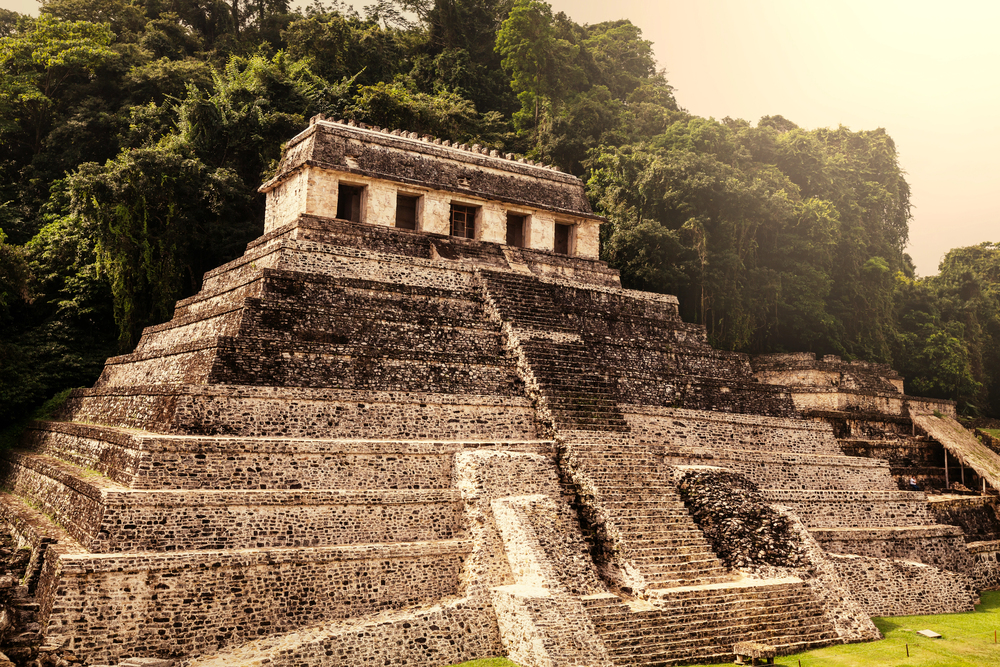
Stone has memory, according to Mayan understanding — not metaphorical memory, but literal retention of experiences that occurred in its presence. Every ceremony, every death, every drop of blood that touched temple surfaces left permanent traces that sensitive individuals can still access.
This isn’t primitive superstition but sophisticated understanding of how consciousness interacts with matter in ways that modern science dismisses without investigation.
Visitors with natural sensitivity report overwhelming experiences when touching ancient stones. Vivid scenes of past events play like movies in their minds.
Emotional states that don’t belong to them flood their consciousness. Voices speaking in dead languages that somehow convey understandable meanings.
The stones absorbed centuries of intense spiritual activity, and they continue broadcasting those experiences to anyone capable of receiving them.
The most disturbing aspect of stone memory is its selectivity. Different individuals access different time periods and events, as if the stones choose what to reveal based on the viewer’s capacity to handle specific types of information.
Children often see celebrations and daily life scenes. Adults receive visions of ceremonies and political events.
But some people — usually those with indigenous ancestry or natural psychic sensitivity — encounter the darker memories: human sacrifices, supernatural manifestations, and encounters with entities that shouldn’t exist according to conventional reality.
The ancient contract remains in effect

The Maya didn’t abandon their cities because of drought, warfare, or social collapse. They completed a cosmic contract that required their withdrawal from these sacred spaces, leaving them empty but not unguarded.
The ruins weren’t meant to become tourist attractions or archaeological sites — they were designated as holding areas for supernatural forces that require containment until specific cosmic conditions allow for their proper release or renewal.
This understanding explains why certain areas of ruins remain perpetually off-limits despite archaeological interest. Why do some excavations encounter persistent technical problems while others proceed smoothly?
Why do local indigenous communities maintain protective protocols around sites they supposedly abandoned centuries ago? The original builders didn’t disappear — they relocated to maintain their obligations from a safe distance, ensuring that ancient agreements remain in effect until the cosmic cycle completes.
Modern intrusion into these sites isn’t just archaeologically valuable or culturally insensitive — it’s a potentially dangerous disruption of containment systems that have operated successfully for centuries. The myths and legends surrounding Mayan ruins aren’t folklore or tourist attractions.
They’re operational warnings about sites that remain active, guardians that remain on duty, and forces that remain bound by agreements that require continued respect and maintenance to prevent their escape into the modern world.
More from Travel Pug

- Underrated Italian Towns That Beat the Tourist Crowds
- Las Vegas Tourist Traps to Skip
- Prettiest Towns in Every US State
- 18 passport-free countries for Americans
- Signs Your Cruise Is Not Worth The Cost
Like Travel Pug’s content? Follow us on MSN.