

There’s something deeply satisfying about climbing up a clock tower and watching a city unfold beneath you. These towering timepieces have been marking the hours for generations, and many of them offer visitors a chance to see spectacular panoramic views from their observation decks.
Unlike modern skyscrapers, clock towers carry a sense of history and craftsmanship that makes the experience feel a little more special. Here is a list of 15 iconic US clock towers that offer stunning skyline views, each with its own story to tell.
Old Post Office Tower, Washington, D.C.
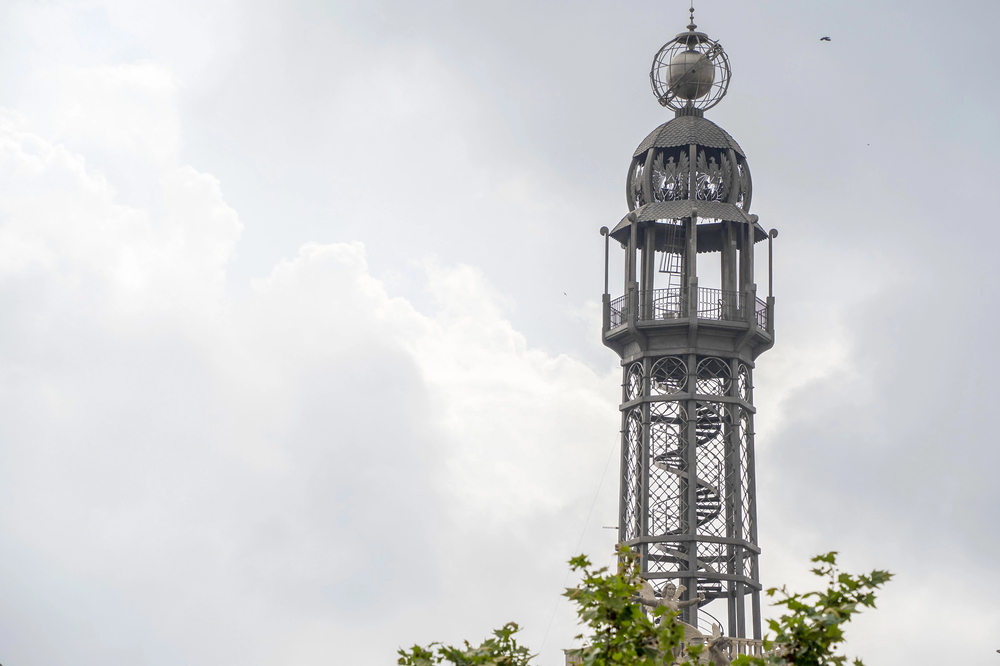
The Old Post Office Tower stands at 315 feet, making it among the tallest structures in Washington, D.C., after the Washington Monument and the Basilica of the National Shrine of the Immaculate Conception. Completed in 1899, the Richardsonian Romanesque building now houses the Waldorf Astoria hotel, but the clock tower remains open to the public through the National Park Service.
The 270-foot-high observation deck offers sweeping views of Pennsylvania Avenue, the White House, the Capitol Building, and the National Mall. What makes this spot particularly appealing is that it’s completely free and rarely has the long lines you’ll find at the Washington Monument.
Custom House Tower, Boston
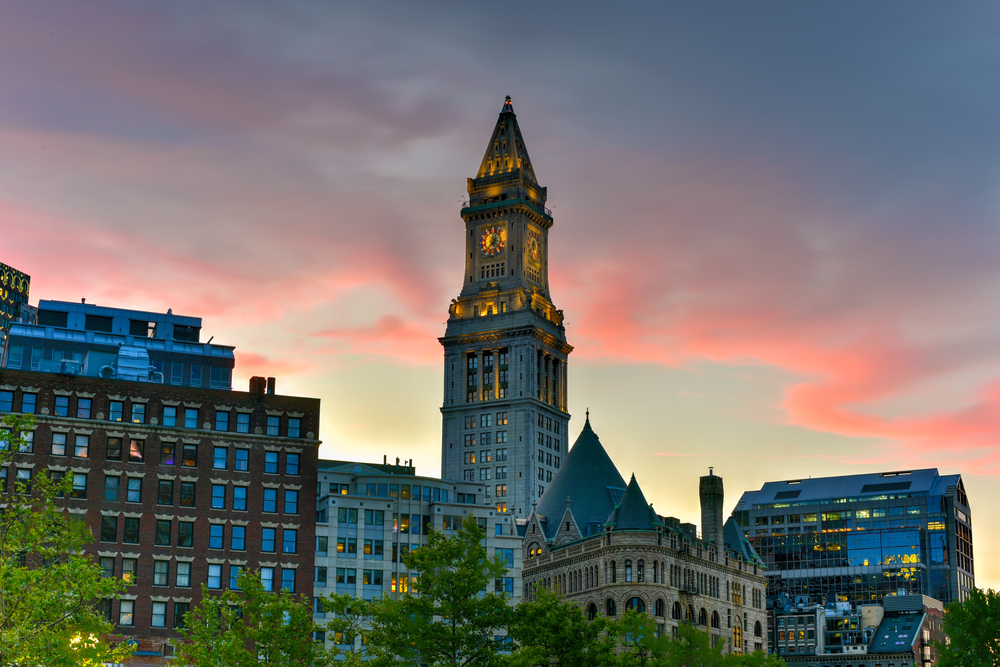
Boston’s Custom House Tower held the title of the city’s tallest building from 1915 until 1965, and its 496-foot Greek Revival-style structure remains an unmistakable part of the skyline. Built as an extension to the original Custom House, the tower received a special exemption from the city’s 125-foot height limit at the time of construction.
Today the building operates as a Marriott timeshare property, but visitors don’t need to book a room to enjoy the views. Daily tours take guests to the 26th-floor observation deck, where a fenced viewing area provides 360-degree views of the harbor, downtown Boston, and the surrounding neighborhoods.
Philadelphia City Hall
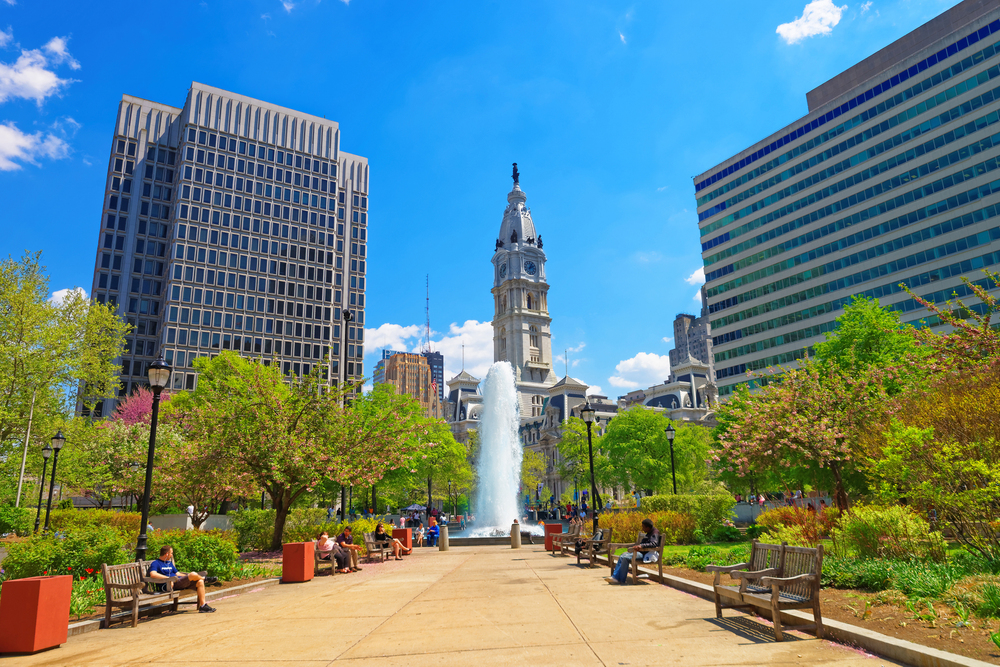
Philadelphia City Hall isn’t just any clock tower. It’s the largest municipal building in the United States and was the world’s tallest habitable building when completed in 1901.
The 548-foot tower remains the tallest masonry structure without a steel frame anywhere on the planet. At the very top sits a 37-foot bronze statue of William Penn, and just below his feet, about 500 feet above street level, visitors can access a glass-enclosed observation deck.
Terminal Tower, Cleveland
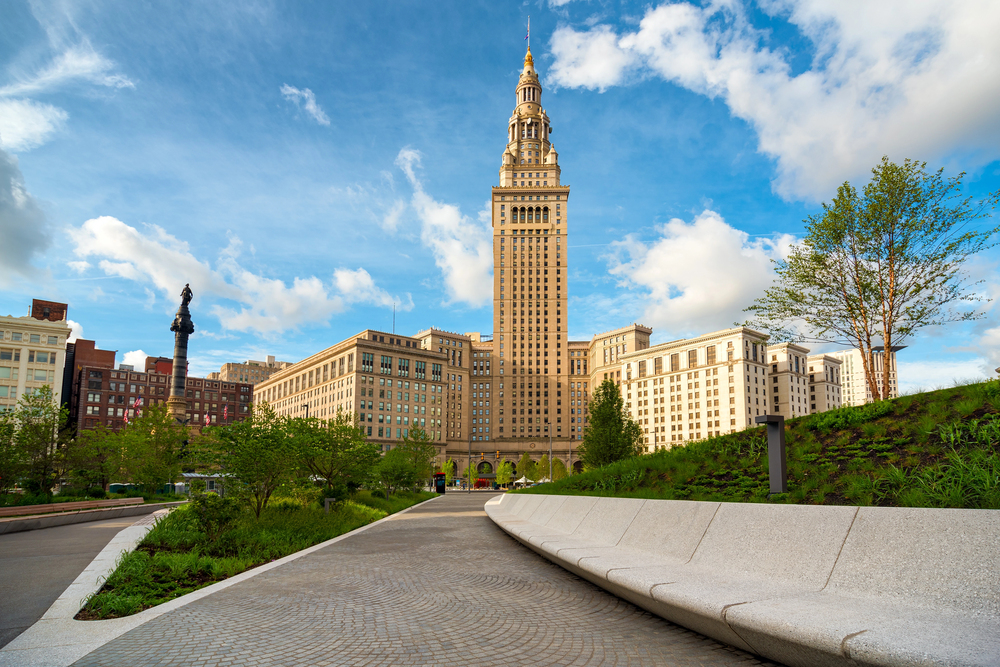
Rising 771 feet above Public Square, Terminal Tower dominated the Cleveland skyline for decades and remains one of the city’s most recognizable landmarks. Built during the skyscraper boom in the late 1920s, the tower served as a railroad terminal and office building.
The observation deck on the 42nd floor is open to the public on weekends during spring and summer, offering 360-degree views of downtown Cleveland, Lake Erie, and the surrounding suburbs. Tickets need to be purchased online in advance, and at around six dollars per person, it’s a bargain for the sweeping vistas.
Daniels And Fisher Tower, Denver
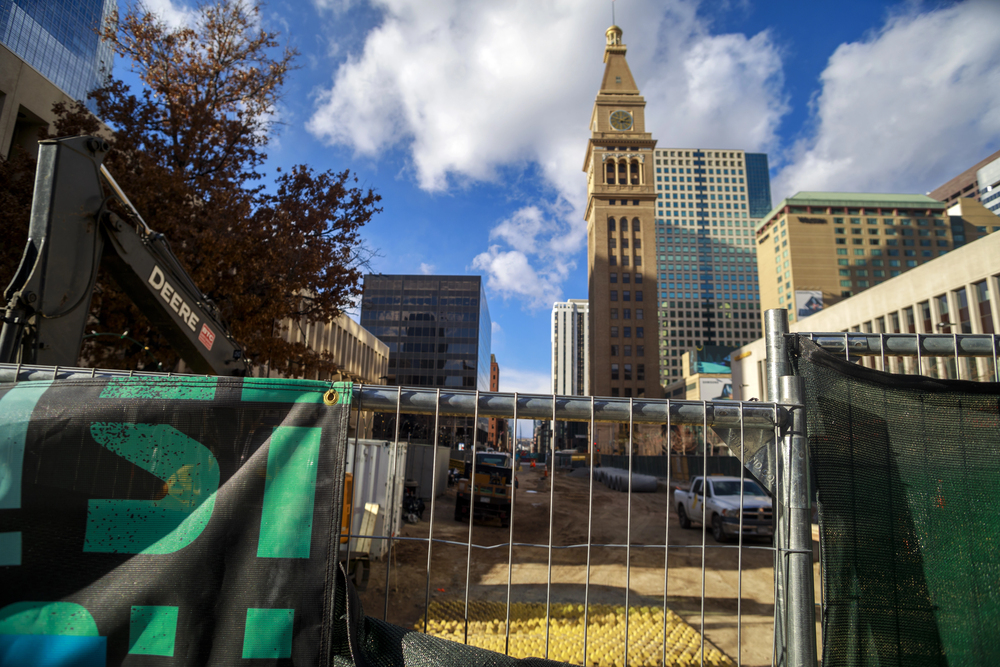
Denver’s Daniels and Fisher Tower was the tallest building between the Mississippi River and California when it opened in 1911. Standing 325 feet tall on the 16th Street Mall, this 20-floor clock tower was modeled after the Campanile of St. Mark’s in Venice.
The tower originally served as the entrance to the Daniels and Fisher department store, but when urban renewal demolished most of downtown’s historic buildings in the 1970s, preservation-minded citizens saved the clock tower from the wrecking ball. Today, visitors can take self-guided tours on Wednesdays and Thursdays, riding an elevator to the 17th floor and climbing stairs to the 21st-floor observation deck.
UT Tower, Austin
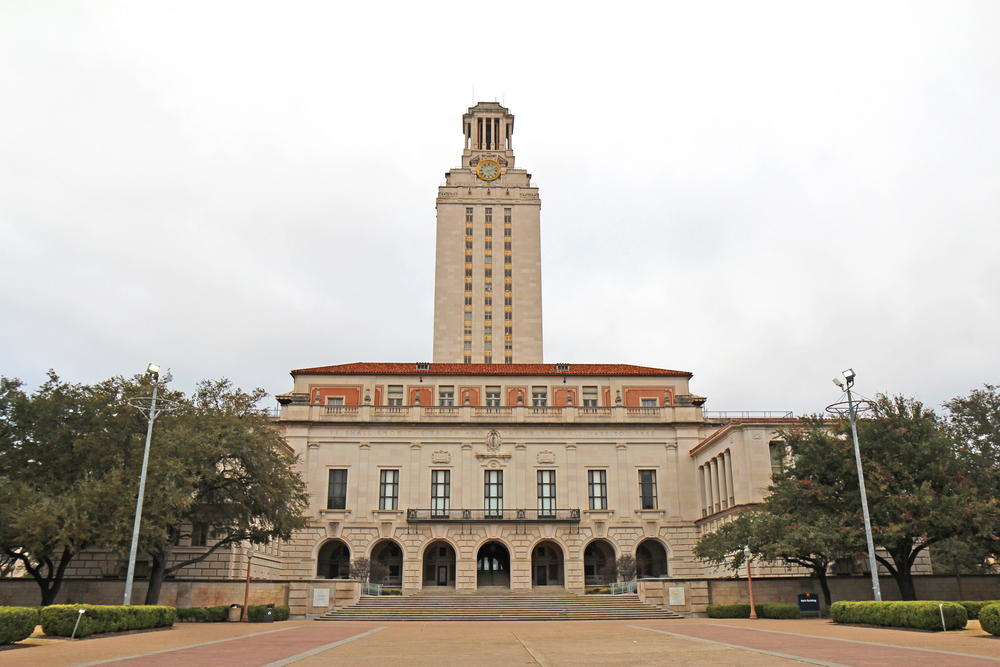
The University of Texas Tower has been the defining landmark of both the campus and the city of Austin since its completion in 1937. The 307-foot structure features four gold clock faces and a carillon of 56 bells, the largest in Texas.
The observation deck at the top was closed to the public for nearly a quarter century but reopened with enhanced safety features and security measures. Tours are hosted by the Texas Union and require advance reservations.
Sather Tower, UC Berkeley
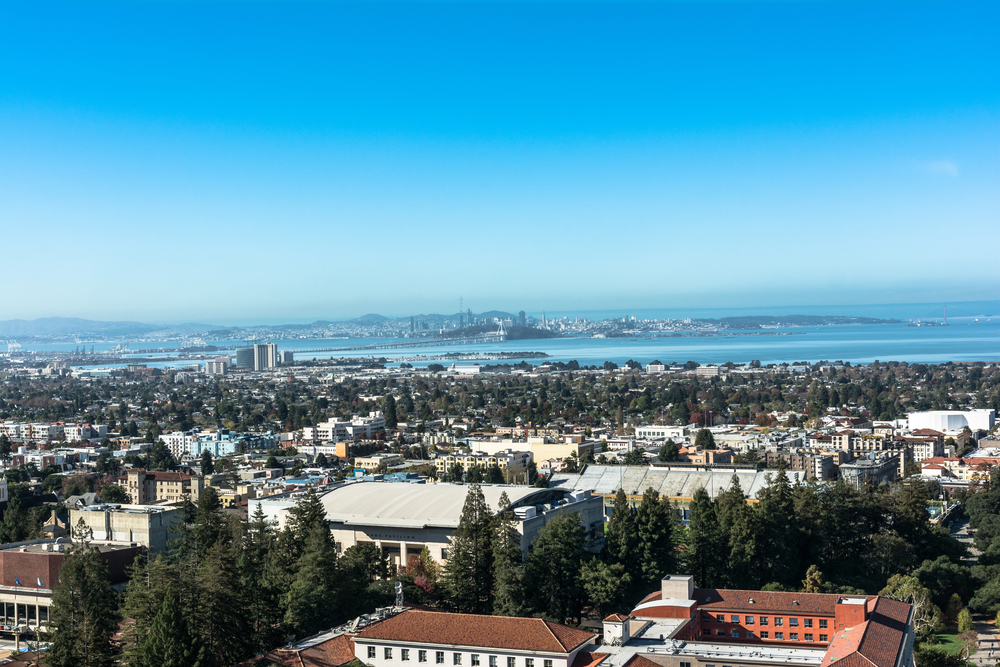
Known locally as the Campanile, Sather Tower is the second-tallest bell-and-clock tower in the world at 307 feet. Designed by John Galen Howard and completed in 1914, it was inspired by the Campanile di San Marco in Venice and has become the defining symbol of UC Berkeley.
An elevator takes visitors 200 feet up to the observation deck, where the views stretch across San Francisco Bay, encompassing the Golden Gate Bridge, Alcatraz, the Oakland Bay Bridge, and the Berkeley Hills. The tower houses a 61-bell carillon that plays three times daily, and the sound carries across the campus and surrounding neighborhoods.
Bromo Seltzer Arts Tower, Baltimore
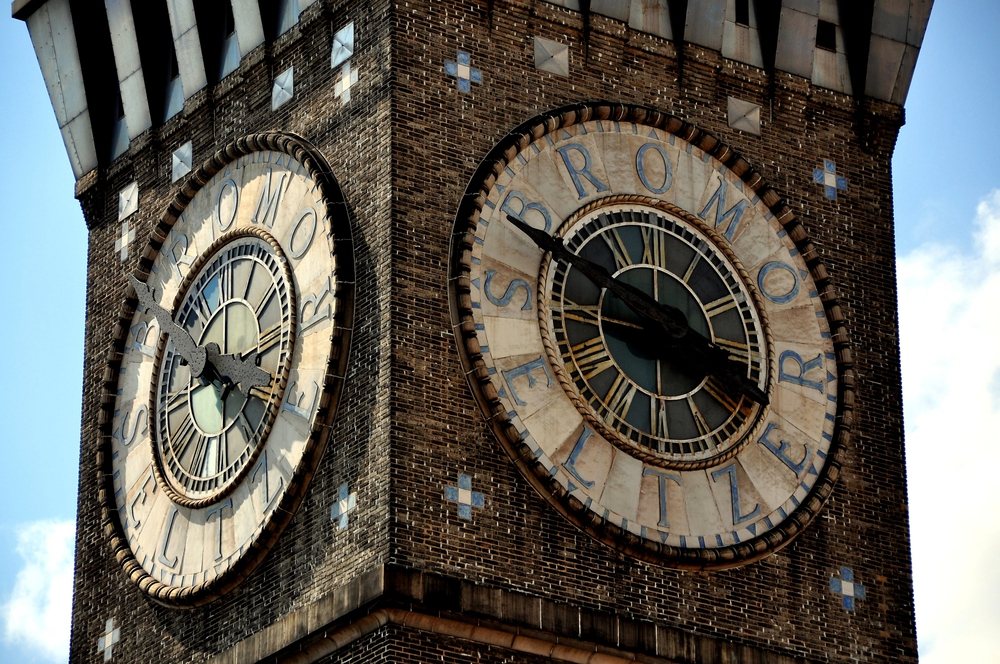
Baltimore’s Bromo Seltzer Arts Tower is a 289-foot Renaissance Revival landmark that was the city’s tallest building when completed in 1911. Built by Captain Isaac Emerson, the inventor of the headache remedy Bromo-Seltzer, the tower was modeled after the Palazzo Vecchio in Florence, Italy.
The four-dial gravity clock was the largest in the world at the time, even bigger than Big Ben. What makes this clock truly unique is that the Roman numerals are replaced by the letters B-R-O-M-O when read clockwise and S-E-L-T-Z-E-R counterclockwise.
Allen-Bradley Clock Tower, Milwaukee
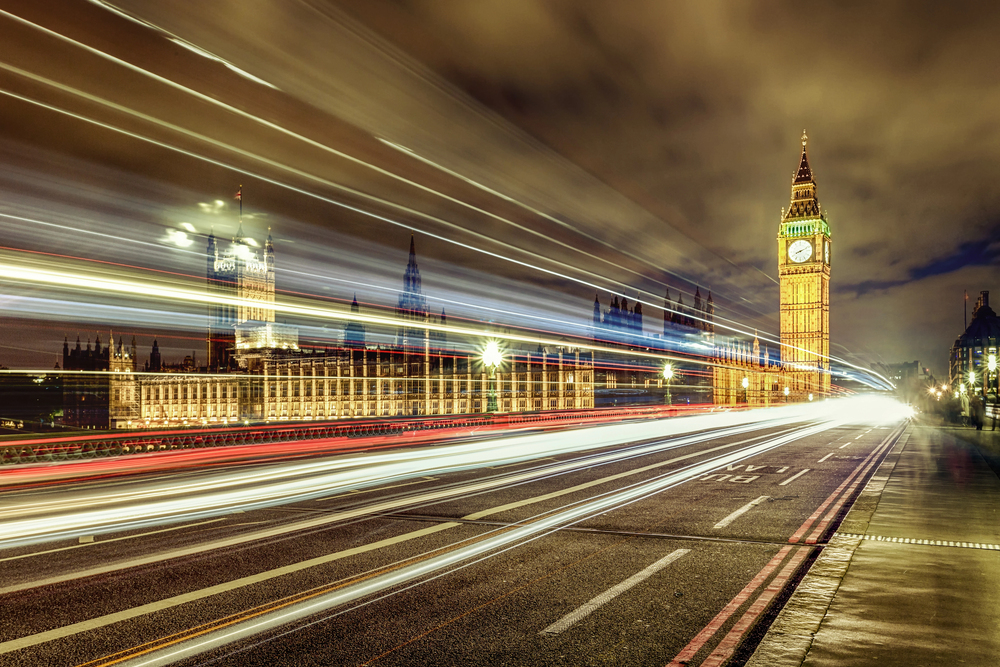
The Allen-Bradley Clock Tower rises 280 feet above Milwaukee’s South Side and held the title of the world’s largest four-faced clock for nearly five decades until 2010. Each of the four octagonal clock faces measures just over 40 feet in diameter, with hour hands nearly 16 feet long and minute hands stretching 20 feet.
Dedicated on Halloween Eve in 1962, the clock was designed to serve as the ‘village clock’ for the surrounding neighborhood, which was largely Polish at the time. Locals still affectionately call it the ‘Polish Moon’ because its illuminated white faces can be seen from nearly 50 miles away on clear nights.
Minneapolis City Hall
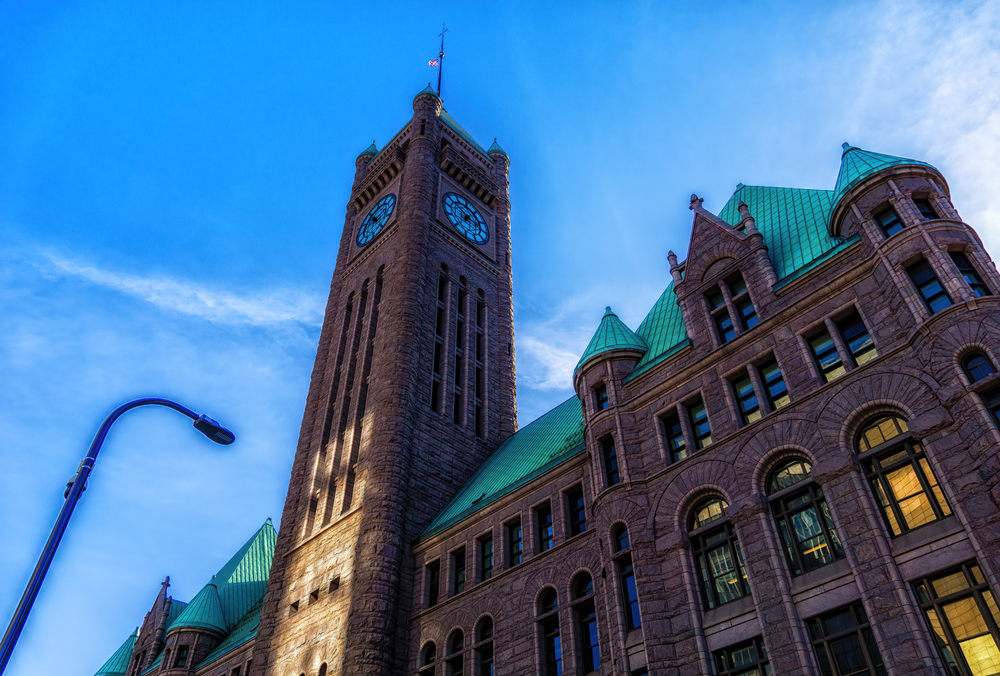
The clock tower atop Minneapolis City Hall reaches 345 feet and was the city’s tallest structure until the Foshay Tower was built in the 1920s. When the clock was installed in 1916, it was heralded as the largest public timepiece in the world.
The clock faces measure over 24 feet in diameter, making them 18 inches wider than Big Ben’s. The building itself is a Richardsonian Romanesque masterpiece constructed from rose granite hauled more than 160 miles from Ortonville, Minnesota, with some blocks weighing over 20 tons.
San Francisco Ferry Building
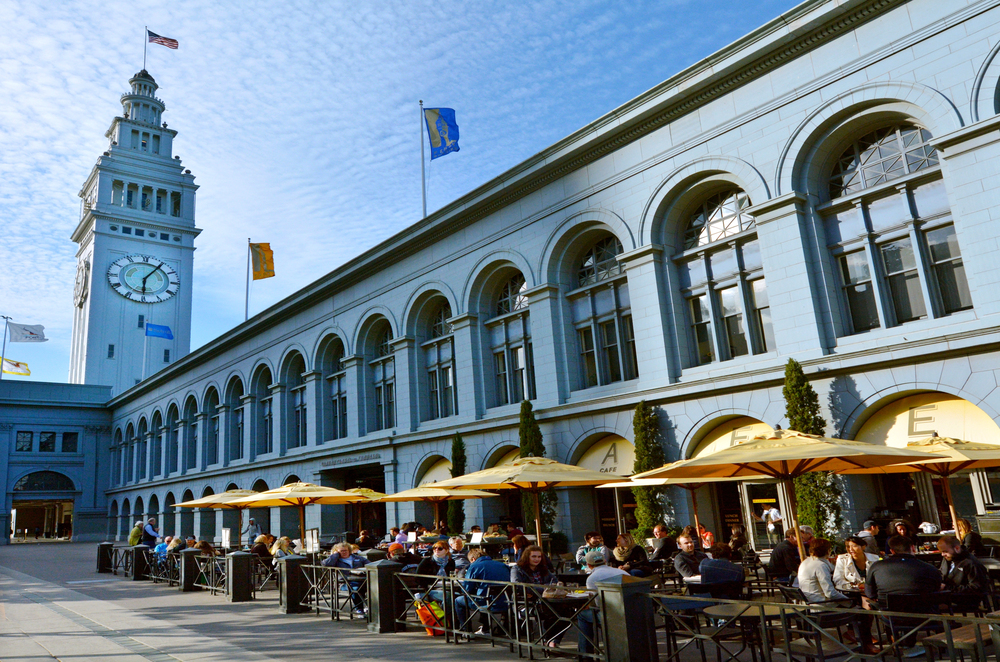
The San Francisco Ferry Building’s 245-foot clock tower has anchored the city’s waterfront since 1898 and remains visible from Market Street and throughout downtown. Designed by A. Page Brown in the Beaux-Arts style, the tower was reportedly inspired by the Giralda bell tower in Seville, Spain.
The building’s robust construction allowed it to survive both the 1906 and 1989 earthquakes with minimal damage. While the clock tower itself isn’t regularly open for public tours, the building serves as one of the Bay Area’s premier food halls and ferry terminals.
Wrigley Building, Chicago
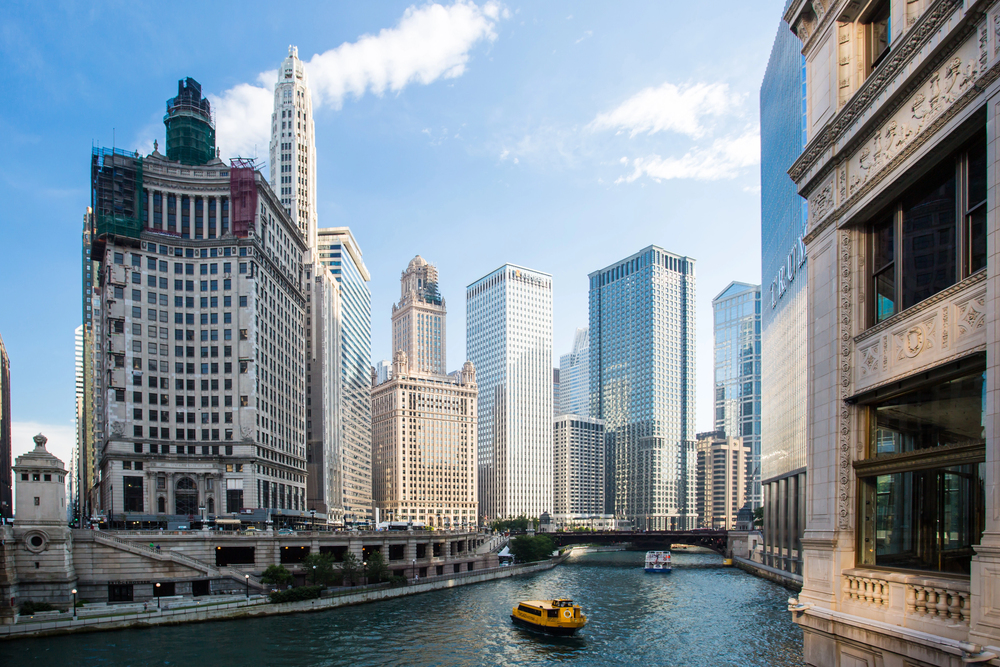
The Wrigley Building’s gleaming white terra-cotta tower has defined the Chicago skyline since 1921, when it became the first major commercial structure on the newly widened Michigan Avenue. Commissioned by chewing gum magnate William Wrigley Jr., the building was modeled after the Giralda tower of Seville’s Cathedral and features four 20-foot-diameter clock faces.
The structure actually consists of two towers connected by elevated walkways, with the south tower rising 30 stories. When it first opened, an observation deck on the 26th floor offered what was described as ‘the best obtainable view of Chicago and its harbor short of taking an aeroplane.’
Foshay Tower, Minneapolis

The Foshay Tower was the tallest building in Minneapolis when it opened in 1929, rising just over 447 feet in the heart of downtown. Built by Wilbur Foshay as a tribute to the Washington Monument, the Art Deco tower features his name spelled out in 10-foot-high letters on all four sides.
Today, the building houses the W Hotel, and visitors can access the observation deck on the 31st floor for panoramic 360-degree views of Minneapolis. A small museum on the same level tells the fascinating story of Foshay and his ill-fated ambitions.
Cornell McGraw Tower, Ithaca
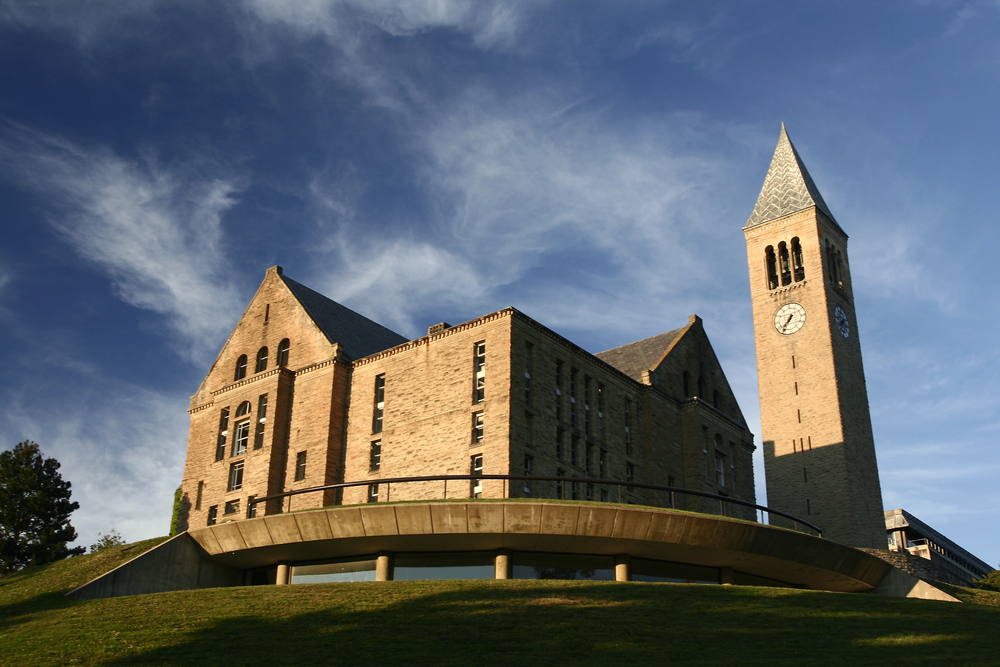
The McGraw Tower at Cornell University stands 173 feet tall and has been calling students to classes with its chimes since the university’s inauguration in 1868. The tower houses the Cornell Chimes, a set of 21 bells that are played up to three times a day during the academic year.
On select occasions, visitors can climb the tower’s 161 steps to witness the bell ringing in person and enjoy views of the Finger Lakes region, Cayuga Lake, and the surrounding gorges and waterfalls. The experience of standing inside the tower while the bells ring is both exhilarating and slightly deafening.
Purdue Bell Tower, West Lafayette
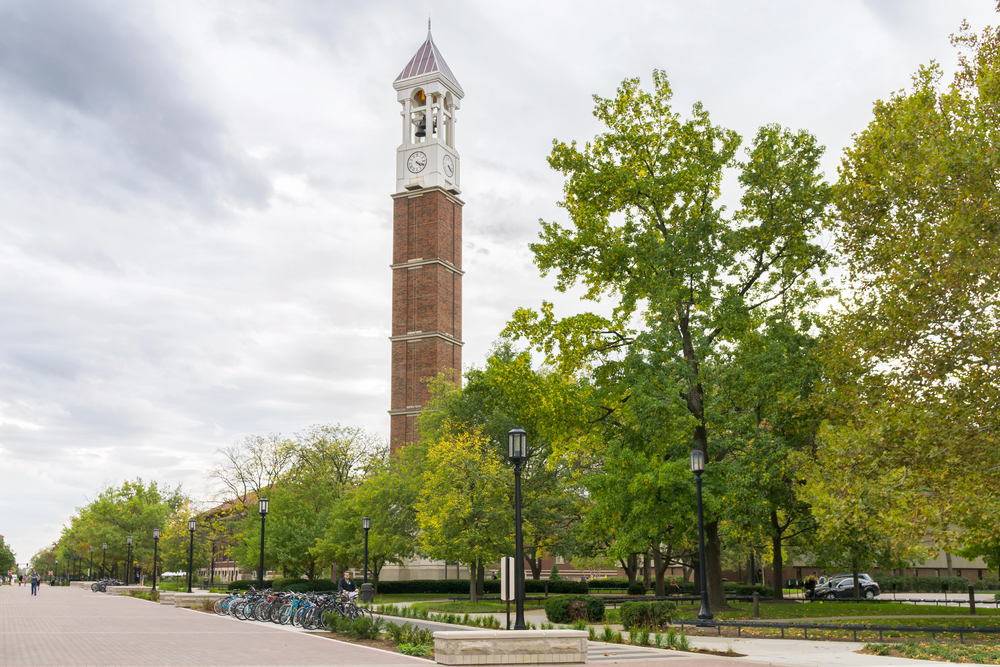
Purdue University’s Bell Tower rises 160 feet above campus and features clocks on all four sides, chiming on the hour, half-hour, and at the end of classes. Completed in 1995 thanks to donations from alumni, the structure mimics the design of a previous tower atop Heavilon Hall.
While the tower itself doesn’t have a traditional observation deck open to the public, its prominent position and the surrounding esplanade make it a gathering spot with views across the campus and beyond. Local legend holds that couples who kiss under the tower at midnight while the bells are ringing will eventually marry.
Where History Meets Horizon
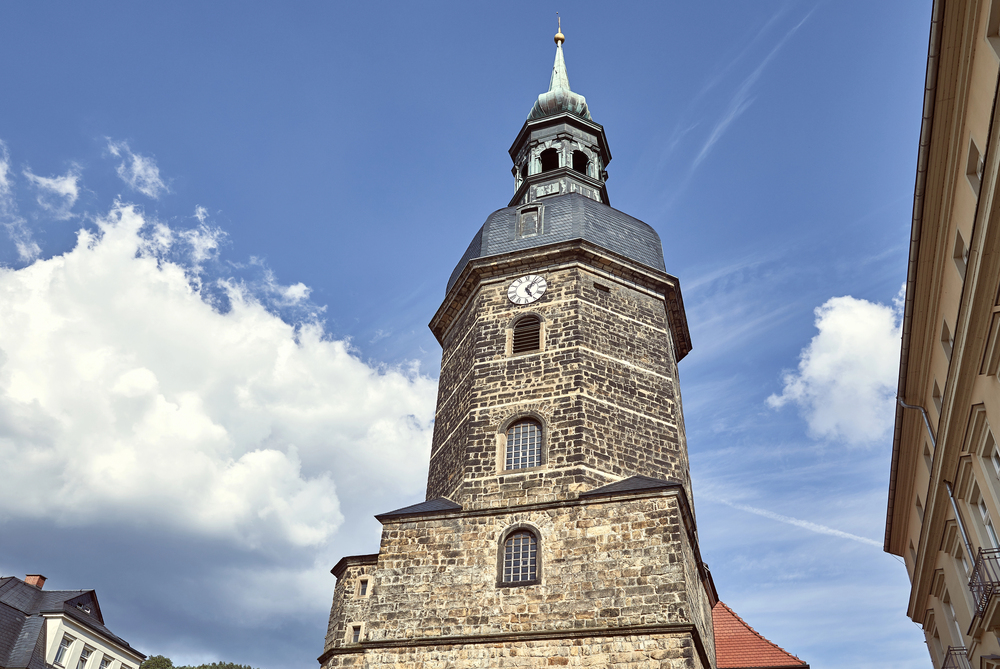
These clock towers represent more than just impressive engineering or beautiful architecture. They’re working monuments to an era when public timekeeping was a civic responsibility and when the tallest structures in a city were often its most democratic spaces, open to anyone who wanted to climb up and see their hometown from a new perspective.
Whether you’re gazing at the Capitol dome from Washington’s Old Post Office or watching the sun set over the Rocky Mountains from Denver’s Daniels and Fisher Tower, these clock towers offer something that modern skyscrapers often can’t: a sense of stepping back in time while looking forward across an entire cityscape.
More from Travel Pug

- Underrated Italian Towns That Beat the Tourist Crowds
- Las Vegas Tourist Traps to Skip
- Prettiest Towns in Every US State
- 18 passport-free countries for Americans
- Signs Your Cruise Is Not Worth The Cost
Like Travel Pug’s content? Follow us on MSN.