

Tokyo’s markets don’t just sell food—they stage a daily theater where vendors shout, steam rises in clouds, and the smell of grilling soy sauce competes with frying oil for attention.
A person could spend weeks eating nothing but market snacks and still miss half of what’s available.
Here’s a list of snacks that show up reliably across Tokyo’s market scene and deserve whatever stomach space can be spared for them.
Taiyaki
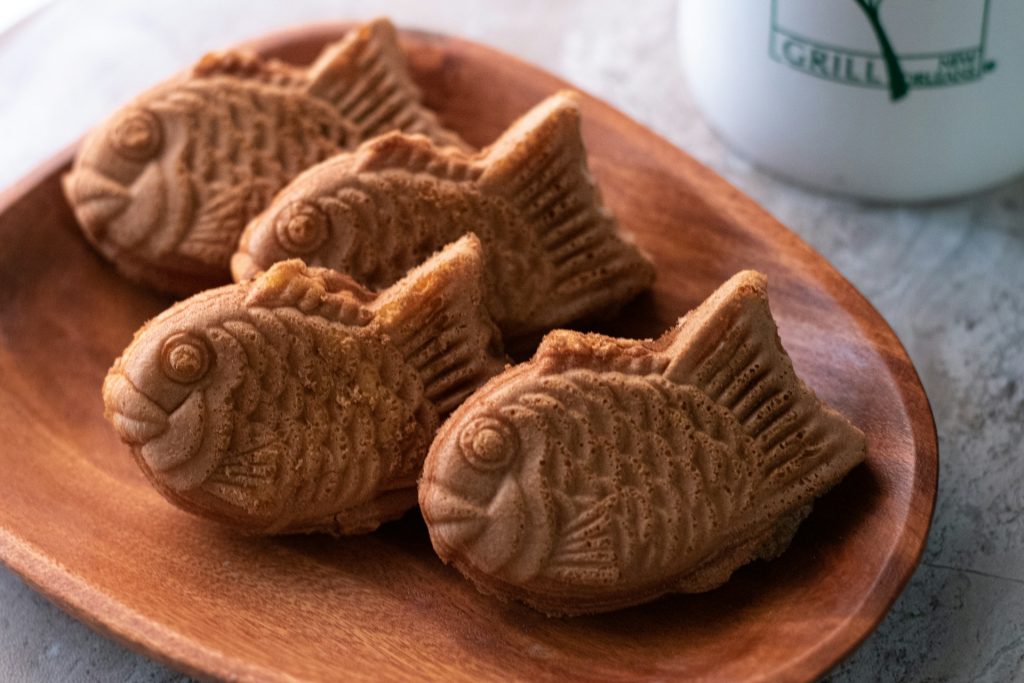
These fish-shaped cakes come off hot iron molds with their tails pointing up and their insides full of sweet red bean paste.
The outside gets crispy.
The inside stays soft.
That’s the whole magic of it, really.
Traditional fillings mean azuki bean paste, but plenty of vendors have decided custard, chocolate, and even cheese belong inside a fish-shaped cake.
Some of these experiments work better than others.
The shape itself honors tai, a sea bream that Japanese culture considers lucky, which seems like a lot of symbolism to load onto what’s essentially a handheld dessert.
Still, eating one while it’s warm enough to require careful juggling between hands delivers something that cold taiyaki from a convenience store never quite captures.
Imagawayaki
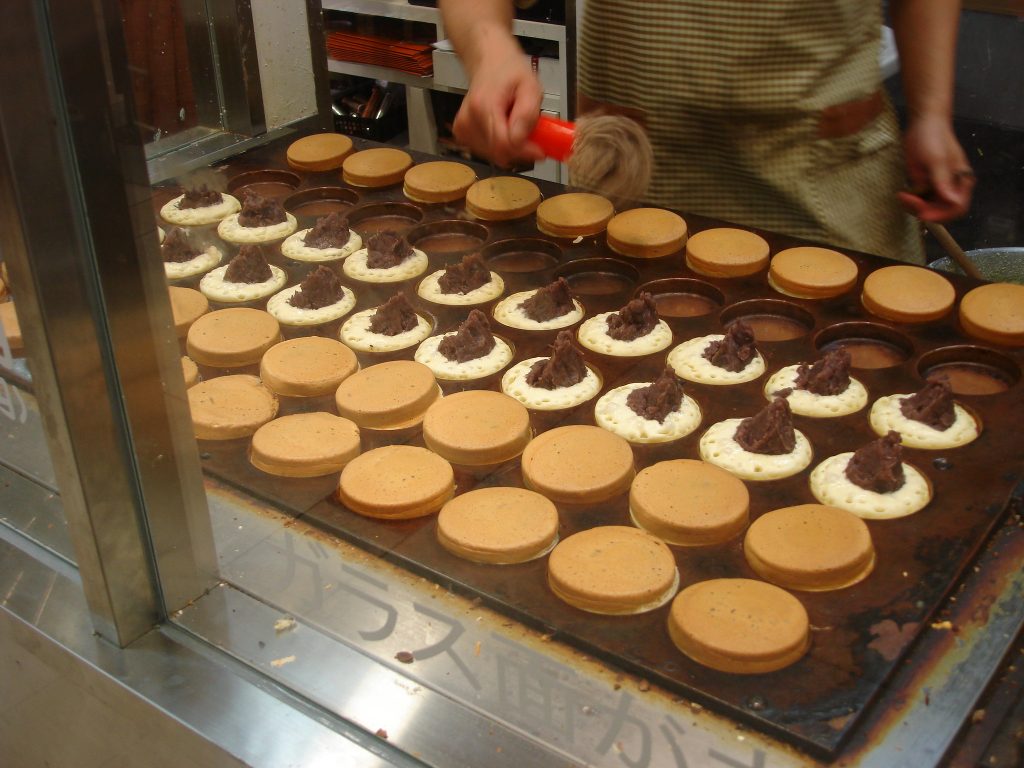
Round, thick, and prone to oozing filling when bitten too enthusiastically, imagawayaki represents the kind of comfort food that doesn’t need justification.
The batter cooks in circular molds until both sides achieve that golden-brown color that photographs so well.
Inside, sweet fillings—usually red bean paste or custard cream—wait to burn impatient tongues.
Different parts of Japan call these by different names, which creates confusion for travelers trying to find them again in other cities.
Tokyo markets have made them ubiquitous though. The smell draws people in before they even spot the vendor.
And watching someone flip dozens of these without ever really looking at what they’re doing becomes oddly hypnotic after a while.
Like Travel Pug’s content? Follow us on MSN.
Mitarashi Dango
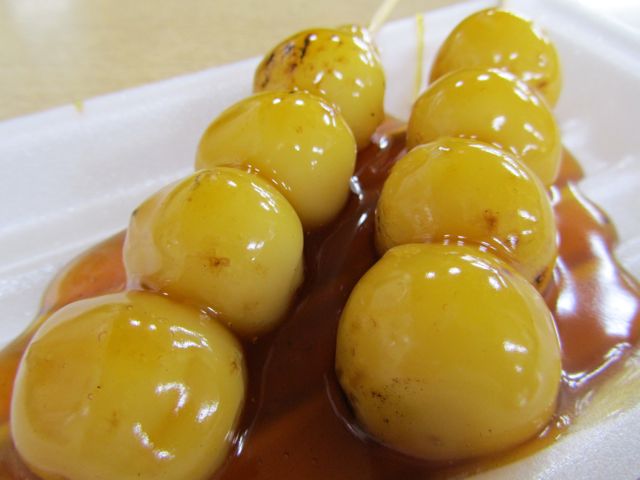
Three or four rice dumplings on a stick, glazed with sweet soy sauce that manages to be both salty and sweet at the same time.
The texture bounces.
Genuinely chewy but not in an unpleasant way.
The glaze caramelizes where it touches the dumplings directly, creating little pockets of intensified flavor that make the rest seem almost bland by comparison.
These originated at some shrine in Kyoto, but Tokyo markets have thoroughly adopted them as their own.
The dumplings themselves contain almost nothing—rice flour, water, sugar—which means the whole thing succeeds or fails based on technique and that glaze recipe.
Sticky fingers are inevitable. Plan accordingly.
Takoyaki
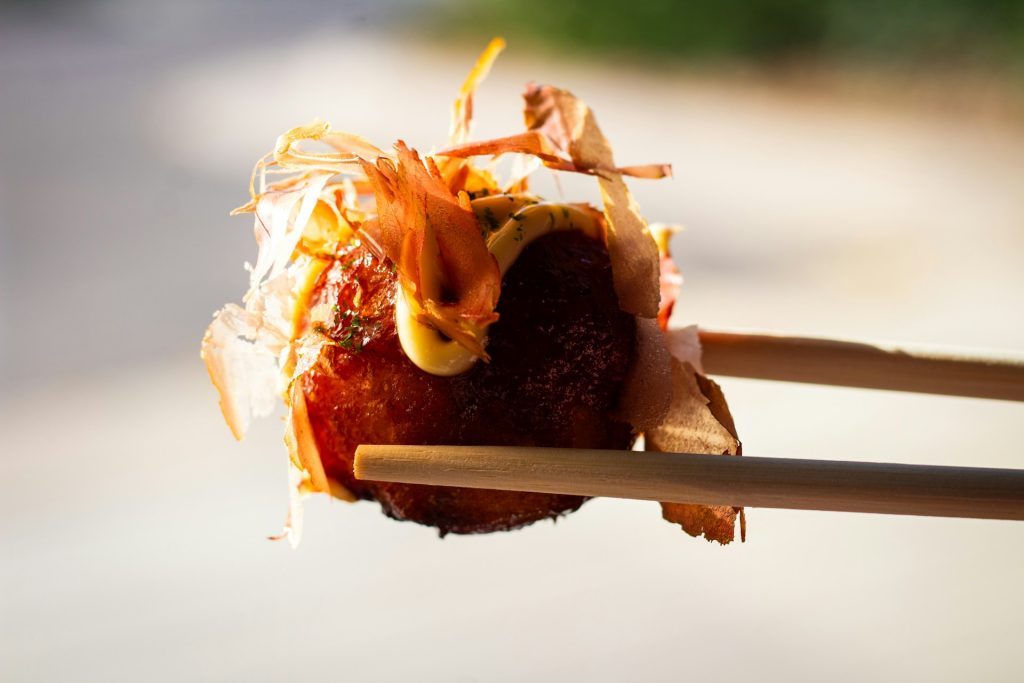
Spherical, octopus-containing, and topped with enough different elements that listing them all feels excessive—these come from Osaka originally, but Tokyo doesn’t care about that anymore.
The batter cooks in specialized pans with half-sphere molds, and chunks of octopus get suspended inside somehow.
Crispy outside, almost molten inside.
Watching vendors make them matters almost as much as eating them.
They use picks to rotate each ball at exactly the right moment, achieving that uniform color through what looks like casual wrist flicks but obviously isn’t.
The bonito flakes on top wave from the heat in a way that seems vaguely alive.
Slightly unsettling if thought about too hard.
The combination of takoyaki sauce, mayonnaise, and all those other toppings creates a flavor that shouldn’t work but absolutely does.
Dorayaki
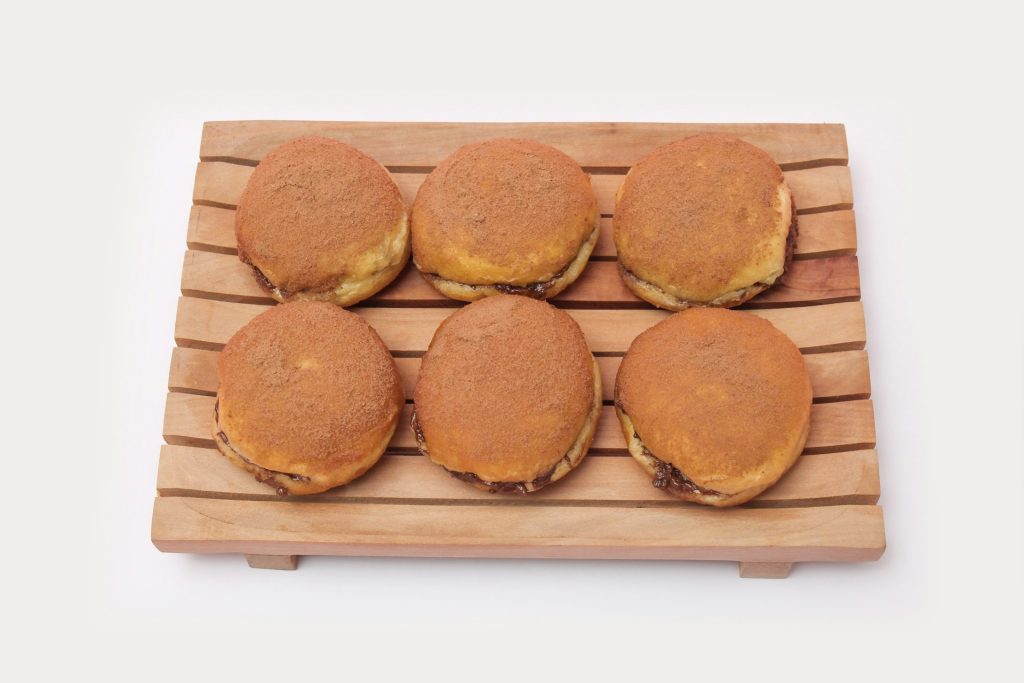
Two pancakes sandwiching red bean paste. That’s it.
But the pancakes contain honey, which gives them a distinctive taste and keeps them from drying out too quickly.
The edges seal slightly where the cakes meet, holding everything together during transport.
Doraemon made these famous—that blue cartoon robot cat who’s obsessed with them.
Vendors definitely capitalize on that association.
The snack stands up fine without the pop culture reference though.
Some vendors load up the anko filling generously, others keep things more restrained.
Personal preference determines which approach works better, and trying multiple versions across different market stalls counts as legitimate research.
Like Travel Pug’s content? Follow us on MSN.
Yakitori
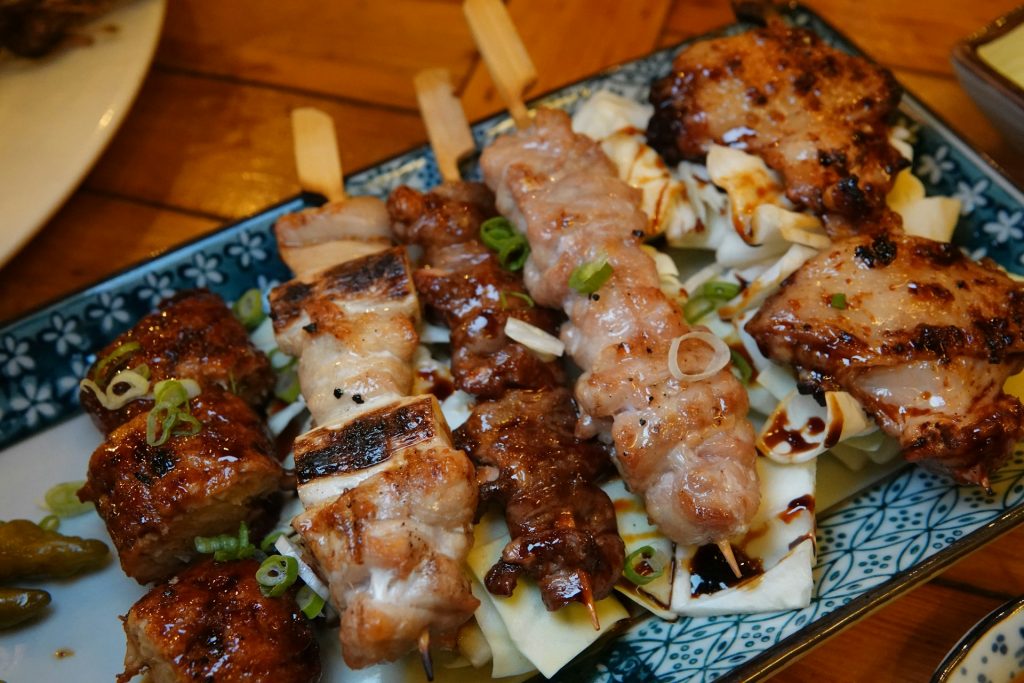
Skewered grilled chicken, seasoned with salt or tare sauce, sold by people standing behind smoking grills who’ve clearly done this thousands of times.
Markets offer different cuts—thigh, breast, skin, liver, cartilage—each with its own texture that ranges from tender to aggressively chewy.
The charcoal grilling creates smokiness that gas can’t touch.
The smell could guide someone through a crowded market blindfolded, which would be dangerous but theoretically possible.
Some stalls specialize in one cut, others offer variety packs. Fingers will get greasy.
They’ll smell like smoke for hours. Worth it.
Melon Pan
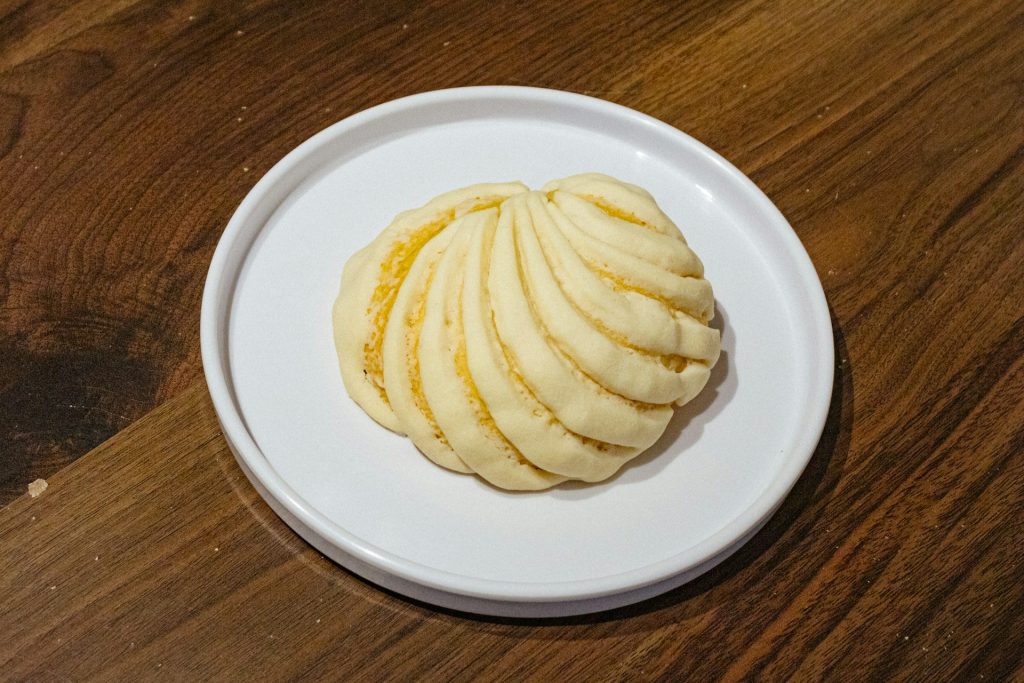
Contains no melon despite the name, which seems like false advertising until someone explains that the cookie-like outer layer resembles melon skin.
The bread inside stays soft and sweet, contrasting with that crispy shell that shatters when bitten.
These oversized buns show up in bakery stalls throughout Tokyo markets, often still warm.
Some modern versions actually do incorporate melon flavoring now, or add custard fillings, but purists insist the original needs nothing extra.
The textural contrast alone justifies the existence of melon pan.
Probably the best example of Japan’s obsession with combining different textures in a single food item.
Korokke
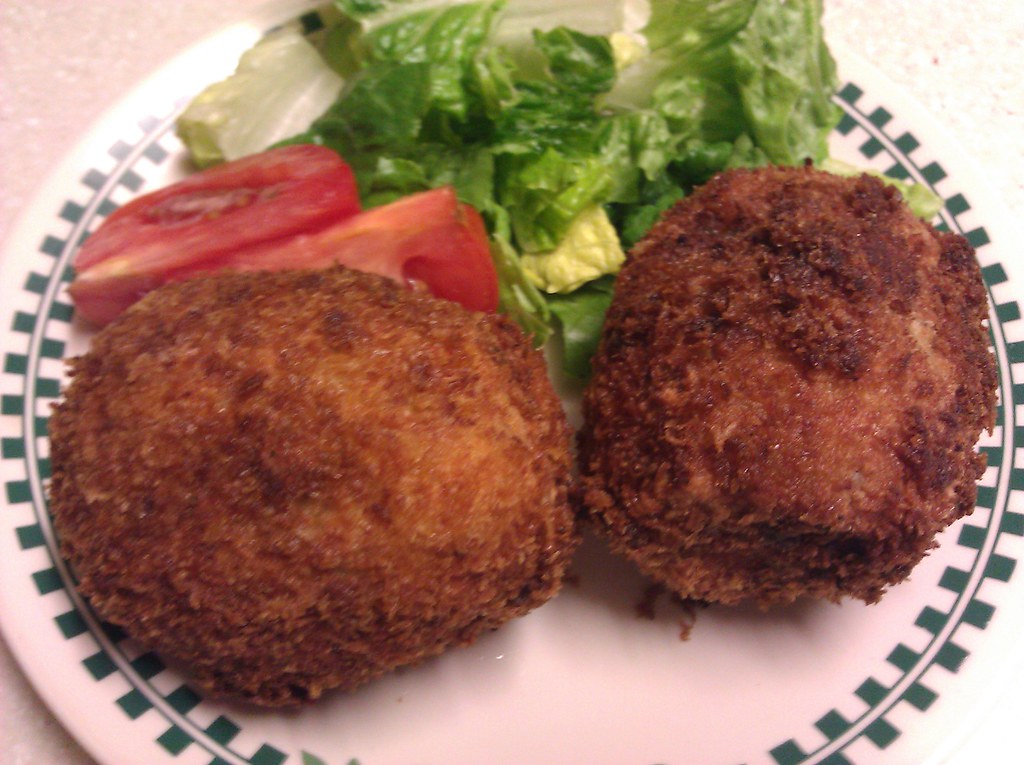
Japanese croquettes—mashed potato mixed with ground meat and onions, coated in panko, deep-fried until golden.
Western food adapted into something thoroughly Japanese.
The inside stays creamy while the outside delivers serious crunch.
Market stalls sell them straight from the fryer, hot enough that juggling between hands becomes necessary.
Some vendors make versions with pumpkin or curry instead of potato.
These cost less than most protein-heavy snacks, which explains their popularity with students.
They’re everywhere in Japanese markets, which says something about how completely Western imports get absorbed and naturalized here.
Like Travel Pug’s content? Follow us on MSN.
Karaage

Fried chicken marinated in soy sauce, ginger, and garlic before getting coated in potato starch and fried.
The potato starch creates crispiness that lasts longer than regular flour coating.
Markets sell it by weight or in set portions, usually in paper cones.
The marinade penetrates deep, flavoring the meat throughout rather than just coating the surface.
Tokyo markets offer endless variations—yuzu, shichimi spice, regional touches that vendors swear make their version superior.
Eating karaage while walking through a market feels quintessentially Japanese despite never appearing in formal food guides.
Locals know what’s up though.
Tamagoyaki
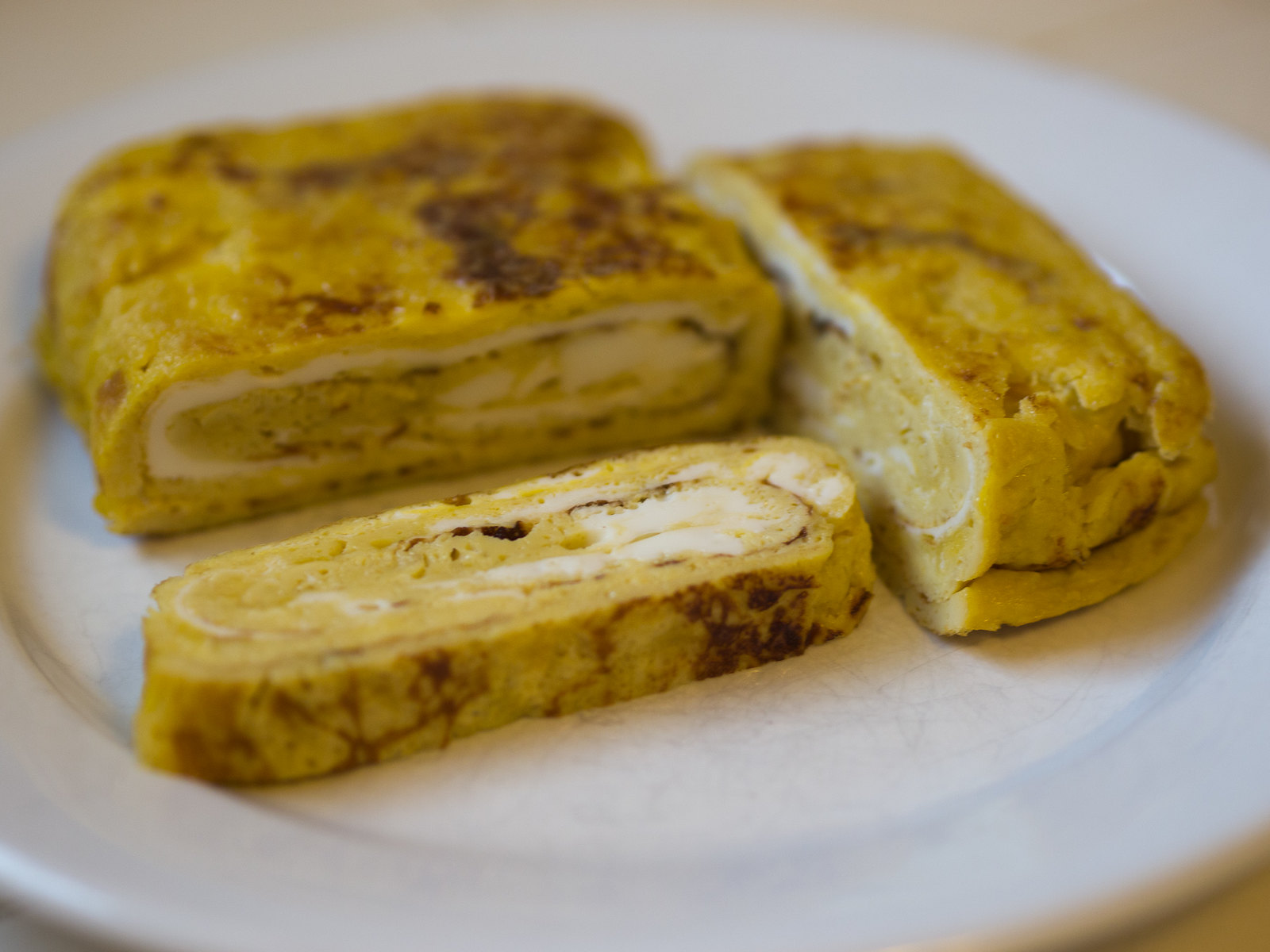
Japanese rolled omelet, sliced thick and served at room temperature. Looks simple.
Requires serious skill to make properly.
The eggs contain dashi, mirin, and soy sauce, creating layers of savory-sweet flavor.
Vendors cook them in rectangular pans, adding thin layers and rolling as they go.
Good tamagoyaki achieves a texture that’s almost fluffy, melting on the tongue.
Market versions range from straightforward to elaborate restaurant-quality.
Some add grated yam for extra fluffiness, others keep ingredients minimal.
The eggs matter a lot—free-range eggs with those deep orange yolks create richer everything.
Color and flavor both.
Senbei

Rice crackers in approximately six thousand varieties, from plain to nori-wrapped to sesame-coated to sugar-glazed.
The crunch varies from delicate to aggressive depending on how they’re made.
Traditional versions involve grilling rice cakes over charcoal and painting on soy sauce as they cook.
Mass-produced senbei dominate now, but specialty stalls still offer handmade crackers at premium prices.
The smell of grilling soy sauce carries far.
Some vendors let people sample broken pieces, creating a whole category of bargain shopping for those who don’t care what their crackers look like.
Taste the same anyway.
Like Travel Pug’s content? Follow us on MSN.
Yakisoba Pan
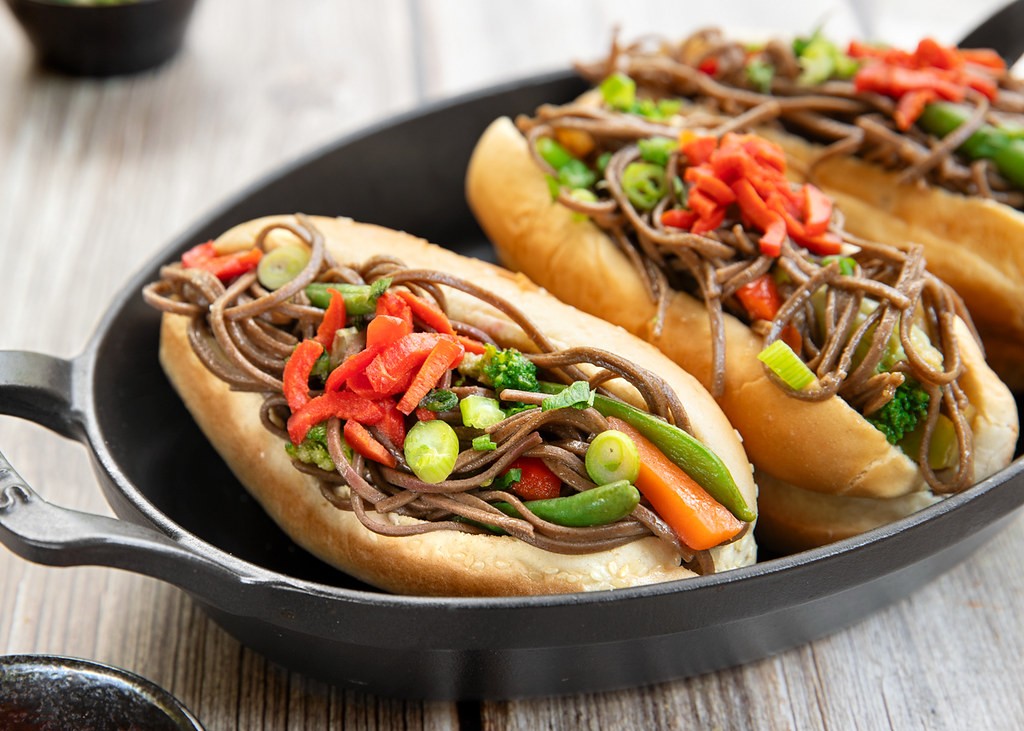
A hot dog bun filled with fried noodles. Carbs on carbs.
Shouldn’t work but does.
The yakisoba contains noodles stir-fried with vegetables, meat, and that tangy brown sauce.
Pickled ginger and seaweed often top the noodles before they get stuffed into bread.
This started in school cafeterias but achieved market popularity through sheer practicality.
Filling, portable, no utensils required.
The contrast between soft bread and slightly crispy noodles provides more interest than expected.
Probably not nutritionist-approved, but market shoppers who grab lunch appreciate the efficiency of getting multiple food groups in one handheld package.
Ikayaki
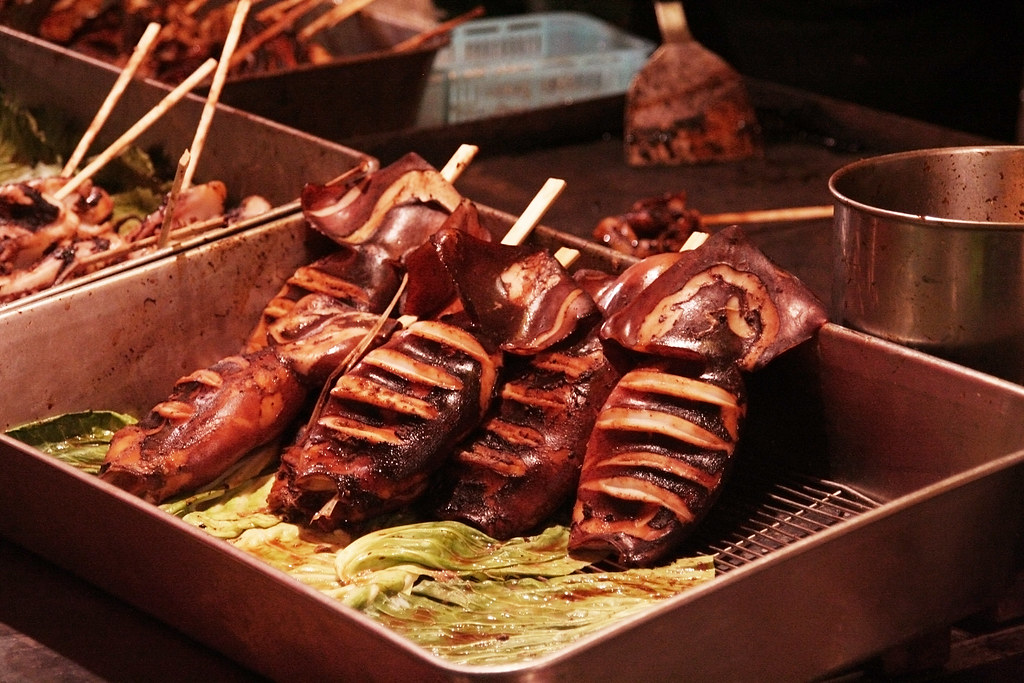
Whole grilled squid brushed with soy-based sauce, dominating certain stalls with smell alone.
The squid grills until the edges curl and char, concentrating all that seafood flavor.
Served whole or cut into strips depending on size and customer preference.
The texture requires real chewing. Some people find this meditative.
Others find it exhausting. Fresh squid makes all the difference—stalls near fish markets have obvious advantages.
And the smell clings to everything for hours, which deserves consideration before committing.
But that combination of char, sweet-salty glaze, and pure umami rewards those willing to deal with aromatic consequences.
Manju
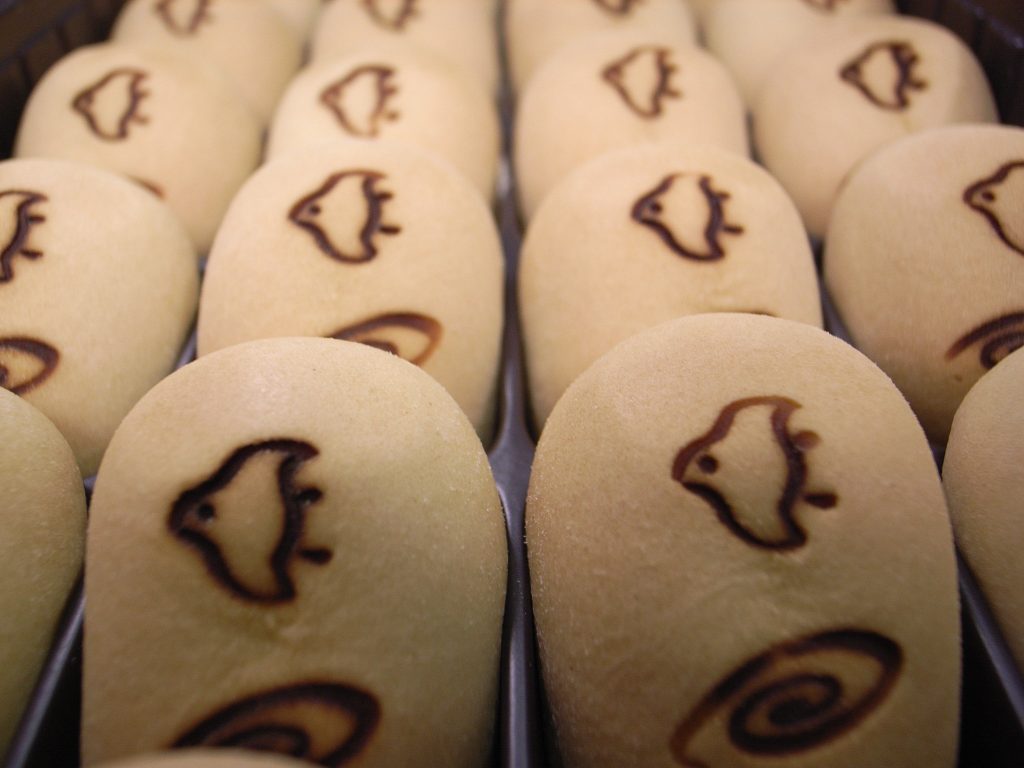
Steamed buns with various fillings, one of Japan’s oldest confections.
Regional variations number in the hundreds, possibly thousands.
Tokyo markets offer manju stuffed with red bean paste, chestnut paste, sweet potato, seasonal whatever.
The outer dough varies by recipe—some stay pillowy soft, others develop chewiness.
Vendors use wooden steamers stacked high, releasing clouds of steam that fog up entire stall fronts.
Tea ceremony culture features certain manju varieties, giving them significance beyond simple snacking.
Modern versions include chocolate and cream cheese, which purists view with suspicion.
The best ones never cross into cloying territory despite obvious dessert status.
Like Travel Pug’s content? Follow us on MSN.
Nikuman
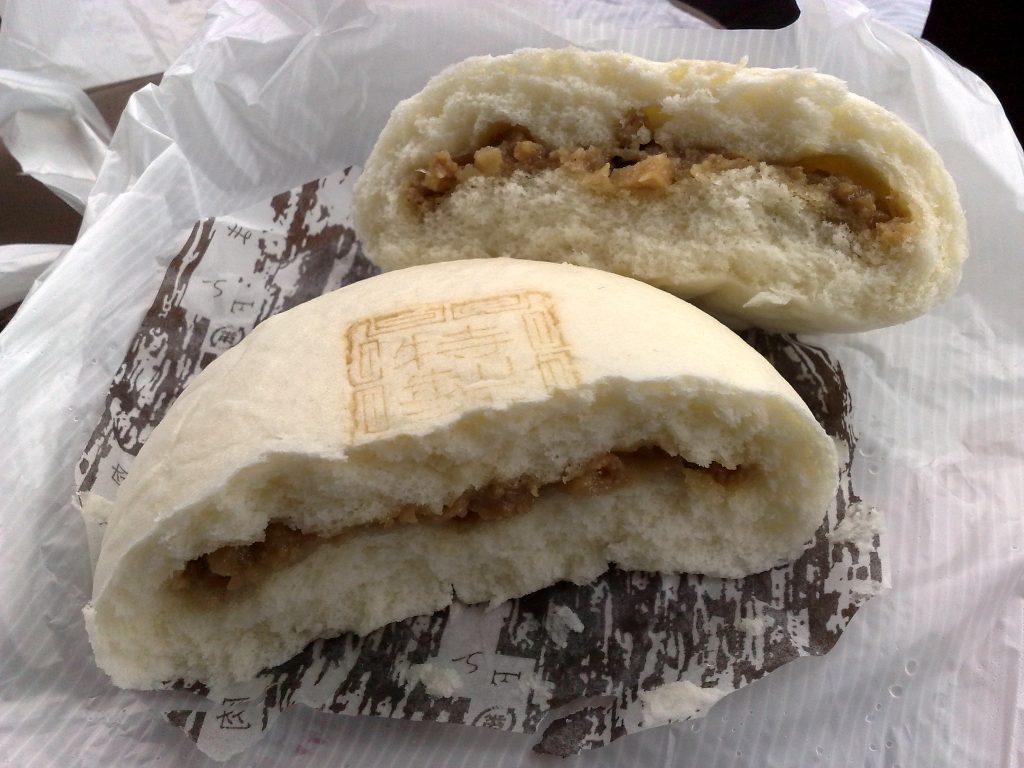
Steamed pork buns—Chinese in origin, Japanese by adoption and centuries of adaptation.
Fluffy white exterior, savory filling with ground pork and vegetables.
Markets keep them in heated display cases at optimal temperature all day.
The dough achieves almost impossible softness when made properly.
Requires good flour and precise steaming.
Fillings vary by season and vendor preference, with curry or pizza versions appearing alongside traditional pork.
Convenience stores sell mass-produced nikuman year-round, but market versions from specialists demonstrate what craft and care actually accomplish.
Particularly popular during cold months when heat and steam provide comfort beyond nutrition.
Onigiri
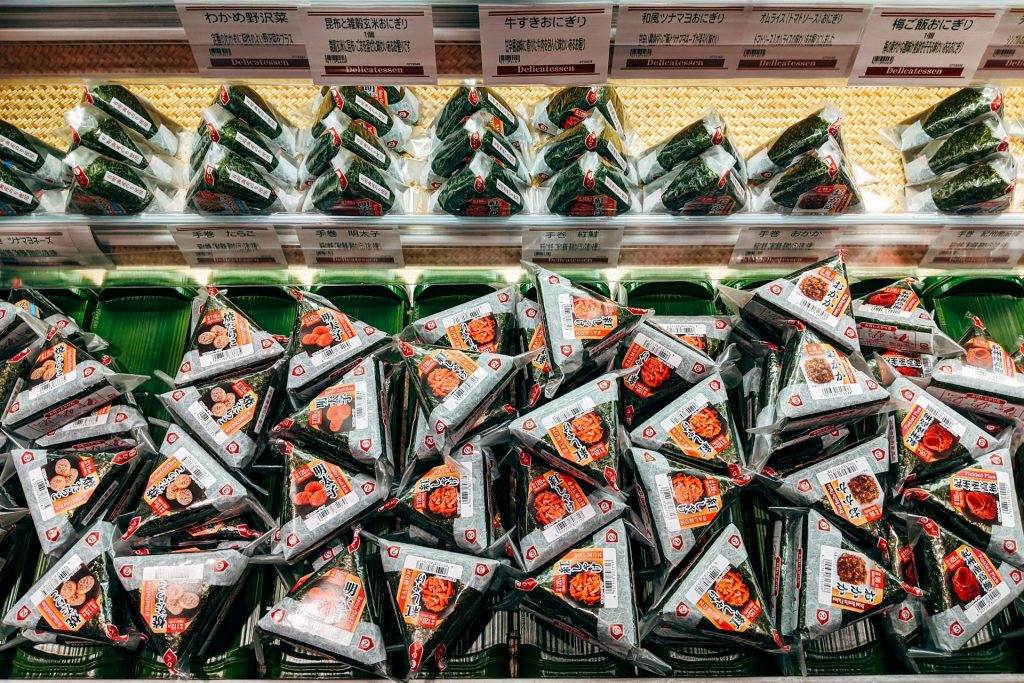
Rice balls wrapped in seaweed with various fillings.
Have fed Japanese people for centuries. Show no signs of becoming less relevant.
Market stalls mold fresh rice around fillings like salted salmon, pickled plum, tuna with mayo, seasoned seaweed.
Shapes vary—triangular, cylindrical, rounded.
The rice should be warm but not hot, slightly firm but not dry, seasoned with exactly the right amount of salt.
Getting this balance right separates adequate from exceptional.
The nori needs to maintain crispness rather than going soggy, which requires either eating quickly or using special wrapping techniques.
Market onigiri can’t compete with convenience store efficiency, but they offer freshness that packaged versions never touch.
Eating Your Way Through

Tokyo markets reward appetite and curiosity in equal measure, though wallet and waistline might protest the education by the end.
More from Travel Pug

- 20 Best Beach Towns in the Carolinas
- 13 Destinations Where Tourists Regularly Regret Their Trip
- 20 Things You Actually Get in First Class
- 20 Small Airports With Aviation Museums
- 20 Places in the U.S. That Are Perfect for a Reset Trip
Like Travel Pug’s content? Follow us on MSN.