

There’s a version of Venice that exists in postcards, travel blogs, and the imaginations of millions of people who’ve never been. Candlelit canals, crumbling palazzos, gondoliers singing in the fog.
And then there’s the Venice that actually exists today — a place so overwhelmed by visitors that locals have been fleeing for decades, where the population has dropped from 175,000 in the 1950s to fewer than 50,000 permanent residents now. What’s happening there isn’t an isolated tragedy.
It’s a pattern playing out across some of the most beloved cities on earth, and the uncomfortable truth is that tourism itself — not neglect, not poverty, not war — is the thing doing the damage.
Venice
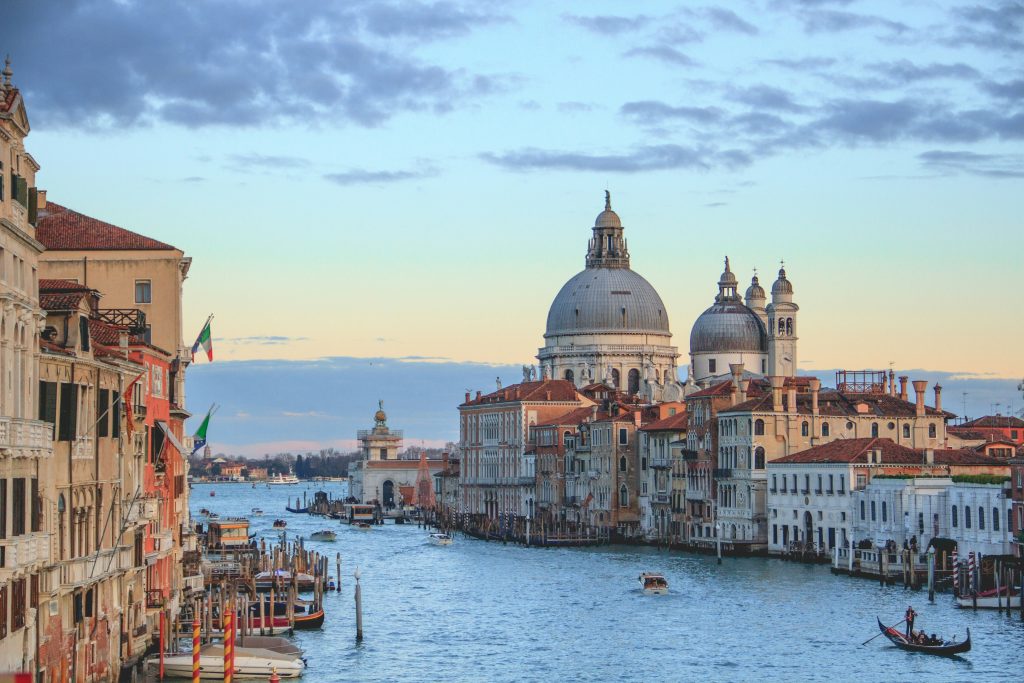
Venice doesn’t just have a tourism problem. It has a tourism catastrophe. On peak summer days, the city receives upward of 80,000 visitors — more than the entire permanent population — most of whom arrive, photograph the same five bridges, and leave without spending a night, which means the economic damage is real and the economic benefit is mostly theoretical.
Barcelona

Barcelona has become a cautionary tale so well-documented that city officials now openly use the word “touristification” without embarrassment, and residents in neighborhoods like the Gothic Quarter and Barceloneta have staged protests carrying signs that read “tourists go home.” Rental platforms — specifically Airbnb, which city officials have repeatedly targeted — gutted the long-term housing stock so efficiently that people who’ve lived in the city for generations simply cannot afford to stay, and the streets they grew up on now smell of sunscreen and sangria from March through October.
Jaume Collboni, the city’s mayor, announced in 2024 that Barcelona would revoke all 10,000 short-term tourist apartment licenses by 2028. So the city is fighting back, even if the outcome remains genuinely uncertain.
Amsterdam

Amsterdam is one of the most honest cities in Europe about what it’s become — and honesty, it turns out, is a bleak advantage. The city launched a campaign in 2023 explicitly telling young British tourists not to come, running ads in the UK that warned of drug arrests and aggressive policing, which is a remarkable thing to say and an even more remarkable thing to mean.
Overtourism carved the city’s famous canal belt into a corridor of souvenir shops and bachelor party routes, eroding the residential character of neighborhoods that took centuries to develop.
Kyoto

Kyoto is treated like a living museum by the people who visit it, which would be tolerable if the people who actually live there weren’t trapped inside the exhibit. Tourists have taken to wandering through private residential alleys in the Gion district, photographing geiko and maiko without permission, occasionally grabbing at their kimono — behavior so persistent and intrusive that the city installed cameras and ultimately blocked off some streets entirely.
The irony is precise: the very authenticity that draws people to Kyoto is being dissolved by the act of drawing people to it.
Dubrovnik
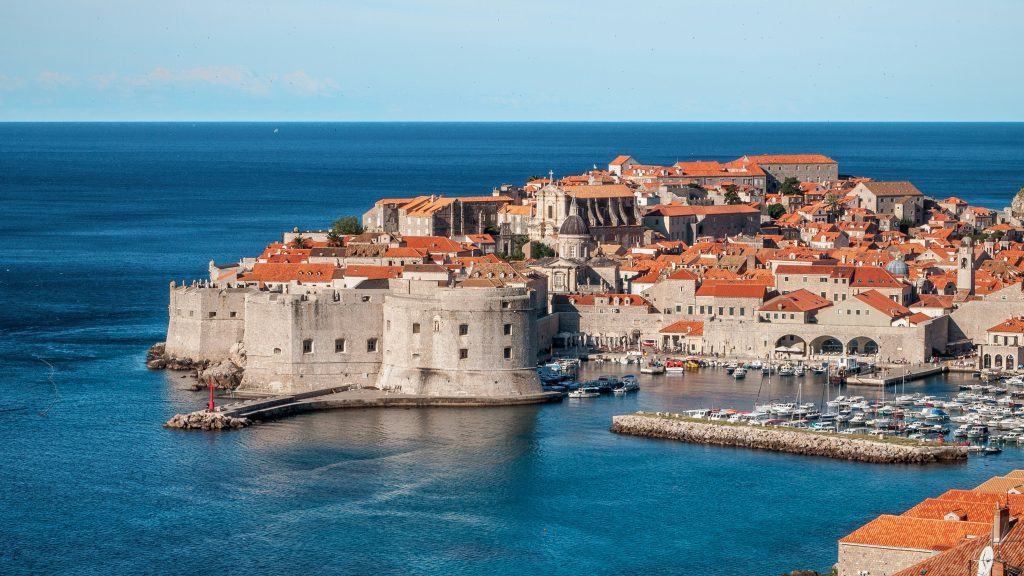
Dubrovnik became a victim of its own visual perfection, which is saying something for a city that was already beautiful before HBO turned it into King’s Landing. Cruise ships unload thousands of people at a time into a walled Old City that measures roughly half a mile across — a space genuinely not built to accommodate that kind of pressure — and UNESCO issued formal warnings about the damage to the site’s integrity as far back as 2016.
The city has since introduced hard caps on visitor numbers, but enforcement is the kind of work that requires a level of political will most governments struggle to sustain when the cruise industry is involved.
Lisbon

Lisbon used to be the city that people discovered just before everyone else did — which is precisely the kind of thing that stops being true the moment enough people say it. The Alfama district, historically working-class and predominantly elderly, has been hollowed out by short-term rentals and repositioned as a picturesque backdrop for travelers seeking “authentic” Portugal, an authenticity that disappears in almost perfect proportion to the number of people seeking it.
Rents in Lisbon rose faster than in almost any other European capital over the past decade, and the people who gave the city its character are, quite simply, gone.
Santorini

Santorini handles roughly three million visitors a year on an island with a permanent population of around 15,000 people, and the math is not difficult to do. The white-domed churches and caldera views that define every Instagram travel account exist in a place that is genuinely struggling with water scarcity, waste infrastructure, and roads built for a fraction of the traffic they now carry.
The island is beautiful the way a sentence with too many words in it is still technically a sentence — technically functional, but under obvious strain.
Machu Picchu

Machu Picchu sits at roughly 7,970 feet above sea level on a mountain spine in the Peruvian Andes, and for a long time the sheer effort required to reach it kept visitor numbers manageable. That changed as flight costs dropped and the Inca Trail became a bucket-list fixture, and by 2019 the site was receiving close to 1.5 million visitors annually — against a UNESCO-recommended ceiling of 800,000.
Peru introduced timed entry tickets and daily caps, then raised and lowered those caps several times under tourism industry pressure, which is the bureaucratic equivalent of setting boundaries and immediately walking them back.
Prague

Prague charges almost nothing by Western European standards, which is the economic feature that made it enormously appealing and the structural vulnerability that made its center nearly uninhabitable. The Old Town and Charles Bridge district are now so thoroughly occupied by visitors that many locals treat them as foreign territory — somewhere they avoid rather than walk through on an ordinary Tuesday.
A city whose beauty was preserved largely because the 20th century’s destructive forces largely left it alone is now being unmade by the 21st century’s enthusiasm.
Reykjavik

Iceland went from 500,000 annual visitors in 2010 to over two million by 2018, which is a rate of growth that would stress any infrastructure — but stress it especially hard when your entire country has fewer than 400,000 residents. Reykjavik, as the point of entry for nearly all of them, absorbed the brunt: housing costs in the capital surged, Airbnb density in the downtown core became among the highest in Europe, and the “unspoiled wilderness” narrative that drove the tourism boom started colliding with the evidence of its own success.
The northern lights are still real. The solitude people came for is not.
Florence

Florence is a city of roughly 360,000 people that receives approximately 16 million visitors a year, and the arithmetic of that ratio shapes almost every aspect of daily life in the historic center. The area around the Duomo and the Uffizi is functionally a tourist corridor rather than a neighborhood — rents are calibrated to Airbnb returns, shops sell leather goods and limoncello, and the butchers and pharmacies and hardware stores that once served actual residents have found better economics elsewhere.
What remains is beautifully preserved and almost entirely hollow.
Bali

Bali’s transformation from spiritual retreat to mass-market destination has been underway for decades, but the pace of change in the past ten years has been something different — sharper, more irreversible, harder to dress up as progress. The rice terraces in Ubud are real; the cafés advertising “digital nomad vibes” beside them are also real, and the two have grown up alongside each other in a way that feels less like coexistence and less like collision than like a slow replacement.
Indonesian authorities introduced a tourism levy in 2024 and have floated proposals to restrict access to sacred temple sites, measures that are both overdue and almost certainly insufficient.
Hallstatt

Hallstatt is a village of roughly 700 people in the Austrian Alps that receives over a million visitors a year, and the disproportion has reached a point where the word “village” starts to feel like a category error. Residents have complained of tourists photographing the insides of their homes through windows, wandering into private gardens, and treating the place as a film set rather than a place where people wake up and make breakfast.
Austria has discussed building a physical barrier at the main viewpoint — a wall, essentially, between residents and the camera-wielding crowd — which is the kind of solution that says everything about how far things have gone.
Cinque Terre

The five villages of Cinque Terre — strung along a few miles of Ligurian cliffside with no flat land and no room to expand — receive somewhere between two and three million visitors a year on infrastructure that was built for fishing communities, not foot traffic. The trails connecting the villages erode faster than they can be repaired, the trains running between them are at crush capacity for most of the summer, and the National Park authority has implemented crowd limits that the region’s tourist economy has lobbied against with considerable success.
It is, as a working landscape, slowly being loved to death — which is not a metaphor but a description.
Bruges

Bruges is sometimes described as the most perfectly preserved medieval city in Europe, which is accurate in the architectural sense and somewhat ironic in every other sense, because what preserved it — relative obscurity for most of the 20th century — is precisely the condition that no longer exists. Day-trippers from Brussels arrive by trainload, outstay their welcome by about four hours, and leave behind foot traffic that the cobbled streets and narrow bridges were never designed to absorb.
The residents who remain in the historic center are statistically outnumbered by tourists on any given summer weekend, and the city knows it.
Tulum

Tulum pitched itself as the antidote to Cancún — sustainable, spiritual, low-impact — and then proceeded to become everything Cancún was, with better branding and worse sewage infrastructure. The cenotes that drew visitors for their crystalline water are now compromised by hotel runoff and sunscreen contamination; the jungle roads that once reached the coast through relative quiet now clog with taxi traffic and food delivery bikes.
The “conscious travel” language that saturated Tulum’s marketing throughout the 2010s turned out to be aesthetic rather than operational, which is about as surprising as it sounds.
The City Becomes a Mirror

There’s something worth sitting with in the fact that the cities suffering most from overtourism are also the ones people most want to see before it’s too late — a logic that is self-defeating in the most literal sense possible, the act of witnessing accelerating the very disappearance it mourns. The answer isn’t to stop traveling.
But it probably involves traveling slower, spending money where residents do, skipping the shot that a hundred thousand people already have, and accepting that a place worth visiting is worth treating like somewhere a real person lives — because it is. The theme park version of a great city is always cleaner, always more photogenic, and always a little dead inside.
More from Travel Pug

- Underrated Italian Towns That Beat the Tourist Crowds
- Las Vegas Tourist Traps to Skip
- Prettiest Towns in Every US State
- 18 passport-free countries for Americans
- Signs Your Cruise Is Not Worth The Cost
Like Travel Pug’s content? Follow us on MSN.