

A meteor shower is one of the few astronomical events that genuinely rewards patience over equipment. You do not need a telescope.
You do not need a star chart. You need a dark sky, a comfortable position, and enough time for your eyes to fully adapt — about 20 minutes — after which the streaks become frequent enough to feel like a private show.
The challenge is that most comfortable places to sleep sit under some of the most light-contaminated sky on the planet.
Glamping cuts that trade-off considerably. The sites below are positioned inside or directly adjacent to certified dark sky parks, remote dark zones, or elevation-advantage terrain where meteor rates during major annual showers often range from 40 to more than 100 per hour under ideal conditions.
Booking around new moons amplifies the result further — a full moon can reduce visible meteor counts by up to 70% by washing out the dimmer streaks. These 26 spots earn their place because the sky quality matches the accommodation standard.
Under Canvas Lake Powell – Grand Staircase, Utah
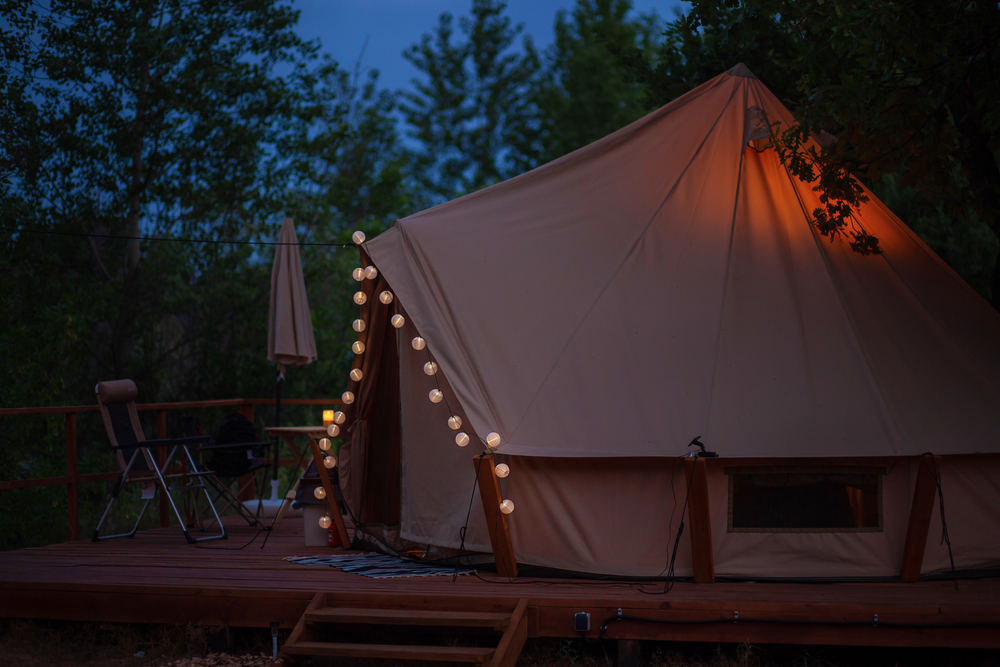
Under Canvas operates multiple glamping camps across the American Southwest, and the Lake Powell – Grand Staircase location in southern Utah became the first DarkSky Approved Lodging property recognized by DarkSky International in 2023. The camp’s 50 safari-style tents are spread across 220 acres of desert, far enough from any significant town that the measured sky quality can approach Bortle Class 1 during new moon phases.
During the Perseid meteor shower peak in August — which in 2026 coincides with near-new-moon conditions for the first time in several years — this site can produce over 100 visible meteors per hour under clear skies.
StarStruck Glamping, Big Bend, Texas
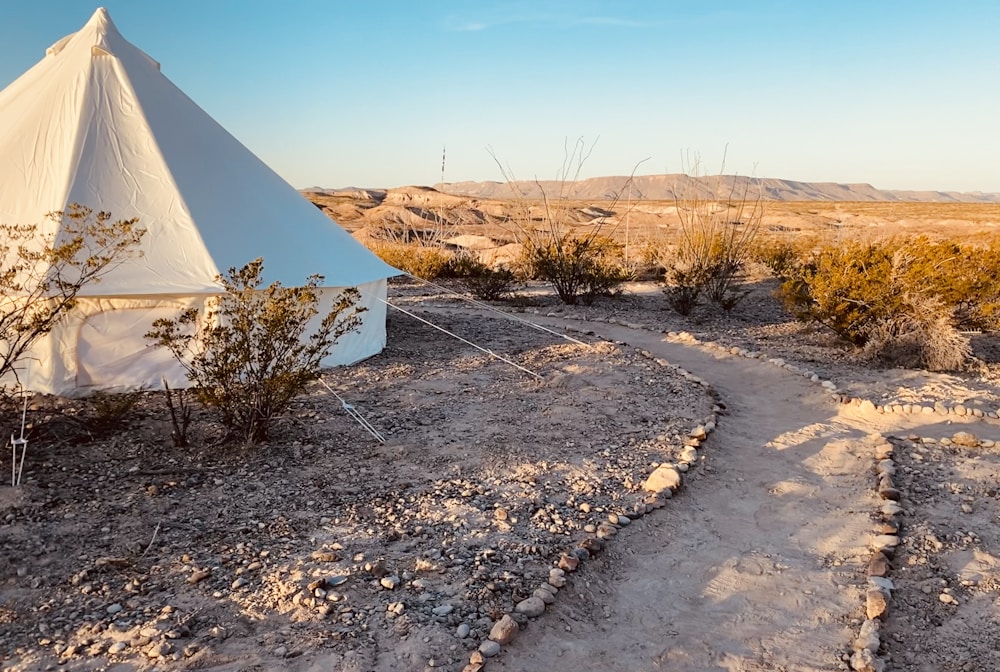
Located within the Greater Big Bend International Dark Sky Reserve, StarStruck Glamping offers luxury domes fitted with large bay windows framing the night sky directly from the bed, telescopes for guest use, and an included guided audio experience that walks you through the constellations visible overhead. Big Bend sits inside the Greater Big Bend International Dark Sky Reserve, certified in 2022, which extends the protected darkness well beyond the national park boundary.
The Perseids and Leonids are both reliably strong here, and the desert heat that makes daytime hiking brutal dissipates enough by midnight to make outdoor watching comfortable in summer months.
SkyScape Glass Cabins, Twizel, New Zealand
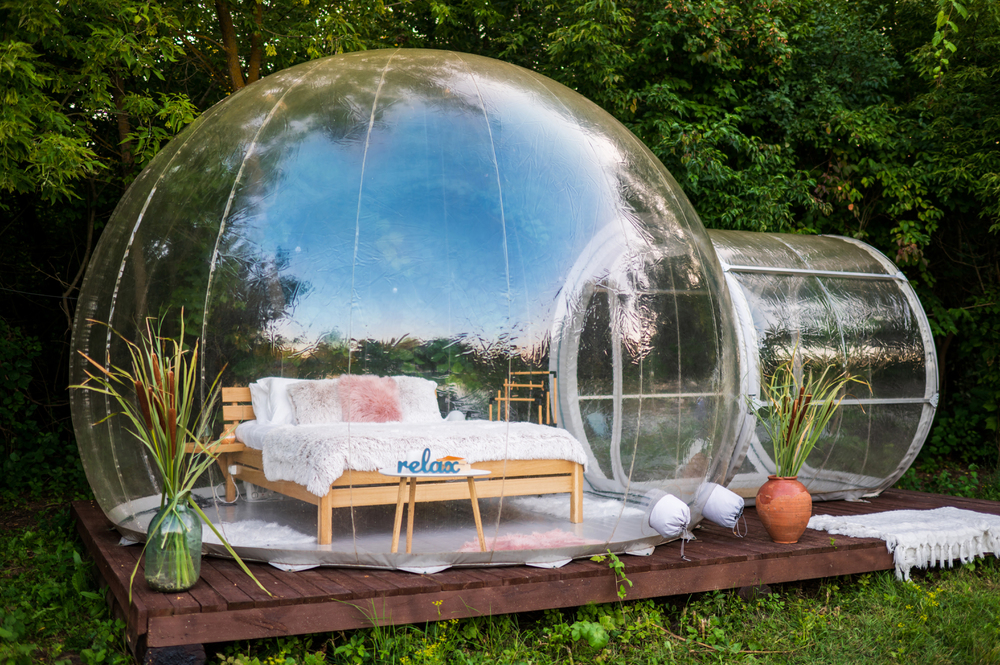
SkyScape operates off-grid glass-roof cabins inside the Aoraki Mackenzie International Dark Sky Reserve on New Zealand’s South Island. The reserve covers 4,367 square kilometers and was the largest designated dark sky reserve in the world at the time of its 2012 certification.
Guests sleep under a full glass ceiling in cabins designed with the observatory principle in mind — the sky is the ceiling. The southern Geminid meteor shower in December and the southern Eta Aquarids in May are the annual highlights here, and the reserve’s position in the Southern Hemisphere means you see parts of the sky simply unavailable to observers north of the equator.
Mt. Cook Lakeside Retreat, Lake Pūkaki, New Zealand
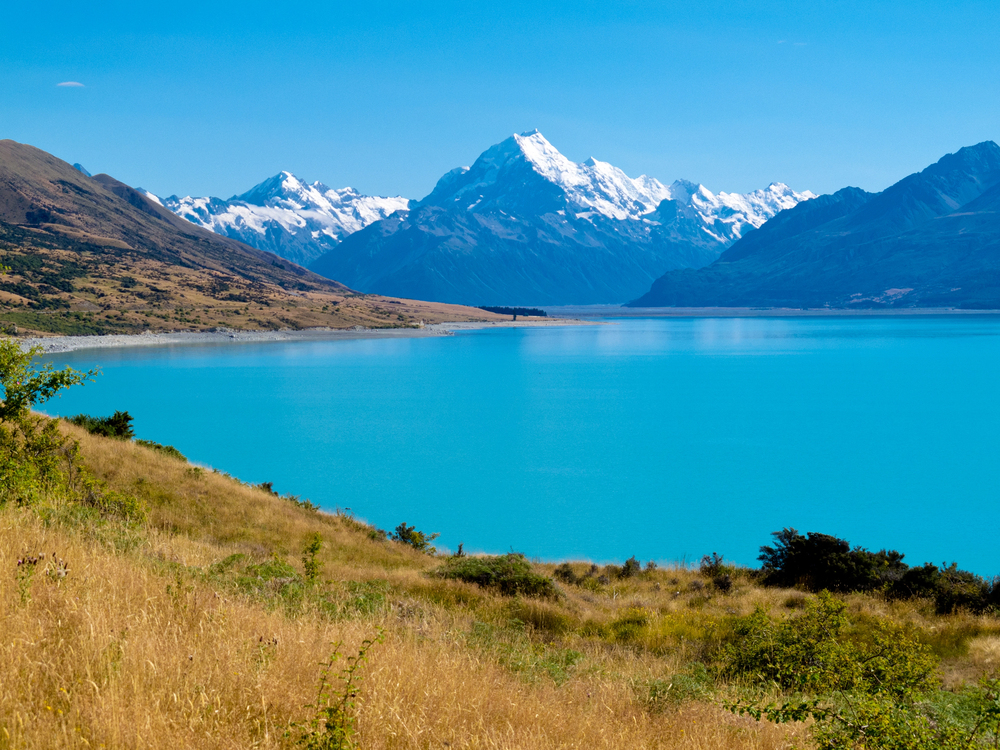
Sitting directly within the Aoraki Mackenzie reserve overlooking Lake Pūkaki, Mt. Cook Lakeside Retreat is a Tuscany-inspired property with an astronomical observatory that doubles as a wine cellar during the day — which is a peculiar and effective combination.
The lake’s surface acts as a secondary mirror on clear nights, reflecting the Milky Way and bright meteor streaks below the horizon line in a way that effectively gives you sky above and sky below simultaneously. The observatory runs nightly sessions for guests, and the resident guide here explains Māori astronomical traditions alongside conventional astronomy.
Clear Sky Resort, Bryce Canyon, Utah
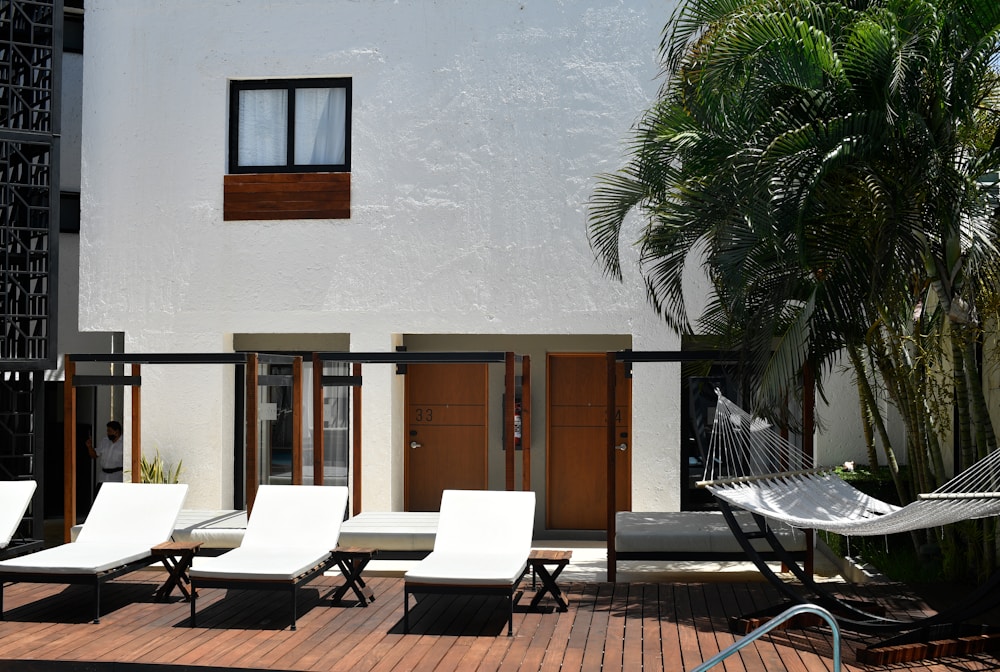
Clear Sky Resort operates 62 geodesic sky domes in the dark sky zone adjacent to Bryce Canyon National Park, one of the most active public astronomy parks in the US system. Each dome has a design optimised for overhead sky viewing, and the resort’s elevation of around 8,000 feet reduces the amount of atmosphere between observers and the night sky.
Bryce Canyon’s annual Astronomy Festival in June draws professional astronomers and public participants, and the resort positions itself specifically around meteor shower dates to fill the domes during peak viewing windows.
Skyview Hotel, Torrey, Utah
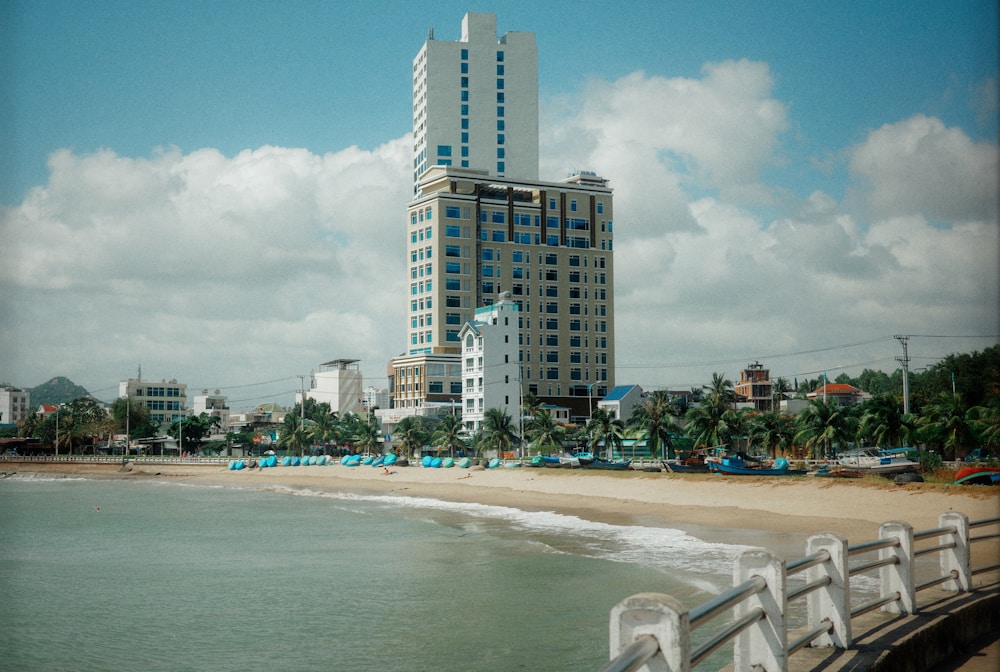
In the town of Torrey — a certified dark sky community near Capitol Reef National Park — the Skyview Hotel offers glamping domes with a design that lets guests watch the sky from a warm bed. The hotel provides free astronomy audio guides tailored to seasonal night sky conditions.
Capitol Reef’s low visitor numbers compared to Zion or Arches mean that the sky here sees little additional lighting from car headlights or torch use during peak season — a detail that makes a measurable difference on sensitive nights.
Dark Sky Dome, Galloway Forest Park, Scotland
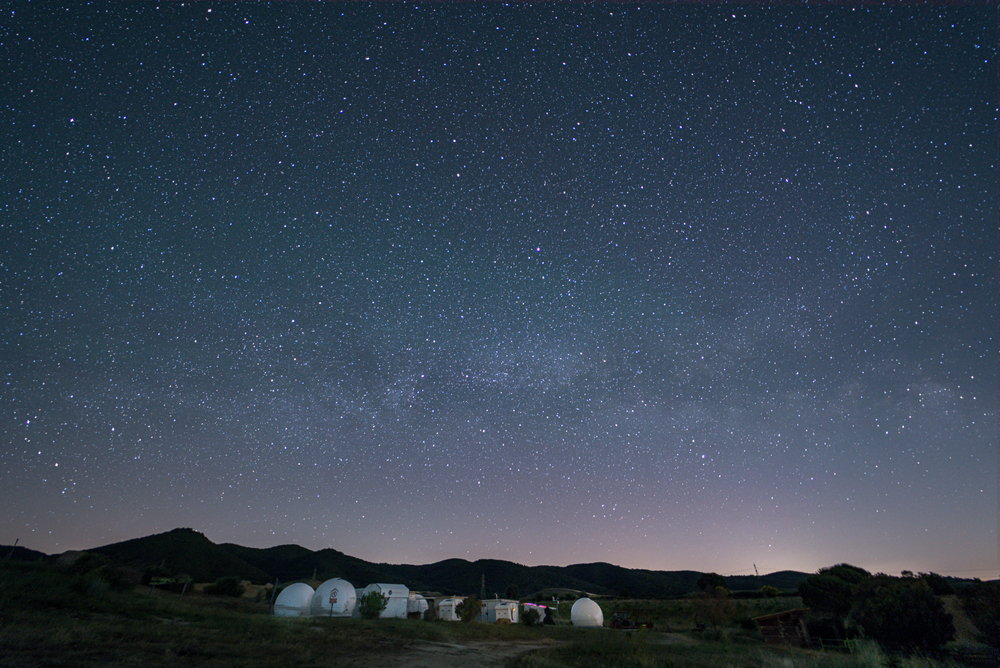
Galloway Forest Park was Britain’s first International Dark Sky Park, certified in 2009, and the Dark Sky Dome glamping experience within it is operated by a local amateur astronomer from a fishing family who navigated by stars professionally. The dome sleeps four and has a clear plastic roof designed for full-sky viewing from inside.
During the Perseid meteor shower in August — when Galloway’s nights run from about 10pm to 4am in Scottish summer — the dome’s position away from any town puts guests in conditions where 40 or more meteors per hour are routinely recorded.
Compass Rose Lodge, Huntsville, Alabama
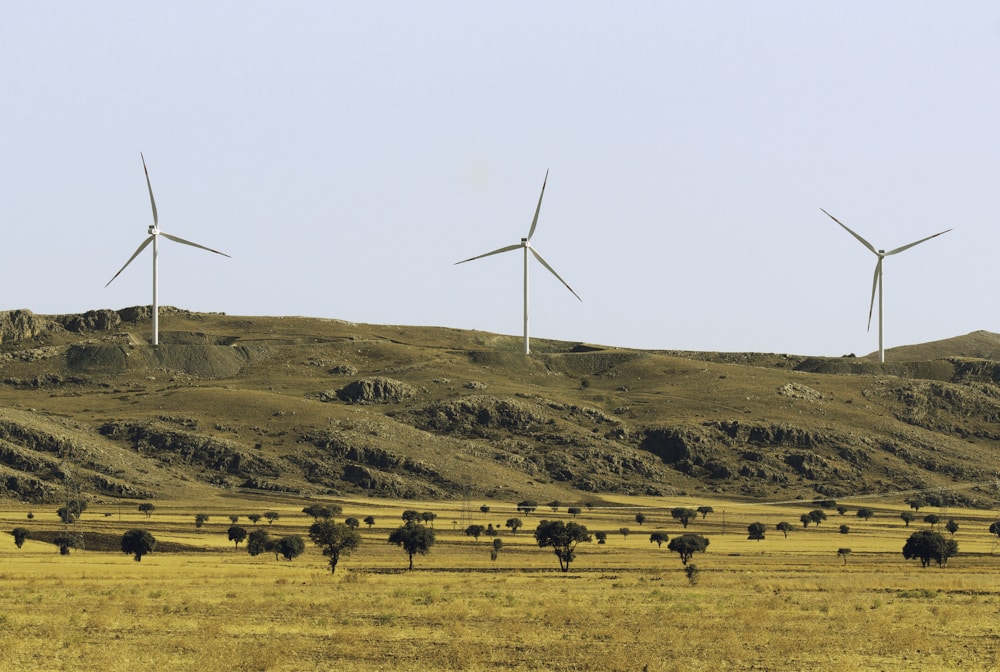
The Huntsville Astronomic and Lunar Observatory (HALO) sits on the grounds of Compass Rose Lodge in the Blue Ridge foothills, where the lodge’s location in a low-light-pollution corridor of northern Alabama produces reliably dark conditions. The observatory is available year-round to all guests for nightly sessions with a resident astronomer.
A resort with a professional-quality observatory and an automated dome attached to the accommodation is unusual anywhere — here it is the central feature rather than an amenity added on.
Glampful, Adirondacks, New York
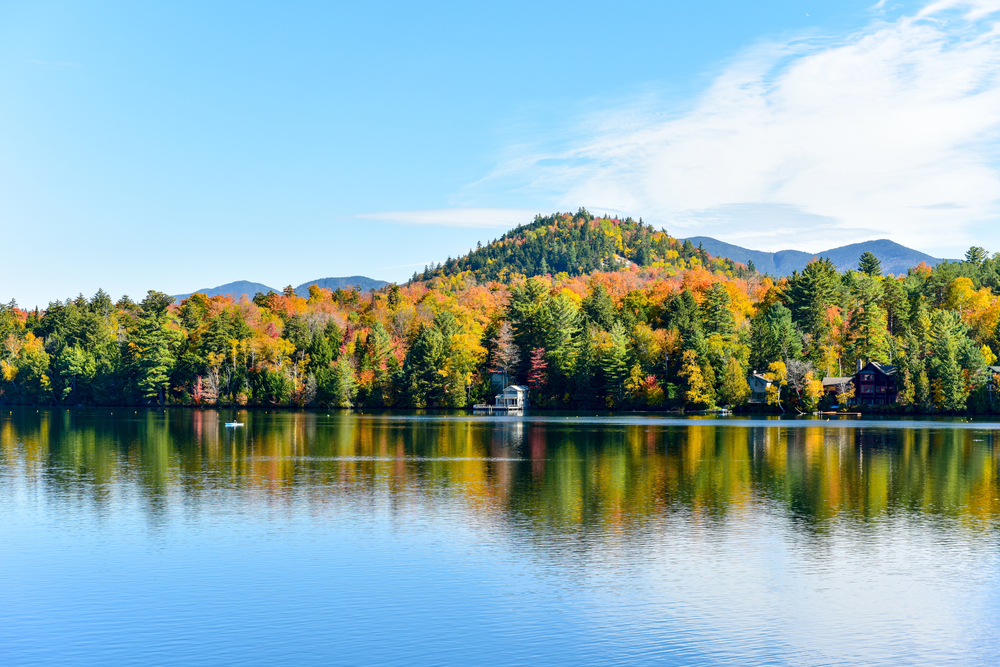
The Adirondack Park represents one of the largest protected areas in the contiguous United States, and its interior darkness is substantially better than most people who live in the Northeast expect. Glampful operates safari-style canvas tents in a part of the park where the Milky Way is visible on clear nights and where the Perseids — observable from this latitude from mid-July through August — are a seasonal event the camp marks on its calendar.
Adirondack chairs on private decks give each tent its own outdoor viewing position, and the park’s tree cover means cold-front nights create the cleanest air in the region.
&Beyond Sossusvlei Desert Lodge, NamibRand, Namibia
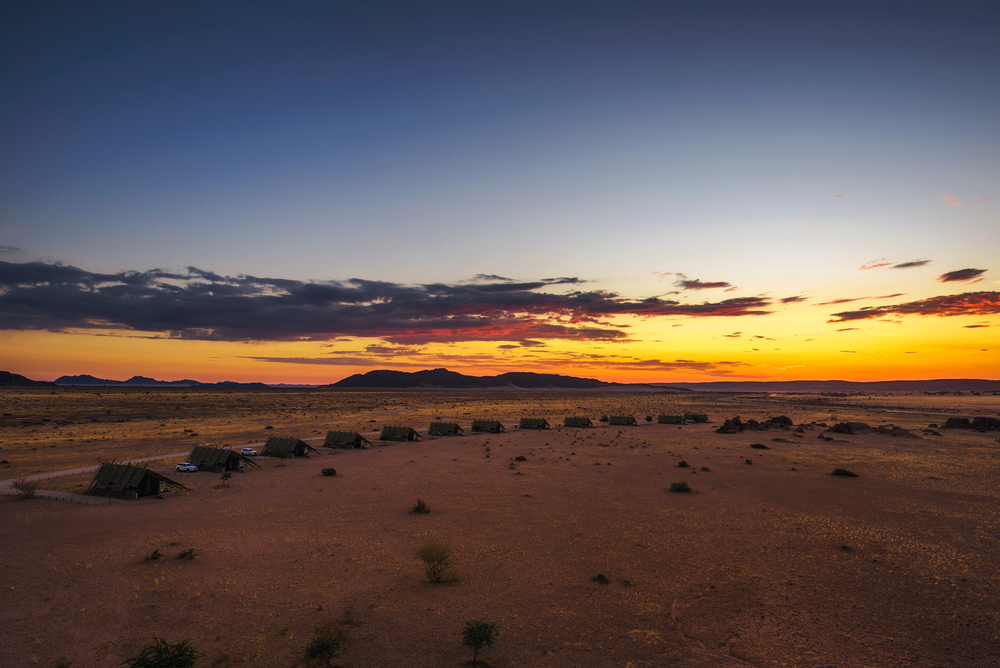
The &Beyond Sossusvlei Desert Lodge sits inside the NamibRand Dark Sky Reserve, 140 kilometers from the nearest town, with a resident astronomer on staff and a 12-inch telescope in its own observatory. Suites have skylights directly above the beds, and the lodge regulates vehicle headlight use across the property to protect its measured sky quality.
NamibRand holds some of the darkest recorded skies on Earth, and the annual Southern Delta Aquarids and Geminids hit the Southern Hemisphere in conditions that the lodge has specifically built its program around.
Wolwedans, NamibRand, Namibia
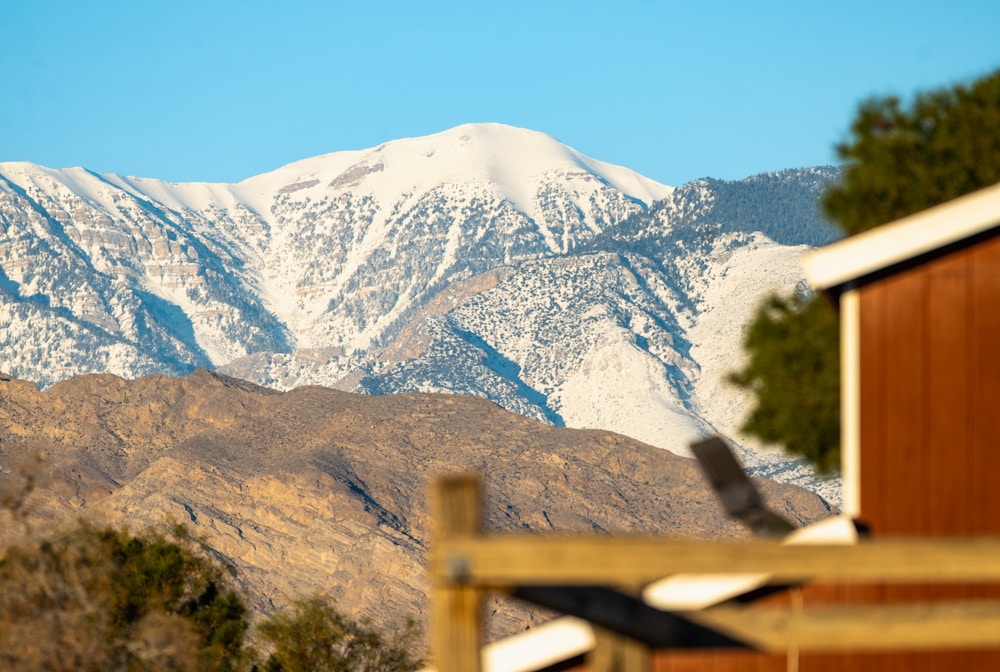
Within the same reserve as &Beyond, Wolwedans offers a different style of experience — smaller portable telescopes available to guests, guided walks led by staff trained in basic astronomy, and the Mountain View Suite with a dedicated outdoor sleeping deck. The camp complex sits on dunes that still hold the day’s warmth after sunset, which means outdoor watching in July and August — during Namibia’s dry season peak — is physically comfortable despite the altitude.
Lying on warm sand under a sky this dark with a jackal calling somewhere in the distance qualifies as a distinct type of travel.
Kwessie Dunes Lodge, NamibRand, Namibia
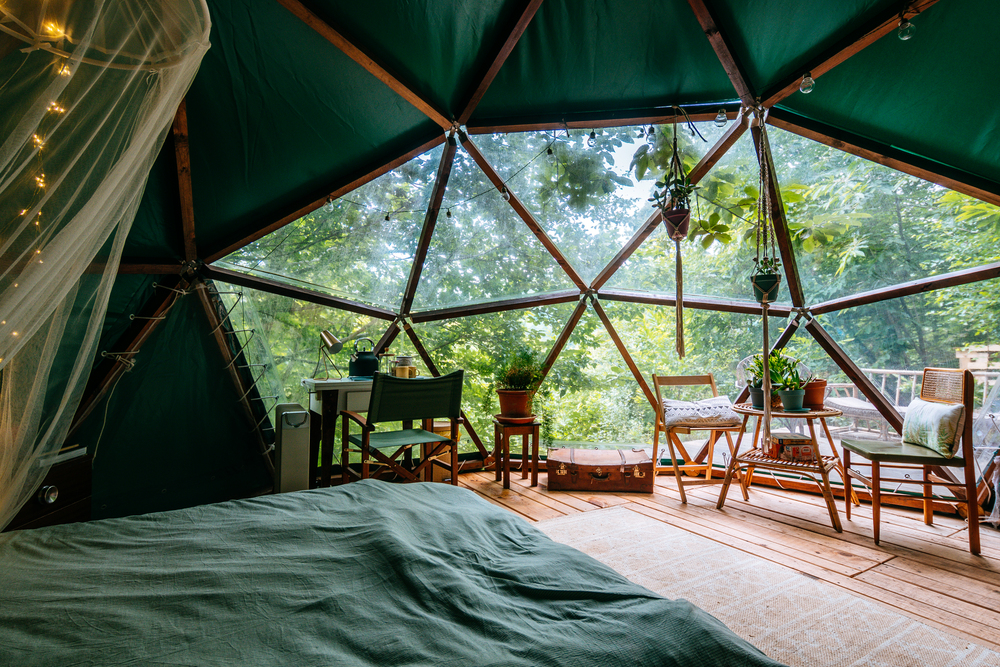
A smaller and less-publicised property within the NamibRand reserve, Kwessie Dunes Lodge occupies a position between the larger camp complexes where sky access is unobstructed on all horizons. The Eta Aquarid meteor shower in May, which produces some of its best rates in the Southern Hemisphere, aligns with the tail end of NamibRand’s dry-season shoulder period when cloud cover is minimal.
The lodge caters to a smaller guest count, which means telescope access is not competitive and the darkness is never interrupted by another group’s return journey.
Explora Atacama, San Pedro de Atacama, Chile
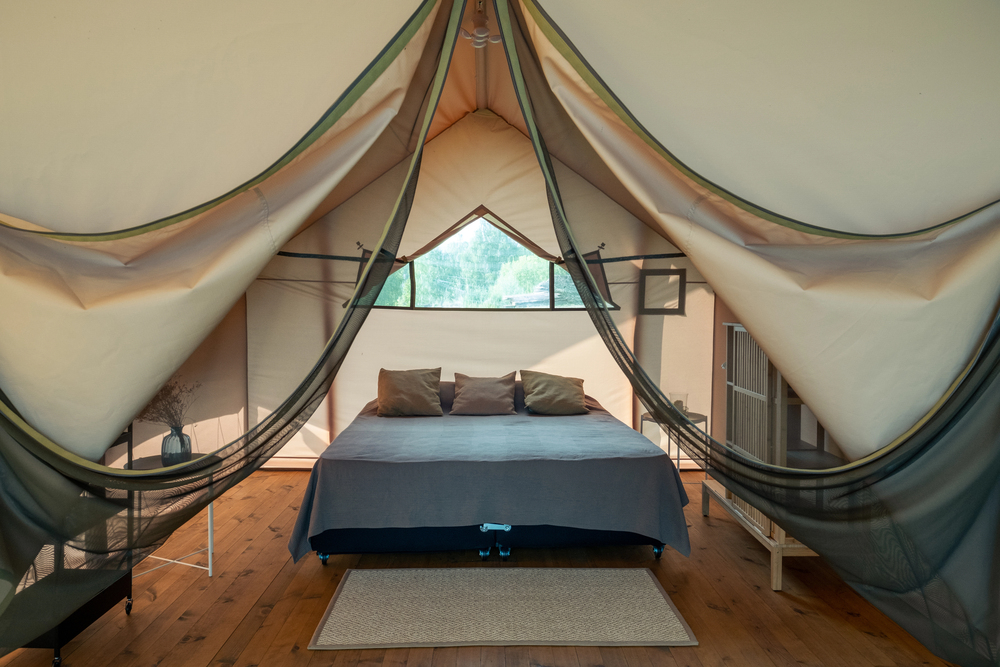
Explora Atacama sits at 2,408 meters above sea level in Chile’s Atacama Desert and operates the only all-inclusive astronomy lodge in the region, with a 16-inch Meade telescope and over 300 clear nights per year as its baseline conditions. The Atacama’s air is so dry that infrared light passes through it with near-zero interference, a fact professional observatories use and that amateur observers here notice immediately in the sharpness of star images.
Meteor showers in this environment produce visible paths long enough that you can follow a single streak across a significant portion of the sky before it extinguishes.
Canopy Camping – The Shieling, Wairarapa, New Zealand
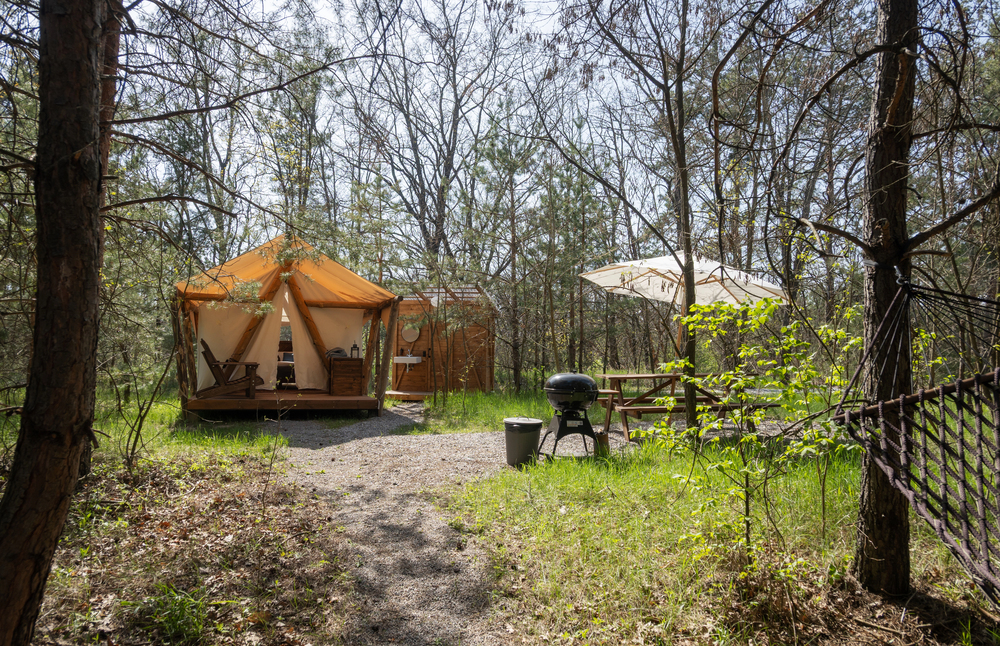
The Wairarapa Dark Sky Reserve, designated in January 2023, covers 3,665 square kilometers of the North Island and measures sky darkness between Bortle 3 and near-Bortle 2 in its core zones. The Shieling, a glamping retreat within a five-hectare native-tree sanctuary in the reserve, offers couples a level of sky access more commonly associated with the South Island sites.
With around 70% clear nights annually, it is among the more statistically reliable of the New Zealand glamping options for meteor shower viewing.
Fairmont Jasper Park Lodge, Jasper, Canada
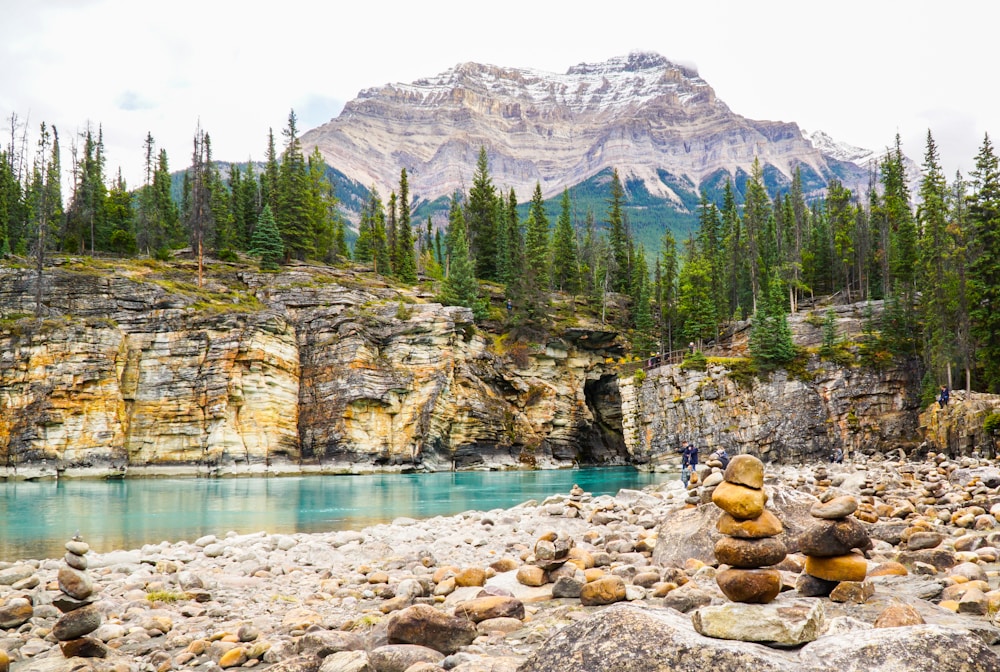
Jasper National Park holds Gold Tier Dark Sky Preserve status and runs an annual Dark Sky Festival each October that draws thousands of participants. The Fairmont Jasper Park Lodge has a 34-seat domed planetarium on property — an infrastructure investment that reflects how seriously the hotel takes its astronomy positioning.
The Orionid meteor shower in October aligns almost perfectly with the festival dates, making mid-October stays here a combination of organized astronomy programming and organic meteor watching directly from the property.
Mont-Mégantic Observatory Area, Quebec, Canada
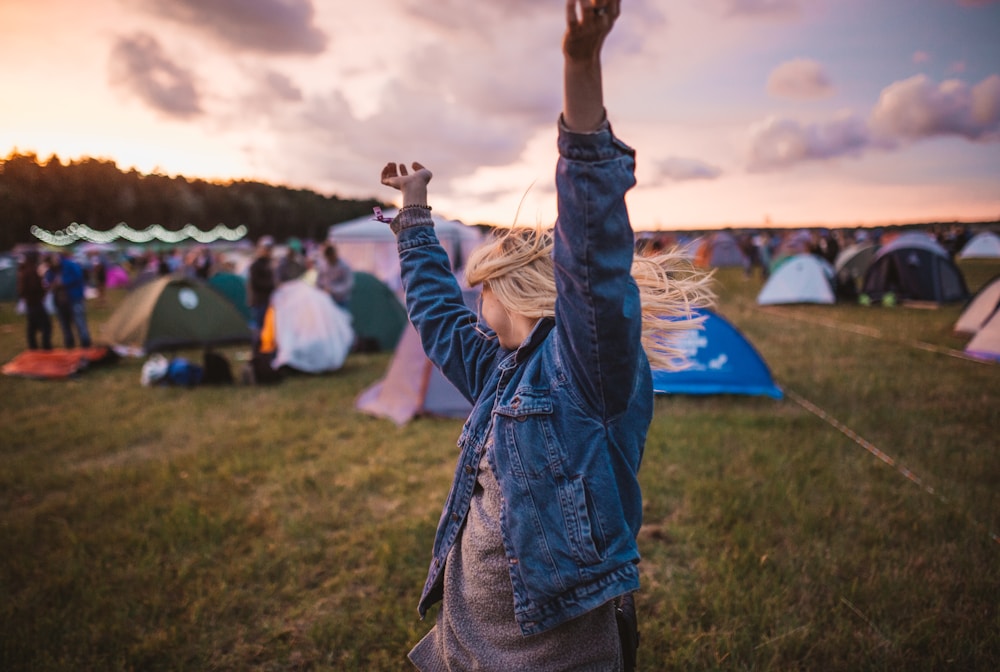
Mont-Mégantic Dark Sky Reserve in Quebec dedicates its annual Perseids event specifically to the meteor shower, running a multi-day program each August where observers in the area can expect 50 to 100 visible meteors per hour under clear conditions. Several glamping and cabin operations have developed in the reserve over the past decade specifically around this event.
The reserve holds the distinction of being one of the first in the world to regulate municipal lighting — surrounding towns modified street lighting as part of the certification agreement.
Sunriver Resort, Oregon
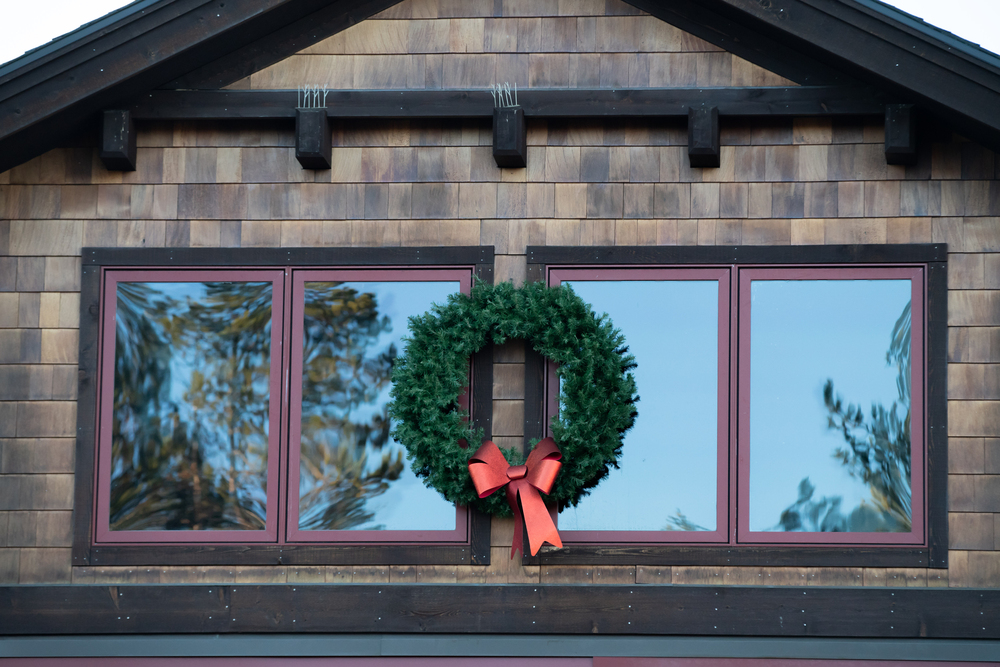
Sunriver Resort in central Oregon has invested in a permanent on-site observatory, an unusual feature for a resort property. Oregon’s high desert plateau east of the Cascades delivers significantly darker and drier conditions than the coast, and the Sunriver area is known locally as one of the most accessible dark-sky zones in the Pacific Northwest.
The Perseids in August and the Geminids in December are the headline events here, and the observatory’s program runs sessions timed around both peaks.
Four Seasons Resort Jackson Hole, Wyoming
The Four Seasons at Jackson Hole hosts evening sessions with professional astronomers using modern telescopes under what the resort describes as some of the darkest skies available from a luxury property in the continental United States. The resort benefits from the exceptionally dark skies surrounding Grand Teton National Park and nearby protected public lands.
The Leonid meteor shower in November — which occasionally erupts into a full storm of hundreds of meteors per hour, though more typically produces 10 to 15 — peaks during the high shoulder season when Wyoming nights are genuinely cold and the air is clear.
Lookout Bubble, Port Lympne, Kent, England
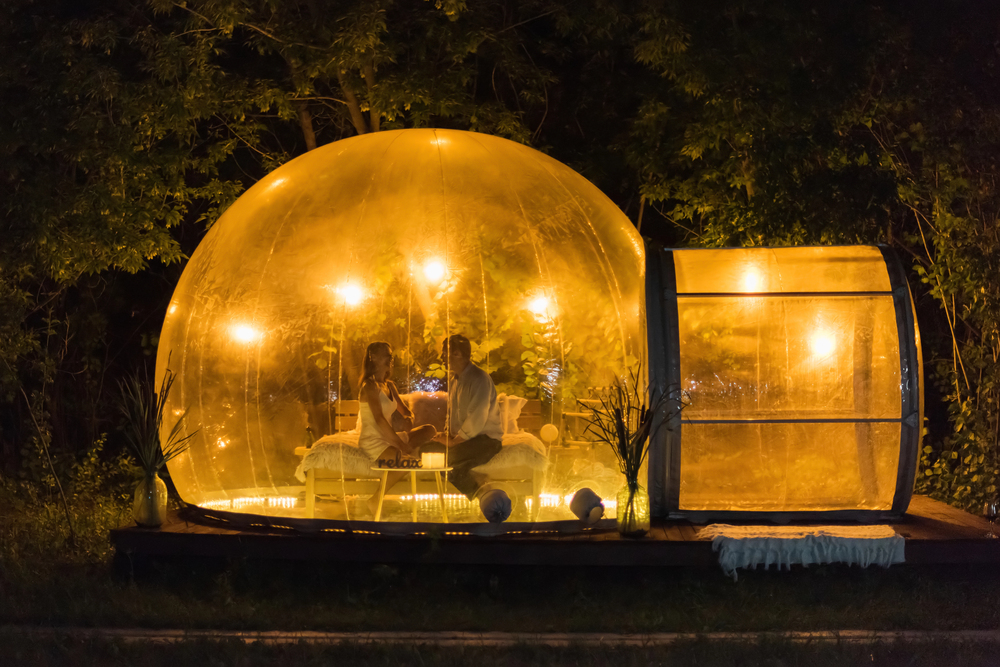
For observers in southern England who cannot travel further afield, the transparent glamping bubbles at Port Lympne in Kent offer a sky-viewing experience that is unusual for the region. The site sits within the wildlife reserve grounds, which contributes to lower surrounding light levels than most rural English locations.
The Geminid meteor shower in December — often overlooked in favour of the Perseids because the December cold deters casual observers — is consistently the stronger of the two annual peaks, sometimes producing over 120 meteors per hour, and the bubble’s shelter from wind makes the cold manageable.
Amangiri and Camp Sarika, Utah
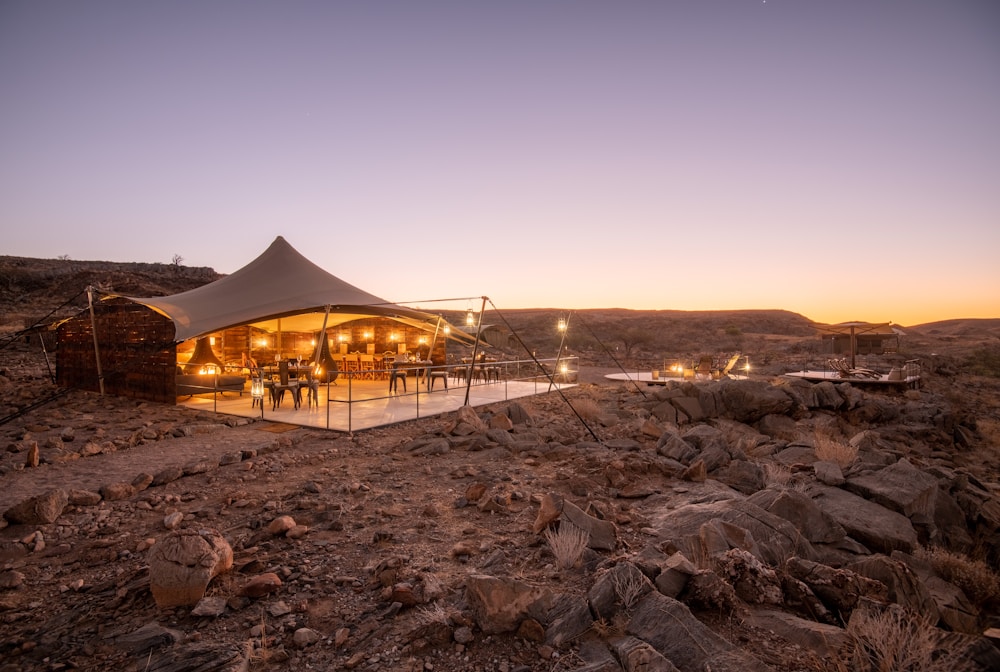
Amangiri is one of the more photographically famous hotels in the American Southwest, built into canyon terrain in the Navajo Nation lands of southern Utah where the Milky Way is consistently described by guests as looking wrong — too bright, too dense, too present. Camp Sarika, the tented extension of Amangiri, sits farther out into the canyon landscape where sky access is even less obstructed.
Professional astronomy sessions are available from both properties, and the Perseid window in August is considered the peak booking period for guests specifically interested in meteor viewing.
Westgate River Ranch, Florida
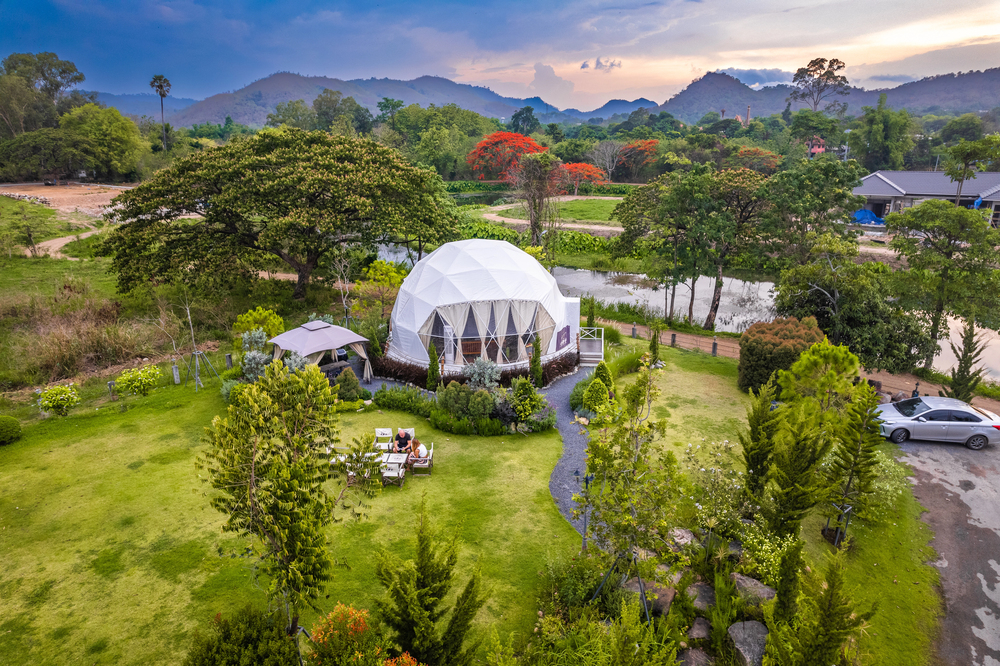
Florida does not immediately suggest itself as a dark sky destination, but Westgate River Ranch in Polk County sits far enough from Miami and Orlando’s combined glow to deliver measurably better conditions than most of the state. The property is a working ranch with glamping accommodations, and its position in the flat Florida interior means most horizons remain largely unobstructed — which matters for showers like the Perseids and Geminids where a significant portion of the visible meteors appear within 30 degrees of the horizon.
Florida’s warm nights also mean outdoor watching in summer and autumn is comfortable without specialist gear.
Heritage Inspirations Glamping, Taos, New Mexico
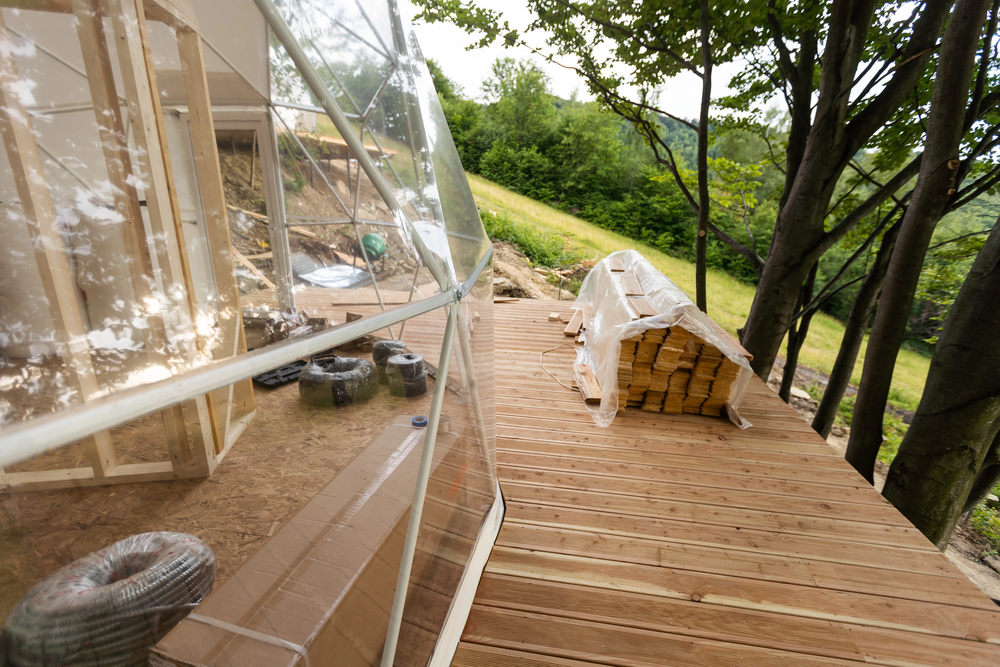
Heritage Inspirations operates high-elevation glamping experiences above Taos, New Mexico specifically around the Perseid meteor shower window in August. New Mexico’s combination of altitude, low humidity, and vast dark zones makes it one of the most consistent meteor-viewing states in the US, and the Taos area specifically sits in a region where the sky quality exceeds most other inhabited areas in the Southwest.
The experience is built around the entire night rather than a single peak moment — dinner, preparation, and watching are treated as a linked sequence.
Far View Lodge, Mesa Verde, Colorado
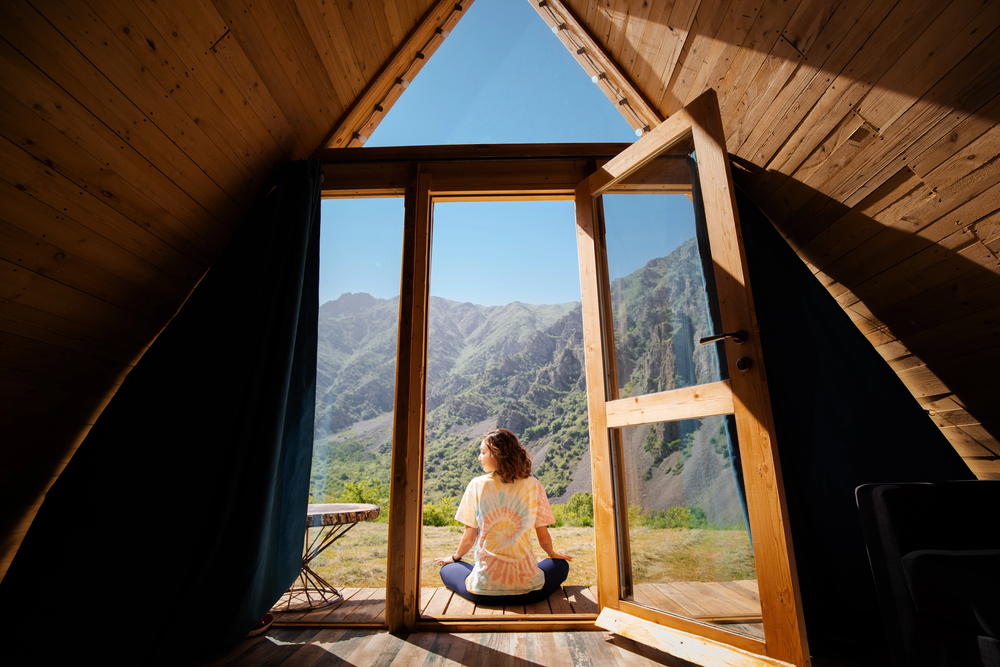
Mesa Verde National Park is primarily known for the cliff dwellings of the ancestral Puebloan people, but the park also holds dark sky status and the Far View Lodge sits within it at 8,100 feet elevation. [The Lyrid meteor shower in late April provides one of the year’s best opportunities for spring stargazing at Mesa Verde.
The combination of a national monument, dark skies, and spring light makes Mesa Verde one of the more unusual meteor-watching environments on this list.
Song of the Ancients, Diablo Range, California
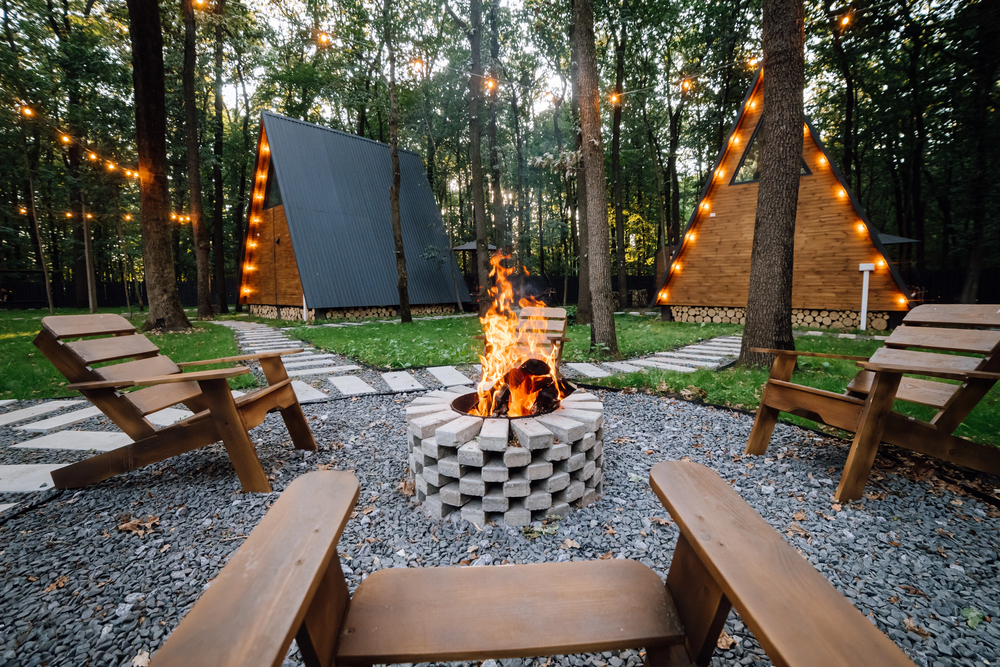
In California’s Diablo Mountain Range east of the San Francisco Bay, the Song of the Ancients campsite sits among oak trees in a dark zone that benefits from both the range’s altitude and its distance from the Bay Area’s light dome. The Perseids are the primary event here, peaking in August when the hills are gold and dry and the nights are warm enough to stay outside until 3am without significant discomfort.
The site’s proximity to Pinnacles National Park provides additional remote viewing opportunities.
Bubble Hotel, Lapland, Finland
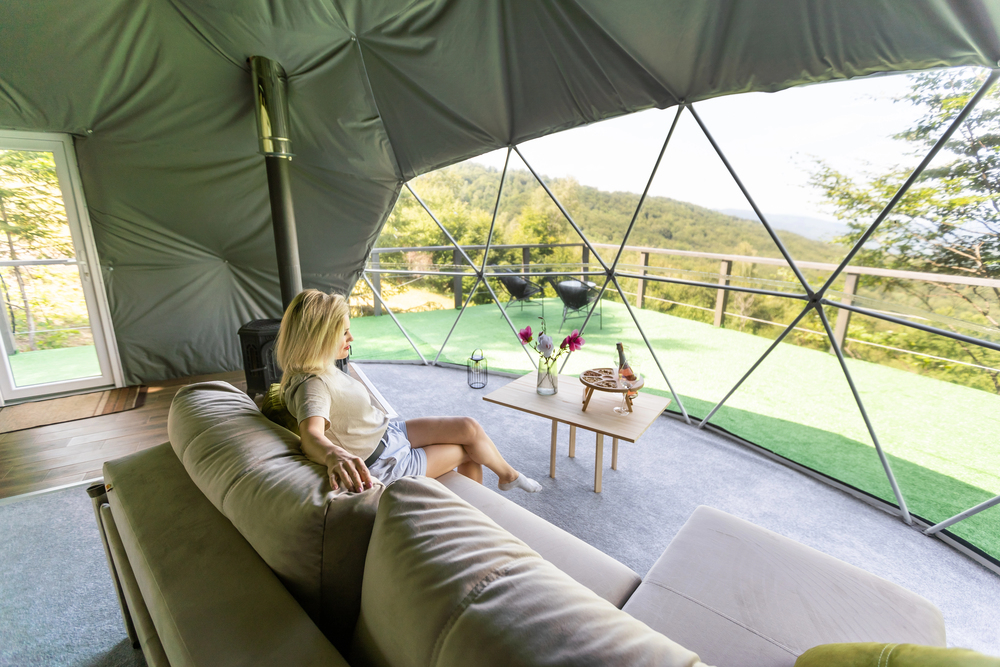
The Bubble Hotel in Finnish Lapland consists of transparent pressurised domes positioned on a snowfield where the northern lights are a regular winter feature. During late summer and early autumn — before long winter nights make aurora viewing more frequent — the Perseid and subsequent meteor showers are observable through the bubble’s roof from a heated interior.
Lapland’s position at high latitude means the Perseids’ radiant point in Perseus rides high in the northern sky, maximising the apparent length of each streak visible.
The Cosmos of Alentejo, Portugal
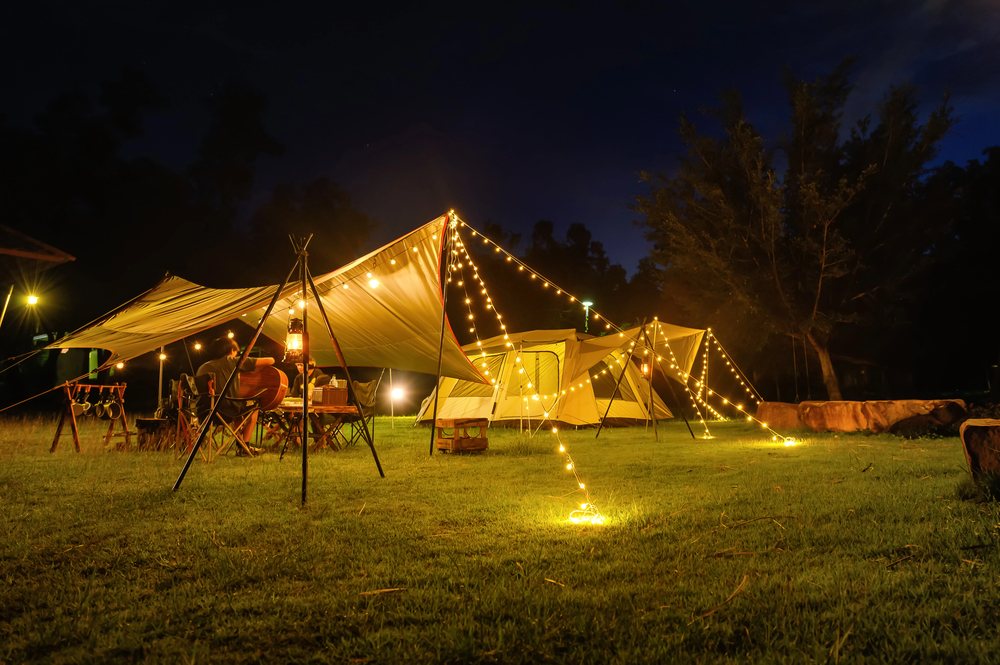
Portugal’s Alqueva region has been recognized as a Starlight Tourism Destination since 2011. Several dark-sky glamping operations have since developed to serve it.
The vast open plains of Alentejo, largely depopulated by the shift from agriculture to urban employment over the past 50 years, produce a sky quality that surprised astronomers when it was first measured. The region pairs well with the southern European summer meteor season — the Delta Aquarids in July and Perseids in August are both strong here — and the temperature is warm enough for extended outdoor watching throughout those months.
When the Tent Becomes the Observatory
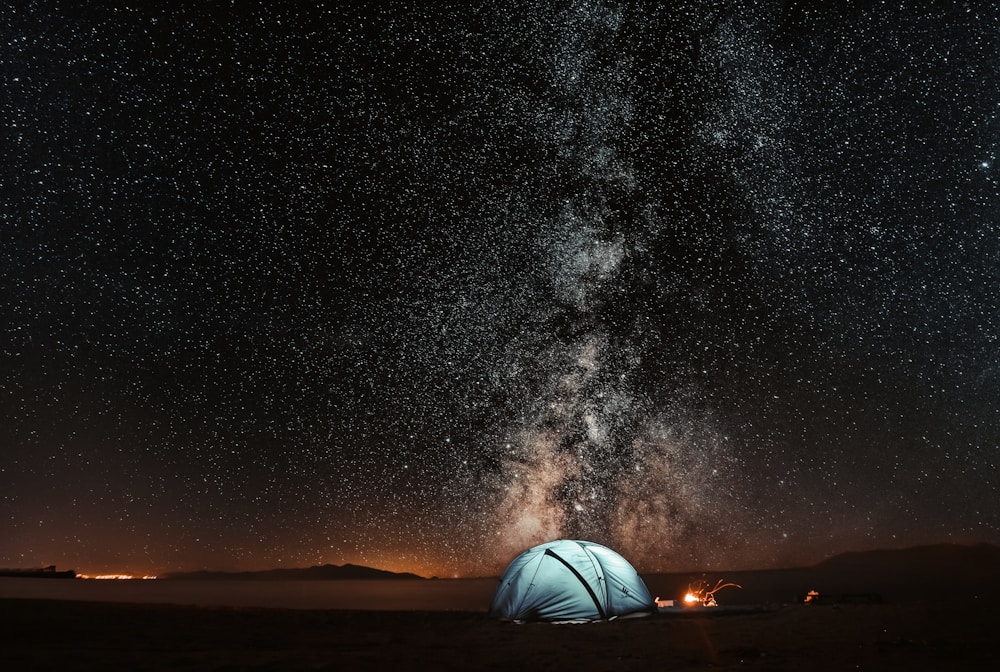
Meteor showers have been observed by humans for recorded history — the Perseids appear in Chinese records dating back to 36 AD — but for most of that time, watching them required nothing more than a clear night and the willingness to be outside after dark. What the glamping options on this list offer is not a technical upgrade to that ancient experience.
They offer the logistics to make it sustainable — a warm bed close enough to walk to after two hours on your back in a field, a dark site that does not require a long drive and a sleeping bag rated for temperatures most people underestimate, and usually a guide who knows where to look and when the next streak is statistically likely to appear. The shower does the rest.
More from Travel Pug

- Underrated Italian Towns That Beat the Tourist Crowds
- Las Vegas Tourist Traps to Skip
- Prettiest Towns in Every US State
- 18 passport-free countries for Americans
- Signs Your Cruise Is Not Worth The Cost
Like Travel Pug’s content? Follow us on MSN.