

There’s something magical about watching a period drama or historical documentary and suddenly recognizing a location. That castle looming in the background, that grand staircase where characters plot their next move, that ancient courtyard where pivotal scenes unfold — these aren’t just sets built on sound stages.
They’re real places with centuries of actual history embedded in their stones. Television has given us unprecedented access to some of the world’s most remarkable historical locations.
From the Tower of London’s blood-soaked chambers to the opulent halls of Versailles, these sites have served as backdrops for countless productions while carrying the weight of genuine historical significance. The stories unfolding on screen pale in comparison to the real dramas that played out within these walls.
The Tower of London
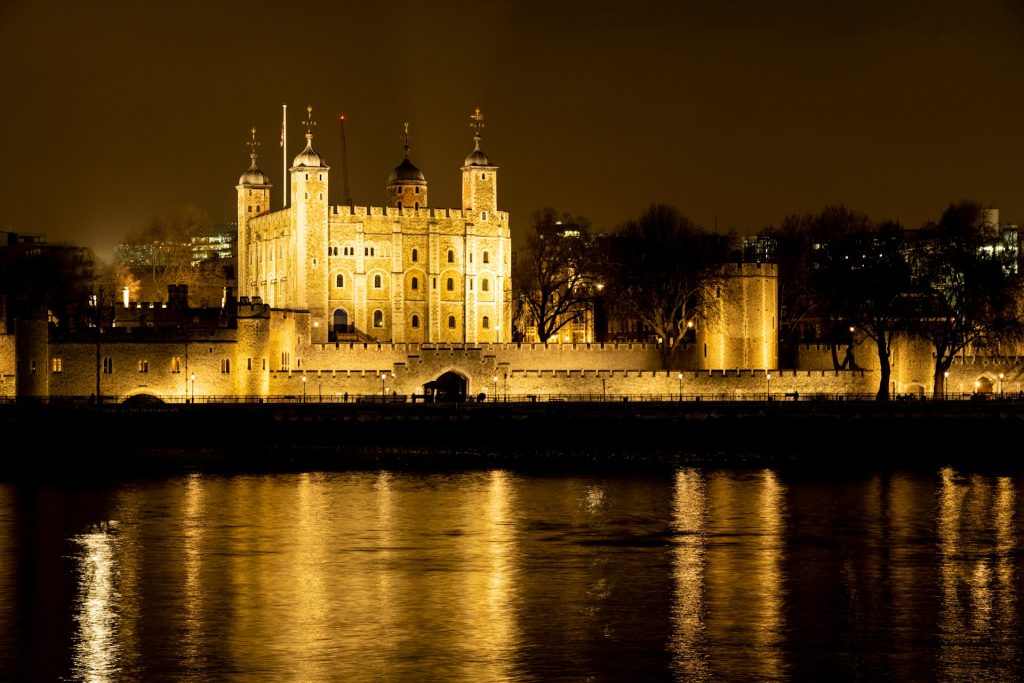
The Tower doesn’t mess around with its reputation. Nearly a thousand years of executions, imprisonments, and royal drama have left their mark on every stone.
When productions film here, they’re walking where Anne Boleyn spent her final days.
Warwick Castle
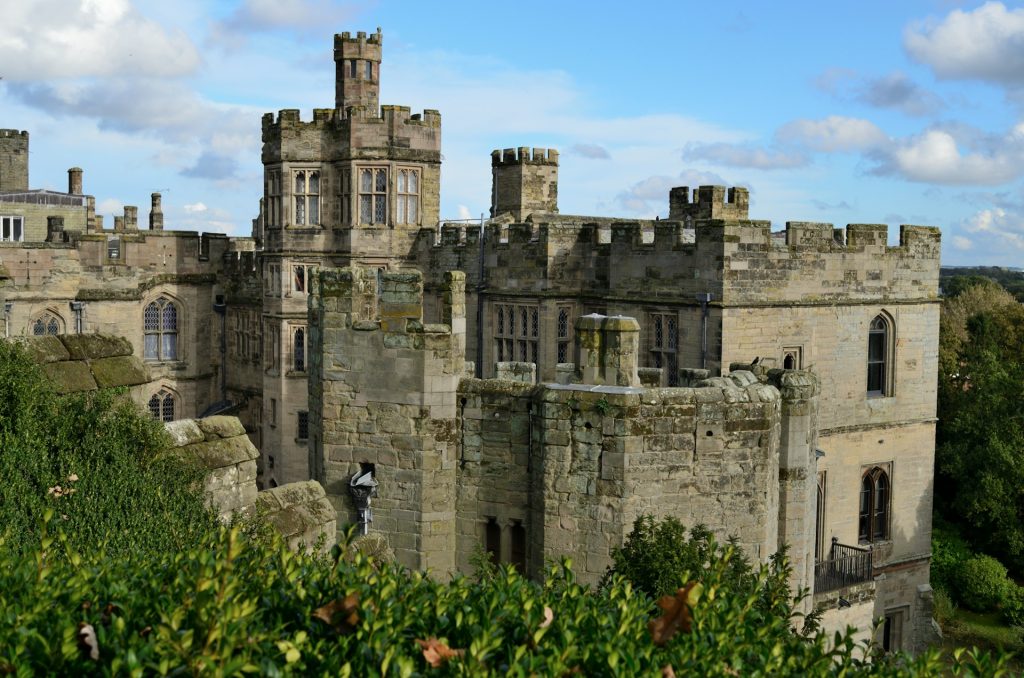
Medieval England comes alive at Warwick Castle, and television producers know it. The castle’s Great Hall and private apartments have hosted everything from period romances to gritty historical dramas, but here’s the thing that strikes anyone who visits: the place still feels lived-in despite being a tourist attraction for decades (though to be fair, when your walls have stood since 1068, a few decades of guided tours barely register).
And while crews set up their elaborate lighting rigs in the courtyard, you can almost hear the clash of actual medieval tournaments that once filled this same space with cheering crowds and the thunder of hooves. So when actors deliver their lines about courtly intrigue, they’re standing where real nobles once whispered actual secrets that toppled kingdoms.
Versailles
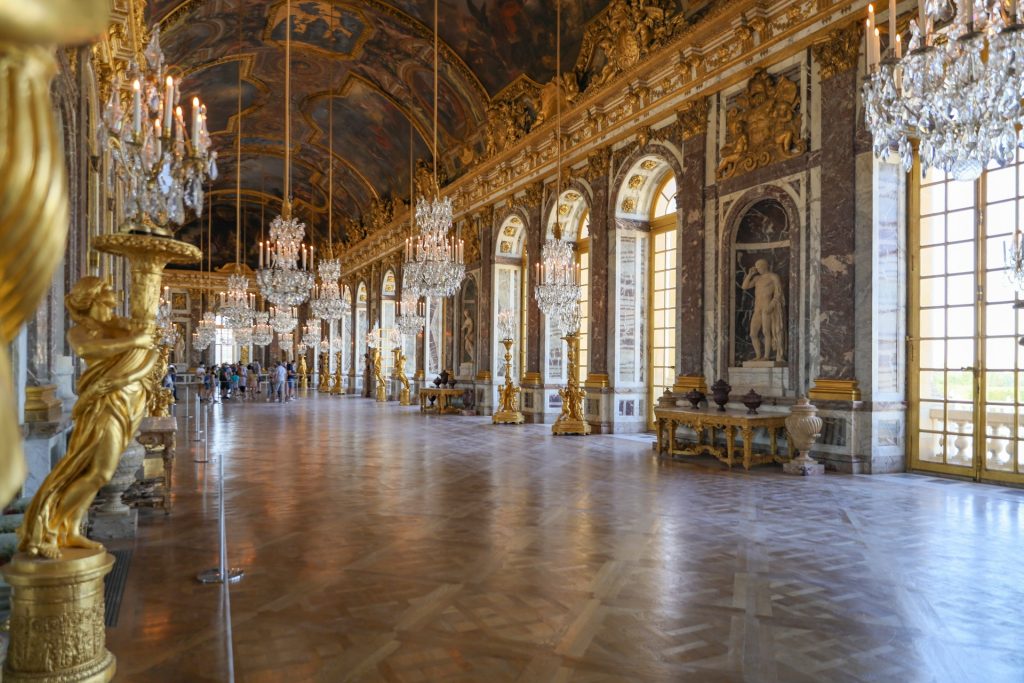
Versailles remains the gold standard for depicting aristocratic excess. Every mirror in the Hall of Mirrors reflects not just camera crews and costume drama actors, but the ghosts of actual court ceremonies that bankrupted France.
The palace operates on a scale that humbles even the most elaborate television productions. Those endless galleries where fictional characters scheme weren’t built for drama — they were designed to remind every visitor that the Sun King’s power stretched beyond comprehension.
Modern productions simply borrow what’s already there.
Windsor Castle
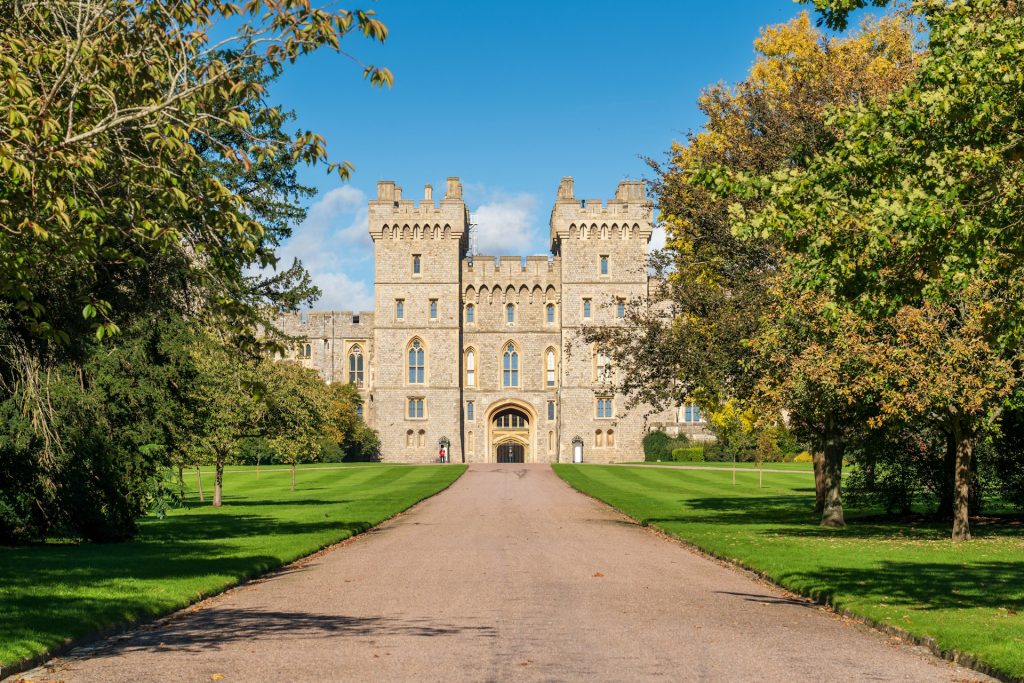
Windsor makes other royal residences look like weekend cottages. Productions filming here work around an active royal schedule, which creates the surreal experience of shooting historical drama in a castle where current history unfolds daily.
The state apartments double as television sets and actual diplomatic venues without missing a beat.
Alnwick Castle
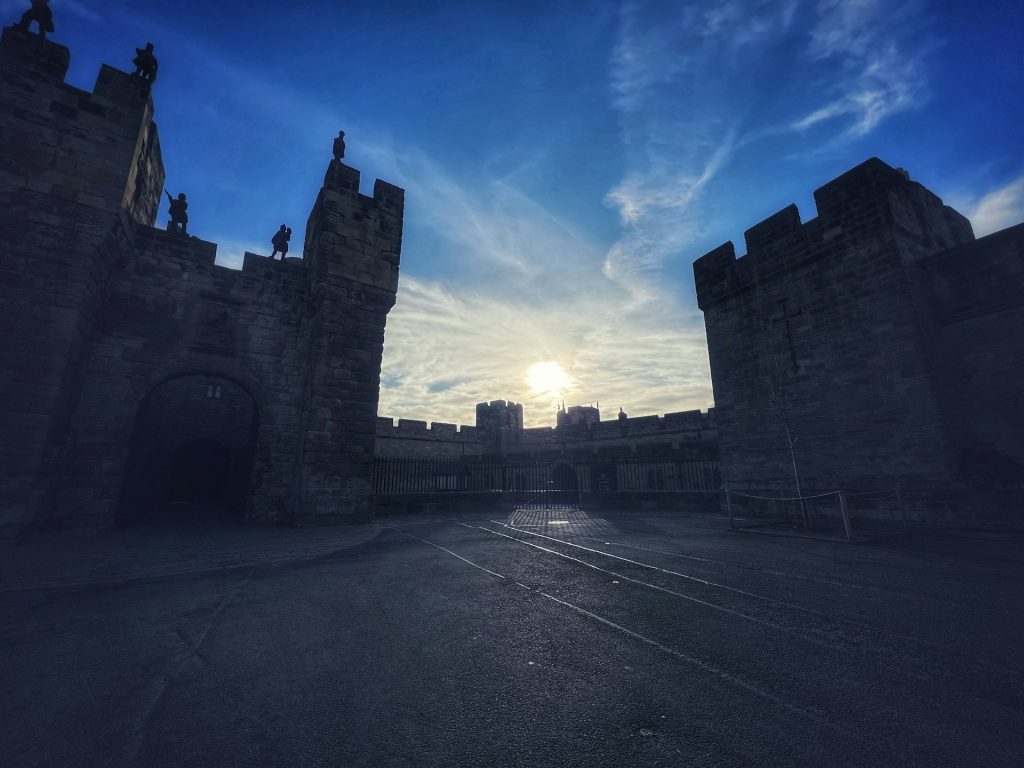
Think of Alnwick as the castle that taught a generation what Hogwarts should look like, but (and this matters more than most people realize) it spent centuries perfecting the art of looking formidable long before any film crew arrived. The Percy family has called this place home since 1309, which means the castle’s imposing presence comes naturally — it wasn’t built to look impressive on camera, it was built to control the Scottish border.
The medieval architecture that makes directors swoon was originally designed to make enemies surrender without a fight, and frankly, it still works.
Hampton Court Palace
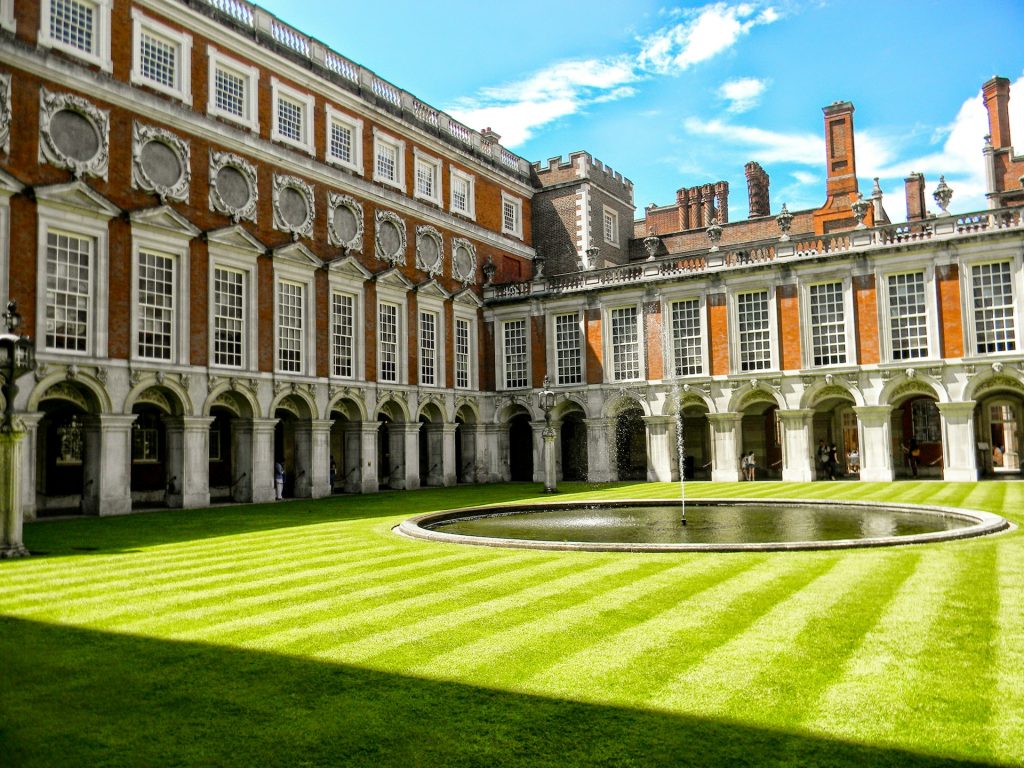
Hampton Court carries the weight of Henry VIII’s presence in every room. The Great Hall where television crews now film banquet scenes once echoed with the king’s actual laughter and rage.
Cardinal Wolsey built this palace to impress, then lost it to his king when he failed to secure the royal divorce. The Tudor kitchens, the haunted gallery where Catherine Howard supposedly ran screaming — these aren’t recreations.
They’re the original stages where English history’s most dramatic moments played out. Television producers don’t need to add atmosphere. It seeps from the walls.
Chatsworth House
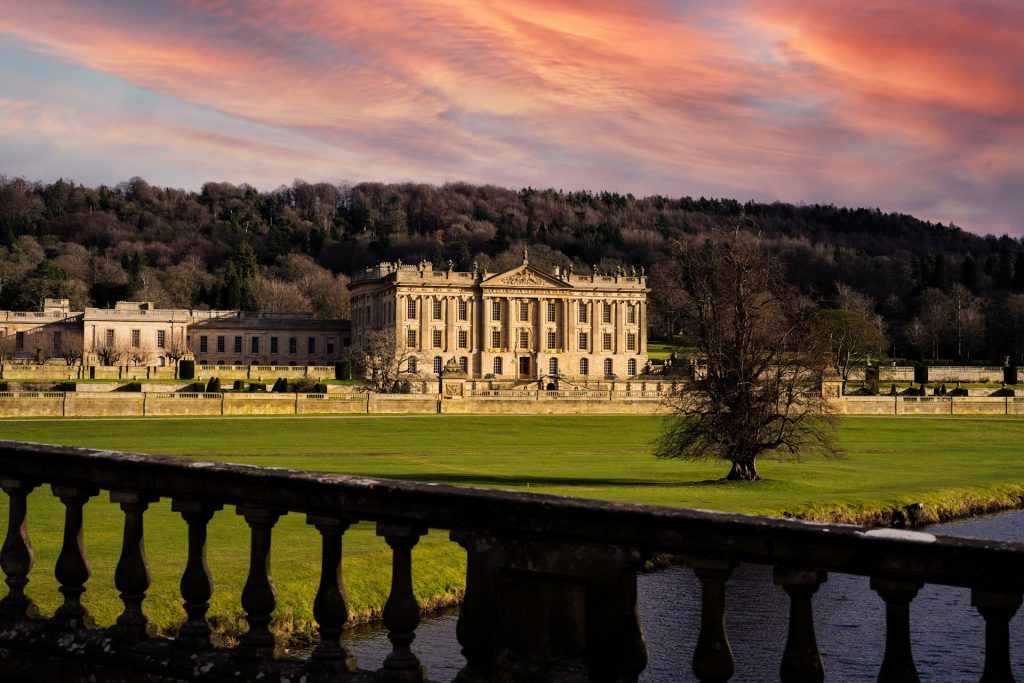
Chatsworth operates like a masterclass in English aristocratic architecture — those perfectly proportioned rooms and sweeping staircases weren’t accidents of design but careful calculations meant to overwhelm visitors with the family’s importance. The house has appeared in countless productions precisely because it embodies everything screenwriters imagine when they write “grand English estate” into their scripts.
Every piece of furniture, every painting hanging on those walls, every marble column supports not just the physical structure but five centuries of the Cavendish family’s determination to display their wealth and taste. The current Duke and Duchess still live here, which means film crews are essentially borrowing someone’s very elaborate living room.
Blenheim Palace
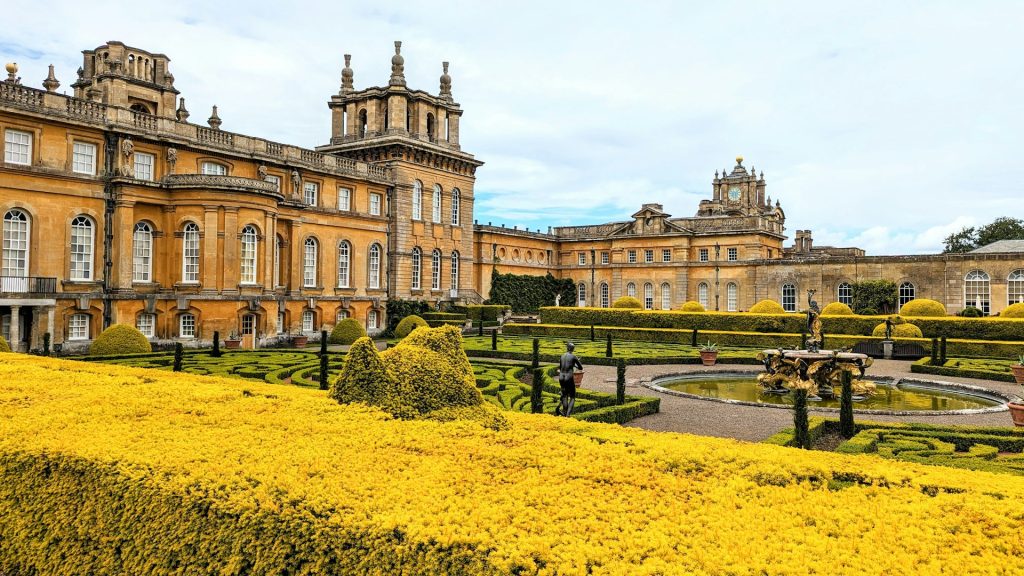
Blenheim Palace was built to celebrate military victory and it shows. Winston Churchill was born here, which somehow feels inevitable given the palace’s imperial scale.
The Great Hall rises 67 feet above visitors’ heads because the Duke of Marlborough wanted everyone to understand exactly what defeating the French at the Battle of Blenheim had earned him. Television productions use Blenheim when they need to convey absolute power without saying a word. The palace does all the talking.
Canterbury Cathedral
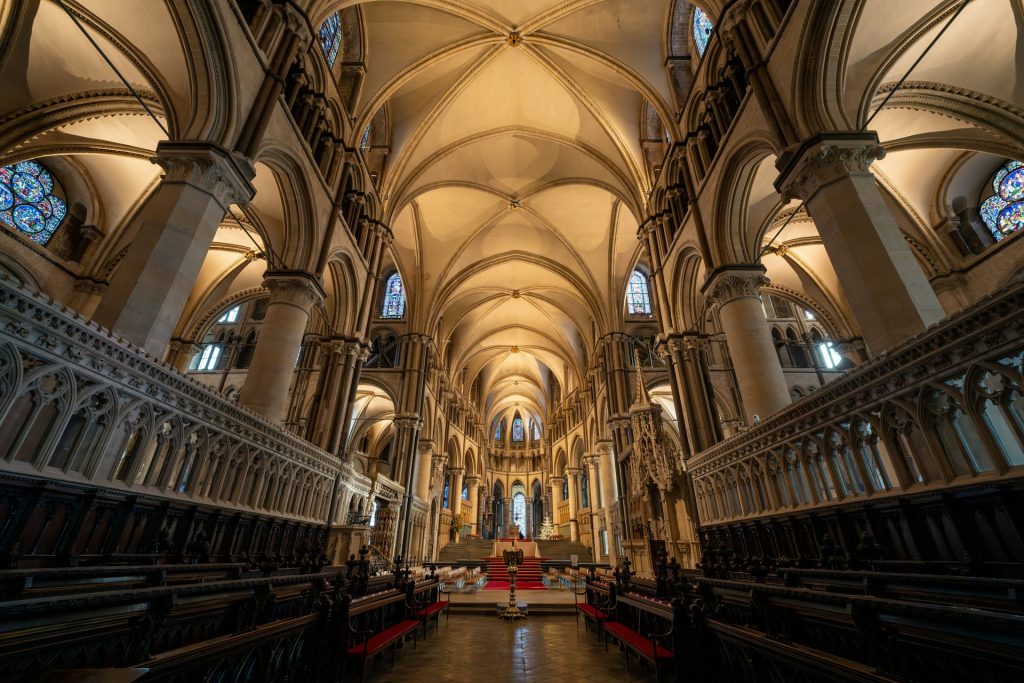
Canterbury Cathedral stands as England’s most important pilgrimage site, and television productions filming here work within sacred space that predates their scripts by centuries. The spot where Thomas Becket was murdered in 1170 remains marked, creating an atmosphere that no set designer could replicate (not that anyone would try — the real thing carries emotional weight that props and paint simply can’t manufacture).
Pilgrims have walked these stone floors for nearly 900 years, wearing smooth paths that modern camera crews now follow as they capture scenes meant to evoke medieval spirituality. But here’s what strikes anyone spending time in the cathedral: the building itself directs how people move through it, creating natural staging that directors can use or fight against, though most choose to work with architecture that was designed to inspire awe long before cinema existed.
Edinburgh Castle
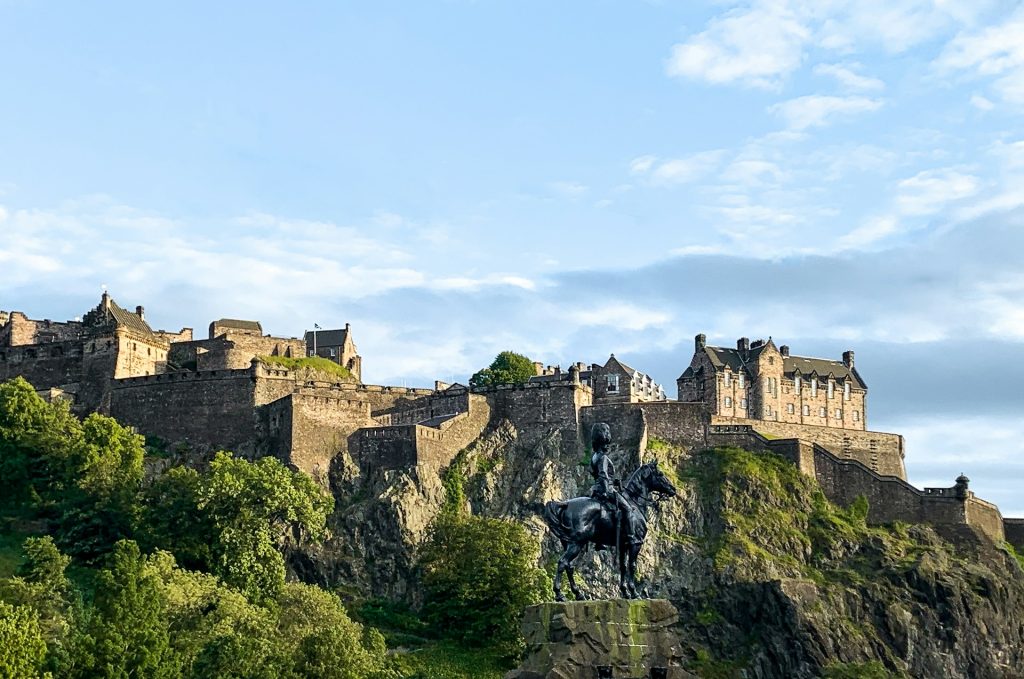
Edinburgh Castle doesn’t need good lighting to look dramatic. Perched on an extinct volcano, it dominates the city skyline with natural authority that film crews simply capture rather than create.
The castle’s royal apartments and great hall provide ready-made sets for any production requiring Scottish grandeur. Mary Queen of Scots gave birth to James VI in these rooms.
The Stone of Destiny sits in the crown room. Television productions borrow gravitas that accumulated over centuries.
Stirling Castle
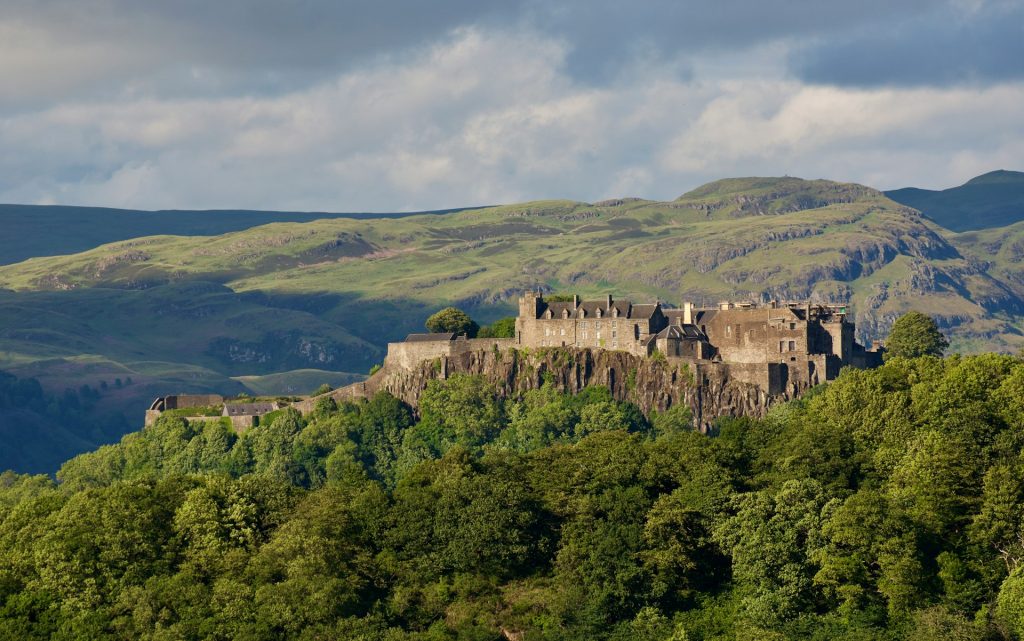
Stirling Castle commands the most strategically important location in Scotland — control Stirling, control Scotland, as countless medieval armies learned the hard way. The Renaissance palace within the castle walls represents James V’s attempt to create a Scottish Versailles, though he died before seeing his vision completed.
Productions filming here work within rooms where Mary Queen of Scots was crowned as an infant and where James VI held court before inheriting the English throne. The castle’s great hall, recently restored to its original splendor, provides a setting that needs no enhancement for dramatic effect. The building carries its own weight.
Conwy Castle
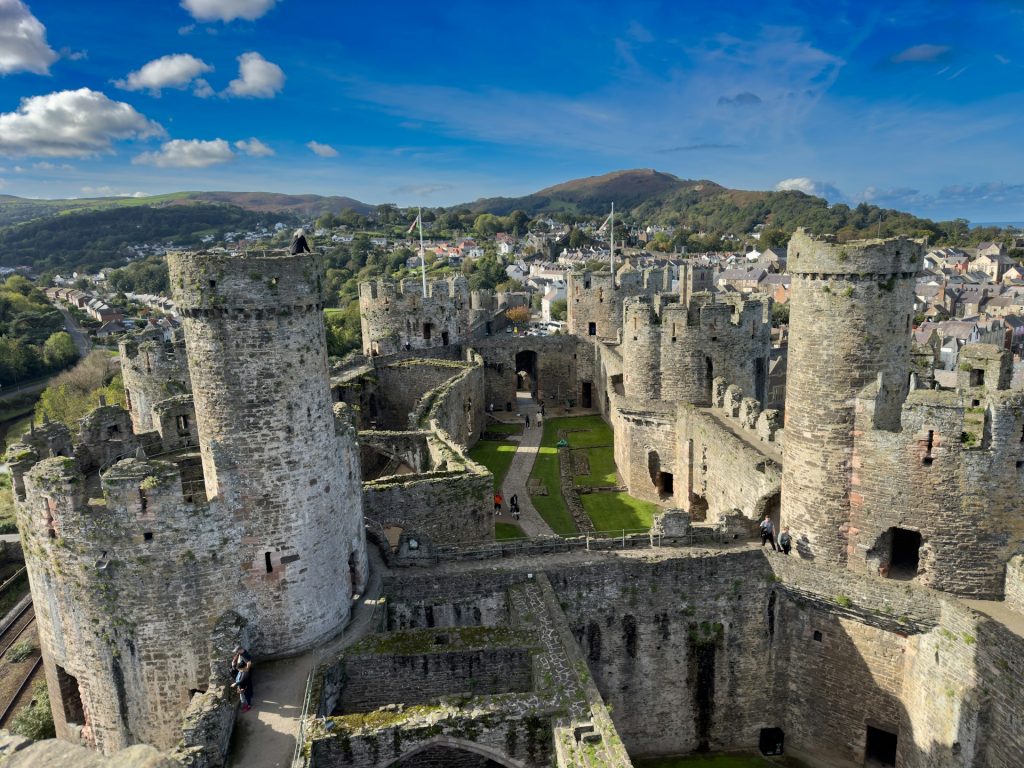
Conwy represents Edward I’s vision of English dominance over Wales, and eight centuries later, it still delivers that message with brutal clarity. The castle’s eight massive round towers rise directly from the rocky outcrop as if they grew there naturally, though every stone was placed with deliberate intent to intimidate Welsh resistance (a strategy that worked, incidentally, since Conwy never fell to siege despite numerous attempts).
Television crews filming within these walls work in a space designed to project power across the surrounding countryside, and the views from the battlements explain why Edward chose this particular spot to plant his architectural flag. But the real drama happens when you realize that this fortress, built to subdue a nation, now serves as Wales’s calling card to the world — which is either ironic justice or a masterpiece of historical rehabilitation.
Caerphilly Castle
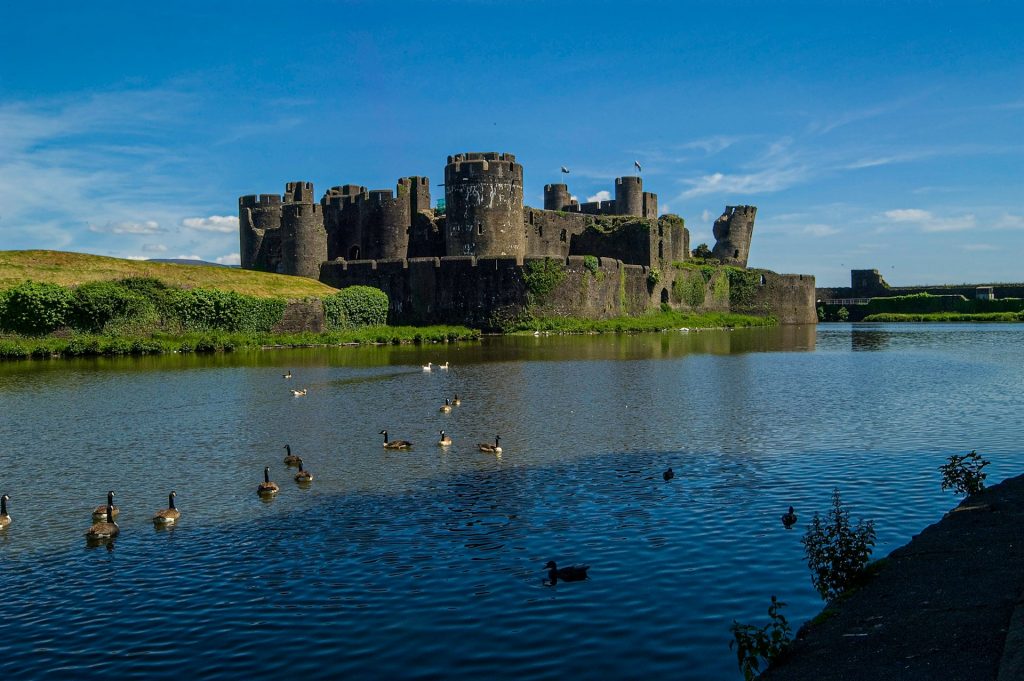
Caerphilly Castle sprawls across 30 acres with the confidence of a structure built to end arguments before they start. The concentric walls and massive gatehouse represent medieval military engineering at its most sophisticated.
Television producers filming here inherit a ready-made fortress that looks exactly like what central casting ordered for “imposing medieval stronghold.” The castle’s water defenses remain intact, creating reflections that double the visual impact without requiring special effects. Real moats beat CGI every time.
Durham Cathedral
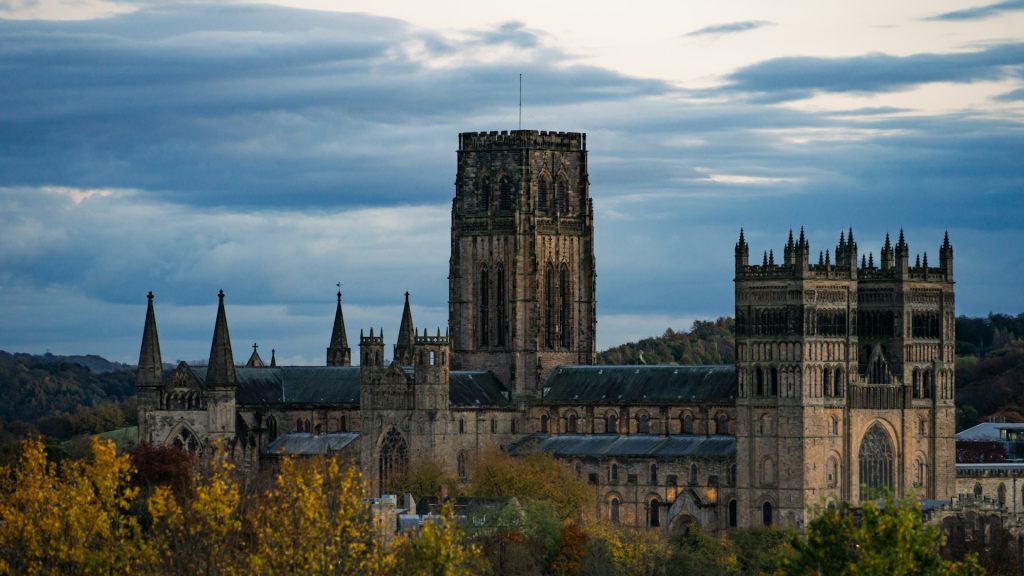
Durham Cathedral manages to be both a masterpiece of Norman architecture and a testament to the power of medieval bishops who ruled this corner of England like princes. The building’s massive pillars and soaring arches create natural drama that television crews can capture but never improve upon, because when your foundation was laid in 1093, you’ve had plenty of time to get the proportions exactly right.
The cathedral houses the tomb of Saint Cuthbert and the remains of the Venerable Bede, making it sacred ground that adds weight to any production filming within its walls. And while modern visitors come seeking the Harry Potter connection (those corridors and staircases appeared in the early films), the real magic lies in standing where pilgrims have worshipped for nearly a thousand years — something that seeps into every frame of film shot here.
The stories behind the stones
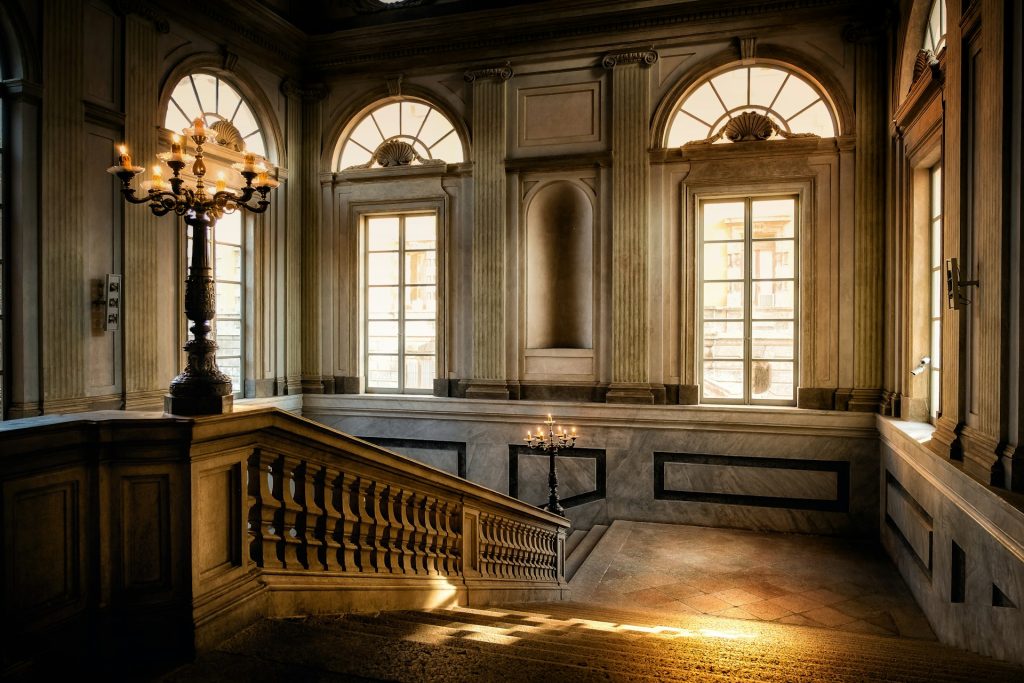
These locations remind viewers that history wasn’t written in books first — it was lived in rooms, walked down corridors, and whispered in corners that still exist. Television productions benefit from authenticity that can’t be built on a backlot or generated by computer.
When actors perform in spaces where real historical figures once stood, the weight of actual events adds depth that even the finest performances can only enhance, never create. The next time a period drama unfolds in a magnificent castle or ancient cathedral, remember that the most compelling character on screen might just be the building itself.
More from Travel Pug

- Underrated Italian Towns That Beat the Tourist Crowds
- Las Vegas Tourist Traps to Skip
- Prettiest Towns in Every US State
- 18 passport-free countries for Americans
- Signs Your Cruise Is Not Worth The Cost
Like Travel Pug’s content? Follow us on MSN.